[directorist_add_listing]

Brentford Welcome Brighton as European Chase Meets a Search for Spark

A Saturday afternoon at the Gtech Community Stadium brings a Premier League fixture with more edge than it might first appear, as Brentford host Brighton & Hove Albion with a 3pm GMT kick-off. Brentford’s season has been defined by a growing sense of maturity in big moments, while Brighton arrive needing to translate decent spells into results again, with the table beginning to reflect the dip in outcomes rather than the quality that still exists in their squad.

With both teams comfortable playing with the ball and both capable of pressing high, this one feels likely to be decided by details: the first mistake in transition, the sharpest set-piece routine, or the one forward who finishes the chance that others miss.

Recent form gives the home side the clearer platform. Their last match in any competition was a 1–1 draw against Arsenal, a result that carried genuine substance rather than simply “a decent point.” The performance showed organisation without passivity and ambition without recklessness, and it also reinforced why Brentford have become awkward opponents for the league’s elite at the Gtech. Holding the leaders is one thing; using it as a springboard is another, and the challenge this weekend is to turn that emotional lift into three points against a team that can be slippery when allowed to settle. That Arsenal game also offered a reminder of where the best version of Brentford hurts you: patient enough to keep structure, direct enough to take the first good chance, and brave enough to commit numbers when the moment is right rather than when the crowd simply demands it.

Brighton’s last outing in any competition ended in late frustration, losing 1–0 at Aston Villa after a tight contest was decided by a late own goal. It was a match in which the margins felt cruel, but it also continued a broader theme that has followed them through parts of the season: plenty of competence in the build-up, not quite enough bite in the final third when the game is on the line. Trips like this can feel like the ideal place to reset—noisy, intense, and full of duels that snap a team out of any lull—but they can also become unforgiving if the first spell goes against you. The visitors won’t need reminding that Brentford at home tend to turn small wins—an interception, a throw-in, a corner—into sustained pressure that can make the pitch feel smaller with every minute.

Team news is a big part of the build-up, not because either side is defined solely by injuries, but because availability can alter the shape of how both press and how both protect themselves after losing the ball. Brentford have a clear boost in the return of Kevin Schade, back in contention after serving a three-match suspension. That matters tactically as much as it matters in headline terms: Schade gives them another direct runner who can stretch the game, particularly useful when opponents try to squeeze the middle and force play wide. It also changes the options from the bench, where pace late on can be decisive in matches that remain level into the final half hour. Alongside that positive, there are still confirmed absences, with Josh Dasilva sidelined and both Fábio Carvalho and Antoni Milambo ruled out for the rest of the campaign due to ACL injuries. That reduces midfield variety and removes some of the creative “spark off the bench” options, making the structure and timing of substitutions even more important.

Brighton’s picture remains shaped by ongoing absences, with Yasin Ayari still out with a shoulder problem and Stefanos Tzimas described as a long-term absentee. Those are the kinds of missing pieces that can quietly matter over a run of weeks rather than in just one match—rotation becomes harder, the training week becomes more about managing bodies than sharpening patterns, and attacking combinations can take longer to click when the same group isn’t consistently available. Even so, the visitors do have enough quality and tactical clarity to hurt anyone if they get control of the middle, and the trip to Brentford often demands bravery in possession because simply clearing lines can invite waves of pressure back onto the defence.

Players in form provide the obvious talking points. Brentford’s attacking output has been underpinned by Igor Thiago’s finishing, with his goal record this season keeping him firmly in the conversation as one of the division’s most impactful strikers. Beyond the goals, there’s a practical value in having a forward who can occupy centre-backs and turn half-chances into shots: it changes how opponents defend set pieces, how deep the back line feels it needs to sit, and how quickly the midfield has to drop when attacks break down. The Arsenal draw also highlighted the kind of contributions that suit this fixture, with Keane Lewis-Potter’s role on the day underlining the importance of energy and timing from wide areas—players who can do the hard yards without the ball and still arrive with composure when the chance finally comes.

For Brighton, the “in-form” story is less about one consistent scorer and more about finding the right blend again. Their best performances tend to come when the attacking line plays with freedom and the midfield can feed runners quickly after winning the ball. When that doesn’t happen, they can end up dominating harmless zones and then being vulnerable to the kind of direct transitional threat Brentford thrive on. The task is to arrive with sharper decision-making: earlier shots when openings appear, better choices on the final pass, and more bodies arriving in the box when wide areas are reached. A tight loss at Villa can either drain confidence or sharpen it—sometimes teams travel better immediately after a narrow defeat because the performance can be defended even if the scoreline can’t.

This match also has an intriguing tactical contrast despite the stylistic similarities. Both sides are comfortable in possession, but Brentford’s best periods often come when they mix control with directness—turning a turnover into a quick strike down the channel, or using the crowd’s energy to turn a series of set pieces into sustained pressure. Brighton, meanwhile, often aim to build patterns through midfield and draw opponents out before accelerating into the final third. That creates a key question: who wins the “rest defence” battle—the shape and discipline teams keep when they attack? If Brentford commit numbers and lose the ball cheaply, Brighton have the technical quality to break quickly. If Brighton overplay in their own half or get caught on the turn in midfield, Brentford can turn that into immediate territory and a set-piece sequence, which is where they can be particularly ruthless.

Game state could decide everything. An early home goal would allow Brentford to dictate the rhythm and make Brighton chase—something that can open spaces for runners and turn the second half into a problem of containment. A bright start from the visitors, on the other hand, could quieten the stadium and force Brentford to take slightly bigger risks to regain control, which can suit a side looking to spring counters into the spaces that appear behind aggressive full-backs. If it stays level into the final 25 minutes, the tie could become a nerve test, with both managers weighing whether to push for the win or protect a point that might feel more valuable to one side than the other in the bigger picture.

There’s also a psychological layer that shouldn’t be overlooked. Brentford’s recent ability to stand up to the league leaders and come away with a result can be a powerful reference point in the dressing room: proof that the plan works, proof that patience pays, proof that they can stay composed in big moments. Brighton arrive with a different kind of motivation—the need to stop a run of frustrating outcomes from becoming a label. Matches like this can be a turning point because they demand intensity, clarity and courage; there’s no hiding place at the Gtech when the game turns physical and the crowd senses vulnerability.

Put together, it feels like the kind of fixture where reputations won’t decide it—execution will. Brentford will want controlled aggression: set-piece pressure, sharp transitions, and enough defensive discipline to prevent the match turning into end-to-end chaos. Brighton will want composure under the press, cleaner final-third choices, and the bravery to play through moments where the atmosphere demands the “simple” option. If one side finds an early breakthrough, it could open up dramatically; if it stays tight, expect a contest decided by a single clean moment in the box or a lapse of concentration after losing the ball.


Sidcup Library Reopens – For the Over-50s

On Tuesdays and Thursdays, Sidcup Storyteller looks a little different.

The library – usually closed on those days – now hums with yoga mats, folding chairs and the low thrum of conversation as residents aged 50 and over gather for tai chi, Pilates, singing and the occasional Fitness MOT. The initiative, called Live Well, Age Well, is a pilot aimed at helping older residents stay active, independent and socially connected.

In a borough where the ageing population is growing – and where isolation and inactivity are persistent concerns – the building has been quietly repurposed as an Ageing Well Hub.

Prevention, Not Prescription

The project is funded by NHS South East London Integrated Care Board and delivered through the Bexley Health & Wellbeing Partnership in collaboration with the London Borough of Bexley.

Its logic is straightforward: invest early, keep people moving, keep them connected, and the need for more serious interventions later may shrink.

Councillor Brian Bishop describes Sidcup Storyteller as “a landmark building at the heart of Sidcup High Street” and says the pilot brings it to life on days it would otherwise be shuttered. Councillor Melvin Seymour points to the evidence linking community activity with stronger mental, physical and cognitive health.

Behind the policy language is a simple idea – that ageing well is easier done together.

A Hub in the Neighbourhood

The Frognal neighbourhood was selected for the pilot due to signs of loneliness and inactivity among older residents. The programme is open to those aged 50 and over in Sidcup, Foots Cray, Lamorbey, Blackfen and Bexley Village, whether managing existing health conditions or simply looking to try something new.

Sessions range from tai chi and yoga to drawing classes and group singing. They are free, informal and, crucially, local.

Diana Braithwaite, Director of Integrated Strategic Health & Care for Bexley, said the hub reflects a broader NHS push to shift services from hospitals into communities and focus on prevention rather than cure.

The library’s usual opening hours – and the adjoining cinema – remain unchanged. But twice a week, the shelves share space with stretch bands and sketchpads.

Ageing, the project suggests, is not a private endurance test. It is a communal affair – and, with the right setting, one that can be approached with a little more movement and a little less isolation.

Chelsea v Burnley Preview: Parker Defiant In Press Conference

Chelsea host Burnley in one of three Saturday 3pm fixtures in the Premier League.

The Blues had won four league matches in a row for the first time this season before their disappointing draw against Leeds.

Meanwhile, Burnley completed a stunning 3-2 comeback against Crystal Palace in their last league match. The Clarets became the first team in 17 years to lead at halftime after trailing by two goals.

Both teams played in the FA Cup last weekend with a contrast in results. Chelsea thrashed Hull 4-0 while Burnley were shocked by League One Mansfield.

This Premier League fixture is crucial in the context of the standings.

Liam Rosenior’s good start to life as Chelsea boss means that his team remain in the Champions League places, although Liverpool are just two points behind.

Scott Parker reiterated in his press conference that he still has hope of avoiding relegation. Burnley are nine points from safety with just 12 games remaining.

The hosts will be happy to welcome back their captain Reece James, who missed the last three games with a slight niggle. Cole Palmer is also back fit and firing again. Chelsea’s talisman has scored four goals in his last two league games.

The Blues’ main miss will be Marc Cucurella. The left back has been one of Chelsea’s most influential players this season. However, he was removed at halftime against Leeds with a hamstring issue and won’t be available for several weeks.

Levi Colwill, Jamie Gittens and Dario Essugo are all out with long term injuries, and the unlucky Romeo Lavia is still building up to match fitness on the training pitch.

Scott Parker confirmed that Armando Broja won’t feature against his former club as he is expected to be fit in a couple of weeks. The same goes for Axel Tuanzebe.

Josh Cullen, Connor Roberts, Jordan Beyer, Zeki Amdouni and Mike Tresor are all out.

Chelsea’s attack has been working well recently, especially since the return of Cole Palmer. He has formed a deadly partnership with Joao Pedro, who has been in fantastic form under Rosenior.

Chelsea have scored at least two goals in all of league their fixtures under the new boss.

However, the defence has been leaky and Cucurella’s absence won’t help. If they are to finish in the Champions League places Chelsea must stop conceding soft goals.

Burnley have had issues at both ends of the pitch all season, which is reflected by their league position of 19th.

Top scorer Jaidon Anthony was on the scoresheet against Palace. He had been on a five game goalless run after his strong start to the season.

Chelsea are expected to be comfortable winners, but Burnley’s recent comeback and the added incentive of avoiding relegation could bring the result into jeopardy.

Scott Parker has been under increasing pressure this season. Just as the Palace result looked to have secured his job in the short term, the embarrassing defeat to Mansfield has eradicated a lot of the positivity.

Yet he insisted in his Thursday press conference that his squad still believe that they can beat the drop.

“100% there is still belief,” he said. “You saw at Crystal Palace that we are fully committed to getting more wins and putting pressure on [the teams around them].”

“After debriefing the cup game, the main driver is the Palace result — coming back from 2–0 down after seven minutes to win away from home. That’s what we hold onto now.”

He also spoke about dealing with the pressure he is under.

“I’ve experienced that before. At 45-years-old, with three promotions at different clubs, I know what I’ve achieved. I’m a fighter. There are always bumps in the road,” Parker said.

And Parker said that he continues to look for ways to boost his team’s hopes of survival.

“We’re constantly searching for solutions — different selections, shapes, systems. We haven’t found a consistent formula yet, but we’ll keep working to help the players and gain more points,” he said.

Wolverhampton 2-2: Arsenal Throw Away Lead As Wolves Snatch Point in Stoppage Time

Arsenal’s trip to Molineux last night turned into the kind of Premier League warning story that title contenders hate reading about themselves. They were 2-0 up, largely in control, and seemingly on course to take another important step toward the championship. Instead, they left with a 2-2 draw that felt like a defeat, having allowed bottom club Wolves to drag them into a frantic finish and then land the final punch in stoppage time.

Arsenal struck early through Bukayo Saka in the 5th minute and doubled the lead via Piero Hincapié on 56 minutes, but Wolves responded with a sensational curling strike from Hugo Bueno five minutes later and then a dramatic 90+4-minute equaliser from 19-year-old debutant Tom Edozie, whose shot took a decisive touch on its way through and sent Molineux into rapture.

The match began in a way that suited Arsenal perfectly: purposeful, sharp, and efficient. With Saka freshly tied down to a new long-term deal, there was a sense of a leader wanting to mark the moment, and he did exactly that. Arsenal moved the ball quickly into the final third, found a pocket of space that Wolves hadn’t locked down yet, and Saka finished with the calm of a player who expects these moments. At 1-0 so early, Arsenal had the ideal platform to quieten a restless stadium and make the evening about control rather than emotion. Wolves looked shaken at first, caught between wanting to press and fearing the space Arsenal can exploit when the press isn’t perfect.

For a while, Arsenal did what good away teams do: they managed the tempo, kept Wolves chasing, and tried to pick off moments rather than forcing the game to become end-to-end. Wolves, though, gradually steadied. They began winning more second balls, contesting duels with greater bite, and finding small outlets down the flanks to push Arsenal back a few yards at a time. The first half never truly became comfortable for Arsenal, even if they looked the cleaner side. The warning signs were subtle: a few loose touches in midfield, a few hurried clearances, a couple of Wolves breaks that didn’t end in a clear chance but did remind Arsenal they still had work to do. By the time the teams went in, Arsenal were ahead, but it didn’t feel like the tie was “over,” and that difference mattered later.

When Arsenal scored again ten minutes into the second half, it looked like the moment the match would finally settle. Hincapié’s goal on 56 minutes gave Arsenal daylight, and the celebrations had the feel of a team that believed they’d just ended the argument. But rather than using the 2-0 cushion to slow the game down and suffocate Wolves with possession, Arsenal’s grip loosened in a way that invited trouble. Passes became less secure, Wolves started arriving into duels a fraction quicker, and the home crowd sensed something they hadn’t felt at 0-1: an opening.

Wolves’ response was immediate and electric. On 61 minutes, Bueno produced a strike that completely changed the mood — a beautifully curved effort that flew beyond the goalkeeper and into the net, one of those goals that doesn’t just reduce a deficit but transforms belief. The stadium rose, Wolves’ players suddenly played with shoulders back, and Arsenal — instead of calmly resetting — looked rattled by the shift in energy.

From that point on, the match tilted toward chaos, and Wolves were delighted by that while Arsenal looked increasingly uncomfortable inside it. Wolves pushed higher, took more risks, and forced Arsenal into defending more crosses, more second phases, more scrambles. Arsenal still had moments when they could have killed the game — the kind of transition chance that, if finished, ends the story — but they couldn’t find the final touch that would have restored calm. Every minute that ticked by at 2-1 made Wolves bolder and Arsenal tighter, and you could feel the tension building in Arsenal’s decision-making: when to keep it, when to clear it, when to press, when to drop.

Then came the ending that will replay in Arsenal’s minds all week. Deep into stoppage time, Wolves threw one more attack forward and Edozie — a teenager thrown into the moment — found space to shoot. His effort took a telling deflection on its way through, wrong-footing the goalkeeper and dropping into the net in the 94th minute. One second Arsenal were seconds from a hard-earned win; the next they were staring at a scoreboard that read 2-2, as Molineux erupted and Wolves celebrated it like a victory.

The draw carries weight beyond one match because of what it does to the title picture and the psychology around Arsenal’s run-in. Arsenal’s advantage at the top remains, but the dropped points reopen the door for Manchester City, with Arsenal now five points ahead but having played one game more — exactly the sort of detail that turns “comfortable” into “tense” very quickly. The fixture itself had been rearranged because of Arsenal’s looming League Cup final against City on 21 March, which only adds to the feeling that Arsenal need to keep their league momentum steady while juggling big-pressure nights elsewhere.

Afterwards, Mikel Arteta didn’t hide. He was blunt: Arsenal “have to blame ourselves,” and he pointed straight at the second-half performance as falling nowhere near the standard required to win at the top end of the table. He spoke like a manager who felt his team stopped doing the simple things that keep you safe — controlling the ball, winning the right duels, managing territory, and making better decisions once the match-state was strongly in Arsenal’s favour. He also made it clear the players would have to accept the criticism that comes with a collapse like that, essentially taking the hit and moving on quickly because the next games won’t wait for anyone’s self-pity.

Rob Edwards, in contrast, spoke with pride and relief. He praised his players’ character, spirit, and fight, stressing that to come back from 2-0 down against the league leaders requires belief that can’t be coached in 10 minutes — it has to be lived and earned. He highlighted the emotional pressure Arsenal are under as leaders across multiple competitions and suggested Wolves’ job was to keep pushing and see if that pressure could be made to feel heavy. On Edozie, Edwards’ message was warm and confident: the youngster had impressed in training, the staff trusted his instinct, and he repaid that trust in the most dramatic way possible.

In the end, Arsenal will see this as a warning about game management and mentality as much as tactics. They had the lead, they had the second goal, and they had the chance to turn the match into a quiet close — but instead they let Wolves turn it into a fight, and Wolves won the emotional battle of the final half-hour. Wolves will take it as a rare surge of hope in a brutal season: a point that feels like a win, a debut goal that will be remembered for years, and a performance that reminded everyone — including Arsenal — that the Premier League rarely lets anyone coast, not even at 2-0 up.

Amana Melome announces new album ‘Recalibration’

Out February 17, 2026 | Recorded between Los Angeles and Spain

Euro-Caribbean-American singer-songwriter Amana Melome returns with Recalibration, her first full-length album in several years, arriving February 17, 2026. Rooted in her family’s jazz lineage and expanded by a life lived across continents, Recalibration captures a powerful new era of reflection, resilience, and renewal.

Born in Germany and raised across several continents, Amana Melome has always carried a global perspective in both voice and vision. She comes from one of the most storied jazz families in modern history. Her grandfather, Jimmy Woode, was the youngest musician ever hired by Duke Ellington, and went on to perform with Ella Fitzgerald, Louis Armstrong, Carmen McRae, Sarah Vaughan, and other icons who shaped the language of jazz. Music is not simply Amana’s heritage, it is her mother tongue.

After returning to the United States for university and graduating from New York University, Amana moved to Los Angeles to pursue her artistic career. There she met producer Saverio “Sage” Principini, with whom she recorded her debut album Indigo Red and its follow-up Phoenix Rising. The projects feature world-renowned musicians including Vinnie Colaiuta, Reggie Hamilton, and Alessandro Alessandroni, whose contributions helped shape the rich, soulful, and cosmopolitan sound for which she has become known.

Released independently in the United States by Savana RecordsIndigo Red made history as the first album ever distributed by Whole Foods Market, and was later released in Europe by Italy’s IRMA Records (2008). While promoting the album in Italy, Amana was chosen to play herself in the lead role of the country’s beloved hit sitcom Un medico in famiglia, an unexpected moment that widened her international visibility and performance opportunities.

Her live résumé is equally expansive. Amana has headlined festivals and high-profile events across the United States, Europe, South America, and Asia, and has performed for global luxury brands including Fendi, Antinori, Robert Mondavi, and Christian Dior. With a sound that moves effortlessly between jazz, neo-soul, folk, and world music, her performances are known for their emotional elegance and intercultural resonance.

After years of constant touring, Amana shifted her focus to motherhood and family life, while also reconnecting with her longstanding love of visual art. She is married to Johan Eriksson, son of the late legendary football manager Sven-Göran Eriksson. This quieter chapter deepened her creative philosophy, rooted in the belief that music, art, and movement are all expressions of the same inner truth. Multicultural, multilingual, and multidisciplinary, she creates with the intention of reminding audiences of their interconnectedness, a thread that has defined every era of her career.

Now, Amana returns with Recalibration, recorded between Los Angeles and Spain. The album marks a powerful new chapter characterized by reflection, resilience, and renewal. Grounded in her family’s jazz heritage and expanded by her global identity, Recalibration explores themes of inner strength, introspection, and healing. It is a rebirth with warmth and intention, reaffirming that Amana Melome’ continues to evolve while staying true to the soulful, jazz-rooted honesty at the heart of her work.

RECALIBRATION (Album)

Release date: February 17, 2026
Recorded: Los Angeles + Spain
Genres: Jazz, neo-soul, folk, world

About Amana Melome’

Amana Melome’ is a Euro-Caribbean-American singer-songwriter whose music blends jazz tradition, soulful storytelling, and global influence. Born in Germany and raised across several continents, she carries forward a generational jazz legacy while forging a sound that is intimate, cinematic, and emotionally honest.

One-third of founders will cut jobs this year due to AI

One in three scale-up founders expect to cut jobs due to AI adoption within the next 12 months, according to new research from Helm, Britain’s largest entrepreneur network.

When 400 members of Helm were asked in an online survey: ‘Do you expect AI adoption to lead to job cuts in your business within the next 12 months?’ 33 per cent said ‘yes’, 64 per cent said ‘no’, and 3 per cent said ‘don’t know’.

The survey carried out between February 5-6 also asked: ‘Are you delaying or reducing new hires as a result of increased AI adoption’ with 58 per cent saying ‘yes’, 35 per cent saying ‘no’, and seven per cent saying ‘don’t know’.

Asked: ‘Do you believe the UK workforce is adequately prepared for widespread AI adoption?’ 3.5 per cent said ‘yes’, 93 per cent said ‘no’, and 3.5% said ‘don’t know’.

Andreas Adamides, CEO of Helm, said: “AI is forcing business leaders to make some difficult decisions about jobs and hiring. Many founders are under pressure to move fast, stay competitive, and rethink roles as automation accelerates.

“The bigger opportunity now is to upskill workers for higher-value roles and use AI to drive sustainable growth. If businesses and policymakers invest in skills early, AI can become a powerful engine for productivity rather than job insecurity.”

Helm member, Joshua Wöhle, Founder and CEO of AI training company, Mindstone, said: “AI has the potential to be transformational for British business, but the skills gap is making people focus on automation, which is where technology has historically made a difference, instead of augmentation, where generative AI really can make a difference.

“Automation leads to job losses versus augmentation that moves the top line. Ultimately, this comes down to training.”

The average Helm member is the founder of a company with an annual turnover of £21 million.

McBrides takes on the DJH’s name following £200,000 office refurbishment and rebrand

A top 40 UK accountancy firm has completed its entry into the South East with the £200,000 office refurbishment and rebranding of McBrides Accountants.

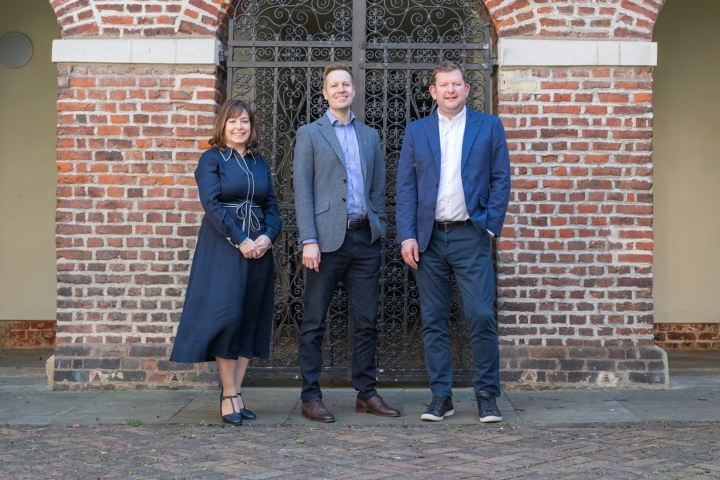
The company officially launches as DJH Bexley today, marking the occasion with the transformation of its Nexus House office in Sidcup, including updating meeting rooms, comprehensive IT and technology improvements, and a new break-out area for team use and client events.

The rebrand represents the final stage of a ten-month integration process since the 53-year-old practice, which employs 61 people, joined DJH in April 2025.

Scott Heath, Chief Executive Officer at DJH, said: “McBrides was a hugely strategic acquisition for us and marks an important first foray into the South East and London.

“It has been a very good decision, giving us an immediate footprint to increase the DJH reach whilst reinforcing the excellent work that Tanya and her senior management team continue to deliver.

“The change in branding will help accelerate marketing efforts, as we look to grow DJH in the region.”

Since joining the top 40 firm, DJH Bexley has secured several notable new clients in legal and energy, while cementing its reputation as a specialist provider of auditing and accounting services to clients in professional services, law, property and shipping.

The practice also now offers clients access to DJH’s specialist services, including capital allowances, R&D tax credits, HR and IT support.

Tanya Hamilton, Managing Partner at DJH Bexley, said: “It has been a great ten months getting to know and understand the wider DJH team, introducing our clients to the additional service lines we can now provide.

“The shared values of exceptional service and industry knowledge have made the transition into the group a seamless process and the rebrand is the final element of a journey that is putting us on track for growth over the next twelve months.”

She added: “Our offices now carry all the DJH branding and, importantly, have state-of-the-art client meeting rooms and a fantastic break-out space. This will be perfect for our team to relax in, as well providing a place where we can host future networking and seminar events.”

DJH Bexley is now recruiting across several areas to support growth, including corporate finance.

The practice offers a full range of accounts, audit, business advisory and tax services to businesses across more than fifteen industries, with a strong reputation for helping clients create and operate tax-efficient, compliant and profitable businesses.

Tanya went on to add: “Operationally, sharing resources across offices has already been a big success with support flowing both ways. With the backing of DJH, we are also investing in marketing to help raise the profile of the brand across the region.”

Following sixteen acquisitions in four years, DJH has grown into a multidisciplinary team of 750 people across 16 offices in the Midlands, the North West, Yorkshire and Dublin.

The partnership with McBrides has created further opportunities for team members to develop their careers and gain experience across specialist service lines.

Gunners Aim to Reassert Title Credentials at Struggling Opponents

Wednesday night’s Premier League meeting at Molineux brings together two sides chasing very different objectives as Wolverhampton Wanderers host league leaders Arsenal in a fixture that carries significance at both ends of the table.

The home side continue to search for consistency and crucial points in their battle to climb away from danger, while the visitors arrive knowing any slip at this stage of the season could quickly invite pressure from pursuing rivals in the title race.

Momentum has been difficult to build for Wolves across the campaign, yet recent performances have shown signs of grit and improvement. Their latest outing, a narrow FA Cup victory over Grimsby Town, provided a welcome lift in confidence and reminded supporters that the squad still carries resilience when matches become tight. Progress in the cup does not solve league problems, but it can provide psychological breathing room, and a spirited display against top opposition would further reinforce belief inside the dressing room.

For Arsenal, the recent run has combined dominant performances with moments of frustration. A league draw at Brentford trimmed their advantage at the summit and served as a reminder that even strong title contenders can be made uncomfortable when opponents refuse to allow rhythm in possession. That setback was followed by an emphatic FA Cup performance that showcased the attacking depth available, with multiple players contributing in front of goal and underlining why the squad remains one of the most dangerous in the division when chances begin to flow. The challenge now is translating that attacking sharpness back into league action where margins are increasingly fine.

Team news adds further intrigue to the build-up. Arsenal’s squad depth has been tested in recent weeks, with several key figures managing knocks or longer-term issues. Midfield options have been stretched, and the availability of creative players has at times dictated how the side approaches matches tactically. Even so, others have stepped forward to maintain performance levels, and rotation has not significantly blunted attacking output. Wolves have faced their own selection complications during the season, frequently adjusting defensive combinations while searching for stability. Injuries have disrupted continuity, forcing tactical tweaks, but recent performances have suggested a more compact defensive shape could make life difficult for visiting teams if concentration holds.

Players in form are likely to determine how this contest unfolds. Arsenal’s attacking unit continues to produce decisive moments, with wide players stretching defences and midfield runners arriving at crucial times in the penalty area. The ability to create chances from multiple sources remains one of their biggest strengths, meaning opponents cannot focus on stopping a single threat. Wolves, meanwhile, have relied on collective effort more than individual brilliance, with young players and experienced figures combining to keep games competitive even when possession statistics tilt heavily against them. Finding a cutting edge in front of goal remains the priority, particularly against teams capable of punishing mistakes swiftly.

Tactically, the evening is likely to follow a familiar pattern. Expect Arsenal to dominate possession, circulating the ball patiently while probing for openings between defensive lines. Wolves’ response will centre on discipline and organisation, hoping to frustrate and then exploit spaces left behind when the visitors push forward. Counterattacks and set pieces could represent their clearest routes to goal, especially if the crowd senses vulnerability and raises the intensity.

There is also the psychological element. Title races often hinge on handling pressure during seemingly routine fixtures, and matches away to sides fighting near the bottom can become unexpectedly tense if the breakthrough does not arrive early. For Wolves, matches against top opposition offer motivation and the chance to turn the narrative of their season, particularly when home support creates an intimidating atmosphere.

With points vital for contrasting reasons, the stakes extend beyond simple league positions. Arsenal aim to maintain momentum and control at the summit, knowing challengers are waiting for any stumble. Wolves, meanwhile, understand that performances against elite opponents can spark momentum and provide a foundation for survival hopes in the months ahead. As the season edges toward its decisive phase, this clash at Molineux carries the feel of a game that could influence confidence levels on both sides, making it far more than just another fixture on the calendar.

Macclesfield 0-1 Brentford: Bees Into Round Five After Gritty Night in Cheshire

Macclesfield’s dream FA Cup run finally ran out of road last night, but only after they had pushed Brentford to the limit in a tense, emotional 1-0 defeat at Moss Rose.

For a non-league side taking on top-flight opposition, the performance was as brave as it was disciplined: they matched Brentford for effort, defended with real organisation, and even had moments where the stadium genuinely believed another giant-killing could be on the cards. In the end, the tie turned on one cruel moment in the 70th minute, when a cross was whipped into a dangerous area and defender Sam Heathcote, trying to do the right thing under pressure, glanced the ball into his own net.

It was a devastating way for Macclesfield to go out—especially given how much they’d poured into the evening—and it left Brentford relieved rather than triumphant as they booked their place in the fifth round.

The tone of the game was set early: Macclesfield weren’t content to camp on their own penalty spot and hope for mercy. They pressed in spells, fought for second balls, and made Brentford earn every clean touch in the final third. Brentford had more possession, but for long stretches it was possession without comfort—Macclesfield’s shape stayed compact, their midfield line worked relentlessly, and their back line attacked crosses with the kind of conviction that turns “pressure” into harmless territory. When Brentford did carve out chances, Max Dearnley stood firm, producing key saves that kept the scoreline at 0-0 and the crowd believing this could become another famous night.

Brentford’s best moments came when they managed to speed the game up—quick switches of play, early deliveries, and runners arriving on the blind side—yet the first half ended with Macclesfield still intact and Brentford still searching for a clearer route to goal. Macclesfield even showed they could threaten themselves, with a bold long-range effort from James Dawson that drifted narrowly wide and drew a roar from the home end, a reminder that the underdogs weren’t merely surviving—they were looking for their own moment to tilt the tie.

After the break, Brentford increased the pressure in a more sustained way. The tempo rose, the ball spent longer in Macclesfield’s half, and the crosses started to arrive with greater frequency. Dearnley was forced into more action, including sharp stops from close range and from set-piece situations where bodies crowded the box and rebounds became a danger.

Macclesfield, though, kept finding a way to reset—one more header won, one more tackle slid in, one more clearance hooked away—until the moment that finally broke them arrived just past the hour. A delivery flashed across the face of goal, and with Brentford attackers arriving behind him, Heathcote tried to defend the cross but could only redirect it past his own goalkeeper. The celebration from the away side was muted; everyone could see immediately what it meant for the player involved and how harsh it felt in the context of Macclesfield’s effort.

Macclesfield didn’t crumble after that. If anything, the goal dragged even more fight out of them. They chased an equaliser with the kind of urgency that makes cup ties crackle: pushing for throws high up the pitch, sending bodies forward on set-pieces, and putting Brentford under the sort of pressure that’s uncomfortable because it comes from belief rather than desperation. There was also a spell where Macclesfield briefly had to cope with being down to 10 men due to injury, making the timing of the goal feel even more cruel, yet they still found ways to get the ball into Brentford’s box late on. One of the clearest chances to force the tie deeper fell in the closing stages, but Brentford’s goalkeeper and defenders combined to deny Macclesfield at the key moment, preserving the narrow lead as the clock ran out.

Afterwards, Brentford boss Keith Andrews spoke with obvious respect for the opposition and the occasion, framing it as the kind of cup night where the only thing that truly matters is getting through, even if it isn’t pretty. He acknowledged how hard it was to find space against a team defending with such commitment and how quickly the match could have swung if Macclesfield had taken one of their moments.

Andrews also made a point of praising Macclesfield’s players for the courage and intensity they showed, and he even went out of his way post-match to pay tribute to them directly—an unusually telling gesture that underlined how testing the tie had been.

Macclesfield manager John Rooney, meanwhile, sounded more proud than bitter. He pointed to his side’s organisation, their willingness to compete for every duel, and the way they stayed in the game right to the end against Premier League opposition.

The heartbreak, of course, was the manner of the deciding goal, but Rooney’s message centred on what his team proved rather than what they missed: they stood up to a higher level, they played without fear, and they gave their supporters another night to remember—just this time without the fairytale finish.

Skip to content Skip to content