[directorist_add_listing]

Bexley prepares for blazing finale as ‘The Firewatchers’ closes Night Visions festival

On Saturday 21 February, residents are invited to gather in the gardens of Hurst Community Centre for The Firewatchers – a ceremonial bonfire event designed to close the borough’s Night Visions programme in dramatic fashion.

Running from 5.30pm to 7.30pm, the free, family-friendly evening promises outdoor fire performances, live music, hot food and drink, and an interactive fire fayre. At its centre will stand a newly commissioned sculptural installation – created to be both admired and ultimately set alight.

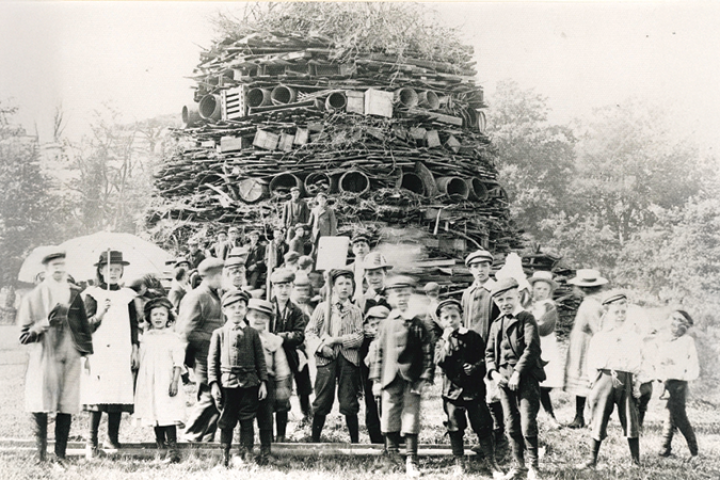
The work has been handcrafted by artist Tom James and co-designed with local scout groups through a series of workshops, reviving Bexley’s historic tradition of communal bonfire building. Archive images of past bonfires helped spark the idea, reconnecting the borough with a practice that once lit up its winter nights.

Rather than a conventional fireworks display, The Firewatchers leans into ritual and spectacle: a temporary artwork transformed by flame, shared in real time by the community that helped shape it.

Councillor Cafer Munur, Cabinet Member for Place Shaping, said:

“The Firewatchers promises to be a spectacular conclusion to Night Visions, rounding off an incredible programme of cultural events in Bexley. The event will take place in the beautiful gardens of Hurst Community Centre, a space not usually open to the public. I would encourage local people to come out for this celebration of creativity and experience the warmth of our local community as they gather to behold this exciting work of fire-art, created just for Bexley.”

The event is produced by Three Rivers Bexley, Emergency Exit Arts and Lightfires –organisations known for combining large-scale outdoor art with strong community participation.

Scott Burell, Director of Three Rivers Bexley, said:

“When we found the historic photos of bonfire-building in Bexley’s Local Archives we knew we had to bring this incredible tradition back to Bexley as part of the Night Visions festival. It has been a brilliant experience working with artist Tom James and Scout groups from across the borough to light up these cold winter nights with an evening of spectacular fire performances.”

The Firewatchers forms part of Night Visions, a borough-wide festival of illuminated art made possible by £100,000 of investment from Arts Council England and delivered in partnership with Bexley Culture Network. Additional funding comes through Creative People and Places via Three Rivers Bexley.

The festival sits within #CelebratingBexley, a year-long cultural programme marking major local milestones – including 60 years of the London Borough of Bexley, 500 years since the closure of Lesnes Abbey and 160 years of Crossness Engines.

Bank of America named Official Touring Partner of The Royal Ballet for 2026

The Royal Ballet will take to the world stage in 2026 with Bank of America as its Official Touring Partner, in a landmark collaboration designed to expand the Company’s international reach and deepen cultural ties across Asia.

Announced today by Royal Ballet and Opera, the partnership will support a major overseas tour spanning Singapore and Japan, bringing British ballet at its finest to global audiences.

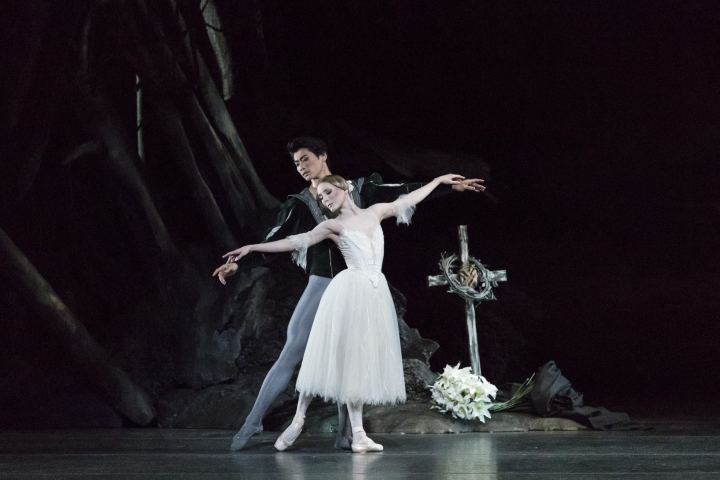
The 2026 programme opens with four gala performances at the Esplanade in Singapore (26–28 June), before moving to Tokyo. There, Frederick Ashton’s La Fille mal gardée will be staged at Lilia Hall (3–5 July), followed by Peter Wright’s celebrated production of Giselle at NHK Hall (10–12 July).

The agreement marks Bank of America’s first partnership of this kind with a leading European dance company. It reflects a broader alignment between public and private investment in the arts – combining government backing with corporate philanthropy to strengthen cultural exchange between the UK, Japan and Singapore, where the bank has long-established operations.

For The Royal Ballet, the tour represents more than a series of performances. It is an opportunity to present a company widely regarded as a global benchmark for classical and contemporary dance – from cherished British repertory to newer commissions that continue to test the art form’s boundaries.

The partnership also carries a community focus. In collaboration with Bank of America, the Company’s Learning and Participation team will work with young people from disadvantaged communities in Japan, offering workshops and engagement opportunities designed to make dance more accessible and to nurture future creative talent.

Kevin O’Hare, Director of The Royal Ballet, said the support was critical to the Company’s international ambitions.

“We are thrilled to welcome Bank of America as our Official Touring Partner. Their support ensures we can continue to bring the beauty and excellence of The Royal Ballet to audiences worldwide, while also creating meaningful opportunities for communities to engage with the arts.”

Arts Minister Ian Murray welcomed the announcement as an example of philanthropy strengthening Britain’s cultural footprint abroad.

“As a government we are clear that philanthropy plays a vital role in complementing public funding and supporting our finest institutions to thrive,” he said.

“Alongside the £1.5 billion we’ve already committed to UK arts and culture across this parliament, we’re growing the impact of British culture on the world stage – showcasing the talent and expertise of UK performing arts professionals and promoting our values, all while supporting jobs at home.”

Andrea Sullivan, International Executive in Bank of America’s Global Community Opportunity Group, said the partnership aligned with the bank’s commitment to cross-cultural engagement.

“Our new partnership with The Royal Ballet, to support their 2026 Tour in Singapore and Japan, reflects Bank of America’s commitment to supporting meaningful cross-cultural exchange. We are proud to champion a creative sector that drives growth and transforms lives – and to align with public investment to maximise sector-wide impact.”

For The Royal Ballet, the 2026 tour will be both a showcase and a statement: British dance travelling confidently outward, backed by a partnership that underscores the growing interplay between culture, diplomacy and investment.

Chelsea 2-2 Leeds United: From Cruising to Collapsing: Chelsea Held After Leeds Refuse To Fold

Chelsea’s winning momentum finally stalled today as Leeds United fought back from two goals down to claim a 2–2 draw at Stamford Bridge, leaving Liam Rosenior furious at the way his side lost control of a match they appeared to have wrapped up. Chelsea looked on course for another important win after João Pedro’s opener and a Cole Palmer penalty put them in charge, but a chaotic five-minute spell in the second half flipped the night on its head as Lukas Nmecha converted from the spot and substitute Noah Okafor punished a defensive mistake to snatch a point that felt massive for Daniel Farke’s depleted visitors.

The first half had an edgy, stop-start feel early on, with Leeds compact and aggressive in midfield, trying to disrupt Chelsea’s rhythm and spring forward whenever they could. Chelsea gradually found pockets of space down the flanks and began to move the ball with more purpose, and the breakthrough arrived in the 24th minute through a quick, clever combination. Palmer drifted into a central pocket, waited for the run, and slipped João Pedro in behind; the Brazilian took one touch to settle himself and finished calmly to make it 1–0. Leeds responded with a couple of dangerous moments of their own—particularly when Jayden Bogle carried the ball forward and forced Chelsea into hurried defending—but clear chances were limited as Chelsea’s centre-backs held firm.

Chelsea started the second half with more control and thought they had the chance to kill the game when João Pedro again caused problems in the area and was brought down. Palmer stepped up for the penalty on 58 minutes and rolled it home with his usual composure, making it 2–0 and sending Stamford Bridge into “job done” mode. For a while, Chelsea looked comfortable: they kept the ball, forced Leeds to chase, and had openings to add a third on the break.

Then the game turned sharply. Leeds were handed a lifeline when they won a penalty of their own on 67 minutes. Nmecha took responsibility and slotted it into the corner to reduce the deficit to 2–1, immediately changing the temperature inside the stadium. Chelsea suddenly looked anxious, their passing became hurried, and Leeds sensed a wobble. Five minutes later, the equaliser arrived in messy fashion and summed up Chelsea’s recurring problem this season—one lapse, one moment of hesitation, and an opponent is back in the game. A long ball and a scramble forced Chelsea into a defensive error, and Okafor reacted quickest to turn it in from close range for 2–2.

From there, it became a frantic finish. Leeds were suddenly the louder team on the pitch, pressing with renewed belief, while Chelsea tried to steady themselves and find the winner. The clearest late chance fell to Palmer, who somehow missed from point-blank range in stoppage time when it looked easier to score, a moment that drew gasps around the ground and perfectly captured Chelsea’s mix of brilliance and wastefulness.

There was also concern for the home side as Marc Cucurella was forced off with what looked like a hamstring problem, disrupting Chelsea’s left side and adding to Rosenior’s list of headaches on a night that should have been far simpler.

After the match, Rosenior focused on the “small moments” that cost his team, admitting Chelsea were excellent for long spells but switched off at the wrong time and allowed Leeds to build momentum far too easily. He praised the attacking play that produced the two goals, but stressed that quality is meaningless without concentration and game management for the full 90 minutes—particularly at home, where he felt Chelsea should be closing matches out with authority.

Farke, meanwhile, praised his players’ resilience and mentality, pointing to the circumstances—injuries and absences—and the fact they could easily have folded at 2–0 down in a hostile stadium. He highlighted the impact of Okafor off the bench and the belief shown once they got one goal back, saying the comeback should give Leeds a real boost for the run-in.

In the end, Chelsea will feel this as two points dropped rather than one gained, especially with the late Palmer miss still fresh. Leeds, though, will take it as a statement of character—written in a five-minute burst that turned a lost cause into a valuable point.

West Ham 1-1 Manchester United: Šeško breaks Hammers hearts with 96th-minute volley as United rescue a point

West Ham were seconds away from a priceless win in their relegation fight tonight, only for Manchester United substitute Benjamin Šeško to crash in a stunning 96th-minute equaliser and snatch a 1–1 draw at the London Stadium. Tomáš Souček’s scruffy but deserved opener early in the second half had the home crowd dreaming of three points, yet the Hammers couldn’t land the knockout blow on the counter and paid the price when United’s late pressure finally produced one moment of quality.

The first half had a tense, cagey feel—West Ham compact, physical and happy to break up United’s rhythm, while United dominated possession without finding a cutting edge. Chances were scarce, but there were flickers. Luke Shaw had an effort blocked at the last moment in a crowded area, and West Ham threatened sporadically through Jarrod Bowen’s direct running down the right, forcing United to retreat quickly whenever the ball turned over. The game’s shape suited West Ham for long spells: Souček and the midfield screen clogged central lanes, the back line held its nerve, and United’s attacks often ended with hopeful deliveries rather than clear openings.

The match sparked into life immediately after the restart—and West Ham struck first. A long ball caused uncertainty in United’s back line, and with Shaw caught underneath the bounce, Bowen muscled in, helped the move along and then delivered a low cross from the right. Souček, who kept charging into the box, darted between defenders and poked a close-range finish through the goalkeeper’s legs to make it 1–0. It was a goal built on aggression and simple intent, and it reflected West Ham’s willingness to gamble forward at the right time.

United tried to respond with more urgency, pushing their full-backs higher and asking Bruno Fernandes to play earlier passes in behind. They thought they’d levelled when Casemiro met a deep delivery with a beautifully guided header into the corner, but the goal was ruled out for offside after a check, with the midfielder just ahead of the last defender when the ball was played. That decision only added to the tension, and West Ham dug in deeper, looking increasingly dangerous on the break as United committed numbers forward.

As the clock ran down, West Ham had moments that should have sealed it. Bowen and the supporting runners found space in transition, forcing a couple of desperate blocks and scrambles in the United area, but the final pass or finish never arrived. United, meanwhile, threw on extra attackers and began swinging crosses into the box with greater frequency. Joshua Zirkzee came agonisingly close in stoppage time, steering a clever header across goal that drifted inches wide, a warning shot that West Ham failed to heed.

Then came the twist. In the sixth minute of added time, Bryan Mbeumo delivered an inswinging ball from the right, and Šeško—arriving at pace near the far side of the six-yard box—adjusted his body brilliantly to strike a first-time finish high into the net. It was a ruthless piece of execution from a player introduced to change the game, and it instantly flipped the mood: West Ham players collapsed in disbelief, United’s bench sprinted in celebration, and the home crowd roared its frustration at letting the win slip so late.

After the game, West Ham boss Nuno Espírito Santo spoke with the tone of a manager torn between pride and anger—proud of the organisation and effort, but furious that his side couldn’t close the match out after defending so well for so long. He pointed to the need for better game management in the final minutes, especially once West Ham had chances to make it 2–0 on the counter. United interim boss Michael Carrick, meanwhile, admitted his team weren’t sharp enough for long periods and struggled to create clean chances, but he praised their persistence and mentality to keep going until the last moment—adding that the late equaliser should serve as a reminder of the standards required if they want to stay in the Champions League mix.

For West Ham, it felt like two points dropped rather than one gained, a damaging “nearly” in a tight scrap near the bottom. For United, it was a messy night that still ended with a vital return—proof they can find a way even when the performance isn’t flowing, and a point salvaged by a finish that will be replayed for a long time.

Tottenham 1-2 Newcastle United: Spurs’ slump deepens: Newcastle End Five-Game Wait

Tottenham’s miserable home form continued today as Newcastle United claimed a 2–1 win in north London, a result that brought audible boos at full-time and sharpened the scrutiny on Thomas Frank. Newcastle were the better side for most of the evening, led for long stretches, and—crucially—had the nerve to respond immediately after Spurs’ equaliser, with Jacob Ramsey’s composed finish turning a brief Tottenham revival into another damaging defeat.

Newcastle set the tone early, winning a flurry of corners and pinning Spurs deep with direct running and quick switches of play. Tottenham struggled to settle into any rhythm, repeatedly losing second balls and retreating rather than stepping out, and Newcastle’s pressure almost told before the break when Joe Willock curled a lovely finish into the corner—only for a VAR check to rule him narrowly offside. Spurs were relieved, but that reprieve didn’t last. Deep into first-half stoppage time, Newcastle struck from another sustained spell: Guglielmo Vicario saved Malick Thiaw’s initial header, but the centre-back was quickest to the rebound and poked the ball home from close range to give the visitors a deserved lead at the interval.

Tottenham’s first half was also disrupted by another injury blow, with Wilson Odobert forced off after treatment, adding to a squad already stretched by absences. Frank’s side did improve after the restart, showing more intent and getting higher up the pitch, and they finally created a bit of momentum through Pape Matar Sarr’s driving runs and a couple of promising situations down the right. Their equaliser came from their first meaningful set-piece pressure of the night: Xavi Simons delivered a deep corner, Sarr nodded it back across goal, and Archie Gray reacted sharply to turn it in from close range for 1–1, sparking a brief surge of belief around the stadium.

That belief barely had time to grow before Newcastle shut it down. Four minutes later, Anthony Gordon drove into the box and slipped a clever pass into Ramsey, who guided a first-time left-foot finish beyond Vicario into the bottom corner. Tottenham’s defending in the build-up—backing off, failing to halt the run, and allowing the cut-back—will frustrate Frank, especially because it arrived right after Spurs had finally found a foothold.

The final stages were tense rather than frantic, with Newcastle dropping deeper to protect their lead and Spurs lacking the creativity and clarity to properly test Nick Pope. Tottenham’s best chance to salvage a point came in stoppage time: Dominic Solanke’s acrobatic attempt was blocked and the loose ball fell to Micky van de Ven just inside the area, but he blazed over, and with it went Spurs’ last real hope of rescuing something from the game. Newcastle saw out the closing moments with bodies in the box and calm clearances, earning a win that felt as much about discipline as it did about quality.

After the match, Eddie Howe praised Newcastle’s performance and admitted it felt “a strange game” because he didn’t think his side deserved to be pegged back when Tottenham equalised, but he was delighted with the response and the way Newcastle defended the closing minutes. He also singled out Ramsey’s technical quality and highlighted the energy of his midfield, pointing to Ramsey and Willock as key to Newcastle’s control for large periods. Thomas Frank was more blunt about what went wrong, conceding Newcastle were better in the first half and lamenting the key moment after Spurs levelled—one missed pass, a poor defensive sequence, and suddenly Spurs were behind again. He felt his team didn’t have enough in the final stages to force a second comeback.

Mark Elder Returns to Rigoletto, 50 Years After His Royal Opera Debut

Conductor Mark Elder is marking a remarkable milestone this spring: 50 years since his debut at The Royal Opera. And he’s celebrating the way he began – with Verdi’s Rigoletto.

The production runs on the Main Stage from 25 March to 23 April, with Elder conducting every performance.

Elder first stepped into the Covent Garden pit in 1976 with Rigoletto. Five decades later, he returns not as a newcomer, but as one of the House’s most respected musical figures. Over the years, he has led a vast repertoire here – Verdi, Wagner, Puccini, Strauss, Rossini – creating performances that have defined generations of opera-goers.

Now he comes back to the opera that started it all.

A dark, modern Rigoletto

Director Oliver Mears presents Verdi’s tragedy as a sharp-edged morality tale. Power collides with innocence. Corruption seeps through every corner of the stage.

Simon Lima Holdsworth’s set and Ilona Karas’s costumes bring the story firmly into the present, while Fabiana Piccioli’s lighting and Anna Morrissey’s movement direction heighten the tension. The result is a production that feels immediate and unsettling.

Two casts, one landmark run

Elder leads two international casts across the run.

Opening night sees George Petean as the tormented court jester Rigoletto and Aida Garifullina as his daughter Gilda. The performance also introduces several Royal Opera debuts: Peruvian tenor Iván Ayón Rivas as the Duke of Mantua, British bass William Thomas as Sparafucile, and American mezzo-soprano Anne Marie Stanley making her Main Stage debut as Maddalena. Blaise Malaba appears as Count Monterone.

From 11 April, Daniel Luis de Vicente makes his House debut in the title role. Gilda is shared by Rosa Feola and Robyn Allegra Parton, with Liparit Avetisyan as the Duke, Alexander Köpeczi as Sparafucile, Elena Maximova as Maddalena and Willard White as Count Monterone.

Opera for everyone

All performances are audio described. A touch tour is available on Wednesday 8 April, and a live BSL-interpreted performance takes place on Wednesday 15 April.

Fifty years after his first downbeat at The Royal Opera, Elder returns to the score that introduced him to Covent Garden audiences. The music is as sharp as ever.

Tickets are available here

British Airways announces the latest release of Avios-Only flights to two of Europe’s summer holiday hotspots

British Airways has announced that the latest Avios-Only flights, on which 100% of the seats are exclusively available as Reward Seats, will be flying from London City Airport to Madrid and Toulon Saint-Tropez, as the airline reaches its 50th Avios-Only service.

Available exclusively to members of The British Airways Club, seats will be available to book from tomorrow, 12 February 2026, with prices starting at just £2 plus 21,500 Avios for Toulon, and £2 plus 28,000 Avios for Madrid, including 23kg checked baggage.

Customers can explore the Spanish capital and hub of art and culture over the late May bank holiday, making the most of their travels, or discover Toulon, a brand-new destination for British Airways this summer, and the closest airport to the glitz and glamour of Saint-Tropez. Flights depart and return to London City Airport, conveniently located in the heart of the capital.

Since launching Avios-Only flights in 2023, British Airways has operated 48 Avios-Only flights to 16 destinations across Europe, the Caribbean, Africa and the Middle East, including Cape Town, Barbados, Sharm El Sheikh, Málaga and Marrakesh. With this latest news, British Airways will surpass 50 dedicated Avios-Only flights* with the return flight from Madrid to London marking the 50th milestone.

Colm Lacy, British Airways’ Chief Commercial Officer, said: “We’re excited to release these latest Avios-Only flights, to two top leisure destinations for summer. These flights are always incredibly popular, and we’re delighted to give our loyal customers even more opportunities to enjoy the benefits of The British Airways Club.”

Adam Daniels, IAG Loyalty’s CEO, said: “While it’s not been too long since our last Avios-Only flight, we are excited to be starting the year by announcing another two flights on London City Airport’s hottest new routes to Toulon and Madrid. With all seats onboard only available to book with Avios, the initiative shows the continued power of loyalty, and opens up greater redemption opportunities for customers during the peak summer months.”

Customers with a British Airways American Express Credit Card also have the option to use their Companion Vouchers when booking seats on Avios-Only flights. These entitle Members to a second seat for no extra Avios, just the taxes and charges.

Alongside these dedicated Avios-Only flights, customers can book Reward Seats, purchased using Avios at static rates, on all British Airways routes. On flights to and from Heathrow and Gatwick, British Airways guarantees a minimum of 12 and 14 Reward Seats on standard short and long-haul flights respectively. For services to and from London City, four reward seats are guaranteed, with two in business (Club Europe) and two in economy (Euro Traveller). Avios-Only flights mean that every seat is available to purchase using Avios. Members booking the Avios-Only flight can do so in any cabin as they normally would through ba.com.

Hillingdon’s Community Heroes Honoured at 2026 Awards

Hillingdon’s most inspiring residents took centre stage last night (Tuesday 10 February) as 21 local heroes were honoured at the 2026 Hillingdon Community Awards.

Held at the Battle of Britain Bunker Exhibition and Visitor Centre in Uxbridge, the annual ceremony – now in its fifth year – celebrates the borough’s unsung heroes who go above and beyond to support vulnerable residents, promote healthy lifestyles and strengthen community spirit.

This year saw a record-breaking 212 nominations, with winners selected across four categories: Helping Communities; Helping Vulnerable People; Promoting Health and Wellbeing; and Bravery. The judging panel, led by the Leader of the Council, Cllr Ian Edwards, carefully shortlisted the final 21 recipients.

Gold recognition for 25 years of mental health support

Four outstanding individuals received gold awards on the night, including Linda Roberts, who has volunteered with Hillingdon Mind for more than 25 years.

Linda has supported hundreds of people living with mental health challenges, running weekly sessions including a women’s group at St Andrew’s Church in Uxbridge and a local walking group designed to bring people together.

Having faced her own mental health struggles, Linda is passionate about helping others feel less alone.

She said: “I’ve seen how much difference being with like-minded people can make. If you’re struggling, don’t be afraid to reach out – we’re here to help.”

Silver for fundraising inspiration

Jack Edwards received silver in the Helping Communities category in recognition of his tireless fundraising and volunteering with organisations including Hillingdon Athletic Club, Lowlands Tennis Club, Uxbridge Football Club and the Lido Railway.

Born with a chromosome deletion and having faced significant neurological and physical challenges, Jack has also endured the loss of his mother and uncle to Motor Neurone Disease. Despite this, he continues to inspire those around him with his resilience and positivity.

He said: “Receiving this award means everything to me. I dedicate it to my mum, my uncle and everyone who’s supported and encouraged me.”

Turning adversity into action

Among the bronze winners was West Drayton resident Eddie McGinty, recognised in the Helping Vulnerable People category.

After being sent to Feltham Prison at 15 and experiencing crime, addiction and serious mental health challenges, Eddie has transformed his life. He now runs several successful businesses and dedicates his time to speaking in schools and prisons, sharing his experiences to steer young people away from crime.

He said: “If I can change, so can anyone. A life of crime only ends in misery. If telling the truth about my past helps even one person choose a different path, it’s worth it.”

Celebrating community impact

The 2026 awards were sponsored by Heathrow Airport Limited and J McCann and Co Ltd, whose representatives joined the celebration and presented awards on the night.

Cllr Ian Edwards said: “Every year we are humbled and inspired by the stories of our nominees and winners. Their determination, bravery, generosity and resilience make a real and lasting difference to people’s lives.

“I want to offer my sincere thanks to each and every one of them for their dedication to our borough. Hillingdon is stronger because of you.”

Two and Signicat make B2B buyer verification instant

– Two and Signicat, two Norwegian fintechs, partner to solve a problem that has blocked the growth of B2B e-commerce: proving, in real-time, that a buyer has authority to purchase on behalf of their company.

Two and Signicat address a persistent challenge in the British and European B2B commerce landscape. While digital identity verification for consumers is mature, with established national schemes like BankID and MitID used widely, and corporate credit checks are routine, the link between the two remains a critical point of friction. The process of confirming that an individual buyer is authorized to transact on behalf of their company still frequently requires manual intervention, creating transaction delays, increasing fraud risk, and leading to lost revenue from abandoned sales.

“We call it the authority gap,” said Andreas Mjelde, CEO and co-founder of Two. “A British distributor can instantly verify that a buyer is a real person named Maria García. They can check that García Industrial S.L. is a legitimate Spanish company. But can Maria commit García Industrial S.L. to net-60 terms on a five-figure order? Until now, answering that question meant days of back-and-forth with documents and phone calls. We’ve collapsed that to seconds.”

The partnership lets Two’s B2B payment and risk platform connect to Signicat’s identity platform, allowing it to orchestrate a full suite of verification methods. This process combines personal identity proofing, using methods that range from established national eID schemes to modern electronic identity document verification with biometrics, with real-time data lookups from official company registries. As a result, when a business buyer authenticates, the system simultaneously confirms their individual identity and cross-references their legal authority to transact on behalf of the company.

The timing matters, because global B2B-ecommerce sales are projected to reach $36 trillion by 2026, highlighting the rapid shift from traditional channels to online B2B sales, though growth continues to face challenges from fraud and compliance friction. Signicat’s 2025 research found 54% of European fintechs reported rising fraud, much of which exploits exactly this gap between personal and corporate identity.

“The fraud isn’t sophisticated. Someone claims to represent a company, you can’t verify it quickly, so a commerce either rejects the sale or accepts the risk,” said Sven Richard Samdal, Head of Growth at Signicat. “We built an infrastructure that lets Two verify authority the same way Nordic banks verify identity at scale and meet its AMLR obligations while confidently expanding. This is the infrastructure that enables secure, cross-border commerce at scale.”

For merchants, the partnership means offering immediate payment terms to verified business buyers without manual credit applications. For buyers, it means the same frictionless checkout experience they expect as consumers, backed by the credit terms their business needs.

Skip to content Skip to content