[directorist_add_listing]

Bentley Motors opens applications for 2026 apprenticeship intake

Bentley Motors has today opened applications for its 2026 Apprenticeship Programme, inviting the next generation of talent to begin their careers with one of the world’s most iconic luxury automotive brands. Launching during National Apprenticeship Week, the programme offers 25 exceptional individuals the opportunity to learn, grow and help shape the future of mobility at Bentley.

For more than 40 years, Bentley’s apprenticeship programmes have played a vital role in the company’s success – developing skilled, passionate people who have gone on to become engineers, leaders and innovators across the business. Today, that legacy continues as Bentley prepares for its next chapter, delivering the Beyond100+ strategy and a bold transition towards an electrified, sustainable future.

The 2026 intake will offer apprenticeship opportunities across key areas including Manufacturing, R&D, Sales and Marketing, Finance, Quality, Mulliner, Strategy and Product Lines. Based at Bentley’s renowned Dream Factory in Crewe, apprentices will work at the heart of the business, gaining hands-on experience alongside industry experts while contributing to the design, build and delivery of extraordinary vehicles. From day one, apprentices will be empowered to apply their ideas, develop future-ready skills and play an active role in shaping the automotive industry of tomorrow.

Apprenticeships will commence in September 2026 and will be offered at a range of levels, including Advanced Apprenticeships (equivalent to two A Level passes), Higher Apprenticeships (equivalent to a foundation degree, Higher National Certificate or Higher National Diploma), and Degree Apprenticeships offering progression equivalent to a Bachelor’s or Master’s degree.

Dr. Karen Lange, Member of the Board for People and Culture at Bentley Motors, commented:

“For 40 years, our apprenticeship programmes have been a powerful engine for innovation, craftsmanship and progress, enabling talented individuals to turn ambition into impact. As we transform Bentley through our Beyond100+ strategy, it is the curiosity, creativity and technical excellence of the next generation that will define how we lead the industry forward. Investing in young people today is how we secure sustainable success for decades to come.”

Sophie Reynolds, Degree Apprentice in Product Strategy, added:

“Bentley drew me in as a relatively small company where I could build close relationships, get hands on in real business activities, and gain exposure all the way up to the Executive Board. Being within the luxury automotive sector, you get a real understanding of the impact of a customer, and how every team in the business contributes to industry leading excellence.

“My apprenticeship has taken me on placements across Product Strategy, Product Line Delivery, Manufacturing, R&D, and a stint internationally in Porsche. Through the opportunities, responsibility, exposure, events, projects, and extra-curricular work that I have been involved with through Bentley’s apprenticeship programme I have achieved more than I ever expected, ultimately winning a national award through MAKE UK, as this year’s Business Apprentice Rising Star.”

Bentley Motors has also been recognised as a UK Top Employer for the 15th consecutive year by the Top Employer Institute, reflecting its continued commitment to creating an exceptional workplace culture and investing in colleague development at every stage of a career.

Applications for Bentley’s 2026 Apprenticeship Programme are now open and close on 20 February 2026. For further information and details on how to apply, visit careers.bentleymotors.com.


Virgin Atlantic celebrates National Apprenticeship Week

Virgin Atlantic is marking National Apprenticeship Week (NAW) 2026 with an engaging programme of events that bring apprenticeships to life across aviation, engineering and future skills.

Running from Monday 9th February to Sunday 15th February, NAW 2026 marks its 19th year and highlights the role apprenticeships play in developing early-career talent. This year’s theme, ‘Fuelling your skills. Powering your future’, reflects Virgin Atlantic’s focus on building accessible pathways into aviation.

On Thursday 12th February, Virgin Atlantic will host Early Careers – an opportunity for, students from Space Studio West, a local partner school, to attend the Heathrow engineering hangar for an immersive, behind-the-scenes experience. During the visit, students will meet Virgin Atlantic’s engineering team, explore real apprenticeship career pathways, and take part in an exclusive guided hangar tour where students will see aircraft maintenance in action and the teams and technologies behind day-to-day operations. The experience is designed to spark curiosity, build confidence and inspire the next generation of engineering talent by bringing the world of aircraft maintenance and operations to life.

The airline will continue its activity on Friday 13th February with two further events aimed at inspiring future talent. To start the day, our charity partners at STEM Learning will co-host a national virtual panel for schools and teachers across the UK, featuring Virgin Atlantic colleagues who all began their careers as apprentices and have since progressed into roles across the business. Hosted by Mark Cox, Head of Aircraft Maintenance at Virgin Atlantic, the panel will include Tom Minto (Station Manager), Sophie Kelly (Engineer – Technical Operations), and Engineering Technicians Dhru Bhudia and Omer Cinar, offering first-hand insight into how apprenticeships can lead to long-term careers at Virgin Atlantic.

Later that day, Virgin Atlantic will open its doors at the CAE training centre for its flagship ‘Most Loved Apprenticeships event’ – a family-friendly showcase open to colleagues and up to two guests aged 13 and above. Officially opened by Virgin Atlantic’s CEO, Corneel Koster, the immersive experience will give young people and their families the chance to explore real “skills for life” in action. Guests will step inside the airline’s state-of-the-art CAE centre, exploring everything from flight simulators and engineering demonstrations to the uniforms department, alongside hands-on activities showcasing aircraft engineering, cabin crew safety skills, and the future of AI and technology at Virgin Atlantic.

Becky Woodmansee, Chief People Officer at Virgin Atlantic, commented:
“National Apprenticeship Week shines a light on the powerful role apprenticeships play in shaping the future of our industry. Our people are at the heart of everything we do, and by opening our doors to families, schools and our teams, we’re showcasing the incredible career opportunities available at Virgin Atlantic. We’re proud to inspire the next generation to see aviation as a place where they can learn, grow and build a rewarding career.”

These activities reinforce Virgin Atlantic’s belief that apprenticeships play a vital role in building a diverse, skilled and future-ready workforce – offering meaningful alternatives to traditional academic routes. The airline currently supports more than 150 active apprenticeships across 45 programmes, spanning engineering, aviation operations and data and AI. 80% of Virgin Atlantic’s Engineering Leadership Team began their careers as apprentices or graduates, and apprenticeship intakes now reflect a 50/50 gender split, highlighting the impact on long-term progression and diversity.

Lewisham father and son athlete duo urge others to apply for funding

Andy Lewis, 57, a PE teacher from Hither Green, is an unusually talented athlete. Not satisfied with excelling at one sport, he has won awards as a pentathlete, decathlete, long-jumper, and bobsleigh champion, and more recently has moved on to indoor rowing which earned him a silver medal in the 2024 British Championships.

These days, he also competes in ‘Hyrox’, an endurance challenge that involves periods of running interspersed with gruelling physical activities such as throwing a medicine ball at a target 100 times.

As if that wasn’t enough, apart from his own fitness regime and working at a secondary school in Bexleyheath, he also coaches athletics at the Alex Yee Ladywell Arena in Lewisham. “I love all kinds of training,” he comments. “It keeps me off the streets!”

Andy is currently helped in his sporting endeavours by Lewisham’s Sport Foundation (GSF). The Foundation is run by charitable social enterprise GLL – which operates ‘Better’ leisure centres in Lewisham and across the UK in partnership with local authorities – and is the UK’s largest independent athlete support programme.

The award allows him free use of the facilities at any Better leisure centre plus access to physiotherapy and psychological support if needed.

Past recipients of GSF funding include Tom Daley, Ellie Simmonds and Lewisham’s very-own Alex Yee.

Andy’s son, Myles, 19, has also inherited the sporting genes and is forging his own career as a footballer. He currently plays for SC Thamesmead’s under-23 team and was invited to try-out at Maidstone (though the match was cancelled). He is also supported by the GSF and is hoping to become professional.

The window for applying to the Sport Foundation this year closes on 20 February and Andy urges other south London athletes to step forward for support. “The Foundation is a fantastic opportunity, especially for young people who are following ‘stepping stones’ towards their goals,” he says. “Spread the word!”

For information on how to apply, please visit – https://www.gllsportfoundation.org/

Stamford Bridge Spotlight As Chelsea Host Leeds With Points Vital In The Top-Four Race

A midweek Premier League night at Stamford Bridge brings Chelsea and Leeds United together this evening in a fixture that feels bigger than a typical February league game. Chelsea come into the contest as one of the division’s in-form sides, pushing hard for Champions League qualification and looking to keep pace with the clubs around them. Leeds arrive with confidence of their own, having steadied a season that began with real turbulence and now looks increasingly like one driven by resilience, clear patterns of play, and the growing belief that they can compete with anyone when their intensity is right.

Momentum strongly favours the home side on recent evidence. The last match, was a 3–1 Premier League win away at Wolves on 7 February, with Cole Palmer scoring a first-half hat-trick to set the tone early and maintain a surge of results under Liam Rosenior. That win made it four straight league victories in the new regime and reinforced the idea that Chelsea’s attacking rhythm is returning, particularly when Palmer is operating with freedom and confidence around the box. The performance also carried a practical message: when the Blues begin games sharply, they can overwhelm opponents before the match has time to develop into the kind of scrappy contest that has frustrated them at points this season.

Leeds travel south with a timely lift of their own after a 3–1 win over Nottingham Forest at Elland Road on 6 February, a result that moved them further clear of the relegation picture and snapped Forest’s recent run. Goals came from Jayden Bogle, Noah Okafor and Dominic Calvert-Lewin, whose strike was his 10th Premier League goal of the season, underlining how important he has been in turning pressure into points. That victory mattered not only for the scoreline but for the wider message: Leeds are increasingly capable of winning matches they “have” to win, and they’re doing it while keeping their identity intact.

The recent head-to-head context gives the night an extra edge. Leeds beat Chelsea 3–1 earlier this season, a result that will still sit in the memory of both dressing rooms as a reminder that this is not simply a case of a top-four chaser expecting to roll through a promoted side. That day showed how dangerous Leeds can be when their pressing and transitions land properly, and it adds an element of unfinished business for Chelsea, especially at home and with the table pressure they now carry.

Team news and late fitness calls could play a big part in shaping the feel of the match. For Chelsea, the most talked-about name in the build-up has been Reece James, who has been dealing with illness and is considered doubtful, despite having recovered from a recent minor issue. There have been positive developments elsewhere, with Andrey Santos back in training after an ankle problem, and both Tosin Adarabioyo and long-term absentee Roméo Lavia also working back into training as the club manages their returns carefully. Even with that improving picture, the selection still looks like it will hinge on the final assessment of a few key bodies and on the manager’s willingness to rotate in the middle of a busy run.

Leeds have their own concerns. Pascal Struijk and Anton Stach have been ruled out, and there are late checks around the fitness of Dominic Calvert-Lewin and Ilia Gruev, both of whom are important to how Leeds function—Calvert-Lewin as the focal point and finishing presence, Gruev as a stabiliser in midfield phases and defensive transitions. With Elland Road intensity a major part of their best performances, the challenge away at Stamford Bridge is maintaining that same edge while also managing game tempo and defensive distances for long spells.

Players in form offer a clear indication of where the decisive moments might come from. Palmer arrives off that Wolves hat-trick looking like the sharpest attacker on the pitch, and his ability to win penalties, strike early, and produce final actions under pressure makes him the obvious headline threat. Chelsea’s attacking output has also benefitted from strong support around him, with João Pedro’s movement and link play helping create the spaces Palmer thrives in, and the midfield continuing to provide late runs into scoring areas. If Chelsea control the ball for long spells, the key will be turning possession into high-quality chances quickly enough to prevent Leeds settling into their defensive structure and growing into the contest.

For Leeds, Calvert-Lewin remains central to their hopes, not just for goals but for the way he gives them a direct outlet when the press is bypassed and the first pass forward needs to stick. Okafor’s goal against Forest also hints at growing contribution from the supporting cast, and that matters in a match where Leeds may not create a huge volume of chances. The visitors will likely need to be ruthless when opportunities arrive, because away to a top side, you often only get a handful of moments that genuinely look like goals.

Tactically, the match looks primed as a clash between Chelsea’s desire to control territory and Leeds’ willingness to disrupt rhythm. Chelsea will want to establish possession early, pin Leeds back, and attack in waves—using quick switches and half-space combinations to pull the away side out of compact lines. Leeds, by contrast, will aim to make the game uncomfortable: press in coordinated bursts, force hurried decisions in build-up, and transition quickly into the channels when the ball is won. If they can keep the match level into the second half, the pressure shifts onto the home side to find a breakthrough rather than simply manage the game.

Set-pieces and second balls could quietly become decisive. Leeds have shown they can score from structured moments as well as open play, while Chelsea’s improved attacking confidence has also come with an increased ability to sustain pressure that typically leads to corners and free-kicks in dangerous areas. In matches like this, where one side expects to dominate and the other expects to scrap, the “messy” phases—clearances, rebounds, loose touches at the top of the box—often decide the scoreboard.

The psychological shape is also worth watching. Chelsea’s recent run has brought belief, but it also brings expectation, and expectation can tighten matches if early dominance doesn’t produce a goal. Leeds arrive with less to lose and a recent memory of beating Chelsea already this season, which can be powerful if they survive the first wave and make the game feel unpredictable. Stamford Bridge will want an early statement; Leeds will want the game to stay alive long enough for their intensity and confidence to become a factor.

With Champions League places in view for Chelsea and growing comfort in the division for Leeds, the stakes are clear without needing extra hype. If Chelsea start as they did at Wolves, it can become a night of control and attacking fluency. If Leeds turn it into a high-tempo scrap and land the first big moment, the match can quickly become one of those testing evenings where composure and decision-making matter more than reputation. Either way, it looks set up for a contest decided by fine margins—and by who takes the key chances when they arrive.

Hounslow marks Safer Internet Day with new online safety resource

Hounslow is marking Safer Internet Day on 10 February by urging residents of all ages to think more carefully about how they live, learn and interact online – and where hidden risks may lie.

The awareness day coincides with the launch of a new borough-wide online safety resource, designed to give residents clear, practical guidance on navigating the digital world more safely.

The initiative reflects growing concern about the impact of online harm across all age groups, from young people grappling with social media pressures to vulnerable adults facing increasingly sophisticated scams.

Councillor Samia Chaudhary, Cabinet Member for Education, Children, Skills and Employment, said the council is taking a preventative, whole-community approach.

“Online harm is a priority for Hounslow,” she said.

“We’re adopting a public health approach that focuses on prevention as well as safeguarding. This new resource gives residents the tools they need to make more informed decisions about their online lives.”

Councillor Lily Bath, Cabinet Member for Adult Social Care, Public Health and Integration, said the risks are wide-ranging and evolving.

“Online safety affects everyone,” she said.

“That includes the impact of excessive scrolling on young people’s mental health, as well as the financial risks faced by vulnerable adults through phishing and online scams.”

Education remains central to tackling these challenges. The new online resource – which will be updated regularly – brings together trusted information and practical support, including:

  • links to up-to-date online safety guidance
  • advice for parents, carers and practitioners
  • tools and support services available locally and nationally

By launching the resource on Safer Internet Day, the council hopes to prompt conversations across households, schools and communities – and encourage residents to take simple steps to protect themselves and others online.

Gravita appoints Lisa Mayhew as new CEO

Gravita, the full-service accountancy firm for ambitious businesses, has appointed Lisa Mayhew as its new CEO. The appointment marks an important step as the firm continues to scale its national business and broaden its client offering. Heather Swanston, who has held the position of Interim CEO since June last year, will return to her role as Chair of Gravita’s Board.

Over the last decade, Lisa has served as Firmwide Managing Partner and Global Co Chair at BCLP, a global law firm, managing the firm across 32 offices in the US, UK, Europe, Asia, and the Middle East. Under her leadership, revenue grew from $350M to $900M, while embedding a one-firm operating model across regions. Her emphasis on client-centricity, strategy execution, empowerment of high calibre teams and cultural integration helped transform a UK-centric firm into a top-tier global player.

Lisa has a strong record of leveraging technology and data to enhance client service and efficiency. She led a firm renowned for its innovation, picking up industry awards for its pioneering use of technology and data analytics in legal service delivery. The firm also founded an ahead-of-its-time contract lawyering business (LOD) which, under Lisa’s leadership, was sold to private equity. More recently, Lisa set up and led BCLP’s unique new corporate reputation management service “Protect”, an integrated legal, PR and forensics service with Byfield, FTI Consulting and KPMG.

Earlier in her career, she was a prominent employment lawyer and was one of the few nationally ranked “eminent practitioners” in Chambers & Partners. She is also a Meyler Campbell‑qualified coach and currently serves as Senior Independent Director on the Solicitors Regulation Authority (SRA) Board.

Gravita has partnered with seven firms since 2022, and now has offices in London, Oxford, Essex, Bristol and Exeter, increasing its headcount to 458, up >400%. Nearly 1,000 new clients joined the company across these regions last year, reflecting the company’s depth of expertise and high growth in key sectors such as property and construction, technology, healthcare and life sciences, financial services and not for profit. The business also demonstrated its commitment to nurturing existing talent in 2025, with 12% of employees receiving promotions, and ‘intent to stay’ in their most recent colleague survey increasing by 19%. These developments reflect the firm’s focus on building a sustainable, well-governed and attractive business for clients and colleagues alike.

Lisa Mayhew, incoming CEO at Gravita, said: “I am delighted to be joining Gravita to drive forward the next stage of its growth strategy. I was immediately drawn to the company’s culture, its impressive client portfolio and ambitious growth trajectory. The business has already built significant momentum through its recent expansion, establishing itself as a leader in the sector with exceptional talent across the firm. Private equity investment in professional services enhances the client experience and provides exciting new opportunities for talented professionals looking to work together to serve the needs of clients both now and in the future.”

Heather Swanston, Chair at Gravita, said: “Lisa’s appointment is a massive signal that we are a business with ambitious plans for the future. I have spent the past few months getting to know Lisa, and I am more convinced than ever that she is the right person to lead Gravita into its next phase of evolution and ultimate success. It has been a pleasure and honour to act as Gravita’s interim CEO, and I truly believe in the momentum we’ve built, the strength of our culture, the determination in our plans, and the calibre of the team driving them forward.”

Tenzing Private Equity, the private equity investor in Gravita, expressed its excitement about the company’s future

Rob Jones, Investment Lead at Tenzing, said: “Lisa has a strong track record of scaling complex organisations while maintaining a clear focus on culture and client outcomes. Her experience leading and integrating global firms is highly relevant to Gravita’s next stage of development, and we are pleased to be supporting the business as it continues to build on its recent momentum.”

Signicat appoints Ray Ryan to lead UK digital identity strategy ahead of rising fraud costs and the arrival of eIDAS 2.0

With a recent Signicat report revealing that 22% of UK businesses’ annual revenue is impacted by identity fraud and its prevention costs, European digital identity leader Signicat has appointed Ray Ryan as its UK Country Manager.

The appointment underscores Signicat’s commitment to the UK, a key market where the company orchestrates the full lifecycle of digital identity verification. Based in London, Ray Ryan will report to Joakim Harging, Chief Enterprise Nordics & UK and GCSS at Signicat.

“The UK market requires a sophisticated, end-to-end approach to digital identity. It’s about orchestrating trust at every step of the customer journey, from initial onboarding to ongoing lifecycle management,” says Joakim Harging, Chief Enterprise Nordics & UK and GCSS at Signicat. “Ray’s mission is to build on our strong foundation here and establish Signicat as the trusted digital identity partner for any UK company looking to operate securely and efficiently, both at home and across Europe.”

With more than 25 years of experience in leadership roles at regtech and fintech companies, including PassFort and ComplyAdvantage, Ray has worked closely with financial institutions on fraud prevention, KYC, and digital onboarding. He has a track record of building and scaling go-to-market teams and helping highly regulated organisations use technology to balance compliance, risk, and growth.

“UK businesses are navigating a hugely complex and changing environment. It’s no longer about a single identity check: it’s about orchestrating the entire trust journey” says Ray Ryan. “Companies need to manage intricate identity verification obligations, while simultaneously defending against fraud and preparing for future standards like eIDAS 2.0 or AMLR, as well as the BritCard”. My focus is to demonstrate how Signicat’s single platform simplifies this complexity, turning compliance from a regulatory burden into a competitive advantage.”

Signicat’s platform is already a critical component for major UK institutions, having been trusted to process millions of applications for the Home Office’s EU Settlement Scheme, the world’s largest digital immigration programme. For commercial clients like Funding Circle or Visa, this translates into proven business results, with Signicat’s solutions enabling up to an 80% automation rate in onboarding, reducing SME loan decisioning times from days to minutes, and cutting fraud rates by as much as 50% for many clients.

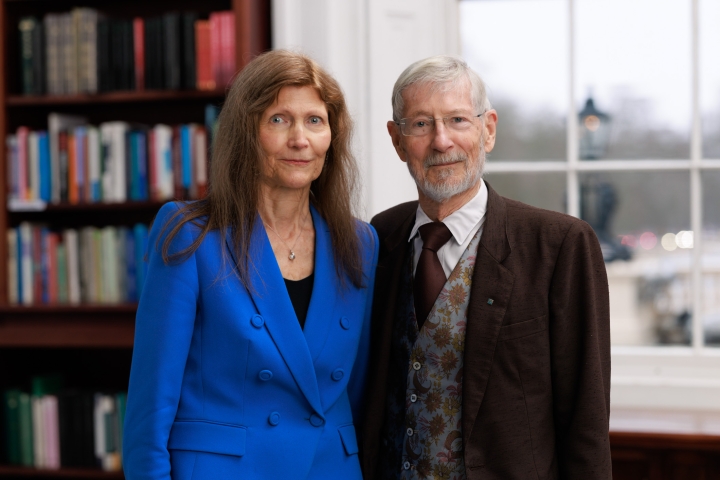
Cochlear Implant Pioneers and MED‑EL Founders Ingeborg and Erwin Hochmair Honoured with 2026 Queen Elizabeth Prize for Engineering

MED‑EL celebrates a historic milestone: its founders, Ingeborg and Erwin Hochmair, have been named, together with other outstanding personalities, as Laureates of the 2026 Queen Elizabeth Prize for Engineering—one of the world’s most prestigious honours for life‑changing technological innovation.

The 2026 Queen Elizabeth Prize for Engineering recognises the design and development of modern neural interfaces—technologies that restore lost human functions—and the visionary engineers behind them.

Ingeborg and Erwin Hochmair are honoured alongside Graeme Clark and Blake Wilson for their groundbreaking contributions to cochlear implants, a technology that converts sound into electrical signals to directly stimulate the auditory nerve, restoring hearing to hundreds of thousands of people worldwide over the past four decades.

Pioneering Cochlear Implants That Changed Hearing Care Forever
Beginning in 1975 at the Technical University of Vienna, Austria, Ingeborg and Erwin Hochmair launched pioneering cochlear implant research that led to the world’s first microelectronic cochlear implant in 1977, marking a turning point in hearing technology. Their work drove critical advances in signal processing, implant miniaturisation, and long‑term biocompatibility, laying the foundation for today’s advanced cochlear implants.

By uniting rigorous engineering with deep clinical insight, the Hochmairs not only transformed hearing care but also paved the way for the founding of MED‑EL. Their vision continues to shape the company’s mission to deliver lifelong hearing solutions for people of all ages. With recent advancements such as TICI (Totally Implantable Cochlear Implant), MED‑EL continues to advance neural interface engineering, delivering even more personalised and lifelike hearing experiences.

Engineering Guided by Compassion and Scientific Integrity
“This honour recognises not only a technological achievement, but a belief we have held from the very beginning—that engineering, guided by compassion and scientific integrity, can fundamentally change lives,” says Ingeborg Hochmair, Co‑founder and CEO of MED‑EL. “Cochlear implants were once considered impossible by many. Today, they demonstrate what can be achieved when engineers, clinicians, and users work together with a shared purpose.”

Erwin Hochmair, Co‑founder of MED‑EL, adds: “From the earliest experiments, our goal was to create a neural interface that could work in harmony with the human auditory system over a lifetime. This recognition by the Queen Elizabeth Prize for Engineering affirms the importance of long‑term thinking, scientific persistence, and engineering solutions that truly serve people.”

Together with Ingeborg and Erwin Hochmair, the 2026 Queen Elizabeth Prize for Engineering (QEPrize) has been awarded to Graeme Clark, Blake Wilson, John Donoghue, Alim Louis Benabid, Pierre Pollak, Jocelyne Bloch, and Grégoire Courtine for the design and development of modern neural interfaces that restore human function.

The Laureates will share the £500,000 prize and collectively represent a new era in neuroengineering and neuroprosthetics, alongside parallel breakthroughs in brain‑computer interfaces, deep brain stimulation, and electronic spinal stimulation. Together, these innovations demonstrate the extraordinary potential of engineering to restore lost functions, independence, and dignity.

On Tuesday, 3 February, the 2026 Laureates were formally announced by Lord Vallance, Chair of the Queen Elizabeth Prize for Engineering Foundation, at the Science Museum in London.

Shaping the Future of Hearing Technology
For MED‑EL, this award is also a tribute to all hearing implant users worldwide whose experiences continue to inspire innovation, as well as the global community of engineers, researchers, clinicians, and partners advancing hearing technology.

“This recognition strengthens our resolve to keep pushing boundaries,” Ingeborg Hochmair states. “Our mission has always been to overcome hearing loss as a barrier to communication and quality of life. At MED‑EL, we will continue to invest in research, accessibility, and technologies that help people participate fully in life, wherever they are.”

——–

About the Queen Elizabeth Prize for Engineering
Diverse, multifaceted, and continually evolving, engineering creates solutions to global challenges and improves billions of lives. Engineers have enabled us to work together across the planet, explore the smallest cells and the most distant stars, and navigate our way through the world.

Awarded annually, the Queen Elizabeth Prize for Engineering (QEPrize) champions bold, groundbreaking engineering innovation of global benefit to humanity. The prize celebrates engineering visionaries, inspiring young minds to consider engineering as a career and helping to solve the challenges of the future.

The Queen Elizabeth Prize for Engineering is open to:

Up to ten living individuals
Of any nationality
Who are personally responsible for a groundbreaking innovation in engineering of global benefit to humanity
Self‑nomination is not permitted.

The judges use the following criteria to select the winner or winners:

What groundbreaking innovation in engineering has been achieved?
In what way has this innovation been of global benefit to humanity?
Are there other individuals who may have played a pivotal role in this development?

Hammers Seeking Breathing Space While Fourth-Placed United Chase The Teams Above

London Stadium hosts West Ham United v Manchester United on Tuesday at 8.15pm with the stakes clear at both ends of the ambition scale. West Ham come into the night needing points to keep their safety push moving, while United arrive in fourth place and chasing momentum that could pull them closer to the top two. The mood is sharpened by recent form: confidence has begun to return for the home side, and the visitors are travelling with a clear sense of direction after a strong run of league results.

A 2–0 win away at Burnley on 7 February carried real significance in a bottom-three clash. Crysencio Summerville struck again—his fifth goal in five games—before Taty Castellanos added his first league goal to seal a result that boosted belief and offered a rare touch of control in a season that has often felt fragile. The clean sheet also mattered, suggesting the defensive work is tightening at the right time, and it gives the crowd a reason to lean in rather than brace for the worst.

Manchester United’s most recent outing also ended 2–0, beating Tottenham at Old Trafford to make it four wins from four in the Premier League since Michael Carrick’s return as head coach. Bryan Mbeumo opened the scoring, Bruno Fernandes added the second, and the performance had the look of a side playing with growing confidence and clarity. With fourth place already secured heading into the round, the challenge now is sustaining that level away from home in a fixture that can quickly become emotional and scrappy.

Selection and availability will be watched closely, particularly for West Ham, where key individuals can change the tone of a match. Lucas Paquetá has recently been managed through a fitness issue and remains a significant variable because of how much creativity and control he can provide when fit. Lukasz Fabianski has also been dealing with a problem, and any continued absence in goalkeeping options can influence how aggressively the back line holds its position. For United, the build-up has been more about maintaining rhythm and continuity rather than crisis management, but the intensity of the schedule means late checks and rotation decisions are always part of the picture—especially with the visitors aiming to keep the same sharpness they showed against Spurs.

Form players add a clear edge to the contest. Summerville arrives as the headline threat for West Ham, bringing confidence, timing and the ability to turn one clean sight of goal into a decisive moment. Bowen remains the most reliable outlet when the game stretches, offering pace and direct running that can punish any over-commitment. United have their own drivers of momentum: Fernandes is central to tempo and chance creation, while Mbeumo’s finishing and movement have increasingly made him a difference-maker in tight games. If West Ham are forced to defend deep for long spells, the quality of United’s final ball—and their patience in recycling pressure—could be decisive.

Tactically, this looks like a match where the first 20 minutes set the emotional temperature. West Ham will want to harness home intensity, stay compact without inviting constant waves, and make sure their attacking moments carry real threat rather than hopeful breaks. United are likely to have more of the ball, but the key is turning possession into clear chances rather than letting the game drift into a stop-start battle of set-pieces and second balls—exactly the type of contest West Ham can drag teams into when confidence is up.

The game state could decide everything. An early West Ham goal would lift the stadium and force United into riskier positions, potentially opening space for counters. A United opener would flip the script, making it a test of whether West Ham can chase without losing shape, and whether United can manage the match with the same calm they showed at Old Trafford. With one side climbing toward safety and the other pushing for the Champions League places, it has all the ingredients of a midweek fixture where nerve, discipline and one or two defining moments matter more than dominance.

Skip to content Skip to content