[directorist_add_listing]

Act now. 864,000 sole traders and landlords face new tax rules in two months

Sole traders and landlords earning more than £50,000 from self-employment and property are being urged to act now with two months left to prepare for Making Tax Digital (MTD) for Income Tax.

From 6 April 2026, those eligible will need to use recognised software to keep digital records and send HM Revenue and Customs (HMRC) light-touch quarterly updates of their income and expenses. These are not extra tax returns.

HMRC is providing a range of free support to help people prepare, including online guidance, webinars and videos. Those who genuinely cannot use digital tools can apply for an exemption. Further information and guidance are available on GOV.UK

Free software options are available and once income and expenses are recorded, the software generates a simple summary to send to HMRC.

At the end of a tax year, those within MTD for Income Tax will still need to file a tax return by the following 31 January – but the software will already hold the information from the quarterly updates, meaning no last-minute hunt for records or receipts.

Craig Ogilvie, HMRC’s Director of Making Tax Digital, said:

“With two months to go until MTD for Income Tax launches, now is the time to act. A range of software is available and the system is straightforward and helps reduce errors. Thousands of volunteers have already used it successfully.

“This will make it easier for sole traders and landlords to stay on top of their tax affairs and help ensure everyone pays the right amount of tax.

“Spreading your tax admin throughout the year means avoiding that last minute scramble to complete a tax return every January. Go to GOV.UK and start preparing today.”

Thousands of sole traders and landlords have already signed up for MTD for Income Tax, with more than 12,000 quarterly updates successfully submitted through a voluntary testing programme.

Those joining MTD in April 2026 will still file their tax return for the 2025 to 2026 tax year in the usual way by 31 January 2027, as this covers the period before MTD begins. The first MTD tax return, covering the 2026 to 2027 tax year, will be due by 31 January 2028.

To support the transition, the government has announced that customers joining MTD for Income Tax in April 2026 will not receive penalty points for late quarterly updates, for the first 12 months.

Under the new system, penalty points will be given for each late submission, with a £200 penalty only applied once four points are reached. This means occasional slip-ups won’t result in immediate fines.

Arsenal 1-0 Chelsea: Havertz Breaks Chelsea Hearts At The Death As Gunners Book Wembley Return

Arsenal sealed their place in the Carabao Cup final last night with a 1–0 win over Chelsea at the Emirates, completing a 4–2 aggregate victory in a semi-final second leg that was tight, tense and short on clear chances until the very last seconds. For long spells it felt like a chess match—Arsenal protecting their advantage with control and structure, Chelsea trying to find the one goal that would swing the tie—before a late breakaway ended it in brutally clinical fashion, Kai Havertz rounding Robert Sánchez in stoppage time to score against his former club and send the home crowd into celebration.

The early pattern was exactly what you’d expect from a team defending an aggregate lead. Arsenal kept their distances compact, moved the ball patiently when they had it, and looked more concerned with denying transitions than committing numbers forward. Chelsea had plenty of possession in harmless areas but struggled to turn that into genuine danger, with Arsenal’s midfield doing a smart job of blocking the central lanes and forcing play wide. Chances were at a premium: there was a save apiece in the first hour and most efforts were either snatched at from distance or smothered in crowded boxes.

As the clock ticked on, Chelsea began to take bigger risks. Liam Rosenior reshaped his side in search of urgency, throwing on Cole Palmer and Estêvão and later Alejandro Garnacho—the same player who caused Arsenal problems in the first leg—hoping for a spark that could turn pressure into a decisive moment. The visitors did manage to raise the tempo and pin Arsenal back deeper, but the final pass kept letting them down, and whenever a cross did arrive, Arsenal’s centre-backs dealt with it calmly. Chelsea’s best spell came late, when they threw bodies forward and tried to overload the wide areas, yet it still didn’t translate into the kind of clear chance that truly tests a keeper.

That all-or-nothing approach eventually created the space Arsenal were waiting for. Deep into stoppage time, Declan Rice surged forward on the counter as Chelsea committed men into the box, and Arsenal’s break had a ruthless simplicity to it. Havertz took the pass in stride, kept his nerve, and finished the tie with a composed touch after rounding Sánchez, sealing the night and putting Arsenal on the road to Wembley for their first League Cup final appearance since 2018.

After the match, Mikel Arteta framed it as a win built on maturity across two legs, praising his side’s discipline and their understanding of when to accelerate and when to shut the game down. He also spoke about the lift a final can give a squad in a season packed with matches, describing it as the kind of momentum that can feed a group mentally as well as physically. Arteta reserved special words for Havertz, acknowledging the striker’s stop-start season and calling the goal a “special moment” that he hopes will kickstart a strong run.

Rosenior, meanwhile, focused on the progress he believes Chelsea are making despite the elimination. He pointed to a more controlled, organised performance than the chaotic first leg and accepted that Arsenal’s winner arrived when Chelsea were effectively “throwing everything” at the game. He insisted the setback can’t derail Chelsea’s longer-term aims, highlighting elements of the display he liked, even as he admitted they lacked the cutting edge needed to truly threaten Arsenal’s lead. He also noted a couple of late fitness issues in his squad, with key players missing out after picking up minor knocks.

In the end, it was a semi-final decided by fine margins and one ruthless transition. Chelsea had to chase, Arsenal made them work for every inch, and when the game finally opened up in the final moments, the decisive touch came from the one player whose storyline felt written for the occasion.

Graduate from University of Surrey’s world-beating Tonmeister course wins fourth Grammy for engineering on Kendrick Lemar’s hit single, luther

A University of Surrey graduate who engineered and mixed Kendrick Lamar’s surprise album GNX has won his fourth Grammy Award – taking Record of the Year for the hit single “luther”. 

Oli Jacobs, who graduated from Surrey’s Music and Sound Recording (Tonmeister) degree in 2014, won the prestigious award at this year’s Grammy Awards (1 February 2026) for his work as engineer and mixer on Kendrick Lamar and SZA’s “luther”. The track spent 13 consecutive weeks at number one on the Billboard Hot 100 and surpassed one billion Spotify streams in just seven months. 

Oli has previously won Best Engineered Album, Non-Classical in 2025 for Peter Gabriel’s “i/o” and two Grammys in 2023 for Harry Styles’ “Harry’s House” – Best Engineered Album, and Non-Classical Album of the Year. 

At this year’s ceremony, Jacobs was also nominated for Album of the Year twice – for Sabrina Carpenter’s “Man’s Best Friend” and Kendrick Lamar’s “GNX” – bringing his total Grammy nominations to 11. 

Now based in Los Angeles, Jacobs has become one of the most sought-after engineers in the music industry, working with artists including Taylor Swift, Doja Cat, Sabrina Carpenter, The 1975 and Sam Fender.  

Dr Russell Mason, Tonmeister Programme Director at the University of Surrey, said: 

“Oli’s fourth Grammy win is a testament to his exceptional talent. To win a Grammy for the second consecutive year puts him among an elite group in Grammy history, and it’s particularly exciting to see him working across such a diverse range of artists, from Kendrick Lamar to Peter Gabriel to Sabrina Carpenter. 

His career has real momentum now, sharp, focused and moving at pace, much like the work recognised on Kendrick Lamar’s GNX album. His success also reflects the distinctive approach of the Tonmeister degree. The course is unique e in the UK, and that difference matters. It shows what’s possible when you combine technical excellence with genuine musical artistry, which has been the foundation of our course since 1970.” 

Surrey’s Music and Sound Recording degree blends rigorous musical study with advanced investigation of audio engineering and mastery of sound recording. The course has produced numerous Grammy, Oscar, BAFTA and Emmy winners since its first cohort graduated in 1974.  

The Institute of Sound Recording within Music and Media at Surrey boasts world-class performance and recording facilities and equipment including three studios, 11 practice rooms, and 5 edit suites. The Immersive Mix Studio has been launched in 2026, featuring a Mac Pro running Pro Tools, Logic, and Reaper, an Avid S6 console, and a 9.1.4 immersive audio loudspeaker setup using ATC loudspeakers.  

Dr Mason comments:  

“We’re also immensely proud that Oli came back to Surrey in September to talk to our current students, taking time out from a mixing session in London. The students were inspired to hear from one of our graduates at the peak of his career.” 

Women’s running scheme brightens up winter evenings

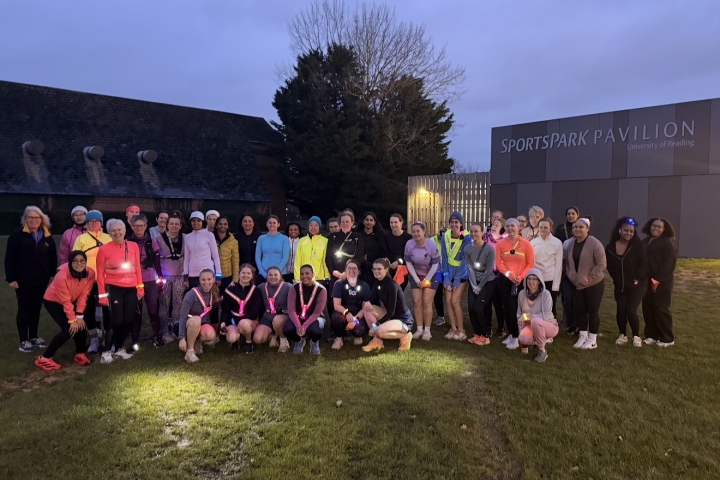
A free weekly running group for women launched at the University of Reading last week, helping to mark the University’s centenary celebrations.

Let’s Lift The Curfew, supported with a University of Reading centenary grant, aims to build confidence, fitness and community by bringing together women of all abilities for supportive group runs on campus.

The initiative launched on Thursday 29 January, with sessions taking place every Thursday evening at 5pm until 26 March.

Meeting outside the SportsPark Pavilion on the Whiteknights campus, participants follow a 3km route led by qualified run leaders, with beginner, intermediate and advanced pace groups available.

As the University marks 100 years since receiving its Royal Charter, the Centenary Grant scheme is supporting projects that strengthen connections between the University and its local community. Let’s
Lift The Curfew, part of Sport England’s This Girl Can campaign, welcomes students, staff and women from across Reading to take part together.

David Steers, sport and active wellbeing co-ordinator at the University of Reading SportsPark, said: “There is something special about running together in a group on a winter evening. The conversation, the encouragement, the shared sense of achievement are great motivators.

“As we mark 100 years as a University, built by our local community to understand and study the environment and society, we wanted to create something that brings our student, staff and the local community together in our beautiful environment. We hope women across Reading will join us to see how winter running can be sociable, enjoyable and accessible.”

Sophie Hunt, a University of Reading student who took part in the first session, said: “Running in the dark felt less scary when everyone was together. It gave me a real boost after a long day. I wasn’t sure what to expect but the atmosphere was really welcoming and supportive.”

Sessions are free. Participants are advised to wear hi-vis clothing and bring a headtorch or running light.

Sidcup shop closed for selling illicit tobacco

A shop in Sidcup has been ordered to close for three months after being caught selling illicit cigarettes and tobacco.

Bromley Magistrates’ Court granted a closure order on Thursday 29 January against Sidcup Mini Market, at 9 St John’s Parade, following an investigation by the London Borough of Bexley’s Trading Standards Team, supported by Police Safer Neighbourhood officers.

The order, issued under the Anti-Social Behaviour, Crime and Policing Act 2014, will keep the premises shut until 11.59pm on 28 April 2026.

Trading Standards officers carried out a series of test purchases between October 2025 and January 2026, alongside a major enforcement visit on 27 January. In total, officers seized 768 packets of cigarettes and 5.1kg of hand-rolling tobacco.

Councillor Richard Diment said the action sent a clear message.
“Securing this closure order demonstrates our continued commitment to keeping our communities safe and makes it clear the sale of illicit tobacco and cigarettes will not be tolerated in our borough,” he said.

“We will continue to work closely with our partners, including the Police Safer Neighbourhood Teams, to protect residents and support a fair trading environment.”

Bexley Council said the case highlights ongoing efforts to tackle the illegal sale of age-restricted and counterfeit goods across the borough.

Crystal Palace Sign Jørgen Strand Larsen

Crystal Palace are delighted to announce the signing of Jørgen Strand Larsen from Wolverhampton Wanderers in a club-record deal.

The 25-year-old Norway international has signed a four-and-a-half year contract. He will wear the No. 22 shirt for the Eagles and becomes our third arrival of the January transfer window.

Strand Larsen has spent the last year-and-a-half with Wolves, following two seasons at Celta Vigo. Adapting to English football with ease, he scored 14 Premier League goals in 35 appearances during his first season at Molineux in 2024/25.

Strand Larsen made his professional debut for Norwegian club Sarpsborg back in 2017, representing them in the UEFA Europa League, before moving on to Dutch side Groningen in September 2020.

The powerful forward made his senior debut for Norway in November 2020 and has since become a regular at international level, winning 24 caps and scoring four goals.

Chairman Steve Parish said: “We’re delighted that Jørgen has chosen to continue his impressive journey with us and look forward to seeing him in action at Selhurst Park.

“I’m sure he will prove himself a valuable asset for years to come.”

Strand Larsen said: “I’m really excited to come to Crystal Palace. It’s been something I’ve wanted to do for a long time now.

“I’m here to bring energy and goals, and to try to do my best for the club.”

Everyone at Palace would like to welcome Jørgen to South London and wish him the very best for his career in red and blue.

Photo: Micah Crook/KontentHaus

Evann Guessand Joins Crystal Palace On Loan

Crystal Palace are delighted to announce the signing of Evann Guessand on loan from Aston Villa.

The 24-year-old joins Palace on loan until the end of the season, with the club having the option to make the transfer permanent. He will wear the No. 29 shirt.

Skilful forward Guessand – born on the French island of Corsica – is a product of the Nice academy. After impressive loan spells at Lausanne-Sport and Nantes, he excelled in 2024/25, scoring 12 goals as Nice finished fourth in Ligue 1 and winning the club’s Player of the Season award.

Those performances led to a summer switch to Villa, for whom he made his full debut against Palace earlier this season.

Guessand is also a senior Ivory Coast international and has won 19 caps for his country, scoring three goals, including one last month at the Africa Cup of Nations.

Chairman Steve Parish said: “Evann is an exciting talent who we are confident will flourish on the South London stage.

“His arrival further bolsters our forward options, as we look to push on in the Premier League and in Europe in the second half of the season.”

Guessand said: “I’m really, really excited. I was waiting for this moment for a very long time, and I’m excited to play with my new teammates.

“I think, with the quality we have, we can achieve something.”

Everyone at Palace would like to welcome Evann to South London and wish him the very best for his career in red and blue.

Emirates Night: Arsenal Carry A One-Goal Lead Into A High-Voltage Semi-Final Second Leg

A place at Wembley is on the line when Arsenal host Chelsea at the Emirates Stadium for the Carabao Cup semi-final second leg, with the tie delicately poised after a breathless first meeting that delivered five goals and plenty of needle. Arsenal travel into the return fixture holding a 3–2 advantage on aggregate, but the first leg was a reminder that nothing comes easily when these two meet—especially with a final within touching distance.

That opening chapter at Stamford Bridge set the tone for what could be another chaotic night. Arsenal raced into an early lead through Ben White, before extending their control after the break with goals from Viktor Gyökeres and Martín Zubimendi. Chelsea looked down and out at 3–1, only for Alejandro Garnacho to flip the mood with two goals as a substitute and keep the tie alive for the return. The margins were obvious: Arsenal’s ability to strike first and manage long spells, Chelsea’s ability to inject pace and chaos late on. With only one goal separating them, the second leg is unlikely to be a slow burn.

Recent form adds an intriguing contrast in confidence and context. Arsenal’s last outing in any competition was a commanding 4–0 Premier League win over Leeds, a result that reinforced their capacity to dominate games at home and sustain pressure without losing defensive shape. Chelsea arrive with their own surge of belief after a dramatic 3–2 Premier League comeback win over West Ham, turning a two-goal deficit at half-time into a victory that underlined the impact of their bench and the resilience that has quickly become a theme under Liam Rosenior. Those two results point to a second leg that could hinge on rhythm: Arsenal will want control and predictability; Chelsea have shown they can thrive when the game breaks open and turns emotional.

Selection, as ever in late-winter cup ties, is where the story can shift before the first whistle. Arsenal have been dealt a significant blow with Mikel Merino ruled out after suffering a fractured foot that requires surgery, forcing a rethink in midfield options and possibly altering how aggressively they press and protect transitions. There is also a major late decision around Bukayo Saka, who suffered a hip issue in the warm-up before the Leeds match and is being assessed. Even if the problem is not expected to be long-term, any doubt over his availability matters in a tie where one explosive moment can decide everything. Arsenal do have alternatives, and the way they used width and direct running against Leeds offered encouragement, but removing a first-choice threat always changes the defensive questions the opponent has to answer.

Chelsea’s own availability picture carries a few key notes. Cole Palmer is being monitored after recent fitness management, and his presence would significantly raise their ceiling in possession and in the final pass—particularly against an Arsenal side likely to sit on an aggregate lead at key points of the night. There have also been concerns around Jamie Gittens, while goalkeeper Filip Jörgensen has been a doubt for selection. Another subplot is the availability of Estêvão Willian, who has been on compassionate leave, and any decision there will be handled carefully. In a tie that may come down to impact off the bench again, each absence narrows the options to change the feel of the game.

The individual form lines make it easy to see where the decisive actions might come from. Arsenal’s first-leg advantage was built not just on fluent attacking spells, but on timing—an early goal, a strong start to the second half, and the capacity to score in different ways. Their set-piece threat remains a constant, and the players who attack deliveries and second balls will again be crucial if Chelsea’s defending wobbles under pressure. For Chelsea, the late surge at Stamford Bridge and the comeback against West Ham both pointed to a side that can finish games strongly, especially when Rosenior’s substitutions bring a change of tempo. Garnacho’s first-leg double is the most obvious warning sign, but the wider lesson is that Chelsea can generate chaos in short, decisive bursts—exactly the kind of thing that can turn a 3–2 deficit into an aggregate swing in a matter of minutes.

Tactically, the game state is likely to do a lot of the talking. Arsenal will know that an early goal effectively forces Chelsea to score at least twice, and that prospect could open the tie into the spaces the hosts are often ruthless in exploiting at the Emirates. At the same time, there’s a balance to strike: protect the lead too deeply and Chelsea’s momentum, delivery into the box, and willingness to commit bodies forward can turn the evening into wave after wave. Chelsea’s ideal scenario is equally clear—score first, and the tie becomes a single goal game the other way, with anxiety creeping into the home crowd and the match tilting toward the kind of frantic finish they’ve already shown they can handle.

The psychological edge is fascinating because both sides have already had “their moment” in this tie. Arsenal proved they can hurt Chelsea with structured pressure and clinical finishing, while Chelsea proved they can punch back late and make the tie feel alive even when the performance hasn’t been perfect. That dynamic usually produces a second leg with sharp swings: a tense opening, a spell where the aggregate score dictates caution, then a phase—often after the hour—when the game becomes about bravery, risk, and who blinks first.

With Wembley the prize and a slender advantage in hand, Arsenal’s job is straightforward in theory: start fast, control territory, and avoid giving Chelsea the kind of transitional chances that feed belief. For the visitors, the task is to bring that second-half surge forward by 30 minutes—be more assertive earlier, take the first big moment, and keep the tie in a place where pressure is shared rather than shouldered. One goal can change the script, and with recent evidence that both teams can score quickly in clusters, the second leg is set up as another night where momentum—not just quality—may decide who books a place in the final.

Dynamic digital product passports for short-shelf-life food and drink could cut waste and improve safety

Dynamic digital product passports – real-time, intelligent digital records that capture the true condition of perishable goods such as food and drink throughout their lifecycle – could dramatically cut waste and improve safety, thanks to a new framework jointly developed by researchers at the University of Surrey and King’s College London.

Digital Product Passports (DPPs) will become mandatory in the EU from 2027, but current approaches are static and designed for long-shelf-life products like electronics. While they record fixed information such as design, materials and recycling instructions, they cannot reflect rapid changes in freshness, safety or quality.

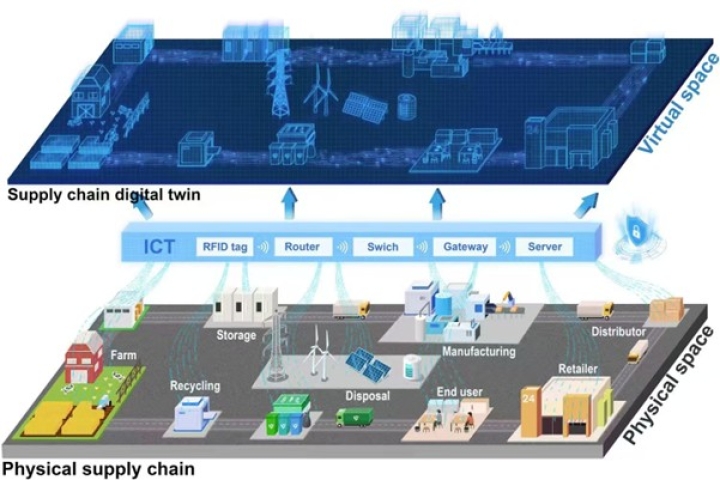
In a perspective article published in Nature Reviews Clean Technology, researchers have introduced the world’s first comprehensive framework for dynamic digital product passports (D-DPPs), showing how real-time sensing, supply-chain digital twins, physics-informed machine learning and secure data infrastructures can work together to track lifecycle changes in short-shelf-life items.

D-DPPs work by continually updating as products move through farms, factories, transport, storage and retail environments. They could also support earlier interventions to prevent spoilage, reduce unnecessary waste and strengthen transparency across food and drink supply chains.

Dr Lei Xing, Lecturer in Digital Chemical Engineering at the University of Surrey and lead author, said:

“Perishable products don’t behave in fixed ways – they change hour by hour as they move through real supply chains. Static digital passports simply cannot keep up. We’ve demonstrated how integrating digital twins, real-time sensing and AI can evolve digital product passports from static compliance records into intelligent decision-support tools that enhance safety, cut waste and enable more circular supply chains.

“Dynamic digital product passports could also help identify where quality begins to decline and why. That knowledge is invaluable for improving stock management and reducing the significant amount of food lost before it ever reaches consumers.”

Dr Miao Guo, Senior Lecturer in Engineering at King’s College London and co-creator of the D-DPP concept, said:

“To make our vision work at scale, digital product passports need data infrastructures that can cope with intermittent connectivity and rapidly changing conditions. By combining interdisciplinary expertise, our perspective article shows how next-generation networks and secure data architectures can keep product information trustworthy and up to date as short-shelf-life products move through complex, real-world supply chains.”

The research also highlights the role of secure, decentralised data systems – such as blockchain-supported networks and smart-contract routines – in keeping passport information trustworthy across fragmented supply chains. The team suggests supermarkets could act as living labs to test D-DPPs under real conditions, providing a practical way to evaluate how the technology supports freshness monitoring, stock rotation and day-to-day decision-making.

The framework set out a new pathway for digital sustainability and more circular use of resources across the food and drink sector. It also shows how collaboration across engineering, Artificial Intelligence (AI) and Information and Communication Technology (ICT) is essential for building the safer, smarter and more sustainable supply chains of the future.

Skip to content Skip to content