[directorist_add_listing]

DPD UK confirms Justin Pegg as new CEO as Elaine Kerr becomes Chairwoman

Parcel delivery firm DPD has confirmed the appointment of Justin Pegg as CEO of DPD UK, with former CEO Elaine Kerr becoming Chairwoman.

As Chairwoman, Elaine will continue to help guide and shape DPD UK’s overall strategic direction, working closely with the UK’s Exec Board.

Currently COO, Justin Pegg has over 35 years of service at DPD and has been a member of the Senior Leadership Team since 2016 and an Executive Director since 2020. In his new role, Justin will be CEO of DPD UK, and Head of cluster UK/Ireland.

The new organisation will be effective from Monday 2 February.

Yves Delmas, Chief Executive Officer, Geopost, commented, “Justin is a proven leader with a strong record of leading teams, driving performance, and delivering sustainable growth. His unique level of knowledge and understanding of our business will ensure DPD UK continues to lead the market and achieve ever higher levels of success.

“We wish Justin the very best of luck as CEO and offer him our full support as we move forward.”

“I would like to warmly thank Elaine for her outstanding leadership and dedication over the past four and a half years. Under her guidance, the business has achieved remarkable success and followed a strong, positive trajectory. Elaine leaves a lasting legacy, and we wish her the very best in her new role.”

Major IPCC workshops bring diverse climate voices to Reading

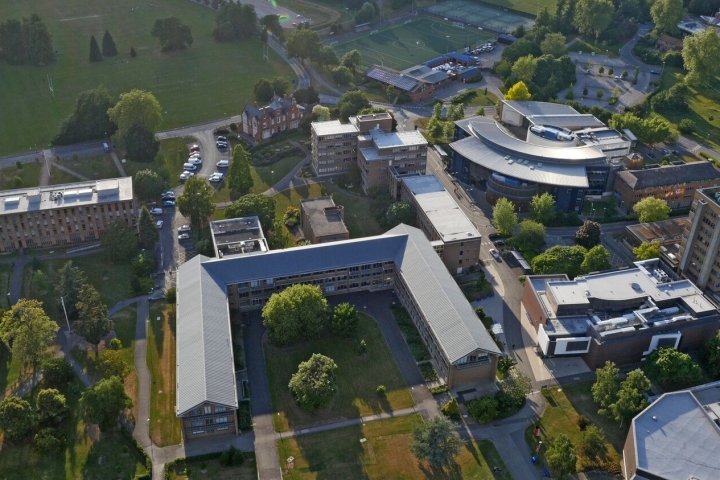
The Intergovernmental Panel on Climate Change (IPCC) will host two major international workshops at the University of Reading in February 2026.

The closed workshops, held at the University of Reading in collaboration with the Department for Energy Security and Net Zero and the Met Office, will run from 10 to 12 February and will help to make IPCC reports more inclusive and robust.

The first workshop will examine how to better include diverse knowledge systems in IPCC work. This means exploring how indigenous, local, and practitioner knowledge can work alongside scientific research to create more complete climate assessments.

The second workshop will focus on improving assessment methods. This includes exploring how artificial intelligence and machine learning can help climate scientists review huge amounts of research more efficiently, as well as better techniques for evaluating climate action and policies.

The workshops will produce recommendations for consideration by authors working on the entire set of IPCC reports planned for the seventh assessment cycle.

Prof Sir Jim Skea, Chair of the IPCC said: “The outcomes and recommendations of the two scientific workshops will provide critical guidance for the IPCC leadership and authors working on the next IPCC assessment. The guidance will help them assess the ever-growing body of climate literature and engage with wider forms of knowledge, including that by Indigenous Peoples and local communities. The University of Reading has been a generous host and a genuine partner in this effort.”

Professor Robert Van de Noort, Vice-Chancellor of the University of Reading, said: “The University of Reading has one of the largest clusters of climate scientists in the world and a global reputation for excellence in climate research. Hosting these IPCC workshops reflects our expertise and our commitment to advancing climate knowledge. We’re bringing together diverse voices from across the planet to strengthen how we understand and respond to the climate challenge. This collaboration is exactly what’s needed to make real progress.”

Minister for Climate, Katie White, said:“These workshops bring together world leading scientists to strengthen the IPCC’s assessments – the foundation for climate action over the next decade.

“The University of Reading, the Met Office and the UK Government are proud to host this work, demonstrating the UK’s scientific leadership in action as we tackle the climate challenge head-on.”

Professor Rowan Sutton, Director of Met Office Hadley Centre and Professor of Climate Science, University of Reading said: “The Met Office is proud to be supporting Reading University to bring together these important workshops on indigenous knowledge and artificial intelligence. Effective climate action must be based on robust and up to date scientific evidence. The IPCC plays the central role in ensuring this evidence is gathered, assessed and made available to policy makers around the world. The Met Office is proud to have six lead authors in the current assessment cycle, highlighting our role as a global leader in climate science and our commitment to the IPCC process.”

Pre-workshop events

On Monday 9 February, the University of Reading will host three events offering a rare opportunity to understand how the world’s leading climate science body works.

An afternoon introduction (2:00pm – 3:00pm) will inform invited guests, including many early career researchers, about pathways to getting involved in the IPCC. Business owners and decision-makers invited to a subsequent session, running from 4:00pm-5:30pm, will be informed how they can make use of IPCC reports and findings.

The day concludes with a high-level public lecture and panel discussion (6:30-8:00pm) led by IPCC Chair Professor Sir Jim Skea, which will explain what the IPCC does and how it functions. The session will also highlight the key scientific questions in the current report cycle and the objectives of the two workshops.

Members of the public can register to attend the evening lecture in person or online: The Science Behind the Climate Headlines: An Introduction to the Intergovernmental Panel on Climate Change

Support offered for local firms to win work on the Lower Thames Crossing

Businesses across Kent and Essex are being given a helping hand to win work on one of Britain’s most ambitious infrastructure projects, as six Lower Thames Crossing Supply Chain Roadshows get underway.

National Highways is starting work on the Lower Thames Crossing this year, and with at least £1 in every £3 from the construction budget due to be spent with small and medium sized businesses, there are lots of opportunities for local firms on the horizon.

Sixty local firms attended the first event at South Essex College in Grays yesterday (Thursday 29 January), hosted by Jen Craft MP for Thurrock. The roadshows will help local businesses understand the project’s low-carbon requirements, as well as help them easily locate and bid for work.

The project is also calling for more local firms to sign up to its Supply Chain Directory, where they can keep in touch with the latest news and updates. Around 1500 SMEs have registered so far.

Jen Craft, Member of Parliament for Thurrock, said: “I’ve been very clear that I want local people to benefit from this national infrastructure project.

“That’s why I’m pleased Thurrock’s businesses are being given the training and information they need to secure competitive construction contacts, supporting the creation of well-paid jobs.

“I’ll keep working with the Lower Thames Crossing team to ensure local employers are the first to benefit from the support and investment this project will bring.”

Natalie Bonnick, Head of Supply Chain Development, Skills, Education & Employment for the Lower Thames Crossing said: “With work on the Lower Thames Crossing starting this year, there are exciting opportunities for local businesses to get involved and win work on one of Britian’s most important economic projects. That could feel daunting, so these roadshows will support firms and guide them through the process to give them the best possible chance of success.”

As enabling work on the new road and tunnel ramps up, a huge variety of materials and services will be needed, ranging from earthworks specialists to caterers and machinery hire to waste management.
Local jobseekers will benefit too, as the Lower Thames Crossing plans to recruit almost half of workers from within 20 miles of the scheme. The first of the project’s Skills Hubs opened last year in Kent, giving local people the chance to upskill in construction free of charge. The topics of the training courses are matched to the project’s immediate needs and upcoming vacancies, and those completing the courses are guaranteed interviews with local firms. An additional Skills Hub in Essex is due to open in 2027.

The Lower Thames Crossing is a new road and tunnel that will tackle congestion on the Dartford Crossing and drive economic growth by creating a reliable new link between the ports of the south-east, the Midlands, and the north.

The project received planning permission in March 2025. In the Budget last year the Chancellor committed the final part of public funding that will enable the private sector to take forward construction and long-term operation of the new road.

Spurs 2-2 Man City: Solanke’s Scorpion Kick Rescues Spurs As Man City’s Two-goal Lead Vanishes

City were cruising at 2-0 up at the break thanks to goals from Rayan Cherki and Antoine Semenyo, but the second half belonged to Dominic Solanke, who dragged Spurs level with a brace capped by an outrageous scorpion-kick finish that lit up the Tottenham Hotspur Stadium.

The opening period was almost all City. Spurs looked disjointed and anxious in possession, struggling to play through City’s press and offering little threat beyond hopeful balls into the channels. City, by contrast, were fluid and patient, constantly finding gaps between Spurs’ midfield and defensive lines. The breakthrough arrived on 11 minutes when Cherki picked up the ball in a dangerous pocket, shifted it out of his feet and drilled a low finish beyond the goalkeeper to give City an early lead. With Spurs still wobbling, City had chances to double the advantage before the interval—most notably when Erling Haaland went close from a promising position—while Spurs were reduced to isolated counters that fizzled out before they could properly test City’s back line.

Just before half-time, City landed the second goal their control deserved. A crisp move through midfield opened Spurs up again, and Semenyo finished clinically to make it 2-0. The home crowd’s mood turned sour as Spurs headed down the tunnel to a chorus of boos, and it felt like a long afternoon was on the way.

Thomas Frank changed the picture after the break, adjusting Spurs’ shape and injecting fresh energy from the bench. Spurs began pressing higher, playing with more urgency, and crucially started winning second balls that City had been collecting comfortably in the first half. That shift quickly led to the first big flashpoint of the comeback. On 53 minutes, Solanke forced his way onto a loose ball in the box and bundled it home, but City were furious, convinced there had been a foul in the build-up. The goal stood, and it altered the emotional temperature of the match immediately—City looked rattled, Spurs suddenly believed, and the stadium woke up.

From that moment, City’s control evaporated. Their passing became less clean, Spurs’ runners began arriving in the box in numbers, and the game opened into end-to-end transitions rather than the measured pattern City wanted. Spurs’ equaliser on 70 minutes was the moment everyone will remember: a low delivery flashed across goal, Solanke improvised brilliantly, and with his back to goal he flicked a scorpion-style finish into the net. It was a piece of pure instinct and technique—an equaliser that belonged on a highlights reel regardless of the final result.

Both sides had time to win it. City tried to regain composure and push for a late winner, while Spurs—buoyed by the comeback—looked dangerous whenever they broke forward with pace. But neither could find the final decisive touch, and the match ended with City’s players looking deflated and Spurs’ fans applauding a response that had looked unlikely at half-time.

After the game, Pep Guardiola pointed to the turning point being the first Spurs goal and the emotional swing it created, suggesting City lost their grip on the contest once momentum shifted and the crowd got involved. He still sounded determined that the title chase isn’t finished, but admitted his side must be far more consistent in managing games they have under control. Frank, meanwhile, praised his players’ character and spoke about the importance of unity between the team and supporters, acknowledging the frustration in the first half but highlighting that the second-half response showed what Spurs can be when they play with belief and intensity.

In the end, City will see it as two points thrown away after a dominant first half, while Spurs will treat it as a potential turning point—an afternoon where they looked beaten, then found a way back, led by Solanke’s opportunism, athleticism, and one moment of outrageous invention.

Man Utd 3-2 Fulham: Sesko’s 94th-Minute Dagger Saves United After Fulham’s Kevin Sparks A Late Old Trafford Storm

Manchester United’s revival under Michael Carrick keeps finding new ways to announce itself. This time it was the most dramatic kind: a two-goal lead, a full-blown wobble, a Fulham equaliser that briefly turned Old Trafford into a stunned theatre of disbelief, and then one last, sharp slice of quality from Bruno Fernandes that allowed Benjamin Sesko to write the ending.

United won 3-2, but the scoreline only tells you who got the points, not who held the pen for most of the second half. Fulham did. They pushed, probed, and played with the calm of a side that believes its patterns will eventually punch through. When they finally did, it came in a late double that had Carrick’s men wobbling on the ropes, only for Sesko to land the final blow in stoppage time.

For Carrick, the bigger story is that the wins are no longer arriving by accident. Since returning to the dugout, United’s football has looked more purposeful, less frantic. There’s a clearer idea of where the ball should go, how quickly it should travel, and when to be brave. Even when Fulham began to dominate possession, United still carried that Carrick hallmark: a willingness to suffer without completely losing their shape, and then explode forward in moments rather than meander.

The opening half was set by an early flashpoint and an early header. United started with energy, pressing in short, sharp bursts and trying to find Matheus Cunha between Fulham’s midfield and defence. When Cunha went down under pressure from Jorge Cuenca, the referee initially pointed to the spot, only for VAR to intervene and reshape the moment. United didn’t get their penalty, but they did get a free-kick in a prime crossing area, and Fernandes delivered with the kind of dead-ball quality that makes chaos feel like choreography.

Casemiro, timing his run perfectly, powered a header past Bernd Leno to give United the lead. It was a goal that felt very Carrick-era in its practicality: win territory, win a set piece, punish the opponent. Fulham, though, did not retreat into panic. They kept the ball well, moved it with patience, and looked most dangerous when they drew United out and then switched play quickly toward the wide areas.

United’s best moments in open play came when they broke lines with one-touch combinations and quick forward passes. Amad threatened from the edge of the box, Bryan Mbeumo’s runs kept Fulham’s back line honest, and Fernandes drifted into pockets to turn and play forward. Still, the first half ended with the sense that Fulham were growing into the contest, enjoying more of the ball and beginning to squeeze United’s build-up.

United struck again early in the second half, and it looked, for a while, like the game had tilted firmly their way. Cunha doubled the lead with a thunderous finish, the kind that doesn’t ask permission. It was a goal built on timing and bravery in midfield, with Casemiro’s involvement again central as United found a direct route into the right channel before Cunha hammered the ball into the roof of the net.

At 2-0, the afternoon should have been about game management. Instead, it became about survival.

Fulham’s response was persistent rather than frantic. They pushed higher, rotated their midfield and wide players to create better angles, and began to force United deeper. A key moment came when Fulham thought they had pulled one back, only for VAR to rule it out for offside after a lengthy check. It didn’t discourage them. If anything, it sharpened their intent.

As the clock ran down, the pressure began to feel inevitable. United’s clearances became shorter. Their passing, once crisp, started to look like it had sand in the gears. Fulham, meanwhile, kept arriving around the box, asking the same question in slightly different ways.

The comeback began with a penalty. Raúl Jiménez converted after a foul in the area, sending the ball into the top corner and giving Fulham the belief they’d been building for the better part of an hour. Suddenly, every Fulham touch carried momentum, every United duel carried anxiety.

Then came the moment that nearly stole the match.

Kevin, the young Brazilian forward with the soft feet and the winger’s appetite for space, stepped off the bench and produced a finish that belonged in a highlights reel before the ball even hit the net. From outside the box, he whipped a right-footed shot into the top corner, a curling strike that turned Fulham’s chase into a full-blooded rescue mission completed. At 2-2 deep in stoppage time, it felt like Carrick’s perfect start as United’s boss was about to meet its first cruel twist.

But Carrick’s United, in these early weeks of his return, have carried a new trait: they don’t fold when the script changes. They rewrite.

With Fulham still celebrating, Fernandes collected himself and did what elite playmakers do in late-game chaos: he simplified, then accelerated. He found space, shaped the angle, and delivered a cross that invited Sesko to be a striker rather than a spectator. Sesko took a touch, kept his nerve, and curled a finish into the top corner to restore United’s lead in the 94th minute.

Old Trafford erupted, not just because it was late, but because it was defiant. A team that has too often looked emotionally fragile in recent seasons suddenly looked like one that could absorb a punch and still swing back harder.

That swing mattered. It preserved Carrick’s 100 per cent record since returning, moved United back into the top-four picture, and extended the feeling that the club is playing with a clearer mind and a sharper edge. Yet the match also served as a warning. United’s defensive control faded badly once Fulham’s possession began to stick, and the margins were thin enough for the afternoon to have ended very differently.

Afterwards, Carrick spoke about the scrutiny that came with this kind of fixture, and the satisfaction of answering it. “It’s a special place this, and it does special things,” he said, before stressing how tough Fulham made it and how pleased he was for Sesko after such a decisive moment.

Marco Silva, meanwhile, focused his frustration on the early officiating and the confusion around the initial penalty decision. “The game started with a horrendous, terrible decision,” he said, calling it a “big, big mistake” and suggesting the communication on the touchline didn’t match what ultimately happened. For a Fulham side that produced the higher share of possession and created enough pressure to turn 2-0 into 2-2, it was a bitter way to leave empty-handed.

Fulham will take heart from the performance, and Kevin’s goal will be remembered long after the result. United will take the points, and Carrick will take another chapter of evidence that this return is not merely sentimental. It is, increasingly, structural.

Aston Villa 0-1 Brentford: Ten-Man Brentford Stun Villa As VAR Denies Tammy Abraham On Return

Aston Villa suffered a damaging home setback today as they lost 1–0 to a 10-man Brentford side that defended with grit and took the one decisive moment the game offered.

In a match dominated by a controversial VAR intervention and an angry late onslaught from the hosts, Dango Ouattara’s first-half stoppage-time goal was enough to silence Villa Park, even though the visitors played for more than half the contest a man down.

Villa began with purpose and there was an early spotlight on Abraham, thrown straight into the starting line-up on his return. He nearly made it a perfect homecoming inside the opening quarter, but Caoimhín Kelleher stayed big and calm to block the chance, setting the tone for a performance that would grow in importance with every passing minute.

Brentford, meanwhile, looked content to stay compact and spring forward into the channels, trying to draw Villa’s full-backs high and attack the space behind.

The match’s first major turning point arrived on 42 minutes when Kevin Schade was shown a straight red card after a heated tussle with Matty Cash that ended with Schade’s studs making contact.

Villa expected the game to open up after that, but Brentford responded with a moment of ruthlessness instead of retreating. Deep into first-half stoppage time, Ouattara raced onto a long ball down the channel; his attempt to square for a team-mate was blocked, but from an awkward angle he cut inside and rifled a rebound finish into the far top corner for 1–0.

The second half was almost entirely played in Brentford territory, yet the biggest moment came with Villa’s apparent equaliser—only for it to be taken away in a decision that infuriated the home crowd.

Early after the restart, Villa built an attack that ended with Abraham reacting quickest to finish, but VAR pulled play back to rule the ball had gone out of play in the build-up, wiping out what would have been a storybook goal on his return. The delay, the announcement, and the sense of “how far back can they go?” turned the atmosphere toxic for a spell, and Villa’s frustration visibly spiked.

From there, it became attack versus defence. Villa piled on pressure—finishing with huge possession, a stack of corners and wave after wave of crosses—while Brentford threw bodies in front of shots and relied on Kelleher’s handling and positioning whenever the ball squeezed through. Villa went closest through a series of moments rather than one clear-cut chance: a Buendía effort smothered at the back post, a stinging strike from Cash pushed away, and then a big late opening for Leon Bailey that he scooped over when it felt easier to hit the target.

Even with long stoppage time, Brentford found just enough breathers through stoppages and smart game management to keep Villa from building a final, decisive surge.

After the match, Unai Emery focused on two themes: Villa’s inability to convert dominance into goals, and the frustration of seeing a key moment overturned after the fact. He insisted his side created enough pressure to at least draw the match, but admitted they lacked clarity and calm in the final actions—especially once emotions took over after the disallowed goal.

Brentford boss Keith Andrews, by contrast, spoke with pride about the resilience of his 10 men, praising their togetherness, their willingness to suffer, and the discipline of the back line in the face of constant deliveries into the box—while also highlighting Kelleher’s contribution as match-defining when Villa’s pressure peaked.

Leeds United 0-4 Arsenal: Gunners Run Riot At Ellend Road

Arsenal turned a potentially awkward trip to Elland Road into a statement win, sweeping Leeds aside with a four-goal display that mixed set-piece ruthlessness with second-half incision. Even the late disruption of Bukayo Saka pulling up in the warm-up failed to dent their rhythm, with Noni Madueke stepping in and immediately shaping the contest.

Leeds began with the kind of front-foot intent their crowd demands, trying to make the pitch feel small and noisy. But Arsenal quickly started to pin them back, winning territory through sustained pressure and a stream of corners that kept Leeds’ defensive line permanently on edge. The breakthrough arrived on 27 minutes when Madueke’s delivery was met by the onrushing Martín Zubimendi, who powered home to puncture the early tension.

From there, the game tilted sharply. Leeds struggled to build any sustained attacking patterns, and Arsenal’s control without the ball was just as impressive as their craft with it. Eleven minutes after the opener, another set-piece caused havoc: Madueke swung in a corner that goalkeeper Karl Darlow could only punch into his own net, with bodies crowding the six-yard area and Leeds unable to clear the danger. Two goals down, Leeds needed a foothold before half-time but rarely found it, their few promising moments snuffed out by Arsenal’s positioning and anticipation.

The second half followed a familiar script: Leeds chasing, Arsenal choosing the moments to accelerate. Viktor Gyökeres, who had earlier spurned a one-on-one when Joe Rodon recovered to challenge, made amends in the 69th minute, stretching to convert a right-wing cross from Gabriel Martinelli after a swift move that sliced through Leeds’ shape. With the points secured, Arsenal still had the appetite for more. Gabriel Jesus added a fourth on 86 minutes, collecting a through ball from Martin Ødegaard, spinning and guiding a composed finish into the far corner to cap a polished away performance.

Daniel Farke was candid afterwards, praising the visitors’ level and admitting Leeds never found the attacking solutions required to trouble the league leaders. “Congratulations to Arsenal, a deserved win today. We have to accept the better team won this game,” he said, calling them “the best side currently in Europe” and pointing to the damage done by set-pieces and the lack of chances his team created.

Mikel Arteta, meanwhile, spoke about the mindset behind Arsenal’s response after recent scrutiny, stressing the importance of playing with conviction and enjoyment. “The mentality is good… with a conviction to believe in what we do and how good we are, and that we can beat any opponent,” he said, adding that expectation and outside “noise” must be turned into fuel rather than a distraction.

Match stats: Possession 49%–51%; xG 0.15–2.19; Shots 3–14; Shots on target 1–8; Corners 4–12; Yellow cards 1–1. Attendance: 36,858.

Chelsea 3-2 West Ham: Hosts Roar Back From 2 Down To Stun Hammers With Stoppage-Time Winner

Chelsea produced a second-half comeback at Stamford Bridge today to beat West Ham 3–2, overturning a two-goal deficit with a relentless spell after the break and snatching the win in stoppage time through Enzo Fernández. It was a derby that looked to be slipping away from the home side at half-time—booed off after a sloppy, passive first 45 minutes—but swung completely once Liam Rosenior rolled the dice with a triple substitution that changed the rhythm, the energy and eventually the scoreboard.

West Ham started the sharper and more purposeful team, pressing Chelsea’s first pass and breaking quickly into the spaces left behind an uncertain back line. Their opener came early when Jarrod Bowen capitalised on a direct ball forward and a loose second phase, finishing clinically to put the visitors ahead and immediately tighten the mood inside the ground. Chelsea struggled to settle, and while they had plenty of the ball, it felt slow and predictable, with West Ham comfortable defending their box and springing forward whenever Chelsea overcommitted. The second goal arrived before the interval and came from another moment where West Ham were quicker to the danger—Crysencio Summerville driving in a finish that left Chelsea facing a real problem at 2–0 down.

Rosenior’s response at half-time was decisive. He made three changes, including introducing Wesley Fofana, Marc Cucurella and João Pedro, and the shift was immediate: Chelsea played with more width, more speed in possession, and far more aggression in their pressing. West Ham, who had looked comfortable earlier, suddenly couldn’t get out as easily, and the momentum tilted hard toward the home side.

The comeback began on 57 minutes and it was built by a substitute. Fofana surged into space and delivered a superb cross, and João Pedro attacked it bravely, guiding a header beyond the goalkeeper to make it 2–1 and ignite Stamford Bridge. With the crowd finally engaged, Chelsea pushed harder and West Ham began to retreat. The equaliser followed on 70 minutes as Cucurella, another half-time introduction, arrived at the right moment and finished with a diving header to level the match at 2–2.

From there the game became frantic. Chelsea sensed West Ham were wobbling and kept feeding runners into the box, while the visitors tried to slow the tempo and regain control through spells of possession and set-piece pressure. Bowen had a notable moment with a dangerous free-kick in the second half that forced a save, and West Ham still looked capable of landing a punch if Chelsea got careless again. But the longer it went on, the more it felt like Chelsea were the side growing in belief.

The decisive moment arrived in the second minute of stoppage time. João Pedro, who had already scored and lifted the performance around him, turned provider with a clever pass into the area, and Fernández finished to complete the turnaround at 3–2, sending the home end into celebration and leaving West Ham stunned after leading by two at the break.

The final minutes also brought ugly scenes. Tempers flared near the touchline after the late goal, and Jean-Clair Todibo was shown a red card following an altercation, capping a frustrating finish for a West Ham side that had been in full control earlier in the afternoon.

After the match, Rosenior admitted his team’s first-half performance wasn’t acceptable and said he understood the frustration from the stands, but he praised the character of the response and the impact of the substitutions, describing the second-half display as the standard Chelsea must set more consistently. He also highlighted the calmness shown to keep going even at 2–0 down, stressing that the group’s spirit has to be matched with better starts.

West Ham boss Nuno Espírito Santo was left to reflect on a collapse that will sting. He pointed to how well his side executed the game plan before half-time, but admitted they lost control after the break and didn’t manage key moments—both in defending crosses and in keeping their composure when momentum swung. Nuno stressed that his team can’t afford to let leads slip in their situation, and that they must learn quickly because results like this are punishing in a relegation battle.

Carrick’s New United Energy Meets Silva’s Smart Operators

Old Trafford on Sunday (2pm) has an unusual edge: it feels alive again, but it also feels like it’s still deciding what it is. Michael Carrick’s early spell has brought a sharp uptick in intensity and clarity, punctuated by wins over Manchester City and Arsenal. The table has tightened around that momentum too, and the danger now is the most football-shaped trap of all: believing the hard part is done.

Carrick has been emphatic that it isn’t. “Just because we are at home, taking anything for granted is bang out of order,” he said this week, framing Fulham as the kind of opponent who punishes even small dips in focus. His language has been that of a manager trying to protect a spark from the wind, insisting United will “deal with the game in front of us and do whatever it takes to come out on top.”

United’s team news is shaped by two forwards in two different directions. Joshua Zirkzee is back training, which Carrick described as “good news,” and he was keen to shut down transfer noise in the same breath: “He trained yesterday for the first time and that’s as far as it goes with me and Josh. I’m looking forward to working with him and nothing more needs to be said.” At the other end, Patrick Dorgu’s injury is a blow to a side that has looked more athletic and aggressive with him involved. Carrick confirmed the issue looks “a little bit more on the serious,” adding: “It’ll be a few weeks for that.”

Fulham travel with their own mix of stability and change. Marco Silva has built a side that can play, compete, and manage difficult spells without losing their shape. They also arrive amid transfer window noise, having brought in Oscar Bobb. Silva sounded genuinely pleased with the deal and very clear on the thinking behind it. “I am very pleased, definitely, because I think it is a very, very good move from ourselves,” he said. Silva called Bobb “a clear replacement” and added: “Very talented player, quality, individual quality as well.” He also tempered expectations about an instant debut, noting the winger’s match fitness means Sunday is likely “too soon.”

That blend of recruitment and realism is classic Silva: ambition with a seatbelt.

Tactically, Fulham will try to be the team that turns United’s enthusiasm into impatience. They’ll want to move the ball well enough to prevent United setting those pressing traps that have fuelled the recent revival, and they’ll try to draw United’s midfield out of its lanes so that runners can arrive late into the box. With Harry Wilson carrying goal threat and Fulham generally comfortable in tight games, they won’t mind if this turns into a contest of nerve and decision-making.

For United, the question is whether they can sustain the emotional energy of two statement wins and still play with the same discipline. Carrick has spoken about consistency as the real elite skill, pointing to the need to cope “emotionally with the ups and downs of what each game brings and moving on to the next.” That’s the warning label on this fixture: Fulham are good at making you work for rhythm, then punishing you the moment you try to force it.

There’s also the officiating factor. John Brooks is the referee, with James Bell on VAR. United’s crowd can turn small moments into big momentum, and Fulham are experienced enough to know how to manage those swings, both with and without the ball.

This has the shape of a match that will be decided by small details: the quality of United’s rest-defence when they attack, Fulham’s ability to play through the first press, and which side is more ruthless when the first clear chance finally appears. For United it’s a test of maturity. For Fulham it’s a test of whether their method can travel to the loudest theatre and still keep its lines.

Skip to content Skip to content