[directorist_add_listing]

Gr4vy Partners with Ecommpay to Expand Merchant Payment Options

Marylebone based Gr4vy, the cloud-based payments orchestration platform, has partnered with global payments provider Ecommpay to expand the range of payment options available to its merchant customers.

The collaboration aims to ensure that every transaction is processed via the most appropriate payment route, enhancing convenience and efficiency.

The partnership allows Gr4vy to offer merchants instant access to more than 100 Alternative Payment Methods (APMs) alongside traditional card payments. This includes popular digital wallets such as Apple Pay and Google Pay, as well as regional options including IDEAL, BLIK, Bancontact, Trustly, and P24. By providing this extensive selection, Gr4vy can match payment options to customer preferences in any market.

John Lunn, Founder and CEO of Gr4vy, said: “At Gr4vy, we are on a mission to empower merchants, enabling them to grow their business by offering flexible, transparent payment options that boost customer loyalty and profitability. With a like-minded mission, Ecommpay is the perfect fit to expand our offering and deliver added choice, convenience and scalability for every end customer, every time.”

Roy Blokker, Head of Strategic Sales at Ecommpay, added: “The Ecommpay suite of innovative and accessible payment solutions is making it easier for merchants of all sizes to trade locally and globally. Our new partnership with Gr4vy provides its merchant customers with access to multiple payment methods through one simple integration. Not only does this remove complexity for merchants, it also reduces costs and minimises friction for end customers whilst ensuring every payment is secure and compliant, improving the customer journey and boosting loyalty.”

The Ecommpay platform delivers global and local acquiring, comprehensive payment processing, and orchestration, all via a single API. Its ongoing development includes essential capabilities such as open banking, recurring billing, Click to Pay, and Bacs Direct Debits, allowing merchants to simplify operations and reduce reliance on third-party systems.

National review backs Islington’s leadership and direction

Islington Council has been given a strong vote of confidence by a national peer review, which praised its leadership, financial grip and shared sense of purpose.

The assessment, carried out by the Local Government Association (LGA), followed a return visit in December by a team of eight senior councillors and officers from other authorities. Their task: to check how far the council had progressed against ten recommendations made during an earlier review in February 2025.

Over several days, the peer team examined how Islington is performing day to day, how it is managing its finances, and how well it is preparing for future pressures. They spoke to more than 70 councillors, staff and external partners, gathering a broad picture of how the organisation is working.

The verdict was positive. The review found good progress across all areas, highlighting strong partnerships – particularly with the voluntary and community sector and the Anchor Institutions Network – alongside clear evidence of collective decision-making. The council was also commended for taking difficult but necessary financial decisions.

Cllr Una O’Halloran, Leader of Islington Council, welcomed the findings. She said: “This fantastic feedback reflects the progress we’ve made, and we remain committed to delivering excellent services for our residents.

“We will continue to work together on the recommendations while planning effectively for the future.

“Thank you to everyone from the LGA, staff, members and all our partners who took the time to be part of this peer review.

“Here at Islington, we’re clear that our overriding mission is to create a more equal future for all, and the LGA’s feedback is further evidence that we’re making it happen.”

The full progress report is due to be published in early February. The original review and recommendations are available on the council’s website.

Court upholds Tower Hamlets Low Traffic Neighbourhoods ruling

A court ruling has confirmed that three Low Traffic Neighbourhoods in Tower Hamlets cannot be removed, following a legal challenge against the council’s decision to dismantle the schemes. The judgment has been welcomed by campaigners and political figures, who say it protects road safety, air quality and community space in east London.

The disputed Tower Hamlets Low Traffic Neighbourhoods ruling relates to schemes located in Columbia Road, Arnold Circus and Old Bethnal Green Road. All three LTNs have remained in place while legal proceedings were ongoing.

The case was brought after Tower Hamlets Council announced in 2023 that it intended to remove the LTNs. The decision was challenged by campaign group Save our Safer Streets, also known as Soss, which argued that the council had acted unlawfully.

In a 26 page judgment, Lord Justice Singh, Lord Justice Arnold and Lord Justice Miles ruled that Tower Hamlets Council had breached its local implementation plan duty and failed to properly take the plan into account. The court said that a failure to reconsult residents was among the reasons the decision to remove the schemes was unlawful.

Green Party London Assembly Member Caroline Russell welcomed the outcome of the Tower Hamlets Low Traffic Neighbourhoods ruling.

“It’s a brilliant victory for Bethnal Green residents that the Judge has backed the community campaign and ruled in their favour, protecting the safer, quieter and less polluted streets provided by Tower Hamlets Low Traffic Neighbourhoods (LTNs).

“This ruling not only benefits people in Tower Hamlets, but all Londoners are better off.

“The Judge has reaffirmed what campaigners and I have said all along in response to Mayor Lutfur Rahman’s move to scrap the Healthy Streets measures. As the 1999 GLA Act makes clear, the Mayor of London has the legal power to intervene and prevent Tower Hamlets from removing these measures.

“This judgement determines, once and for all, that the Mayor of London has the authority to insist Councils implement the road schemes they propose using Local Implementation Plans (LIPs) in line with his Mayoral Transport Strategy (MTS).

“Thanks to this ruling, people in Bethnal Green can continue to enjoy quieter and less traffic-congested streets, allowing children to travel to school without danger, older people to cross the roads safely and the whole community to enjoy cleaner air.”

Campaigners also described the Tower Hamlets Low Traffic Neighbourhoods ruling as a win for residents. Soss said “thousands of local residents will be extremely pleased and relieved” by the outcome.

Ted Maxwell, of Soss, said: “Things have changed a lot in the three and a half years since the mayor first wanted to rip out the LTNs.

“More and more people across Tower Hamlets appreciate the benefits brought by the calmer streets, and at a time when so many of our fellow residents are struggling with the cost of living there are so many better ways to spend public funds than on destroying community space and making our streets more dangerous and putting people’s health at risk.

“We have the second-highest rates of childhood obesity in London, one of the highest rates of hit-and-runs in London and 71% of our children live in poverty.”

A TfL spokesperson said: “Walking and cycling infrastructure, such as LTNs, plays an important role in making our streets safer and encouraging more active travel across London.

“We are very pleased with the court’s decision in this case, which provides welcome clarity on the scope of London boroughs’ legal duties to implement and retain schemes funded by TfL to implement the mayor’s transport strategy.”

A spokesperson for Mayor of London Sir Sadiq Khan said: “It’s good for road safety and reducing road danger, it’s good for tackling air pollution and important for delivering healthy, more liveable neighbourhoods.”

Tower Hamlets Council said it was disappointed with the decision and indicated it would seek to challenge the Tower Hamlets Low Traffic Neighbourhoods ruling further. A spokesperson said: “We are disappointed with the ruling, not least because previously the courts have ruled in our favour.

“We will review the judgment, which has significant implications across London, and we will be seeking permission to appeal to the Supreme Court.”

Low Traffic Neighbourhoods aim to reduce traffic in residential areas using measures such as cameras, planters or lockable bollards. The court decision follows other recent legal cases involving LTNs in London, including a landmark High Court ruling last year involving Lambeth Council.

London Fire Brigade warns of hoarding fire risks this winter

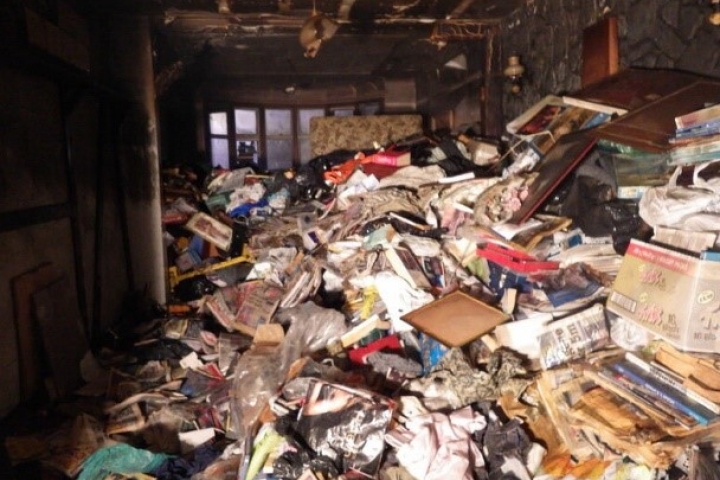
London Fire Brigade is urging carers, families and support workers to use the Home Fire Safety Checker as fire risks linked to hoarding increase during the winter months. The warning follows a rise in incidents across the capital and renewed concern about safety in cluttered homes.

Firefighters attended 1,028 fires involving hoarding in 2025, marking the highest annual total since 2022. This represents an increase from 954 incidents recorded in 2024, equivalent to an 8 per cent rise. The Brigade reports that hoarding behaviours are being encountered more frequently during emergency responses and home fire safety visits.

Hoarding significantly increases the likelihood of fire and injury. Large quantities of stored items such as paper, clothing, cardboard and furniture can accelerate the spread of fire, obstruct exits and make escape more difficult. Firefighters also face greater challenges when tackling blazes in heavily cluttered properties.

The risk intensifies during colder months between November and April, when heating and cooking appliances are used more often. Since 2021, more than 970 people have been injured in hoarding related fires, with the majority of incidents occurring during this winter period.

Data from last year shows that cooking was the leading cause of hoarding related fires, accounting for 226 incidents. A further 137 fires were caused by items being placed too close to a heat source. Recent examples include a fire in Hayes where an unattended candle ignited nearby possessions, followed days later by an incident in Acton involving hoarded materials positioned too close to a hob.

London Fire Brigade works alongside carers, housing providers, health professionals and local authorities to reduce hoarding fire risks. Support includes tailored fire safety advice, fitting and checking smoke alarms, referrals to partner organisations and the hosting of support groups at fire stations.

Carers and support workers are being encouraged to complete the Home Fire Safety Checker on behalf of people they support. The online tool helps identify hazards and provides tailored guidance or access to a visit from a local fire station if required. Simple actions such as keeping exits clear, reducing clutter near cooking areas and using heaters and candles safely can reduce risk.

The Home Fire Safety Checker was launched in July 2023 and has already been completed by more than 31,000 people.

Assistant Commissioner for Prevention and Protection, Pam Oparaocha, said: “Fires in homes affected by hoarding don’t just put the resident at risk. They can spread quickly, threatening neighbours and creating extremely challenging conditions for firefighters responding to the incident.

“Tackling hoarding-related fire risk is not about enforcement or judgement but about working together to keep people safe. By recognising the signs early and offering the right support, we can help prevent avoidable fires and protect lives.

“If you think someone may need support, please take a moment to review the helpful information on hoarding available on our website and complete the Home Fire Safety Checker on their behalf. Homes can contain hidden fire risks, and the online checker helps you identify potential hazards during a walk-through of the property. It then provides a personalised action plan with simple, practical steps to help keep people safer in their own homes.”

Live Facial Recognition pilot in Croydon leads to 100 arrests

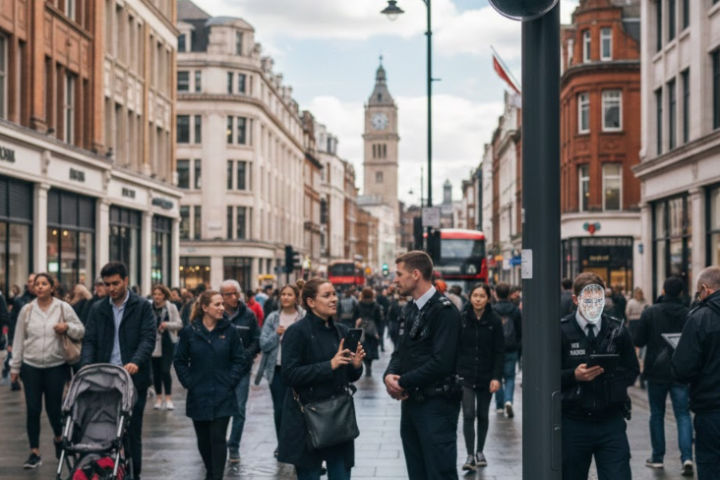
More than 100 wanted individuals have been arrested during the first three months of a Live Facial Recognition pilot in Croydon, according to figures released by the Metropolitan Police. The pilot began in October and represents a new operational approach for the technology in London.

The Live Facial Recognition pilot in Croydon is the first time cameras have been mounted on existing street infrastructure, including lamp posts, rather than deployed from police vans. This change has allowed officers to carry out deployments more flexibly and with fewer resources on site.

Police say the revised setup has improved efficiency. When the system is active, an arrest has been made on average every 34 minutes. The average time taken to locate wanted individuals has also reduced by more than 50 percent compared with van based deployments.

A third of those arrested through the Live Facial Recognition pilot in Croydon were wanted for offences linked to violence against women and girls, including sexual assault and strangulation. Other arrests involved offences such as burglary, recall to prison, possession of an offensive weapon and kidnap.

New data from the Met indicates crime in Fairfield Ward, Croydon fell by 12 percent during the pilot period. This includes reductions in retail crime, violent crime and sexual offences.

Among those arrested was a 36 year old woman who had been unlawfully at large for more than 20 years after failing to appear in court for an assault in 2004. Officers also detained a 37 year old registered sex offender found to be in breach of his Sexual Harm Prevention Order by possessing an unregistered mobile phone and accessing social media. A 27 year old man wanted on suspicion of kidnap was also arrested.

Lindsey Chiswick, the Met and national lead for live facial recognition, said: “The increase in LFR deployments across crime hotspots in London is driven by its proven impact and success — with more than 1,700 dangerous offenders taken off London’s streets since the start of 2024, including those wanted for rape and child abuse.

“This is why we are trialling a new and innovative pilot in Croydon. It allows us to explore a different way of using facial recognition by operating it remotely and more efficiently.

“The amount of arrests we have made in just 13 deployments shows the technology is already making an impact and helping to make Croydon safer. Public support remains strong, with 85% of Londoners backing the use of LFR to keep them safe.”

Police report that three quarters of those arrested through the Live Facial Recognition pilot in Croydon live in the borough. The Met says this demonstrates how the technology is being used to target areas with higher crime rates and focus resources locally.

Case studies released alongside the figures include the arrest of Nilton Darame, 25, of Loughborough Street, Lambeth, who was identified by static cameras on Tuesday, 7 October 2025. He was found to be in breach of tagging conditions linked to an intentional strangulation and two counts of assault on an emergency worker committed on Monday, 8 September 2025. He was later sentenced at Croydon Crown Court on Thursday, 8 January to 18 months’ imprisonment.

At a further static deployment on Friday, 21 November 2025, officers arrested Kastriot Krrashi, 35, of Dingwall Road, Croydon, who was wanted on suspicion of breaching conditions as a registered sex offender. He is due to appear at Wood Green Crown Court on Friday, 23 January for sentencing.

Executive Mayor of Croydon, Jason Perry, said: “Croydon Council has worked closely with the Metropolitan Police to support the trial of Live Facial Recognition (LFR) in our town centre to help identify suspects on police watchlists.

“The pilot has led to a significant number of arrests, including individuals suspected of serious offences and violence against women and girls, demonstrating that this pioneering technology is helping to make our streets safer.

“I look forward to continuing to work with the Met Police to tackle crime, as part of our zero-tolerance approach to fixing the ‘broken windows’, restoring pride in our borough and making Croydon a safer place for all our residents.”

The Live Facial Recognition pilot in Croydon operates at two fixed locations at the north and south ends of the high street. Camera feeds are monitored remotely, while specialist officers and neighbourhood teams remain present on the ground to engage with the public and respond to alerts.

Each deployment uses an intelligence led watchlist created no more than 24 hours in advance and deleted immediately after use, in line with policy. Cameras are only activated when officers are present.

Since the start of 2024, Live Facial Recognition deployments in Croydon have resulted in 249 arrests, with 193 of those individuals charged or cautioned. The pilot will be formally evaluated in the coming months, and there are currently no plans to extend it to other areas. Engagement sessions with residents and councillors are continuing to explain how the technology works and the safeguards in place.

Bromley Health and Wellbeing Centre opens in town centre

A new Health and Wellbeing Centre has been completed in Bromley, enabling health and wellbeing services to operate from a central town centre location. The development introduces a purpose built facility designed to support a range of local health provision.

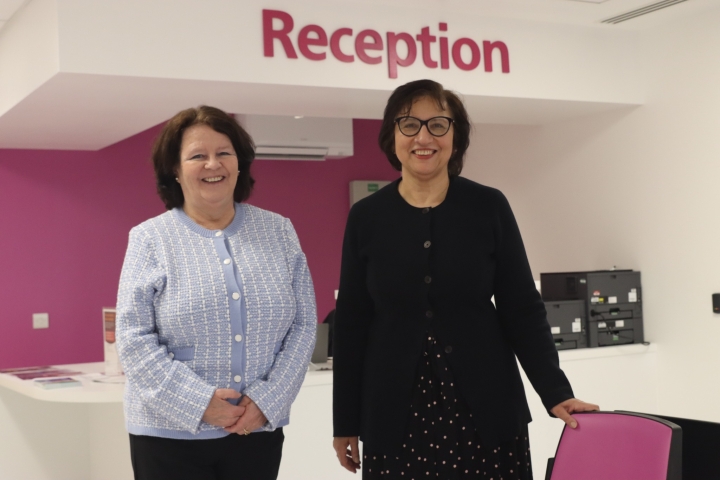
The Bromley Health and Wellbeing Centre provides modern accommodation for health services, including consulting and treatment rooms, new reception areas, and updated heating and lighting systems. A GP surgery forms part of the facilities, contributing to the centre’s role as a focal point for local care.

The delivery of the Bromley Health and Wellbeing Centre follows a long standing ambition to establish new health facilities in the town. The space will be used by public health, care and prevention services, alongside voluntary sector partners, bringing multiple providers together in one location.

The centre has been designed to respond to local health needs and is intended to improve access to services within the town centre. It forms part of the Bromley Civic Centre at Churchill Court, positioned opposite Bromley South train station and the Police Station.

The address of the Bromley Health and Wellbeing Centre is Ravensleigh House, 22 Westmoreland Place, Bromley, BR1 1DS. It is located on the walkway leading to St Mark’s Square.

Councillor Diane Smith, Executive Councillor for Adult Care and Health said: “This new state-of-the-art Health and Wellbeing Centre is enacting our vision of bringing local health services together in the heart of Bromley town centre, while also making best use of our wider Civic Centre building by locating our partners nearby. Now these works are complete, I am pleased that our health partners can begin delivering services for local residents from the new building, as we have been envisaging since we began.”

Dr Angela Bhan, Bromley’s NHS Place Executive Lead said: “I am pleased that through our partnership work with the council we are now bringing these important services together, with all the health benefits this entails for residents. The vision for this new centre is about fulfilling long term health needs in the borough and ensuring services work efficiently and effectively together. Together we will provide joined up personalised care for our residents, in line with our One Bromley strategy.”

From January, the Bromley Health and Wellbeing Centre will accommodate a number of health partners. These include the Dysart Surgery, which has relocated from Ravensbourne Road, and the One Bromley Wellbeing Hub, previously based at The Glades, with further information available online.

Kilburn Library reopening confirmed after £1 million refurbishment

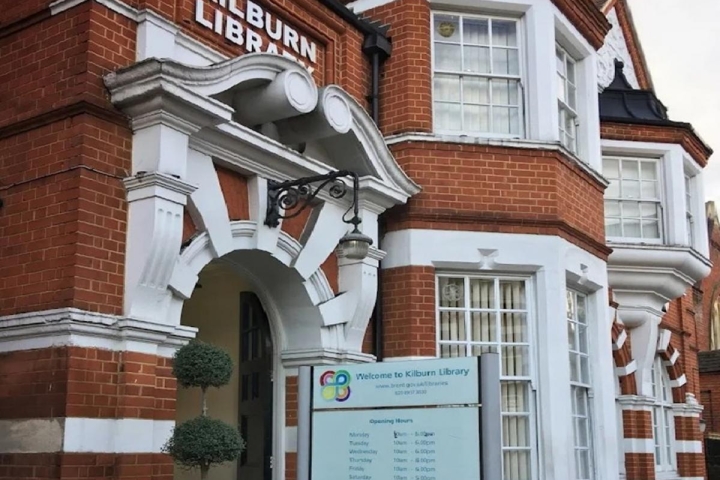
Brent’s Kilburn Library on Salusbury Road is set to reopen on 2 February after a £1 million redevelopment, marking a significant investment in local cultural and community infrastructure. The project positions the building as a renewed public resource for residents in the south of the borough.

Funding for the Kilburn Library reopening has been drawn from multiple sources. £783,000 was provided through the council’s Strategic Community Infrastructure Levy, with a further £231,500 contributed by Arts Council England. Together, these funds have supported a comprehensive reworking of the library’s interior and facilities.

The refurbishment has been designed to respect the building’s 130 year old Victorian architecture while adapting it to contemporary use. The updated layout now operates across a single floor, offering flexible spaces that can be used for exhibitions, workshops, performances and a range of community activities.

A key feature of the Kilburn Library reopening is the upgraded community space known as studio42. This refurbished room is available for hire and includes a screen and Wi-Fi, making it suitable for meetings, courses, group sessions and local events.

Cllr Promise Knight, Cabinet Member for Customer Experience, Resident Support and Culture, said: “We are thrilled to welcome everyone back to the new Kilburn Library on Salusbury Road. This refurbishment is a testament to our commitment to providing inclusive and accessible services that bring people together. The enhanced facilities will support learning, creativity and connection across our vibrant community. We can’t wait to see Kilburn Library become a hub for inspiration, collaboration and culture for years to come.”

Further improvements introduced ahead of the Kilburn Library reopening include refreshed interior design, new soft furnishings and additional study areas. A dedicated digital zone has also been created, with staff on hand to provide support with basic IT queries.

Families are expected to benefit from a redesigned children’s area, which has been updated to encourage curiosity and early learning. The space incorporates interactive and tactile sensory elements intended to support an inclusive experience for young visitors.

BookTrust story and rhyme sessions for under-fives will continue at the library, with the addition of a monthly Saturday session. This change is intended to increase accessibility for families who may not be able to attend weekday activities.

The library’s stock collection has also been expanded and refreshed. With 2026 designated as the National Year of Reading, the Kilburn Library reopening places the venue at the centre of Brent’s planned celebrations and reading initiatives over the coming year.

Electiva London Hospital to open in Summer 2026 with luxury healthcare facilities

Electiva Healthcare has announced plans to open a new hospital in London in Summer 2026. The Electiva London Hospital will occupy a purpose-built site in South-West London on the banks of the River Thames, offering a combination of high-quality healthcare and luxury facilities.

The flagship hospital will feature two fully equipped surgical theatres and ten individually designed bedroom suites. Each suite has been created with comfort and elegance in mind, providing views of the Thames and designed for maximum convenience and flexibility. The hospital will also offer accessibility via road, river, and air, including helicopter transfers, facilitating efficient travel in and out of the city.

The new facility is expected to generate over £50 million in annual revenue and create around 300 jobs locally. Electiva London Hospital will provide a range of treatments including corrective procedures, aesthetic medicine, orthopaedics, and gynaecology, all delivered by world-class surgeons. The development reflects Electiva’s commitment to blending clinical excellence with a premium patient experience.

Sayani Sainudeen, Executive Chair of Electiva Healthcare, said: “This project shows our team and our surgeons that we are pushing boundaries in healthcare capability and technology, built with care and attention to detail. Our mantra, We Care More, applies just as much to our surgeons as it does to our patients, and we encourage surgeons to reach out to us ahead of time.”

Brian Welsh, CEO of Electiva Healthcare, added: “This is a huge opportunity for us to build something new, something different and something special, and to treat our consumers with the very best that we can possibly offer.”

Electiva Healthcare Group is the UK’s fastest-growing provider of tech-enabled self-pay healthcare. The group is recognised for its clinical consistency, data-driven decision-making, and patient-focused approach, providing faster pathways, improved outcomes, and seamless technology-enhanced experiences.

The Electiva Healthcare Group includes:

  • Electiva Hospitals – Electiva Hospital Manchester and Electiva Hospital Glasgow

  • Transform Medical Services – Cosmetic, Weight Loss, Orthopaedics and Gynaecology

  • La Belle Forme – Advanced aesthetic medicine and plastic surgery

  • Swift Surgical – Global medical consumables manufacturer and importer

The London hospital demonstrates Electiva’s aim to partner with leading clinical teams and centres of excellence, offering patients faster access, greater choice, and consistently high standards across the UK. Electiva is building a national benchmark by combining medical expertise, hospitality-level service, and accessible, consumer-friendly financing.

Further expansion is planned over the next year, with new acquisitions and developments aimed at widening access to modern, tech-enabled elective healthcare both nationally and internationally.

Rough sleeping support in Ealing shows progress through partnership work

A sustained programme of partnership working has contributed to a reduction in rough sleeping across the borough, with Ealing Council reporting strong results from prevention and outreach activity. A range of initiatives focused on early intervention has helped many people move away from life on the streets, although some face additional barriers that make support more complex.

Ealing Council works closely with local organisations to deliver rough sleeping support in Ealing. During last winter, prevention activity helped almost 70 people avoid sleeping rough, with nearly all remaining off the streets for at least the following three months. This work included the use of rest centres, delivered in collaboration with local services and charities.

As a result of this collective approach, the borough now ranks within the top five council areas nationally for reducing rough sleeping. The council notes, however, that not everyone experiencing street homelessness can be supported through standard routes.

Around one third of people sleeping rough locally are non UK nationals with no recourse to public funds. This status means they are not eligible for publicly funded support and cannot legally work, rent accommodation, or claim benefits. These restrictions significantly limit the options available through rough sleeping support in Ealing.

The borough has one of the highest numbers of people experiencing homelessness with no recourse to public funds in London. Addressing this issue has required long standing collaboration with voluntary and community organisations.

For more than a decade, the council has worked with Hope for Southall Street Homeless. The charity provides tailored advice on homelessness, immigration and healthcare, alongside practical support. Its day centre offers free meals and helps guests stay connected to essential services, promoting continuity of care throughout each person’s circumstances.

Ravi, a regular guest, has lived in the area for 18 years and became homeless three years ago following immigration issues that prevented him from working. He said, “It was a struggle to find work and I eventually became homeless. I was very stressed and became addicted to alcohol. Having personal support prevents me from going back to bad habits. I have now recovered and I can stand on my own 2 feet.”

Another guest, Mehul, has been attending the centre for two years. He said: “It has helped me a lot with whatever I need – like clothes, food, taking a shower, and when I am sick. I feel thankful and appreciative. It’s really nice.”

John Murphy, general secretary of Hope for Southall Street Homeless, highlighted the scale of the challenge. He said: “The level of rough sleeping in Southall is very distressing, and can leave people very vulnerable to poor health and exploitation.

“There is a deep value in our culture to provide sanctuary, and I believe giving people a sense of self-worth and having things to do makes a huge difference, and can help them integrate back into society.”

Seasonal support has also played a role. Since November 2024, winter pressures funding from government has enabled the council to place more than 60 rough sleepers into bed and breakfast accommodation, with 20 moving on into longer term housing. Additional funding from London Councils allowed the provision of hostel accommodation and immigration advice to 26 vulnerable people with no recourse to public funds, supporting progress towards legal status and more stable housing.

Councillor Louise Brett, deputy leader of the council and cabinet member for safe and genuinely affordable homes, recently visited Hope for Southall Street Homeless. She said: “No one should face the cold alone. Our council officers work tirelessly to connect local people in need with safe shelter and support. Together with the incredible work of Hope for Southall Street Homeless and other local charities, we want to create a future where everyone has a place to call home.”

Skip to content Skip to content