[directorist_add_listing]

Daughter of Croydon judo dynasty triumphs

Sixteen-year-old Lizzy Merredew has been crowned judo’s British Champion in the U52kg category following a gruelling tournament at the end of last year.

In some ways, her success is no surprise as Lizzy comes from a long line of talented ‘judokas’. Her granddad, grandma, mum, brother and twin sister have all participated in the sport for many years while judo king dad, Gareth, runs a popular judo club in New Addington for children and adults (where Lizzy is a member).

“Being a British judo champion is an amazing feeling,” she explains. “It’s the result of years of sweat, sacrifice, training and unwavering support from those around me. Judo isn’t just a sport to me, it’s a way of life that connects me to my family roots and pushes me to be the best version of myself, both on and off the mat.

“The thing I love about judo is how it balances physical strength with mental agility – you can be the strongest person in the room, but if you don’t have strategy and focus, you won’t necessarily succeed,” she continues. “It also teaches core values like respect, discipline, and humility that carry through to every aspect of everyday life.

“Having my parents and grandparents pave the way makes this journey extra special. They didn’t just teach me my first techniques, they passed on their passion for the sport and the sense of community that comes with it. Knowing I’m continuing our family’s connection to judo fills me with passion and pride.”

Crucially, Lizzy has also been supported in her martial arts ambitions by the Croydon arm of GLL’s Sport Foundation (GSF). GLL is the charitable social enterprise that runs leisure centres in the borough under the ‘Better’ brand in partnership with the local council.

The GSF is the UK’s largest independent athlete support programme, offering financial bursaries alongside free access to local ‘Better’ leisure facilities, as well as physiotherapy, and mental health and wellbeing support.

Past recipients include Tom Daley, Ellie Simmonds, Anthony Joshua and Daryll Neita. In 2024, GSF athletes amassed 77 medals at the Paris Olympics and Paralympics.

The window for this year’s applications closes on 20 February with a whopping £2 million of support across the UK up for grabs. Lizzy urges other local sportspeople to come forward and apply.

“The Foundation has been instrumental in my development,” she says. “It has provided access to top-class training facilities with their gym membership and connected me with a network of fellow athletes who understand the demands of elite sport. Without their support, the goals I have achieved may well have been beyond me.”

Executive Mayor of Croydon, Jason Perry says, “I’m proud that Croydon Council is once again supporting GLL’s Sport Foundation this year.

“Following Team Croydon’s fantastic success at the 2025 Better Club Games and with the 2026 Commonwealth Games on the horizon, this promises to be an incredible year for sport in our borough.

“Lizzy’s story is really inspiring and I look forward to following her career as she reaches even greater heights.

“The Sport Foundation provides vital support to talented athletes like Lizzy, helping them achieve their full potential. If you’re eligible, I strongly encourage you to follow Lizzy’s example and apply – and know that Croydon will be cheering you on every step of the way.”


Arsenal take slender semi-final lead after late Chelsea rally at Stamford Bridge

Arsenal will take a narrow advantage back to the Emirates after beating Chelsea 3–2 at Stamford Bridge yesterday in a breathless Carabao Cup semi-final first leg that swung from control to chaos and back again. For long spells Mikel Arteta’s side looked on course to build a commanding lead, but two quick-fire goals from substitute Alejandro Garnacho dragged Chelsea back into the tie and ensured the second leg remains wide open.

Arsenal started like a team determined to silence the home crowd early, pinning Chelsea deep and forcing a series of hurried clearances. The opener arrived from a set-piece and came with a heavy slice of controversy for the hosts. A delivery into the box wasn’t dealt with cleanly and Ben White was the first to react, finishing after Chelsea goalkeeper Robert Sánchez misjudged his attempt to gather and left the ball invitingly loose in the danger area. It was the kind of moment that instantly changes the temperature of a cup tie, and it visibly rattled Chelsea’s back line.

Chelsea tried to respond with energy rather than fluency, but Arsenal’s pressing continued to cause problems and a second goal followed early in the second half in eerily similar fashion. Sánchez again failed to take command of his box, spilling a routine situation under pressure, and Viktor Gyökeres pounced from close range to double the lead. The Swede’s finish was simple, but his work in the build-up and his willingness to attack second balls were central to Arsenal’s sharpness all night.

At 2–0, Arsenal looked comfortable, moving the ball with authority and keeping Chelsea at arm’s length. Yet the tie turned on a period where Arsenal didn’t kill the game. Chelsea, missing several key names and still adjusting under new head coach Liam Rosenior, found a spark from the bench. Garnacho’s introduction changed the tone immediately — he ran at defenders, forced Arsenal to retreat a few yards, and gave Stamford Bridge belief.

Still, Arsenal appeared to have landed the decisive punch when Martín Zubimendi made it 3–0 with the goal of the night. Picking the ball up around the edge of the area, he slalomed away from two challenges and drilled a fierce finish from roughly 12 yards that left Sánchez with no chance. It felt like the moment the tie tilted heavily in Arsenal’s favour.

Chelsea refused to fold. Garnacho struck his first after latching onto a loose ball and finishing with real conviction to make it 3–1, and suddenly Arsenal’s composure was tested. The second arrived not long after, with the winger again finding space in the box and applying a clinical touch to reduce the deficit to a single goal. Those two strikes transformed the closing stages into a frantic affair, with Chelsea pushing and Arsenal trying to regain control through possession and game management.

There were late flashpoints too. Chelsea thought they had a route back through pressure and set pieces, while Arsenal looked for a fourth on the counter. In stoppage time, tensions boiled over following a robust challenge, with a heated exchange involving Enzo Fernández and Zubimendi after the whistle that required players and staff to step in before it escalated.

After the match, Arteta was pleased to win at Stamford Bridge but made it clear he wasn’t satisfied with how his team let Chelsea back into the contest. He praised Arsenal’s authority for much of the night — especially their start and their ability to create chances — but pointed to the two goals conceded as a reminder that the job is only half done. His message was essentially that Arsenal earned the lead, yet should have made the second leg more comfortable with better control in key moments.

Rosenior, in his first home match in charge, took a different view: frustration at the mistakes that put Chelsea in a hole, pride in the response that kept them alive. He defended Sánchez publicly, stressing that responsibility sits with the team and the structure as much as the goalkeeper, and he highlighted the spirit shown once Chelsea had nothing to lose. Rosenior also pointed to the impact of his substitutions and the lift Garnacho gave the stadium, suggesting the late momentum is something they must carry into the return leg.

Arsenal leave with a one-goal cushion and plenty of reasons to feel confident, but Chelsea’s late surge ensured this semi-final still has bite. With the second leg to come at the Emirates, both managers know the same thing: the tie is far from finished.

Plaistow and Upton Park Stations Shortlisted for Step-Free Access Studies

Plaistow and Upton Park stations have been shortlisted by Transport for London (TfL) for feasibility studies into step-free access, although no funding or delivery has been confirmed.

The studies will explore whether lifts, ramps or other improvements could make the stations fully accessible to passengers with disabilities, older residents, or those travelling with buggies or luggage.

Being shortlisted does not guarantee that the upgrades will happen. TfL has stated that any future schemes will need to demonstrate technical feasibility and identify potential funding, which could include third-party contributions. Some early feasibility work from 2017 will inform the current assessments.

Newham Council has been a strong advocate for improved accessibility. In July, the council’s Chief Executive wrote to TfL supporting step-free access at Upton Park, citing how such improvements align with the Mayor’s Transport Strategy and the council’s wider commitment to inclusion and sustainable travel.

Mayor Rokhsana Fiaz OBE said: “For many people, the lack of step-free access can make everyday journeys difficult or even impossible. That’s why I am delighted that Plaistow and Upton Park stations are amongst a shortlist of stations that could benefit from vital investment to make transport accessible. These two London Underground stations are in the heart of vibrant Newham neighbourhoods which we’ve been investing in as part of our inclusive growth ambitions to benefit our residents. From new community spaces, improved public areas, upgrades to our much-loved Queens Market and providing a raft of inclusive cultural activities, we are showcasing the importance of our high streets for people to access readily.”

The inclusion of Plaistow station reflects wider investment in the area, including the Stock Street Cultural and Community Workspace, and public realm improvements delivered through the Shape Newham programme. Examples include the Mr Blue Sky installation at Plaistow Broadway and the Place of Play mural at Plaistow Park. Future improvements, such as works at Queens Market and Queens Square and the creation of a new community hub and library, highlight the importance of accessible transport to support inclusive growth in the borough.

Newham Council said it will continue working closely with TfL, local MPs, the London Assembly, and other stakeholders as feasibility studies progress. Updates will be shared as more information becomes available.

Croydon Explores South Norwood Beaver Project to Boost Wildlife

Croydon may soon be home to a very unusual new addition: a family of beavers could be introduced to South Norwood Country Park as part of a wider rewilding initiative. The scheme aims to enhance local habitats, improve water management and support a more diverse urban ecosystem.

The plans, which have the backing of Croydon Council’s Executive Mayor Jason Perry, would see the beavers living in a secure enclosure within the park. If approved, the project is intended to increase biodiversity, improve water quality and offer a more resilient natural environment for both wildlife and people.

Croydon Council is collaborating with Citizen Zoo, specialists in urban rewilding, to explore the feasibility of the project. Citizen Zoo previously helped launch London’s first publicly accessible urban beaver population in Ealing, through the Ealing Beaver Project, and hopes to replicate some of that success in South Norwood.

Beavers play a vital role in shaping ecosystems. By building dams and creating wetlands, they can improve habitats for birds, fish, insects and other mammals while helping to manage water flow and reduce flooding. Their presence also encourages a richer mix of plant life by opening up small areas of tree canopy.

Before any animals arrive, Citizen Zoo has begun a detailed study to assess whether South Norwood Country Park is a suitable location. Additional funding and the necessary licences from Natural England would be required for the full project to proceed.

Local residents will have a chance to share their opinions through a public consultation in February. This will include questionnaires, community meetings and guided nature walks designed to explain the project and its potential benefits.

If implemented, the beavers would live in London’s largest enclosed urban habitat, which would remain fully accessible to visitors, including dog walkers. The plans also include rebuilding the park’s visitor centre, which would serve as a hub for education and engagement with nature.

Beavers were once widespread across Britain but were hunted to extinction for their fur and meat. Their natural behaviour of felling trees and creating wetlands can have significant ecological benefits when carefully managed in urban spaces.

Executive Mayor Jason Perry said:
“The introduction of beavers in South Norwood Country Park would bring tangible benefits for wildlife and the local community. Alongside investment in the visitor centre, this project is part of our wider commitment to protect and enhance Croydon’s parks and green spaces. I am looking forward to hearing what residents think about these proposals.”

Elliot Newton, Director of Rewilding at Citizen Zoo, added:
“Following our work in Ealing, we were keen to find new sites where beavers could demonstrate their ecological benefits. South Norwood Country Park shows real potential to support biodiversity, improve waterways and engage the community. We are excited to explore how this project could make a lasting difference.”

At present, the South Norwood beaver project is still in the planning stage. Its future depends on the results of feasibility studies, funding, licences and community feedback, but it has already generated significant interest in Croydon’s natural spaces.

G Network administration signals challenge for London broadband sector

UK broadband services in the capital have been shaken by the news of the G Network internet service provider will be entering administration.

This development places one of London’s younger fibre providers under the control of insolvency specialists. Founded in 2016, G Network built its reputation on installing a proprietary full fibre network across central districts and competing with the established infrastructure of BT Openreach and Virgin Media O2.

Earlier this month the business was purchased by FitzWalter Capital, a firm known for dealing in distressed debt. Within days of that acquisition an application was made to the High Court to appoint administrators, a move that surprised some staff and marked the first significant failure in the altnet sector for several years. The G Network administration follows a period in which the industry expanded rapidly during the pandemic before encountering slower customer growth.

Alvarez & Marsal Europe LLP were formally appointed as joint administrators on Monday, January 12. The professional services firm said it would begin marketing the company to potential buyers in the coming weeks while maintaining day to day operations. G Network provides connections to around 25,000 customers and its cables pass approximately 400,000 homes in London.

In a message aimed at reassuring households and businesses, joint administrator Richard Beard said: “G Network will continue to trade as normal, with its full-fibre network operating as before and services being delivered to existing and new customers across London without interruption.”

The provider accumulated heavy borrowings while digging up streets to lay fibre lines. Analysts at New Street Research estimate that net debt exceeded £300million at the time of the sale to FitzWalter. Lenders including NatWest, Santander and Investec are expected to take a writedown as part of the G Network administration process.

The broader altnet market has also struggled. Research from Enders Analysis places combined sector debt at more than £9billion by the end of 2025, reflecting costly refinancings and customer numbers below early forecasts. More than 40 per cent of the UK population can access networks built by these challenger companies.

Beard added: “Our appointment as administrators provides a platform for a restructuring, and we will work closely with the management team to create a sustainable business. We understand that this will be an unsettling time for G Network’s employees. We appreciate their hard work and will be keeping them updated on the restructuring process.”

G Network previously attempted several sales before the recent takeover. Following the deal, senior management roles were made redundant and further positions could be at risk, according to a person briefed on the situation. FitzWalter Capital did not immediately respond to requests for comment.

A statement on the company website emphasised that sufficient funding had been secured for the administration period and that service standards would be maintained. The notice described G Network as a London based full fibre broadband provider delivering connectivity to residents, businesses and infrastructure in central areas.

The administrators believe the underlying assets remain attractive despite the financial pressure. Beard concluded: “The company benefits from a robust network and a strong customer base. We would like to invite any parties interested in acquiring the business to contact us.”

Industry observers expect further consolidation after the G Network administration, with several altnet operators predicted to seek buyers in the coming months. Karen Egan of Enders Analysis said the takeover by a distressed debt specialist was difficult to comprehend as a strategic sale and questioned how easily the business could be sold on again.

For customers, the immediate message is continuity. Alvarez & Marsal stressed that it did not anticipate any adverse impact and that installations and support would proceed as before. The outcome of the G Network administration will be watched closely as a test of confidence in London’s alternative broadband market.

London Records Lowest Homicide Rate Since Records Began in 2025

London has recorded its lowest homicide rate per capita since records began, with 97 homicides in 2025, down 11 per cent from 109 in 2024. This milestone marks the lowest total in eleven years, despite the city’s population having increased by more than half a million over the period.

The reduction reflects the Metropolitan Police’s targeted approach to tackling serious crime. Officers are arresting an additional 1,000 offenders each month, using technologies such as live facial recognition, and disrupting organised crime groups and predatory individuals.

The Mayor of London’s Violence Reduction Unit (VRU) has been central to the city’s strategy, addressing root causes of crime through prevention and early intervention. The VRU has delivered more than 550,000 interventions aimed at diverting young people away from gangs and violence. This work includes school-based initiatives, after-school activities, and placing youth workers in custody suites and A&E departments, which has prevented 80 per cent of under-18s from reoffending within 12 months.

Teenage homicides have fallen to their joint lowest level in nearly three decades, with just eight teenage victims in 2025, a 73 per cent reduction since 2021. Young people accounted for only 8.3 per cent of all homicides last year, and London recorded the fewest homicides of victims under 25 this century. Hospital admissions of young people for knife assaults have fallen by 43 per cent since 2019, when the VRU was established.

Met Police Commissioner Sir Mark Rowley said: “London’s record-low homicide rate is the result of relentless work: arresting 1,000 more offenders each month, using innovative technology such as live facial recognition to solve more crime, and taking precise action against the most dangerous gangs, organised criminals, and predatory men who target women and children. The results speak for themselves: fewer lives lost, fewer families shattered.”

The V100 programme has strengthened protections for women and girls by identifying predatory men and ensuring they face prosecution for criminal behaviour. In the past year, more than 1,600 arrests were made as part of operations to dismantle gang networks and drug lines, removing thousands of guns and knives from London streets.

The Met achieved a 95 per cent positive outcome rate for homicide investigations in 2025, and the city’s homicide rate now stands at 1.1 per 100,000 people. This is lower than any other UK city and compares favourably to global cities such as New York (2.8), Berlin (3.2), Milan (1.6) and Toronto (1.6). Major US cities including Los Angeles, Chicago, and Philadelphia have rates several times higher.

The Mayor of London, Sadiq Khan, said: “Last year London had the lowest murder rate per capita since records began, the fewest murders of those aged under 25 this century, and one of the lowest number of homicides for almost three decades. Our sustained focus on being tough on crime and tackling the complex causes of crime is working.”

Director of the VRU, Lib Peck, added: “Prevention and the work of thousands of youth workers, mentors, teachers and all those who work closely with young people have become a key part of London’s approach. When we were set up more than six years ago, London’s homicide rate of young people was three times higher than it is today. We will continue to invest in young people and in youth clubs because we’re committed to keeping young people safe and supporting them to thrive.”

Overall, the combination of enforcement, technological innovation, and community-based prevention has contributed to London becoming safer than it has been in over a decade, with fewer shootings, stabbings, and violent incidents leading to injury. Public confidence in policing is rising, with 81 per cent of Londoners rating the Met positively and trust among Black Londoners increasing by 10 per cent.

Mayor Launches Family Financial Resilience Partnership to Support London Families

The Mayor of London, Sadiq Khan, has launched a new £2.2 million programme to support low-income families across the capital, helping them access financial support they are entitled to but not currently claiming. The initiative, called the Family Financial Resilience Partnership, is expected to assist more than 17,500 families and unlock up to £8 million in unclaimed benefits in its first year.

The programme will provide free, independent advice on benefits, housing, childcare, immigration, disability, and employment. Support will be delivered across 12 London boroughs through Best Start Family Hubs and Children’s Centres, in partnership with London Citizens Advice and the London Legal Support Trust.

The scheme forms part of the Mayor’s ongoing work to tackle child poverty and cost-of-living pressures in the capital. Data shows that over one in three children in London, roughly 700,000, live in poverty after housing costs. Over the past three years, income maximisation campaigns and advice services led by the Mayor have helped more than 130,000 Londoners claim over £94 million in financial support, although more than £4 billion in benefits remain unclaimed across the city.

Cllr Edison Huynh, Cabinet Member for Children and Young People at Lewisham Council, said: “Family Hubs are a vital part of the infrastructure Lewisham have put in place to support our families. They offer a wide range of services including pre- and post-natal care for families with children aged between 0 and 19 (and up to 25 with Special Educational Needs and Disabilities) but are also able to signpost families to services which support with financial advice, parenting, emotional wellbeing, youth provision and other services.”

Cllr Debbie Weekes-Bernard, Deputy Mayor for Communities and Social Justice, added: “Too many Londoners are struggling to get by each month, and we know that those pressures fall hardest on single parents, families with disabled members and families from ethnic minority backgrounds. By funding the Family Financial Resilience Partnership, we are strengthening the support available to parents and carers in places where they already turn for help.”

Nezahat Cihan, CEO of London Legal Support Trust, said: “We are proud to be a part of the Family Financial Resilience Partnership, fostering collaboration between local authorities, specialist and generalist advice organisations across 12 London boroughs, thanks to GLA funding. Through a new partnership approach of placing advisors in Family Hubs and family related settings, we aim to create a more integrated service that ensures families receive support in accessible, and familiar settings.”

Jonathan Mogford, Chair of London Citizens Advice, commented: “Across London boroughs, local Citizens Advice are key partners with Family Hubs. Citizens Advice has deep and trusted links into the diverse communities in London impacted by hardship and other problems, so we are delighted to work with the GLA to embed and link our services to Family Hub settings, strengthening the support available to families with children/young people.”

The programme builds on the Mayor’s wider initiatives, including funding free school meals, the Holiday Hope programme for children and young people during school holidays, and protection of free and discounted travel for children and young people. These measures aim to relieve cost-of-living pressures, improve health and wellbeing, and ensure all children in London have access to essential services.

Bexley’s Roads Ranked Seventh Best in England with Full DfT Funding

Bexley’s roads have been ranked the seventh best in England, according to figures released by the Department for Transport (DfT). The assessment covers all A, B and C roads, as well as residential streets nationwide.

The borough is one of only four in London, and 26 across England, to achieve a Green rating for overall road condition. Bexley also received a Green rating for funding, reflecting that a significant portion of its highways maintenance budget comes directly from the Council rather than relying solely on DfT contributions.

Each year, the Council repairs around 2,500 potholes and, over the last five years, has resurfaced or restructured roughly 300 sections of road, with most of the investment coming from its own resources.

Cllr Richard Diment, Cabinet Member for Neighbourhoods, said: “We work hard and invest millions of pounds each year in maintaining and improving our highways network. This data shows that Bexley’s roads are among the best in the country and London and we’d like to thank the Council’s highways officers and our contractors for their work every day inspecting and repairing our roads. There is always more to do and we continue to look at how we can make our roads even better and encourage residents to report any issues they are aware of through Fix My Street. During the winter period with changes in temperature, rain and ice we also take action to keep our roads safe with gritting and we respond to the additional potholes and damage to roads that the weather causes. We also engage with utilities companies to press them to minimise the disruption caused by works that they are responsible for.”

The Department for Transport has confirmed that Bexley Council will receive the full allocation of £895,000 for highways capital projects. This comes after a Member of Parliament provided incorrect information in the House of Commons, which had prompted threats to withhold funding.

Cllr David Leaf, Leader of the Council, said: “Our works programme and plans to invest in our highways has once again been approved by the Department of Transport. This is a sign of confidence in our performance. It’s disappointing that the Prime Minister and a Member of Parliament tried to put this funding at risk by spreading misinformation, but the facts speak for themselves and it’s time they apologised.”

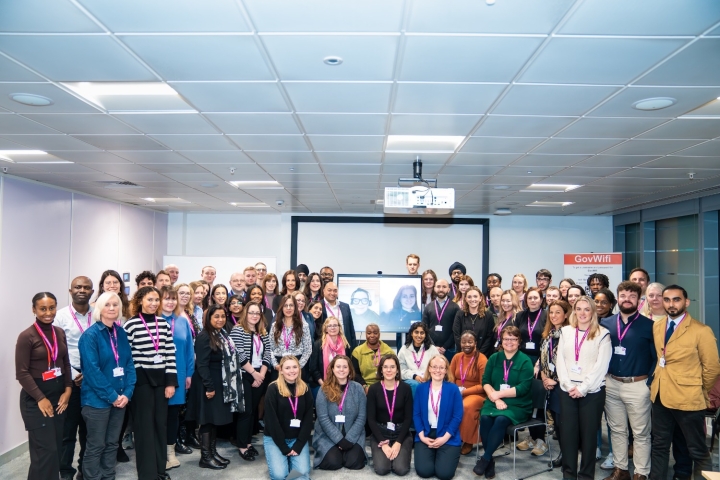
Boardroom Apprentice Programme releases 2025 evolutions

The UK Boardroom Apprentice Learning and Development Programme has released its 2025 evaluation report, detailing outcomes from the third UK cohort and examining how the programme supports wider access to board roles across the country.

Established in 2017 by Eileen Mullan, the Boardroom Apprentice Programme is designed to prepare individuals for service on public and voluntary sector boards. It provides structured learning, direct boardroom experience and individual support to help participants gain the skills and confidence required to contribute effectively at board level.

Eileen Mullan said: “The Boardroom Apprentice Programme exists to bridge the gap between aspiration to serve and the reality to do so. Too often, confidence, access and opportunity stand in the way. This programme is about giving people the knowledge, experience and belief that they belong at the board table.”

The Boardroom Apprentice Programme evaluation outlines a model built around three elements. Participants complete a 12 month placement with a host board, attend a series of learning sessions focused on governance, and receive ongoing guidance from an experienced board buddy. Together, these components are intended to strengthen both understanding and confidence in real governance settings.

Findings from the 2025 cohort show consistently high ratings across multiple measures. According to the Boardroom Apprentice Programme evaluation, 96 per cent of participants rated the programme’s relevance to boardroom environments as excellent or good. The same proportion rated its impact on confidence building at that level. Quality of learning days was rated as excellent or good by 95 per cent of participants, while 93 per cent reported that their expectations were fully met or exceeded.

The evaluation focused on Cohort 3 in 2025 and measured changes in self reported knowledge, understanding and confidence before and after participation. Participants said they applied to gain practical board experience, increase confidence, understand governance responsibilities and prepare for future board or trustee roles. Many also highlighted a motivation to contribute to their communities by applying existing professional experience at board level.

Measured understanding improved substantially across all subject areas. Knowledge of internal and external board environments increased from 4 per cent before the programme to 91 per cent afterwards. Understanding of finances rose from 3 per cent to 95 per cent, while understanding of legal responsibilities and duties increased from 6 per cent to 96 per cent. No participants reported completing the programme without understanding any of the core areas.

Confidence indicators showed similarly strong progress. The Boardroom Apprentice Programme evaluation recorded a 43 per cent increase in participants who strongly agreed they had valuable skills and experience to offer a board immediately. There was also a 42 per cent increase in those who strongly agreed they felt confident asking questions and challenging where appropriate.

Eileen Mullan said: “What matters most is not just knowledge, but how people feel about using it. We consistently see participants start the programme feeling unsure and leave feeling confident, capable and ready to apply. That shift in mindset is critical if we want boards to reflect the communities they serve.”

By the end of the programme, participants increasingly viewed themselves as ready for board roles. Several had already begun applying for positions, and some secured appointments. Participants linked this progress directly to the structure, learning and support provided by the programme.

The report also considered emotional experiences during the programme. Initial feelings of uncertainty were common, but confidence increased steadily as placements and learning progressed. Levels of happiness remained stable throughout, indicating sustained engagement rather than a short lived effect.

Demand for the programme remained strong, with 342 applications received for the 2025 intake. The Boardroom Apprentice Programme evaluation notes that there is no typical participant. Eligibility is open to anyone aged over 18, with selection based on motivation and commitment rather than previous board experience.

Applicant data showed that 57 per cent were women, 13 per cent identified as disabled and 42 per cent reported indicators of social mobility. Applicants also represented a wide range of ethnic backgrounds and sexual orientations.

Eileen Mullan said: “The results from the 2025 cohort reinforce why this work matters. When people are given the right support, structure and opportunity, they step forward. Boards benefit from fresh perspectives, and individuals gain the confidence to contribute meaningfully to public and voluntary sector leadership.”

The 2025 evaluation concludes that feedback from the third UK cohort demonstrates the effectiveness of the programme’s learning and placement approach. It recommends continued delivery to support a diverse and sustainable pipeline of board ready individuals, alongside further exploration of virtual and hybrid learning options in future cohorts

Skip to content Skip to content