[directorist_add_listing]

400 Year old charity redoubles its support for elderly Londoners

Funding from a centuries-old charity is continuing to provide practical support for older Londoners experiencing poverty and hardship across the capital.

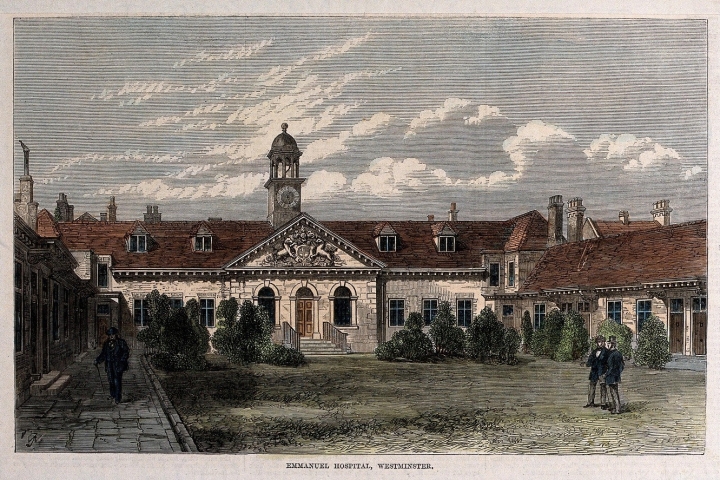
The Emanuel Hospital charity, administered by the City of London Corporation, has awarded £400,000 to Friends of the Elderly to extend its work providing support for older Londoners over the next four years.

The funding allows Friends of the Elderly to issue grants to older Londoners facing severe financial difficulty. These grants help cover essential costs such as household appliances, unexpected bills, and basic needs including food, clothing and energy. This targeted support for older Londoners is designed to reduce financial pressure and help people remain safe and comfortable in their own homes.

The new funding follows more than £345,000 awarded by the Emanuel Hospital charity over the previous four years. That earlier support for older Londoners reached 773 individuals across London, offering assistance at times of acute need.

The origins of the benefaction date back to the late sixteenth century. Emanuel School is one of five schools administered by the United Westminster Schools’ Foundation and was established through the will of Anne, Lady Dacre, dated 1594. Lady Dacre, the daughter of Sir Richard Sackville and widow of Gregory Fiennes, 10th Baron Dacre, set out that the purpose of her foundation should be “for the bringing up of children in virtue and good and laudable arts so that they might better live in time to come by their honest labour.” Her benefaction led to the creation of Emanuel Hospital, originally comprising almshouses and a school in Westminster, supported by a charter drawn up during the reign of Queen Elizabeth I.

Chair of the City Corporation’s Emanuel Hospital Management Sub-Committee Alderman Gregory Jones KC said:

“Although the grants Friends of the Elderly make with our funding may be small, the impact on the lives of older people across London is huge, lasting and transformative.

“Something as simple as having a working washing machine or a carpeted floor, or being able to pay off unexpected bills, reduces stress and worry and enables older people to live happier, healthier lives.”

Rachel Hill, Chief Executive of Friends of the Elderly, said:

“We are absolutely thrilled to have the continued support of the Emanuel Hospital charity, which has made a huge difference to hundreds of older people across London.

“Thanks to this funding, we know that every London pensioner who meets our criteria and comes to us asking for financial assistance, can receive a grant, which is incredible.”

Over the past year, grants delivered through this scheme have provided direct support for older Londoners in a range of situations. Awards included £400 for a dishwasher for an 88-year-old woman in Newham with severe arthritis, £1,000 to a 78-year-old woman in Wandsworth to help cover funeral expenses for her son, and £600 for an iPad for a bedbound 81-year-old woman in Hammersmith & Fulham to support communication and stimulation.

Further assistance included £368 for a new bed for a 68-year-old woman in Southwark undergoing intensive cancer treatment who had been sleeping on the floor. Each example highlights the immediate impact that focused support for older Londoners can have on daily living conditions.

Older people who may benefit from a grant can be referred to Friends of the Elderly by recognised referral agents, including community centres, housing associations and advice organisations.


JAMU Steps into Luxury with Harrods Food Hall Debut

A premium soda brand from Devon is making a decisive move into the luxury retail space, as JAMU secures a coveted listing at Harrods – one of the world’s most influential food and drink destinations.

From this month, JAMU’s all-natural sodas will be available in the Knightsbridge store’s iconic Food Hall, placing the brand alongside some of the most established and sought-after names in global gastronomy. For the independent producer, the listing marks a significant milestone – and a clear signal of ambition.

JAMU has built its reputation on flavour-forward sodas made with premium ingredients and antioxidant-rich botanicals, offering an alternative to traditional soft drinks without compromising on taste. Three flavours will launch at Harrods: Raspberry & Hibiscus, Lemon & Basil, and Cucumber & Pineapple.

“We are extremely proud for JAMU to be on the shelves in Harrods, rubbing shoulders with some of the leading brands and independent names in the food and drink sector,” said Patrick Grant-Sturgis, co-founder of JAMU.

“Harrods is one of the most iconic stores in the world, offering luxury, artisanal and premium products. It is a real honour to have secured this partnership, which will elevate the brand and help widen our customer base even further.”

Each 330ml can contains 6g of prebiotic plant fibre, fewer than 20 calories and no sugar, artificial sweeteners, colours or preservatives. The drinks also include vitamin C and zinc, are 14-allergen free and suitable for vegans – credentials that place JAMU firmly within the growing premium wellness drinks category.

For Grant-Sturgis, the partnership is as much about shared values as it is visibility.

“This listing will allow us to reach a whole new audience with our all-natural and deliciously-refreshing drinks. Our drinks are made with real fruit and botanicals with prebiotics, which aligns perfectly with Harrods commitment to offering its customers exceptional quality products,” he added.

Founded on a belief that soft drinks can do more than simply refresh, JAMU was created to combine natural ingredients with functional benefits – harnessing the power of plants to support hydration and wellbeing. The Harrods listing positions the brand at the intersection of health, flavour and luxury, signalling its intent to compete at the highest end of the market.

London Councils Urge £3 Per Week Social Rent Convergence to Fund New Homes

London boroughs have called on the government to confirm its social rent convergence policy this month, arguing that it is essential to stabilise budgets and support new council housing in the capital.

The cross-party London Councils group has requested a minimum convergence rate of £3 per week from April 2026. Rent convergence, previously government policy between 2002 and 2015, aims to ensure that residents in comparable socially rented properties pay similar rents.

Analysis from London Councils suggests that a convergence rate of £3 per week is crucial for several reasons. First, it would increase resources for new council housing construction. Without this rate, boroughs estimate at least 7,000 fewer homes could be built over the next decade.

Second, it would help reduce homelessness and pressures on temporary accommodation. Expanded social housing provision could create net savings of at least £115 million over ten years due to lower temporary accommodation costs.

Third, boroughs currently face a gap between social housing income and costs, requiring cuts to housing budgets. Without additional revenue, they would need to reduce spending by £269 million over four years on repairs, management, and resident services to balance Housing Revenue Accounts.

Cllr Grace Williams, London Councils’ Executive Member for Housing and Regeneration, said: “Boroughs want to boost investment in council housing, but instead we face stark budget pressures and real-terms cuts. We hope 2026 will be the year we turn around the crisis in council housing finances, and rent convergence should be an integral part of that. If the government enable us to introduce a rent convergence rate of £3 per week from April, this will lay the financial foundations of a much better future for London council housing.”

She added: “Boroughs are determined to work with ministers to deliver on our shared ambitions for housing. This includes making sure social rent levels are fair for tenants, put budgets in a healthier position, and bring investment for the much-needed new social homes that will help reduce homelessness and boost economic growth. But without rent convergence at an adequate rate, we fear continuing budget shortfalls holding back delivery of the new council homes we all want to see.”

London local authorities currently own and manage approximately 390,000 social homes, housing over one in ten London households. Boroughs emphasise that their social housing budgets are in managed decline, limiting improvements to existing homes and new council housing projects. Rent convergence is highlighted as the top priority to strengthen social housing finances.

The government’s consultation on social rent convergence seeks views on how to implement the policy fairly. It proposes phasing in rent convergence over several years, using a standard formula rent based on property value, local earnings, and number of bedrooms. The aim is to make rents fairer, more predictable, and transparent across the social housing sector.

Consultation questions focus on the pace of convergence, which tenants it should apply to, annual increase limits, sequencing with other housing reforms, and support for tenants facing gradual rent rises. London boroughs maintain that introducing rent convergence alongside 2026-27 social rent levels is vital to prevent further financial pressures.

Twenty six tips for your new years resolutions in 2026

Sometimes it’s healthier to think of “New Years” as more of a season than a single specific event.

New year’s day and eve are pretty clear and marked on the calendar, but the period of the first few weeks of the new year are still well outside the realm of ‘normal’ life, so it’s still a good time to be reflecting, recalibrating, and realigning yourself for the year ahead. The traditional way to do that is, of course, New Year’s Resolutions.

But how does that work in practice? How can you make the changes to your life imagined in January actual real shifts in who you are and how you live?

To help you achieve that in 2026, here’s twenty six tips on making your New Years resolutions really stick.

1. Have clear goals – Things like “eat healthier” and “read more” might sound good, but how will you know if you’ve made progress without real numbers/records?

2. Set small steps – Trying to lose two stone is a lot, and on a given day it can feel like you can’t make any meaningful progress towards that goal. Set smaller steps that can be regularly reached.

3. Use “if-then” systems – Set yourself up for success by planning for situations you know you will encounter. Pre-decide, and you will feel less hesitancy when you get to places where the changes you want will be challenging.

4. Positive framing – It is easier to think of changes in your life as “I will accomplish X” or “I will do Y” rather than “I must do less of Z” or “I’ll stop doing Q”. This can seem difficult if you do want to stop something, but try to reframe the decision in a different light. Instead of “I will eat less fast food” think “I will become an accomplished cook”

5. Visual tracking works – Have a chart, a book, a page on a notes app. However you do it, a visual record of your goals and accomplishments will really help you make actual progress in this field. You will know about your progress and feel better as you do it.

6. Celebrate small wins – Simply waiting till the end to celebrate will make the process of change feel too boring and sad. Be happy with yourself in the intervening moments too.

7. Get accountable – Don’t just let your friends, family, co-workers, or anyone else you regularly engage with know what you are doing. Give them permission to call you out and gently but firmly redirect you as you need to be put back on course.

8. Plan actions over intent – Plans aren’t for how we feel or the vibe or mood or atmosphere. They are for actions and accomplishments. Plan out what you will do and when you will do it, not ‘I’ll do X when I feel Y’.

9. Use existing routines – Change works best when it is a reform and remaking rather than a wholly upended shift. Look for the places in your present life where change can fit and adjust around those.

10. Shift identity and outcomes – When your goals are in sync with who you believe yourself to be, they become a whole lot easier. Start to actively think of yourself as the person the goals imply. As James Clear, the famed American writer of Atomic Habits said “The goal isn’t to run a marathon, it’s to become a runner.”

11. Anticipate obstacles – If you expect things to be easy all the time, the shock that comes when they are not will be too much. Plan for the possibility of problems, and be ready to keep going even as they arise.

12. Practice self-compassion – It’s one thing to be self critical. It’s another to be so hard on yourself it becomes demotivating. Keep trying. Keep going. Reflect honestly, but don’t beat yourself up.

13. Imagine the end goal – Push yourself in the present with a picture of the future. Mental imagery allows you to have stronger motivation and keep going towards the goal amidst difficulty. To make a dream real, it first has to be a dream. Let yourself dream.

14. Don’t force the timeline – If you are still in the planning stages, and have not got things ready, you are still allowed to prepare. Don’t force timelines because you think fast = better. Preparing is still progress. Go when you are ready.

15. Reflect regularly – Progress without reflection is just motion. It can feel good, but it may not be useful. Take time, weekly or monthly, to look at what is working and what isn’t. Adjustment is not failure; it is how improvement actually happens.

16. Shape your environment – Willpower is unreliable, but surroundings are powerful. Make the good choices easier and the bad ones harder by adjusting what is around you, not just what is in your head.

17. Focus on one thing at a time – Trying to change everything at once usually means changing nothing for very long. Pick the most important shift first, and give it your attention until it sticks.

18. Make it something to care about – Goals that matter only on paper don’t last. When a resolution connects to what actually matters to you personally, motivation comes from within rather than pressure from outside.

19. Keep goals visible – If you never see your goals, you will forget them. Put reminders somewhere unavoidable so your intentions don’t quietly fade into the background.

20. Treat setbacks as information – Falling short doesn’t mean you’re bad at this. It means you’ve learned something about what doesn’t work. Use that knowledge and keep moving.

21. Choose accountability partners wisely – Accountability works best when it is supportive rather than shaming. Pick people who want you to succeed and will help you course-correct, not give up.

22. Use reminders and prompts – Memory and motivation are inconsistent. Gentle nudges, alarms, notes, or prompts help bridge the gap between intention and action.

23. Simplify wherever possible – If a goal feels complicated, it probably is. Strip it back to the core action that actually moves things forward and focus on that.

24. Learn how habits really work – Understanding how habits form makes change less mysterious and less personal. You stop thinking “what’s wrong with me?” and start thinking “how can I redesign this?”

25. Anchor change to who you are becoming – Sustainable change isn’t about punishment or control. It’s about becoming someone for whom the new behaviour makes sense. Act as that person would, even before it feels natural.

26. Stay flexible – Life will interfere, plans will wobble, and perfection will never arrive. Adapt rather than abandon. Progress survives flexibility far better than rigidity.an.

Palace Seek a Turning Point Against In-Form Aston Villa

Crystal Palace return to Selhurst Park this weekend hoping to arrest a troubling slide, while Aston Villa travel to south London riding a wave of momentum and looking to consolidate their strong league position. This clash presents a sharp contrast: one club desperate for a revival, the other brimming with confidence and consistency.

Palace have struggled of late. Six games without a win, combined with injuries to key players such as Ismaïla Sarr, Daichi Kamada, and Cheick Doucouré, have left Oliver Glasner’s side searching for answers. Their attack has lacked fluidity, defensive lapses have cost points, and confidence is low. Yet the Eagles will hope that home support and tactical discipline can provide the spark needed to reverse their fortunes.

Aston Villa, in contrast, arrive on a run of impressive form. Under Unai Emery, they have recaptured a sense of rhythm, winning three of their last four league games, including victories against Chelsea and West Ham. Before a heavy defeat to Arsenal, Villa had been on a remarkable eleven-game winning streak, and Emery has praised his squad’s mentality, passion, and dominance in recent press conferences. Villa currently sit level on points with Manchester City, a testament to the consistency and ambition Emery has instilled.

Injuries remain a factor for both sides. Villa will be without Amadou Onana, Tyron Mings, Ross Barkley, and Pau Torres, though their return dates are staggered in the coming weeks, allowing Emery to plan accordingly. Palace’s woes are compounded by the absence of several key players, forcing Glasner to reshuffle defensively and in midfield, a challenge he highlighted after their recent loss to Newcastle.

Tactically, Villa are likely to focus on structured possession, intelligent pressing, and rapid transitions—exploiting width to stretch Palace’s fragile backline. The Villans’ experience and cohesion give them an edge in controlling the tempo of the game. Palace, on the other hand, may adopt a cautious approach, prioritising defensive solidity and looking to strike on the counter. Set-piece defending will be crucial, given Villa’s aerial threat and Palace’s own vulnerabilities.

Key battles will likely occur in midfield and across the wings. If Villa can dominate possession and impose their rhythm, Palace will struggle to create opportunities. But if the Eagles can disrupt Villa’s flow, win second balls, and capitalise on mistakes, they may snatch a result despite the odds.

For Villa, the match represents an opportunity to maintain momentum and signal their title-contending credentials. For Palace, the stakes are even higher: a positive result could halt a worrying slide, restore belief, and provide a foundation for the remainder of the season.

With contrasting trajectories, injuries, and morale on both sides, this fixture promises to be intense and tactical—a contest where organisation, resilience, and execution may prove just as decisive as flair and creativity.


Less than a week left to name Sutton gritting vehicles

With less than a week remaining to take part, residents across the London Borough of Sutton are being reminded to submit their entries to name the borough’s three gritting vehicles.

The competition, run by Veolia in partnership with Sutton Council, invites local people to suggest names for the vehicles that play a key role in keeping roads safe during colder months. As temperatures drop and wintry weather approaches, the gritting teams operate through the night across the borough.

Organisers are urging residents not to miss the deadline, with only days left to put forward ideas. The chosen names will be displayed on the front of the gritting vehicles, giving successful entrants a visible and lasting connection to Sutton’s winter operations.

Councillor Christopher Woolmer, Chair of Sutton Council’s Environment Committee, said: “This is a brilliant, fun competition in partnership with Veolia that gives our residents a chance to play a visible role in this vital operation. I encourage everyone, especially our younger residents, to get creative and submit a memorable name that will make their mark on Sutton’s streets this winter.”

Veolia Sutton said the initiative highlights the importance of the service as well as community involvement. Scott Edgell, Divisional Head of Municipal Operations at Veolia Sutton, said: “We’re proud to be delivering essential winter maintenance services in partnership with Sutton Council, including gritting the streets. Our dedicated gritting service is now more sustainable thanks to our newer, more efficient routes that reduce our nightly mileage – as we work to keep Sutton’s roads cleaner and greener for everyone in the community.”

Naming gritting lorries with puns has become a popular trend in many parts of the UK and around the world.

Grit-asaurus Rex, Taylor Drift and Feathers McGrit were some of the names chosen for Gloucestershire’s gritting fleet.

Shropshire’s offering have in the past included Gritty Gritty Bang Bang, Snow Be Gone Kenobi, and Gritty McGritface.

In the US state of Minnisota, some of their snow plowing vehicles get names like Ctrl Salt Delete, Scopp Dogg, Edward Blizzardhands, and No More Mister Ice Guy.

With the submission window closing soon, residents are being encouraged to act quickly and ensure their ideas are entered before the competition deadline passes.

Sutton residents can apply by completing this form.

Final deadline is Friday 9th January.

Police Taser strike left man disabled, Southwark court hears

A man who tumbled from the top of an outbuilding after being Tasered by a police officer is now confined to a wheelchair, Southwark Crown court has been told.

Leonard Sandiford, 61, was running away from police in Woodford Green, east London, when he entered into a a cul-de-sac and climbed on to what was described as a “shed structure”.

He was Tasered and fell from a height of between 5 and 6ft. Prosecutors assert that this resulted in catastrophic injury

Irshad Sheikh, prosecuting, told the court that Sandiford sustained a spinal cord injury and is now tetraplegic and reliant on a wheelchair. The jury was told these consequences followed directly from the fall after the Taser discharge.

Metropolitan Police Constable Liam Newman, 31, from Hornchurch, denies a charge of grievous bodily harm against Sandiford. Jurors were told the prosecution case is that firing the Taser in the circumstances was an unreasonable use of force and therefore unlawful.

In the opening phase of the case, Sheikh said: “Mr Sandiford was simply running away. He was not a threat to either of the officers.” He added that Newman had received training in the deployment and use of Tasers.

Sheikh told the court: “A person being incapacitated in these circumstances would inevitably lead to the risk of an uncontrolled and unsupported fall.” He continued: “The risk of injury being caused in these circumstances should have been obvious to PC Newman.”

The court heard that Newman and another officer were responding to a report of an attempted burglary at a bookmakers in Chigwell Road, Woodford Green, at about 05:00 on 24 April 2022. They approached a white Ford van being driven by Sandiford and cut it off as it neared a side road.

Jurors were told the officers attempted to stop the vehicle. Newman used his baton to strike at the driver’s side, opened the door and tried to pull Sandiford out. Sandiford held his hands up as he exited the van, the court heard.

Newman then shouted at Sandiford to get on to his knees while pointing a Taser at him. Sandiford bent his knees slightly before running away and was pursued by both officers, leading to the events that culminated in the Taser discharges, fall, and injuries.

During the chase, Newman fired his Taser twice. Jurors were told it was also discharged twice when Sandiford had scaled the wall of the shed structure. After the first shot while Sandiford was on the wall, he “gave out a yell but continued on his way”, Sheikh said.

The second discharge incapacitated Sandiford, causing him to lose control of his muscles and fall to the ground.

The court heard that this fall led to the injuries now being considered.

The trial is ongoing.

Guildhall Art Gallery exhibition explores London Underground through art and sound

Visitors to Guildhall Art Gallery are set to be immersed in large-scale paintings and layered sound recordings when a new exhibition opens later this month.

Opening on 27 February, Jock McFadyen and Jem Finer: Underground (and Surface) will be presented at the City Corporation’s gallery and brings together the work of the Paisley-born Royal Academician and the founding member of The Pogues. The exhibition combines vast painted views of London cityscapes and Tube stations with recorded sounds drawn from the capital’s transport network.

The exhibition revisits McFadyen’s Underground series, first conceived in the late 1990s, and reimagines it through a new collaboration with Finer. The project has been co-curated by Elizabeth Scott, Head of Guildhall Art Gallery for the City Corporation.

In works such as Bank and Ghost, familiar Underground signage and structures fragment and dissolve, creating a tension between recognition and disorientation. These darker, enclosed scenes are balanced by expansive cityscapes, including Popular Enclosure, which present calm views of London beneath radiant blue skies. Each painting is linked site-specifically to the Tube station it depicts.

Finer’s contribution transforms the painted underground city into what the organisers describe as a living, breathing organism. His field recordings from the Northern line and Central line combine mechanical rhythms with melodic elements, incorporating creaks, groans, pips, and other everyday urban sounds that accompany commuters but often go unnoticed.

Chairman of the City of London Corporation’s Culture, Heritage, and Libraries, Brendan Barns, said:

“Jock McFadyen’s consummate skill in presenting epic views of the capital which, at the same time, convey a sense of intimacy, as well as beauty and decay, are sure to engage and impress visitors.

“Adding Jem Finer’s atmospheric soundscapes from the Tube network to the mix is particularly intriguing, and it will undoubtedly make for a very memorable experience.”

Jock McFadyen said:

“Many of us descend daily into the tunnels and carriages that offer rapid access to distant parts of our urban world.

“We see and hear a remarkable variety of things there, but how often do we pay attention to the graffiti-daubed exteriors, the rails, pipes, struts, and wires that adorn the surface of the spaces through which we pass? How often do we really listen to all the mysterious mechanical and organic sounds that emanate from the subterranean caverns that house our public transport?

“I’m honoured that Jem has contributed such a beautiful soundtrack to my Underground series, one that is far superior to my original idea of a simple raw recording of closing doors, announcements, and the rattling and grinding of rails. It is a wonderful haunting piece, which seems to unfold with new sounds every time I hear it.”

Jem Finer said:

“I hoped to find a resonance with Jock’s paintings where the figurative dissolves into abstraction. I remembered him writing “All paintings are abstract. The subject of all my paintings is the paint”. I feel the same way about sound… about it being the focus of composing.

“For me, the form is important, but the sound is the true subject. I started to flip Jock’s thinking and work with the sounds I’d recorded in the way that he might work with paint, transformed just far enough that there remains a trace of familiarity while becoming something unexpected, newly discovered.”

The exhibition will operate a ‘Pay What You Can’ admission model, following its use for three previous shows at the gallery.

Guildhall Art Gallery forms part of the City of London Corporation’s wider cultural offer and supports the Destination City strategy, which aims to encourage people to live, learn, work, and explore in the Square Mile. The City of London Corporation invests more than £130m each year in heritage and cultural activities and manages a range of institutions including the Barbican Centre, Tower Bridge, Guildhall School of Music & Drama, and Guildhall Art Gallery.

OBE announced for man who helped recycle thousands of tonnes of office furniture.

The founder of a sustainability-focused social enterprise has been recognised in the New Year Honours List for his contribution to charity and environmental work.

Alan Cooper, founder of Waste to Wonder Worldwide, has been awarded an Officer of the Order of the British Empire.

He received official confirmation of the honour from the Cabinet Office in November.

Mr Cooper described the award as “a surprise, a thrill, and a moment to reflect on the journey so far.”

He has spent more than two decades working in ethical reuse and circular economy initiatives, with a particular focus on changing how surplus office furniture is viewed and used.

“At Waste to Wonder Worldwide, we turn office clearances into opportunities for change. By repurposing surplus furniture and equipment, we can reduce carbon emissions, eliminate waste, and support schools and charities in underserved communities worldwide.” Says the company’s website.

Waste to Wonder Worldwide began as a small operation redistributing redundant furniture but has since grown into an international organisation.

Under Mr Cooper’s leadership, the charity has donated more than £49m worth of furniture and equipment at fair market value.

It has supported more than 1,500 schools across 47 countries, including the UK. Typically, 80-100% of furniture and equipment they collect are then redistributed to schools and charities around the world,

The organisation also diverts thousands of tonnes of office furniture from landfill each year, delivering social and environmental benefits through reuse and education programmes. In one instance, over 539 tonnes of furniture were removed from Overbury’s office’s in the CITI tower in central London’s Canary Wharf district.

Reflecting on his work, Mr Cooper said: “Running a company brings with it many opportunities — to support customers, to embrace every skill and idea from colleagues, and to work alongside valued partners. But it also evokes an individual responsibility to do positive things further afield. ‘The world is your oyster,’ to coin a phrase.”

Looking ahead, he added: “As we look to 2026, companies and their employees will be able to sit down and plan how they can benefit others whom they may never meet — using their organisation as a catalyst to improve lives across the entire globe. Nil magnum nisi bonum: nothing is great except good.”

Waste to Wonder Worldwide specialises in ethical office clearance, sustainable relocations and circular economy programmes linked to education and community development.

Its best-known project, School in a Box, redirects surplus office furniture to schools with limited resources, reducing waste while supporting learning environments.

The Waste to Wonder Worldwide OBE recognition highlights the growing role of social enterprises in tackling environmental challenges while delivering global community impact.

Skip to content Skip to content