

[directorist_add_listing]

THE NEW WORLD ORDER IN THE AMERICAS: The US-Venezuela Shockwave and What It Means for Britain and Europe

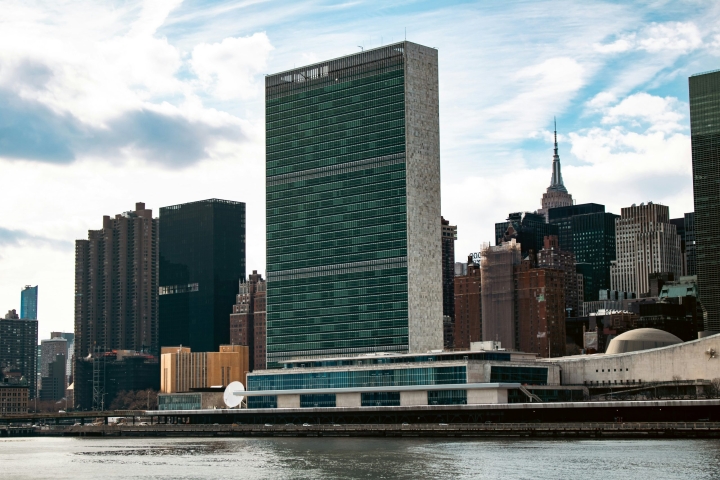
The UN Security Council was built as a kind of post-apocalyptic fuse box.

In 1945, the architects of the United Nations were staring at the smoking ruin of the League of Nations, a second world war, and a simple fear: if the great powers weren’t locked into a single system, they’d drift back into blocs, rival treaties, and “accidents” that weren’t accidents at all. So the UN Charter created a Security Council with “primary responsibility” for peace and security, and then made the big three of the day (the US, the Soviet Union, and the UK) plus France and China permanent members with special voting power. The bargain was blunt: you get a seat that can’t be taken away, and a veto that can stop decisions you consider intolerable, and in return you stay inside the tent.

That’s the origin of the veto problem. The veto wasn’t a bug that crept in later. It was the price of admission.

Why the Council struggles to act

Today the Council has 15 members, but on substantive decisions you need at least nine votes and no veto by any of the five permanent members. In practice, when the issue touches core interests of a permanent member state, the Council turns into a diplomatic roundabout where everyone drives in circles, politely honking.

You can see the pattern in modern conflicts where drafts repeatedly die on the table. The structure almost guarantees stalemate on the hardest questions: China and Russia counterbalance Western initiatives, and Western states block China and Russia when it suits them. The Security Council still does plenty when interests align, but on the headline wars, it can look like a steering wheel welded in place.

There is a workaround, but it’s a lighter tool: the General Assembly’s “Uniting for Peace” mechanism, created in 1950, lets the Assembly make recommendations when the Council is deadlocked. Recommendations, though, aren’t binding in the same way as Security Council measures, and they don’t magically conjure enforcement.

When states bypass the Council

Deadlock doesn’t stop geopolitics. It just changes the route.

Over the past few decades, major military actions have repeatedly proceeded without fresh Security Council authorisation, sometimes justified through contested legal theories, sometimes through moral arguments, sometimes through sheer power. A few clear examples:

Kosovo (1999): NATO intervened militarily in Yugoslavia without a Security Council mandate; the legality and legitimacy were openly disputed, and the Council met amid sharply divergent views.

Iraq (2003): The US and UK advanced a “revival” argument (that earlier resolutions provided authority), but many states rejected that reading; the legal basis remains one of the most contested in modern international law.

Panama (1989): A draft resolution condemning the US invasion was vetoed, underscoring how the veto can shield a permanent member from Council consequences.

Syria strikes (2017–2018): Absent Council authorisation, states reach for alternative justifications (self-defence, humanitarian intervention), and those justifications are heavily argued over.

This pattern matters because it normalises a world where the Security Council is treated less like the gate and more like a comment box: useful for signalling, occasionally decisive, but often bypassed when the stakes are judged existential.

The legal escape hatch: self-defence (and why it’s so contested)

Under the UN Charter, the baseline rule is simple: states must refrain from the threat or use of force against other states. The most cited exception is self-defence, which preserves an “inherent” right of self-defence if an armed attack occurs, at least until the Security Council has taken measures.

The fight is over the edges:

What counts as an “armed attack” (especially with proxies, militias, cyber operations)?

Can self-defence be anticipatory (acting before the blow lands)?

What about force against non-state actors operating from another state’s territory?

Customary law debates often return to the old “Caroline” formulation: necessity and proportionality, with necessity framed as overwhelming and leaving no meaningful choice. Some governments stretch these concepts; many lawyers insist the Charter was designed precisely to prevent elastic self-defence from becoming a blank cheque.

So what happens if a country breaches the Charter?

Here’s the cold reality: the Charter does not come with an automatic, mechanical punishment system.

In theory, the Security Council can determine a threat to peace and impose binding measures under Chapter VII, including non-military sanctions and, if it chooses, authorisation of force. In extremis, a state that persistently violates Charter principles can be expelled, but that requires a Security Council recommendation, meaning a permanent member veto can block even that.

So enforcement is political. If the alleged violator is powerful, the practical sanction is usually reputational damage, reciprocal measures by other states, economic counter-sanctions, and long-term strategic costs. When the alleged violator is a permanent member, the Council is often structurally unable to act against it.

That is why so many countries conclude that the system is unfit for purpose on great-power conflicts: not because international law vanishes, but because enforcement becomes selective and strategic.

The US and Venezuela: a fresh shock to the system

This week, the argument stopped being theoretical.

US forces carried out a major operation in Venezuela that resulted in the ousting and capture of President Nicolás Maduro, who is now in US custody facing narco-terrorism charges in New York. The UN Secretary-General warned the operation sets a dangerous precedent, and legal experts argue it lacks the usual legal foundations: UN authorisation, host-state consent, or a clearly valid self-defence claim.

Economically, the move is being paired with coercive pressure on oil. Venezuela’s oil company has begun cutting output as a US oil embargo and blockade halts exports and storage fills, affecting joint ventures and flows that previously moved under licences.

Europe’s response has been notably careful: supportive of Venezuelan democracy in principle, but emphasising adherence to international law and the UN Charter, with internal EU division visible.

China, meanwhile, publicly pushed back on the precedent rather than promising concrete retaliation. Russia’s senior figures denounced the operation as unlawful and destabilising, while also presenting it as consistent with America treating Latin America as its backyard.

The subtext is loud: if the US is willing to do this in the Western Hemisphere, it is signalling that the combination of geography, oil, and strategic rivalry overrides multilateral constraint.

What precedent does this set?

This is where the playground analogy bites.

When a leading power demonstrates it can use force, achieve a headline objective, and absorb only diplomatic scolding, it changes the incentives for everyone else. Not because other states suddenly become ten feet tall, but because they learn what the costs really are.

Russia will read this through the lens of Ukraine and sanctions endurance: the lesson is not the West will forgive, but power can outlast condemnation.

China will study the legal arguments and the choreography, because Taiwan is the ultimate rules versus power test case.

Middle powers, including India, don’t need to copy the act to benefit from the climate it creates: a looser enforcement world expands room for hedging, transactional diplomacy, and selective alignment.

In other words: the precedent is not everyone can invade everyone. The precedent is the ceiling on consequences is lower than the Charter implies, especially for the strongest states.

The United Kingdom, Europe, and the new isolation problem

Europe’s dilemma is that it is still rhetorically married to a rules-based order, but increasingly forced to live in a power-based one.

The Venezuela episode shows Europe caught between two instincts: relief at Maduro’s removal and anxiety that the method undermines the very legal scaffolding Europe relies on. The result is language that is careful, lawyerly, and, to Washington, easily ignored.

That connects to a broader transatlantic drift. In Trump’s second term, pressure on allies to carry more of their own defence burden has intensified in tone and frequency, reinforcing the idea that the US security guarantee is more conditional than Europeans became accustomed to.

A note on “World War II repayments”

If part of the political mood is shaped by old debts finally being cleared, it’s worth being precise about what ended.

The UK’s final repayments connected to WWII-era and immediate post-war arrangements with the US and Canada were made on 29 December 2006, including the famous post-war Anglo-American loan. These were not reparations in the Versailles sense, but loans and settlements tied to wartime supply and post-war reconstruction finance. Still, symbolism matters in politics, and the last cheque cleared can quietly change how electorates narrate obligation.

Russia versus Britain, in raw scale

If a leader is trading threats with Moscow, it helps to remember the physical asymmetry. By land area, Russia is roughly 70 times the size of the United Kingdom. That doesn’t determine outcomes on its own, but it does shape strategic depth, resources, and the psychology of escalation.

Starmer, Trump, and the optics of strength

On the UK-US relationship, the dynamic you’re pointing at is largely about political signalling.

Trump’s political brand rewards leaders who project blunt capacity, tight borders, and a willingness to ignore polite disapproval. Europe’s current governing style, with its committee-voice and internal splits, is almost designed to lose that particular audition.

And this is where the “slap down” lands. In a widely discussed exchange, Trump rebuked Starmer with the blunt question: can you beat Russia on your own? The point wasn’t to invite analysis or a thoughtful answer. It was to assert hierarchy, to put Britain back in its box, and to remind Europe that in Trump’s world the protection contract is conditional and the price is obedience, spending, and posture.

At the same time, Trump has publicly pushed Starmer hard on immigration and border issues, using Britain as an example of what he sees as a European failure to control borders and manage national cohesion. That combination, rebuke plus conditional praise, is classic leverage: it keeps the UK inside Washington’s orbit while reminding London who holds the megaphone.

Whether Starmer is weak is an argument. What’s less arguable is that Trump’s political ecosystem punishes leaders who look managerial, cautious, or consensus-driven, especially when the moment demands hard power language.

So how does Britain (and Europe) get back to the table?

If the world is sliding toward harder power, the UK can’t compete by pretending it’s 2003 America, and it can’t compete by speaking only in press releases. It competes the way it historically has: by combining credible capability with exceptional statecraft.

Here’s the spine of a serious recovery strategy, without fantasy budgets or cosplay empire:

Britain and Europe need a credible European security pillar that can act when Washington is distracted or disinterested. That means defence industrial capacity, ammunition stockpiles, air and missile defence, and the ability to sustain operations. Trump’s pressure campaigns on NATO spending are a warning flare, not a phase.

They also need diplomacy that the Global South actually believes. Selective outrage is the tax that keeps compounding. If Europe wants international law to matter, it has to sound consistent across theatres, not like a different person depending on the map. Venezuela is a stress test because it tempts Europe into quiet approval, nervous disclaimer.

Britain specifically should lean into being an intelligence, finance, and convening power: sanctions design, anti-kleptocracy enforcement, maritime security partnerships, and coalition-building with countries that share interests even if they don’t share ideology. In a more transactional world, you don’t wait to be invited. You turn up with capabilities other people need.

On energy, Europe must treat supply resilience as national security, not just economics. Venezuela has reminded everyone that oil still sits at the centre of coercion, and disruptions can be engineered quickly.

Finally, Europe should push realistic UN reform agendas that improve legitimacy even if they don’t abolish the veto overnight: veto-restraint initiatives, stronger transparency, and more routinised General Assembly emergency mechanisms. None of this makes the UN perfect, but it stops the slow bleed where the UN becomes theatre and nothing else.

The uncomfortable conclusion

The Security Council was designed to prevent another world war by forcing the great powers to share a room. The veto was the lock on the door. But a lock can also trap you inside during a fire.

The Venezuela operation has become a live demonstration of what happens when a superpower decides the room is too slow and walks out through the wall instead. Europe’s cautious response shows how hard it is to defend rules without the means to enforce them.

If Britain wants to be more than a spectator, it has to do two things at once: rebuild enough hard capability to be taken seriously, and rebuild a diplomatic voice that sounds like a grown-up in a world of megaphones. No empty threats, no moral foghorns, no sleepwalking into other people’s wars, and no assumption that America’s priorities will always align with ours.

The playground is real. The trick is to stop acting like the referee still has a whistle everyone respects, and start acting like a country that can still shape the game.


Crescent Garden Foundation appointment as Jack Tsang named head of Executive Team

The Mayfair and Hong Kong based Crescent Garden Foundation is continuing long civic legacy of improvements to architecture, urban design, and built environment policy, as it announces the appointment of Jack Tsang FRAS to head its executive team.

In a press release about the appointment today, the Foundation described how Mr Tsang will bring legal expertise, cultural insight, and visionary commitment to the role.

Educated in the United Kingdom and Australia, Mr. Tsang read Laws at the University of Nottingham and holds a Master of Laws from the Australian National University. He trained as an English Solicitor at Simmons & Simmons and subsequently practised in mergers and acquisitions with the distinguished London firm Slaughter and May.

His professional acumen is matched by a passionate dedication to cultural and heritage preservation, particularly in relation to East Asian architectural history and Hong Kong’s built legacy. In recognition of his scholarly and cultural contributions, Mr. Tsang was elected a Fellow of the Royal Asiatic Society of Great Britain and Ireland.

“We are delighted to welcome Jack as Executive Director” said Ms. Peggy Siu, the Founding Chair of the Crescent Garden Foundation. “His distinguished international career and dedication to the clan’s heritage stewardship will be invaluable as we continue to uphold the Foundation’s mission and deepen our global engagement.”

The role will see Mr Tsang provide strategic oversight to the Foundation’s operations, especially focused on widespread institutional partnerships, and new rounds of philanthropic endeavours.

The Crescent Garden Foundation is a philanthropic organisation established to advance scholarship, education and access in architecture and the built environment.

It was founded to honour and continue the Siu clan’s 160 years of recorded architectural and civic contribution, with a particular connection to the development of Hong Kong.

Through successive generations, members of the clan have been involved in major building, engineering and development projects that helped shape the city’s urban landscape while also supporting the preservation of architectural heritage.

The Foundation’s work reflects that history by supporting students, academic institutions, professional bodies and cultural organisations engaged in architecture and the built environment.

Its activities include scholarships, awards and institutional partnerships designed to promote excellence in architectural design, cultural preservation and scholarly research.

This latest move will continue to ensure that the research and philanthropy the foundation pursues will stay benefiting as many people in the wider urban communities as humanly possible.

Man City 1-1 Chelsea: Late Fernández leveller stuns City as Chelsea dig deep for Etihad draw

Manchester City were left kicking themselves after a 1–1 draw with Chelsea at the Etihad, conceding in stoppage time to surrender two points they looked set to claim for most of the afternoon.

Pep Guardiola’s side controlled long spells and carried the greater threat, but couldn’t turn superiority into a second goal. Chelsea, arriving amid turmoil after parting company with Enzo Maresca earlier in the week and led by interim boss Calum McFarlane, stayed in the contest and found a way to land a punch right at the end.

City’s opening was sharp and aggressive. They pressed high, moved the ball quickly through midfield and forced Chelsea to spend long periods defending deep. Erling Haaland had City’s best early chance, striking the inside of the post as the home side threatened to run away with it. For all the pressure, Chelsea’s defensive block held firm enough to keep the scoreline blank until late in the first half.

The breakthrough eventually arrived in the 42nd minute. A loose ball dropped invitingly on the edge of the area and Tijjani Reijnders pounced, thumping a left-footed strike beyond the goalkeeper to put City in front. It was the kind of goal that felt like it might open the floodgates, especially given the pattern of the match.

Chelsea, though, adjusted after the break. They tightened up their shape, at times shifting into a back three to match City’s width and reduce the space between the lines. The visitors still didn’t create a flood of chances, but they were far more competitive without the ball and gradually began to carry a threat on the counter and from second balls around the box.

City had opportunities to make it safe. They continued to get into good positions and finished with more attempts overall (14 shots to Chelsea’s eight), but the killer touch never arrived. The match also took a physical toll: Joško Gvardiol went off early in the second half, and City’s defensive options looked stretched as the game wore on.

With the clock ticking into added time, Chelsea pushed forward one last time. A deflected cross dropped kindly inside the area, and Enzo Fernández reacted fastest. His first two efforts were blocked in the scramble, but he stuck with it and bundled home on the third attempt in the 94th minute to snatch a point that felt enormous given the circumstances.

City’s frustration was obvious. They had dominated much of the contest, hit the woodwork, and spent long stretches camped in Chelsea’s half, yet still couldn’t put the game beyond reach. Chelsea, meanwhile, celebrated a result forged more from resilience and belief than fluency—exactly the kind of response a dressing room often looks for after a chaotic week.

The draw leaves City six points behind league leaders Arsenal, a damaging slip in the title chase. Chelsea remain fifth, and the performance will offer encouragement as they navigate their managerial transition.

Tottenham 1-1 Sunderland: Spurs held again as Sunderland’s late sting earns deserved point

Tottenham’s shaky home form followed them into the new year as they were pegged back by Sunderland in a 1–1 draw in north London, leaving Spurs with another result that felt like a missed opportunity rather than a step forward.

The hosts started brightly and played with far more bite than in their previous outing, moving the ball quicker and getting early shots away. Mathys Tel tested goalkeeper Robin Roefs inside the opening minute, Pedro Porro even tried his luck with a bold long-range lob, and Richarlison was inches away from making contact with a dangerous delivery—only for a crucial last-ditch intervention to keep Sunderland alive.

That momentum came with a cost, though. Mohammed Kudus was forced off with an injury inside the first 20 minutes, a blow that disrupted Spurs’ rhythm and left them short of natural attacking options for long spells. Randal Kolo Muani was introduced, but Spurs’ early edge dulled slightly.

Still, Tottenham found the breakthrough on 30 minutes—and it came from a set-piece routine. A corner was worked to Cristian Romero, who teed up Micky van de Ven. His effort was heading on target, and Ben Davies reacted quickest in the six-yard area to divert it over the line. It was a rare personal moment for the long-serving defender, and it gave Spurs a lead that their first-half control largely merited.

Sunderland’s response before the break was limited but not absent. Trai Hume drove over from distance, hinting that the visitors were growing into the contest. The bigger shift arrived after half-time.

Sunderland played with more bravery in the second period, pushing their midfield higher and finding ways to release runners rather than simply absorbing pressure. Tottenham, meanwhile, had moments to put the game to bed but couldn’t land the decisive second goal. As the match wore on, the visitors began to look the more likely to score, especially from wide areas and second balls around the box.

The warning signs were there. Brobbey latched onto a loose moment in the Spurs back line and hit the side-netting, Simon Adingra bent one wide, and Enzo Le Fée came within inches of an equaliser when his header struck the post.

On 80 minutes, Sunderland finally got their reward—and it was emphatic. Le Fée combined neatly with Brian Brobbey in a quick one-two, opening a pocket of space at the edge of the area. Brobbey took one stride and thundered a finish into the top corner, a strike that silenced the stadium and underlined Sunderland’s second-half improvement.

Both sides had a chance to win it late. Hume’s long-range effort required a sharp save from Guglielmo Vicario, while Spurs almost snatched it in stoppage time when substitute Joao Palhinha glanced a header just wide. But neither could find the final touch, and the points were shared.

The numbers reflected a fairly even contest, with Tottenham registering more attempts and shots on target, but Sunderland edging possession and forcing Spurs to defend more than they would have wanted in the closing stages.

For Tottenham, the draw keeps them in the bottom half and adds to the sense of frustration around their home performances—especially after leading for so long. For Sunderland, it’s another sign of how hard they’ve become to beat: four consecutive draws and an unbeaten run that continues to grow, with the Black Cats sitting in the top eight and continuing to pick up points on the road.

Next up, Spurs face a tricky trip to Bournemouth, while Sunderland head to Brentford looking to turn these draws into a statement win.

Newcastle 2-0 Crystal Palace: Late surge sends Newcastle past Palace as patience finally pays off

Newcastle United claimed a 2–0 home victory over Crystal Palace at St James’ Park, breaking stubborn resistance with two late goals to secure three valuable Premier League points. It was a performance built on control, persistence and set-piece efficiency rather than early fluency, but one that ultimately reflected Newcastle’s dominance over the course of the afternoon.

From the opening exchanges, Newcastle United set the tempo, pushing Palace deep and circulating possession with intent. Crystal Palace arrived with a clear plan: stay compact, deny space between the lines and frustrate the home crowd. For long spells, that approach worked.

Newcastle thought they had found an early breakthrough before half-time when Anthony Gordon turned in from close range, only for the flag to cut short celebrations. Joelinton then had another effort ruled out soon after, leaving Eddie Howe’s side heading into the interval with mounting frustration despite territorial control.

Palace were not without threat. Breaking sporadically, they forced Newcastle to stay alert, with Nick Pope required to make a sharp save to preserve parity. Will Hughes also went close from distance as Palace showed they were capable of punishing any lapse in concentration.

The second half followed a similar pattern. Newcastle continued to probe, increasing the pressure through wide areas and set pieces, while Palace defended in numbers and attempted to slow the game whenever possible. As the clock ticked on, the tension inside St James’ Park was palpable.

The breakthrough finally arrived in the 71st minute — and it came from the captain. A delivery into the box caused problems, and Bruno Guimarães reacted quickest, powering a header home from close range to lift the roof off the stadium. It was a goal that felt inevitable given Newcastle’s sustained pressure.

With Palace forced to open up, the second goal followed just seven minutes later. Another corner sparked chaos in the six-yard area, and defender Malick Thiaw showed sharp instincts to stab the ball over the line, effectively sealing the contest.

From there, Newcastle managed the game professionally, limiting Palace to half chances and seeing out the closing stages with confidence. Statistically, the hosts’ superiority was clear — more possession, more shots, and a vastly higher threat level — but it was their patience and composure that ultimately made the difference.

For Crystal Palace, the defeat extended a difficult run of form. Oliver Glasner’s side defended bravely for long periods but once again struggled to cope with set pieces, an issue that continues to undermine otherwise disciplined performances.

Eddie Howe will be pleased not only with the clean sheet but with the character shown to keep pushing after earlier setbacks. With key players returning to form and confidence growing, Newcastle’s ambitions of pushing toward the European places look increasingly realistic.

Palace, meanwhile, leave Tyneside knowing they must find solutions quickly. Their organisation kept them in the contest for over an hour, but fine margins — and two decisive moments — ultimately proved costly.

Fulham 2-2 Liverpool: Reed rockets Fulham back level as late drama denies Reds at the Cottage

Fulham and Liverpool played out a breathless 2–2 draw at Craven Cottage, with Harrison Reed producing a sensational stoppage-time strike to snatch a point just moments after Liverpool thought they had secured victory.

The hosts set up with a reshaped defence, switching to a back three that saw Issa Diop slot in alongside the centre-backs and Timothy Castagne pushed forward as a wing-back. Tom Cairney was handed a start in midfield following his recent impact, while Liverpool were without the injured Hugo Ekitike, prompting Cody Gakpo to lead the line. Milos Kerkez and Alexis Mac Allister both returned to the starting XI for the visitors.

Fulham struck first after a finely balanced opening spell. Harry Wilson, facing his former club, showed composure and technique to fire home after Raúl Jiménez’s clever flick. The goal initially raised eyebrows, but replays confirmed Virgil van Dijk had played Wilson onside, allowing the opener to stand.

Liverpool struggled to find fluency before the break, although Gakpo did threaten, heading against the woodwork from an offside position. The visitors emerged with greater intent after half-time and began to tilt the match in their favour. Mac Allister rattled the crossbar from a corner before Florian Wirtz thought he had equalised, only for an initial offside call to intervene.

That decision was later overturned, with Wirtz awarded the goal following a lengthy review. The German midfielder, who barely celebrated, clipped home his second league goal in as many matches to bring Liverpool back on terms.

Momentum swung again as Fulham refused to retreat. Wilson nearly restored the lead with an audacious chip that dropped onto the frame of the goal with Alisson caught out of position. Yet it was Liverpool who struck next, deep into stoppage time, when Gakpo arrived at the back post to turn in Jeremie Frimpong’s cross. The Dutch forward’s exuberant celebration seemed to signal a dramatic away win.

There was, however, one final twist.

With barely minutes remaining, substitute Harrison Reed — on the pitch for only a short spell — unleashed a stunning 25-yard effort that flew into the top corner, leaving Alisson helpless and Craven Cottage in raptures. It was Reed’s first goal in nearly two years and arguably the finest of his career.

The late equaliser felt richly deserved for Fulham, who had matched Liverpool throughout despite missing several key players. The result leaves Fulham in mid-table, while Liverpool remain inside the top four but frustrated after letting victory slip away so late.

Fulham head coach Marco Silva praised his side’s organisation and resilience, insisting defeat would have been harsh given their overall display. Liverpool boss Arne Slot lamented defensive lapses and late concessions, acknowledging that strong spells with the ball once again went unrewarded.

In the end, this dramatic encounter had everything — disputed decisions, momentum swings and a moment of pure inspiration — ensuring it will be remembered as one of the most thrilling draws of the season.

Everton 2-4 Brentford: Bee’s Statement at Everton as Thiago Leads With Finishing and Fire

Brentford arrived at Hill Dickinson Stadium like a team with a plan that had been rehearsed until it hummed. They were concise, aggressive, and clinical, and they left with a 4-2 win that felt less like a smash-and-grab and more like an away-day declaration. Everton were poor, yes, but Brentford deserve the loudest credit because they played with hunger and purpose, and they turned key moments into goals with brutal efficiency.

The opening goal set the tone. On 11 minutes, Igor Thiago put Brentford ahead, and it was the type of strike that immediately frames a match: one side sensing weakness, the other side suddenly feeling the pressure of having to chase. From there, Brentford looked the more composed side, moving the ball with intent and carrying a sharpness in the final third that Everton never matched.

What happened after half-time was pure Brentford insistence. Nathan Collins made it 2-0 on 50 minutes, and before Everton had found their bearings again, Thiago scored on 51 minutes to make it three. The speed of that double punch mattered. It did not just widen the scoreline, it broke Everton’s belief that a reset at the interval would change the game’s flow.

Even when Everton finally found a goal through Beto on 66 minutes, Brentford never looked rattled. That is the mark of a side that trusts its structure. Brentford continued to defend with discipline and attack with a clear idea, and when Everton opened up chasing the game, Brentford punished them exactly as a top-seven side should.

Thiago completed his hat-trick on 88 minutes, a finishing masterclass that made the afternoon feel like his personal highlight reel. Everton’s late header from Thierno Barry in stoppage time reduced the margin, but it barely touched the story. Brentford were the hungrier team, the sharper team, and the more clinical team, and those qualities travelled beautifully.

There is also something bigger in the way Brentford are winning matches like this. This was not just a good striker having a good day. It was a team performance built on organisation, intensity, and clarity in both boxes. Under Keith Andrews, Brentford are starting to look like a side that expects to win these games rather than hopes to. They played like they believed the table should make room for them, and they played like they had earned it.

If Everton will look back at this as an alarming dip, Brentford will look back at it as a marker. The goals were the headline, but the mindset was the message. Brentford were more urgent, more accurate, and far more ruthless, and in this league that combination is worth more than possession or noise. It is worth points, momentum, and a growing sense that Brentford’s season is heading somewhere interesting.

Bournemouth 2-3 Arsenal: Rice inspires comeback as Gunners extend lead at the summit

Arsenal strengthened their grip on the Premier League title race with a hard-earned 3–2 victory away at Bournemouth, with Declan Rice producing a decisive second-half brace to pull his side clear at the top.

The result moves Arsenal six points ahead of their nearest challengers, though the margin of victory did not reflect the tension of a contest that tested their resilience from start to finish on the south coast.

Rice’s influence was all the more striking given doubts over his availability. Nursing a swollen knee in the build-up, the midfielder was only given the green light shortly before kick-off — a decision that paid off emphatically as he struck twice from close range after the interval.

Arsenal’s afternoon began shakily. A loose pass across the face of goal from Gabriel gifted Bournemouth an early opener, allowing Evanilson the simplest of finishes after just 10 minutes. The home side sensed vulnerability and almost capitalised again, with Justin Kluivert going close as Arsenal struggled to find rhythm.

However, Gabriel atoned for his error midway through the first half. After a driving run from Noni Madueke unsettled the Bournemouth defence, the centre-back arrived in the box to steer home the equaliser and steady the visitors.

Despite the leveller, Bournemouth continued to cause problems before the break, underlining why they had troubled Arsenal so effectively last season. But the pattern shifted after half-time.

Nine minutes into the second period, Martin Ødegaard threaded a clever pass into Rice on the edge of the area, and the England international finished with authority to put Arsenal ahead. Moments later, the same trio combined again — Ødegaard releasing Bukayo Saka down the right, whose low cross was turned in by Rice to make it 3–1.

To Bournemouth’s credit, they refused to fold. Substitute Junior Kroupi reignited belief with a superb curling strike from distance, setting up a nervous finale in which Arsenal were forced to dig deep.

Tempers flared late on when referee Chris Kavanagh brought proceedings to a close as Bournemouth prepared to deliver a promising cross, sparking anger among players and supporters alike. Arsenal, though, held firm to secure another statement win.

The victory extends Bournemouth’s winless run to 11 matches, leaving AFC Bournemouth looking anxiously over their shoulders. Arsenal, meanwhile, continue to show a growing ability to navigate difficult moments — a quality increasingly associated with champions.

After the match, Mikel Arteta highlighted his side’s character, singling out both Gabriel’s response to his early mistake and Rice’s determination to make himself available. Bournemouth head coach Andoni Iraola conceded that defensive frailties once again proved costly, despite an encouraging first-half display.

Arsenal may not have been at their fluent best, but once again they found a way — and that, more than anything, continues to separate them from the chasing pack.

Wolverhampton 3-0 West Ham: Pressure Mounts on Nuno After Wolves Outclass West Ham

Wolves’ long wait for a Premier League victory came to an emphatic end as they swept aside West Ham with a commanding 3–0 win at Molineux — a result that significantly intensifies the scrutiny on visiting manager Nuno Espírito Santo.

For Wolverhampton Wanderers, the afternoon represented both relief and release. Having failed to register a league win all season, they struck early and never looked back, overwhelming a West Ham side short on confidence and cohesion.

The breakthrough arrived almost immediately. Inside four minutes, Jhon Arias marked his first league goal by converting a low cross from Hee-chan Hwang, setting the tone for a breathless opening spell. Wolves doubled their advantage soon after when Hwang stepped up from the spot and calmly dispatched a penalty following a clumsy challenge on Mateus Mané.

West Ham’s afternoon deteriorated further before the interval. Teenage midfielder Mané crowned an outstanding half with a thunderous long-range effort, his first goal at this level, leaving the visitors stunned and their travelling supporters audibly furious.

For Wolves fans, the scoreline bordered on surreal. The club had not celebrated a Premier League victory since April of last year, and yet by half-time they were cruising. The second half was played largely at Wolves’ pace, as they protected their clean sheet with minimal fuss and doubled their points tally in one afternoon.

While the home side looked rejuvenated, the spotlight quickly shifted to West Ham United, whose troubles under Nuno Espírito Santo show little sign of easing. The defeat stretched their winless run to nine matches, leaving them hovering dangerously close to the relegation zone ahead of a crucial clash with Nottingham Forest.

After the match, Wolves head coach Rob Edwards praised his players’ patience and commitment, describing the victory as a deserved reward for steady improvement. He also highlighted the importance of delivering the win in front of long-suffering home supporters, framing it as a potential turning point as the new year begins.

Nuno, by contrast, offered a blunt assessment of his team’s display. He apologised repeatedly to West Ham fans, labelling the performance “embarrassing” and admitting it was among the lowest moments of his managerial career. The reaction from the away end — which included boos and chants mocking their own side — reflected the depth of frustration.

West Ham never truly threatened a response. Despite Wolves entering the match without a clean sheet all season, José Sá was rarely tested, underlining the visitors’ lack of attacking spark. Their inability to match Wolves’ intensity or organisation raised serious concerns ahead of the run-in.

For Wolves, there is no sudden talk of safety just yet — but confidence has finally returned. For West Ham, however, the pressure is mounting rapidly, and their next fixture now carries enormous weight in determining the direction of their season.

Skip to content Skip to content