

[directorist_add_listing]

Crystal Palace 1-1 Fulham: Cairney strikes late to earn Fulham draw and spoil Palace’s New Year opener

Crystal Palace began the new year with another reminder that leads are only useful when you can keep hold of them. Jean-Philippe Mateta’s first-half header had Selhurst Park stirring, but substitute Tom Cairney’s superb late equaliser earned Fulham a point and stretched Palace’s winless run across all competitions to six.

The first half had the slightly dulled tempo of a holiday fixture, but Fulham carried the early edge in threat. Harry Wilson forced Dean Henderson into the first meaningful save of the afternoon and Raúl Jiménez, alive to the rebound, could only scuff wide when Palace’s box briefly looked unguarded. Palace’s approach was tidier than it was sharp, circulating possession and waiting for an opening that didn’t quite appear until they began getting regular service into the wide areas.

Palace’s first clear chance arrived on 32 minutes, Marc Guéhi denied from close range by Bernd Leno. It was the prelude to a key flashpoint. Fulham’s Jorge Cuenca went down after a challenge that appeared to involve minimal contact, and referee Tony Harrington ordered him off the pitch for treatment. With Fulham temporarily a man short, Palace moved quickly, and when Nathaniel Clyne delivered from the right, Mateta attacked the far-post space and powered his header beyond Leno.

It was Mateta’s first goal from open play since November 1, and it should have been the foundation for Palace to finally calm a jittery run of results. But the goal arrived with a sting for Fulham. Marco Silva was unimpressed by the decision that took Cuenca off the pitch, and afterwards he made his view plain: it was “a strange decision,” and he believed Fulham “should not have been playing with 10 men in that moment” because his player was fit to continue.

Palace had chances to turn the advantage into something safer before the break. Clyne and Will Hughes both went close, and Fulham looked rattled enough that a second goal felt within reach. Palace didn’t land it, and the match slowly swung towards the kind of finish their supporters have come to dread, the one where the clock runs down but the pressure runs up.

Fulham’s second half began with another setback when Kenny Tete was forced off with a hamstring injury, prompting an early reshuffle. It didn’t blunt their threat for long. Antonee Robinson started to find space for deliveries from the left, and Jiménez’s movement asked awkward questions of Palace’s centre-backs. Palace still had moments to kill it, most notably when Mateta failed to react sharply enough to convert a clever pass from the impressive Yeremy Pino that would have provided genuine breathing room.

Instead, Fulham’s pressure grew into proper chances. Jiménez met a Robinson cross with a header that struck the post, and Palace survived another heart-in-mouth sequence when Leno, after an initial mistake, pushed the ball onto the bar and Guéhi somehow blocked teammate Maxence Lacroix’s effort on the line in the ensuing scramble.

That escape proved decisive, because Fulham eventually found their equaliser on 80 minutes and it was worth the wait. A neat combination involving Robinson and Wilson worked the ball to Cairney on the edge of the area. The Fulham captain, introduced from the bench, opened his body and whipped a brilliant left-foot finish beyond Henderson. Silva celebrated with a double fist pump, as if to turn irritation into satisfaction in one motion.

The closing stages had chances to swing the result either way. Henderson produced a superb added-time save to deny Timothy Castagne, and Fulham then wasted the clearest opportunity of all when former Palace defender Joachim Andersen blazed over with virtually the last kick of the match.

Palace manager Oliver Glasner did not hide his frustration afterwards, describing his side as “a little bit in survival mode” as the fixtures continue to pile up. For Fulham, it was another display of resilience and control, strong enough to earn a point and, with sharper finishing late on, they might have stolen all three. For Palace, it was the same old lesson dressed in a new calendar: one goal rarely feels like enough.


Brentford 0-0 Spurs: Dull stalemate as Thomas Frank returns to old ground

Tottenham’s trip to west London ended without goals or much entertainment as they were held to a 0-0 draw by Brentford, on an emotionally charged afternoon marking Thomas Frank’s first visit back to the Gtech Community Stadium since leaving the Bees.

The point did little to lift the mood among travelling Spurs supporters, whose frustration boiled over into ironic chants of “boring, boring Tottenham” during a flat second-half display. There were boos at both the interval and full-time, reflecting a performance that lacked spark despite Spurs edging the shot count.

Frank, who spent more than six years building Brentford’s Premier League identity before moving north in the summer, had beaten his former side comfortably less than a month earlier. This time, however, his new team struggled to impose themselves against a disciplined home outfit.

The opening period offered little rhythm. Brentford thought they had taken the lead inside five minutes when Kevin Schade turned in from close range, but the flag was quickly raised for offside. At the other end, Archie Gray came closest for Spurs before the break, only for Nathan Collins to throw himself in the way of a goal-bound header.

Brentford grew into the contest after half-time and began to apply sustained pressure. Spurs were fortunate not to be reduced to ten men when Cristian Romero, returning from suspension, misjudged a clearance and then appeared to handle the ball while bringing down Igor Thiago as the last defender. Referee Andy Madley waved play on, a decision that infuriated the home bench.

Moments later, Tottenham were appealing for a penalty of their own when Gray went down under a challenge from Schade, but VAR saw no reason to intervene. Chances followed at both ends without reward: Keane Lewis-Potter failed to connect cleanly when well placed, Thiago blazed over from close range, and Vitaly Janelt forced a sharp save from Guglielmo Vicario with a firm header.

Despite Spurs recording a higher expected goals figure, Brentford goalkeeper Caoimhín Kelleher was rarely tested in earnest as the visitors’ attacking play repeatedly broke down in the final third.

Off the pitch, Tottenham were also without Brennan Johnson, who was omitted from the squad amid growing speculation over a potential move away from the club.

Speaking afterwards, Frank acknowledged the importance of the defensive effort but admitted his side lacked quality in possession. He highlighted unforced errors and missed transitions as key reasons why Spurs were unable to turn control into clear chances.

Brentford head coach Keith Andrews felt his team were the stronger side after the interval and believed they carried the greater threat. He suggested Spurs were content to disrupt the game’s tempo and manage the atmosphere, fully aware of how dangerous Brentford can become when momentum builds at home.

The result leaves both sides with questions rather than answers, while the reaction from Spurs supporters underlined the growing impatience with performances that prioritise solidity over ambition.

Islington sets out 2026 Priorities after Year of Housing Gains and Community Investment

Islington Council has outlined its priorities for 2026 after a year that saw hundreds of families move into affordable homes, major investment in public spaces, and millions secured in cost-of-living support for residents.

In a New Year message, council leader Cllr Una O’Halloran reflected on what she described as a challenging but productive 2025, pointing to tangible improvements across housing, welfare support and community facilities.

Housing remained a central focus throughout the year. The council says hundreds of families were rehoused in safe, genuinely affordable homes, while planning permission was granted for a major regeneration scheme at the Barnsbury Estate. The development is expected to deliver 1,116 new homes in what the authority describes as a once-in-a-generation project.

Alongside housing delivery, financial support for residents continued to expand. Since April 2024, Islington’s Income Maximisation Service has helped residents secure £16.2 million in additional income, with further help available through the council’s Resident Support Scheme.

Investment in public spaces and services also featured prominently in the council’s year-in-review. Barnard Park reopened following a full refurbishment, while children across the borough benefited from free meals and holiday activity programmes. More than 200,000 visits were recorded at the newly upgraded Sobell Leisure Centre, and the borough’s Black Cultural Centre hosted events throughout the year celebrating culture, diversity and opportunity.

Community recognition was another highlight. The council awarded Freedom of the Borough to Arsenal Women following their UEFA Champions League win, and to local fundraiser John David Dade, who has raised almost £500,000 for the Poppy Appeal.

Looking ahead, the council says its focus for 2026 will remain on expanding affordable housing, protecting tenants, improving street safety, and widening opportunities for young people.

Cllr O’Halloran said the council would continue to centre its decisions around residents:

“Every project, every service, every decision is about making life better for you and your neighbours – we are making it happen by working together for a more equal future.”

Las Iguanas brings back popular Bottomless Tapas to lift the January blues

Latin American restaurant chain Las Iguanas is welcoming the New Year with the return of its fan-favourite Bottomless Tapas, giving diners an affordable way to enjoy bold flavours and good company throughout January.

Known for its bold interiors, Latin-inspired music and sociable dining style, Las Iguanas combines freshly prepared food with a relaxed, energetic atmosphere. The menu caters to meat-eaters, vegetarians, vegans and flexitarians alike, ensuring everyone can enjoy the experience.

Running Sunday to Friday from 5 to 30 January 2026, the limited-time offer invites guests to enjoy 90 minutes of unlimited tapas from just £17 per person, making it a budget-friendly option for those easing into the year after the festive season.

The Bottomless Tapas experience is designed for sharing, with a menu inspired by Mexican street food and South American favourites, all served in Las Iguanas’ colourful, upbeat cantina setting. It’s ideal for relaxed evenings with friends, bringing people together over vibrant dishes and a lively atmosphere.

Diners can choose from a variety of small plates including nachos, Patatas Bravas, jalapeño poppers, quesadillas filled with chicken, beef or mushroom, garlic bread with cheese, cauliflower bites and more. Vegetarian and gluten-free options are available, while desserts and sides can be added for an additional cost.

The January deal offers an opportunity to sample Las Iguanas’ contemporary take on Latin American cuisine without stretching the post-Christmas budget.

How People Moved Pigs across the Pacific

Long before borders, boats and written history, people were already moving animals across the islands of Southeast Asia. New research shows pigs were among the most successful travellers.

A genomic study published yesterday in the journal Science reveals how thousands of years of human migration carried pigs across Indonesia and deep into the Pacific –quietly reshaping ecosystems along the way.

The international research team, led by Professor Laurent Frantz of Queen Mary University of London and Ludwig Maximilians University of Munich, analysed DNA from more than 700 pigs, both modern and archaeological. The results trace a detailed map of how people transported animals across islands once thought to be biologically isolated.

Breaking the Wallace Line

For more than a century, the Wallace Line has marked one of the world’s sharpest natural boundaries, separating Asian wildlife from Australasian species. Leopards and monkeys dominate one side: marsupials and cassowaries the other.

Pigs don’t follow the rules.

They appear on both sides of the divide, stretching from Southeast Asia to Polynesia. Genomic evidence now shows why: people carried them.

The earliest traces point to Sulawesi, where humans may have been moving warty pigs as far back as 50,000 years ago – possibly to establish hunting populations. These early communities are also responsible for some of the world’s oldest cave paintings, many of which depict pigs.

From farming to feral

Around 4,000 years ago, pig movement accelerated as farming societies expanded out of Taiwan. Domestic pigs travelled through the Philippines and Indonesia, into Papua New Guinea and onwards to Vanuatu and remote Polynesia.

Later still, European colonialism added new pig lineages to the region.

Many animals escaped, forming feral populations that interbred with earlier arrivals. On the Komodo Islands, hybrid pigs – descended from animals introduced thousands of years apart – are now a crucial food source for the endangered Komodo dragon.

A conservation dilemma

Today, pigs occupy very different roles across the Pacific: sacred animals in some cultures, destructive pests in others, and in some ecosystems so embedded they are hard to classify as invasive at all.

That complexity poses difficult questions for conservation.

Professor Laurent Frantz said:

“It is very exciting that we can use ancient DNA from pigs to peel back layers of human activity across this megabiodiverse region. The big question now is, at what point do we consider something native? What if people introduced species tens of thousands of years age, are these worth conservation efforts?”

Dr David Stanton added:

“This research reveals what happens when people transport animals enormous distances, across one of the world’s most fundamental natural boundaries.”

Professor Greger Larson said:

“When people have landed a hand, pigs were all too willing to spread out on newly colonised islands in South East Asia and into the Pacific.”

Human history, written in DNA

The study, involving more than 50 researchers from institutions across Europe, Southeast Asia and the Pacific, highlights how deeply human movement is written into the natural world.

Long before global trade, people were already shaping ecosystems – one pig, one island, one journey at a time.

easyJet launches new London Southend–Ibiza route for summer 2026

easyJet has announced a new route from London Southend Airport to Ibiza, giving travellers even more choice for summer 2026, with flights and holiday packages now on sale.

The airline’s first flight to the Balearic island will take off on 29 April 2026, operating twice weekly on Wednesdays and Saturdays, just in time for the start of the summer season.

As London Southend’s largest airline, easyJet continues to expand its presence at the airport. The addition of Ibiza means the airline now offers 24 routes from London Southend, connecting passengers across the UK, Europe and North Africa with a growing range of leisure destinations.

The new route opens the door to everything Ibiza has to offer – from the historic streets, to the island’s stunning beaches, vibrant food scene and world-famous nightlife. Whether travellers are drawn to the buzz of San Antonio, the charm of Ibiza’s old town or simply the island’s crystal-clear waters, the destination offers something for every type of holidaymaker.

Customers can also book easyJet holidays packages to Ibiza, which include flights, hotel accommodation, transfers and 23kg of luggage. Packages are available with a low deposit of £60 per person and come with easyJet holidays’ Ultimate Flexibility guarantee, allowing changes to bookings up to 28 days before departure.

Kevin Doyle, easyJet UK Country Manager, said:

“In our 30th year, we remain as committed as ever to making travel easy and affordable for our customers. With this new route and holiday packages to Ibiza now available from London Southend for summer 2026, we’re giving customers across the region even more choice and access to one of Europe’s most loved destinations — and we can’t wait to welcome more passengers on board next summer.”

Nigel Mayes, Business Development Director at London Southend Airport, added:

“We’re absolutely thrilled to be announcing the return of flights to Ibiza with our partners at easyJet. This latest addition is another important step forward for London Southend as our network continues to grow, giving passengers even more choice when flying from our easy, speedy and friendly airport.

Earlier this year, easyJet opened its new three-aircraft A320neo base at London Southend, supporting around 1,200 jobs, including 140 direct roles for pilots and cabin crew. With its network continuing to grow from strength to strength, the airline is reinforcing London Southend’s position as a key gateway for Essex and London, boosting connectivity and supporting regional growth.

Flights and holidays are now available to book via easyJet.com and the easyJet mobile app.

Daisy Green to Take Over North London Cafés Amid Community Opposition

Thousands of people have signed a petition opposing the replacement of the operators of five north London cafés. The cafés, located in Hampstead Heath, Queen’s Park and Highgate Wood, are due to change hands following a retendering process launched earlier this year.

Celebrities including Benedict Cumberbatch and James McAvoy have backed the campaign to retain the existing operators, who are scheduled to leave the cafés by 31 January. More than 11,800 people have written to the City of London Corporation, the landowner, asking for the handover to be halted. The corporation said the retendering was intended to ensure the cafés continue to provide “a high-quality visitor experience”.

Emma Fernandez and Patrick Matthews have run the Parliament Hill Lido Café for 10 years. The City of London Corporation, which manages green spaces as a registered charity, announced on 19 December that four cafés—at Queen’s Park, Golders Hill Park, Parliament Hill Lido, and Parliament Hill Fields—would be operated by the chain Daisy Green. The operator for the fifth café, in Highgate Wood, is yet to be confirmed.

A previous retendering process in 2016 awarded the leases to Benugo, though the chain later withdrew. The corporation said applications were assessed on several factors, including concept, menu and food offer, and community and social value, rather than purely on income. Existing operators were invited to submit proposals as part of the process.

Doug Crawford, part of a campaign group supporting the current café operators, said to the Local Democracy Reporting Service that the local community’s voice had been “drowned out by corporate greed”. However, Gregory Jones from the City of London Corporation, speaking to the same, stated that Daisy Green “demonstrated the strongest blend of quality, sustainability, affordability, and community value”.

Daisy Green operates 21 sites in London, including a location at the National Portrait Gallery.

Co-founder Prue Freeman said the team was “delighted” to have been selected to run the cafés. She added: “We want these cafés to remain welcoming spaces where everyone feels included and connected to these very special spaces.”

Metropolitan Police Call Centre Staff Strike on New Year’s Eve Over Pay

Metropolitan Police call centre staff have begun a 25-hour strike on New Year’s Eve over a dispute about pay. The industrial action started at 06:00 GMT and involves around 175 Unite union members, including call handlers, technicians, and office staff who support the dispatch of police vehicles.

Unite said its members have not received a pay increase for 2025-26, despite police officers in the Met receiving a 4.2% rise, which aligns with increases across other UK forces. The union was quoted by the BBC saying that the Met had offered either a below-inflation 3.8% increase or a 4.2% rise contingent on staff accepting “vastly inferior conditions.”

The strike comes on one of the busiest days of the year for emergency services in London. Unite warned that the action could cause delays to emergency call-outs, particularly given that policing New Year’s Eve cost the Met almost £2.3 million last year.

A Met Police spokesperson said the force is prepared for the strike and does not expect disruption to normal service levels. They added that the majority of staff would still be working alongside police officers to ensure public safety.

Officers are deployed across all 32 London boroughs, with a significant presence in central areas including Westminster and the West End, which are expected to be particularly busy. Cdr Nick John, who is leading the New Year’s Eve operation, said planning begins many months in advance to manage one of the busiest nights of the year.

London’s New Year’s Eve fireworks display is fully ticketed and sold out. The Met has warned that anyone attempting to access the area without a ticket or breaching security fencing could be arrested and prosecuted. Primrose Hill will be closed as a viewing location, and the public is advised to make alternative plans.

Cdr John added that officers would provide a reassuring presence, deter crime, and respond decisively to incidents. In a statement quoted by the BBC he urged people to “only call 999 in a genuine emergency” due to the expected high demand on call-handling teams.

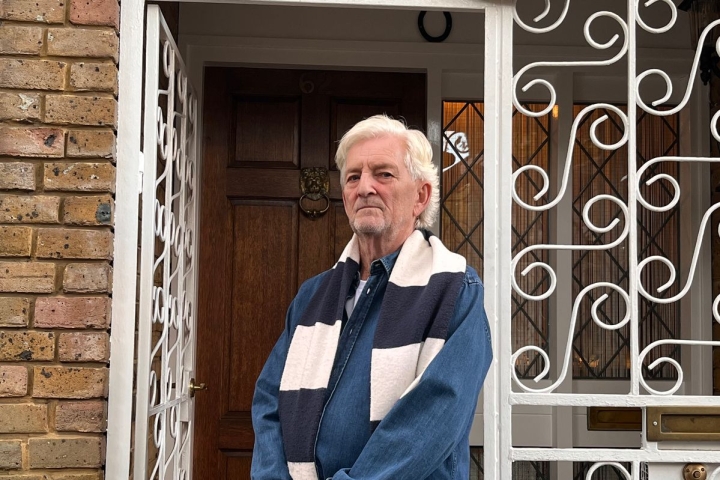
Hackney Resident Battles Council for 18 Years Over CCTV Failings

An East London resident has spent almost two decades pursuing compensation from Hackney Council over a burglary at his home in 2007.

Anthony Burton’s claim began after a thief broke into his Regents Estate home in South Hackney at around 1am on 2 June 2007. The burglar used a crowbar to smash a glass pane and stole a bag containing a purse, cash, a television, a PlayStation, and other possessions worth over £2,000.

Although police arrived about 20 minutes later, no fingerprints were found and the suspect was never caught. Mr Burton, who had home contents insurance, believed a council-controlled CCTV system could have recorded the crime. However, the system was not operational, invalidating his insurance claim.

“It’s a bit like if you’re taking out car insurance,” Mr Burton told the Local Democracy Reporting Service. “And the insurer asks you if your car has an alarm on it – and you say yes. Then, someone nicks your car. The police find it, but there’s no alarm on it. Do you think the insurance company is going to pay you out?”

As leaseholders, the Burtons were paying service charges to Hackney Council, which helped fund a network of CCTV cameras on the estate. At least one camera overlooked the back door and the driveway where their car was parked during the burglary. In 2009, they discovered that none of the 16 cameras had been working for two years.

Mr Burton claims his insurance company told him the council was liable because he had been charged for the CCTV service. Since then, he has been trying to get Hackney Council to reimburse him.

Hackney Council advises leaseholders to take out home contents insurance and states that residents may still claim compensation if loss or damage results from council negligence. A police report confirms that no CCTV was operational during the burglary.

Over the years, Mr Burton says he was repeatedly told by council staff that he would be reimbursed, only for those staff members to leave their positions before any resolution. “It just goes on and on,” he said.

In 2010, he secured a meeting with Charlotte Graves, former head of Hackney Homes, and Judith Morrison, Head of Leasehold Services. He says they promised to reimburse service charge credits to all homes paying for CCTV, though the council says it has no record of this. The officers twice offered a £200 goodwill payment, which Mr Burton refused, seeing it as a refusal to accept responsibility.

The Burtons later pursued legal action. Solicitors initially confirmed they had a strong case but advised that the £2,200 claim was not financially worthwhile. After filing a Small Claims Court claim, Hackney Council disputed that the premises had been burgled and requested proof.

Mr Burton consulted further solicitors, who warned him that pursuing the case would involve excessive paperwork and costs. “They told me I was a fish in a pond, and I couldn’t swim,” he said.

Over the years, Mr Burton has kept police reports and correspondence with council officers and politicians, including former Mayor Philip Glanville. At one stage, he stopped paying service charges and council tax, prompting the council to take him to court. He later paid £1,800 in arrears plus £200 in court costs.

Conservative councillor Simche Steinberger, involved for many years, said the dispute could enter the Guinness Book of Records due to its length and the number of officers and councillors involved. “But the worst part of it is that officers keep saying ‘the matter is closed’. How can they say that with no justification?”

Mr Burton said: “It’s a disgrace – how many more people have been affected by this?”

Hackney Council said: “We sympathise with Mr Burton and have been in regular contact with him about this incident. Following our investigations, we have no record promising to reimburse service charges, as Mr Burton suggested. We now consider this matter closed. If Mr Burton remains unhappy with this outcome, he should seek independent legal advice.”

Skip to content Skip to content