

[directorist_add_listing]

Coram Chief Executive Dr Carol Homden Honoured with DBE for Services to Children

Dr Carol Homden, Chief Executive of the London-Based Thomas Coram Foundation for Children, known as Coram, has been named Dame Commander of the Order of the British Empire (DBE) in the 2026 New Year Honours List. The accolade recognises her exceptional work supporting children, young people, and families across the UK.

Dr Homden has led Coram since 2007, having previously been commercial director at the Prince’s Trust from 2003. She has also served as Chair of the National Autistic Society for ten years and currently chairs Diabetes UK. Her previous roles include membership of the Youth Justice Board for England and Wales, seven years on the Adoption Leadership Board, and trusteeship of the Association for Child and Adolescent Mental Health. She was awarded a CBE in 2013 for her contributions to children and families.

Professor Ivor Crewe, President and Chair of the Coram Board of Trustees, said: “All who work and volunteer for Coram will be thrilled by the news of Carol’s honour. It is due recognition of her inexhaustible devotion to the welfare of the nation’s children over close to twenty years, and her inspired leadership of Coram. Without her energy, resourcefulness and dedication, worthy of our founder Captain Thomas Coram, Coram would not have developed into one of Britain’s leading children’s charities, committed to improving the lives of all vulnerable children, however hard their circumstances.”

Dr Homden said: “It is humbling and overwhelming to receive such an honour. It is my privilege to work with dedicated staff, volunteers and supporters across health, education, law and social care as we together strive to support children and families who experience adversity to create better chances for children now, and advance research and policy to build a better future for society.”

Under Dr Homden’s leadership, Coram has expanded its work supporting hundreds of thousands of children and families annually. She has overseen innovative programmes in adoption and fostering, sibling contact, and initiatives to amplify the voices of young people through youth insight and ambassador programmes. She also established the Coram Institute for Children, the UK’s first research institute of its kind, seeking evidence-based solutions to the challenges children face in the 21st century across policy, law, and practice.

Dr Homden’s personal and professional commitment is informed by her own family experience. She is married to author and designer Steve Caplin, and they have two sons, the eldest of whom is autistic and supported in Mildenhall, Suffolk.

Coram, founded as the Foundling Hospital in 1739, is the UK’s first and longest-running children’s charity. Today, the Coram Group provides a wide range of services, including reading support, life skills, creative therapy, adoption services, legal advice, and training for early years and children’s social care professionals. The Coram Institute for Children is recognised as an Independent Research Organisation by UKRI, and all of the charity’s work is guided by seven key outcomes for children and young people: access to education and justice, a loving home, a voice that’s heard, opportunities to shine, skills for the future, equality of opportunity regardless of where children live, and building a society that cares.


Frank Returns to Brentford as Spurs Visit the Gtech in Festive Fixture

Brentford’s final home game of the year comes with an extra layer of intrigue as Tottenham arrive in west London and Thomas Frank steps back into the Gtech Community Stadium for the first time since leaving the Bees to take the Spurs job. It’s a fixture that naturally carries emotion — for Frank, for players who worked under him, and for a Brentford crowd that watched a long, successful spell come to an end — but it also lands at a moment when both teams badly want points for very practical reasons.

Brentford come into the match on a high after a convincing 4–1 home win over Bournemouth last time out, a result that showcased the best of Keith Andrews’ side: aggressive front-foot play, quick service into dangerous areas and the kind of ruthlessness in the final third that has made them such a problem on home turf. That performance also underlined the pattern of their season — far more reliable at the Gtech than on the road — and Andrews will want another strong home showing to keep their league position moving in the right direction as the calendar turns.

Tottenham arrive off the back of a hard-earned 1–0 away win at Crystal Palace, their last match in any competition, with teenager Archie Gray scoring the goal that steadied a wobble and eased the pressure that had been building through a difficult run. It wasn’t a polished display, but it was the kind of away win Spurs have sometimes struggled to grind out, and Frank will hope it becomes a foundation rather than a one-off.

Brentford have looked sharper in recent weeks, especially at home, where their intensity and set-piece threat have repeatedly tilted games their way. Spurs’ recent league run has been less predictable — capable of producing strong spells and big moments, but too often disrupted by injuries, uneven game management and a lack of continuity from week to week. That contrast makes this one feel like a genuine test of which version of Tottenham turns up: the side that can control momentum, or the one that gets dragged into uncomfortable contests.

Team news is likely to shape the tone. Brentford remain without Vitaly Janelt, whose season has been ended by heel surgery, and they’ve also had longer-term absences including Josh Dasilva and Fábio Carvalho, limiting midfield and attacking rotation. There is, however, some encouragement around the group, with players returning to training and the squad beginning to look a little less stretched than it did earlier in the winter. Tottenham’s situation remains more delicate: Yves Bissouma, Dejan Kulusevski, James Maddison and Dominic Solanke have all been sidelined, and even with players returning in other areas, Frank has had to manage workloads carefully and adapt his shape depending on who is available.

As for players in form, Brentford’s latest win put the spotlight firmly on Kevin Schade, whose finishing and running from wide areas can turn a match quickly, while Keane Lewis-Potter has also been delivering end product and energy in recent weeks. Spurs will look to Richarlison to set the tone again — he’s been central to their better performances, not just for goals but for the way he leads the press and attacks crosses — while Pedro Porro remains a key source of delivery and tempo from the right side, and Gray’s growing influence is increasingly hard to ignore.

Tactically, Brentford will fancy making this a home-style game: fast starts, direct carries, strong second-ball pressure and set pieces that force Spurs into prolonged defending. Tottenham, meanwhile, will want to avoid being pulled into a stop-start battle and instead use longer spells of possession to take heat out of the contest, picking their moments to break Brentford’s press rather than playing into it. The midfield fight — and who wins the second balls when the game becomes stretched — could decide whether Spurs can impose control or whether Brentford can keep the match played at their preferred tempo.

Frank’s return will naturally dominate the build-up, but once the first tackle goes in, it’s likely to look like what it really is: two sides with enough quality to hurt each other, both needing points, and both aware that the festive period doesn’t forgive slips in focus.

Palace Welcome Fulham as Points, Patience and Personnel Shape the Contest

Crystal Palace welcome Fulham to Selhurst Park for a London derby that comes with two very different recent trajectories. Palace are trying to halt a wobble after a bruising spell of results, while Fulham arrive in far better rhythm and with the chance to turn a strong December into a platform for the second half of the season.

Palace’s most recent outing ended in a 1–0 home defeat to Tottenham, a tight match decided by a single moment that left them frustrated at not taking something from a game where they saw plenty of the ball. Fulham’s 1–0 away win at West Ham, settled late, another example of their growing habit of finding a way through close contests.

Looking at league form across the last six fixtures, Palace’s results have been up-and-down: three wins and three defeats. They’ve shown they can win games when their energy and transitions click, but they’ve also been punished heavily against top opponents and have struggled to recover once momentum swings away from them. Fulham’s last six in the league is much stronger on paper: four wins and two defeats, including back-to-back away victories and a sequence that has lifted them up the table.

The teams also know each other well, having met recently. Palace won 2–1 at Craven Cottage earlier this month, scoring early and then finding a late winner after Fulham had levelled. That game is a useful reference point: Palace were clinical at key moments, Fulham controlled long spells and created enough to believe they can turn the outcome around this time.

Injury concerns and availability will shape the selection conversation. Palace remain without Ismaïla Sarr, who is recovering from ankle ligament damage, and his absence reduces their pace and directness in wide areas. There has also been attention on Chris Richards, who picked up a foot injury in the cup and required treatment; he’s been viewed as a doubt rather than a definitive absentee, so late checks matter. Palace have also been managing defensive depth in recent weeks, meaning any small knock can have an outsized impact on balance and partnerships.

Fulham’s biggest confirmed problem has been in attack, where Rodrigo Muniz has been sidelined by a hamstring issue that has required surgery, limiting Marco Silva’s centre-forward options. Fulham have also been impacted by international duty: Alex Iwobi, Calvin Bassey and Samuel Chukwueze are away at the Africa Cup of Nations, which affects both their midfield/attacking rotation and defensive depth.

As for players in form, Palace can take encouragement from the way they’ve found goals from different sources. Eddie Nketiah has shown he can make the difference with sharp movement in the box, while captain Marc Guéhi remains a set-piece threat and a key organiser at the back. Jean-Philippe Mateta is still the focal point for how Palace play when they go direct, and when he pins defenders effectively it brings their best runners and creators into the game. For Fulham, Raúl Jiménez has delivered important goals and has been decisive from the spot, while Harry Wilson continues to provide end product and momentum swings with his delivery and shooting. Emile Smith Rowe has also been influential in their better spells, knitting play together and arriving late into dangerous areas.

Tactically, this looks like a contrast in how each side wants to hurt the other. Palace under Oliver Glasner will likely try to make Selhurst feel intense and unpredictable: quick pressure, aggressive second-ball play, and fast attacks when space opens up. Fulham, led by Marco Silva, are usually most comfortable when they can settle into shape, play through midfield with patience, and pick the right moments to increase tempo — particularly if Palace over-commit and leave transition lanes open.

With derby edge, recent history between the sides, and both squads shaped by absences, this has the feel of a match decided by concentration and timing. Palace need a response and a performance that reconnects them with Selhurst Park. Fulham will believe their recent form gives them a real chance — but they’ll also know this ground can flip a game quickly if they lose control of the key moments.

Arsenal 4 – 1 Aston Villa: Arsenal blow Aston Villa away to tighten grip on Premier League summit

Arsenal surged five points clear at the top of the Premier League after tearing Aston Villa apart with a devastating second-half display at the Emirates, running out emphatic 4-1 winners.

The contest had been finely balanced before the interval, but everything shifted dramatically after the restart as Mikel Arteta’s side struck twice in quick succession to seize control. A Bukayo Saka corner caused chaos in the Villa area when Emiliano Martinez failed to gather cleanly, allowing Gabriel to force the ball over the line on his first league start since returning from injury.

Barely moments later, Arsenal doubled their advantage. Martin Odegaard threaded a perfectly weighted pass through the Villa defence and Martin Zubimendi showed composure beyond his years to finish low into the corner, leaving the visitors reeling.

From there, the hosts played with freedom and confidence. Leandro Trossard added a third with a superb first-time strike from just outside the box, an effort that underlined Arsenal’s growing authority. Any lingering doubt was removed almost instantly after Gabriel Jesus was introduced from the bench, the Brazilian calmly side-footing home his first goal in over a year less than a minute after coming on.

Villa’s remarkable winning run came to a halt despite a late consolation from Ollie Watkins, who finished after David Raya had earlier produced an outstanding save to deny John McGinn. The goal did little to soften the blow on a night when Unai Emery’s side struggled to cope with Arsenal’s intensity and sharpness after the break.

The visitors had their moments in the first half and could have gone ahead when Watkins found space after a clever pass from Ezri Konsa, only to miscue his effort wide. Arsenal, meanwhile, were largely contained before half-time, with Viktor Gyokeres unable to convert a pair of headed chances.

Arteta’s team emerged transformed after the interval, pressing higher, moving the ball quicker and overwhelming a Villa side that appeared to feel the effects of their demanding schedule, having mounted a stirring comeback win at Chelsea just days earlier.

There was some frustration in the Villa camp after the second goal, with Mikel Merino escaping a second yellow card for a challenge on Morgan Rogers, while Arsenal also had a concern of their own as Declan Rice was forced out of the contest through injury.

Even so, the evening belonged to the league leaders. After recent matches where dominance failed to translate into goals, Arsenal were ruthless when it mattered most, stretching their lead over Manchester City and opening a six-point gap on third-placed Villa.

The victory sends the Gunners into the new year firmly in control of the title race, while Villa are left to regroup after their momentum was abruptly halted.

Speaking afterwards, Arteta praised his side’s response after the break, highlighting their efficiency and competitive edge once the game began to flow in their favour. Emery, meanwhile, played down the post-match touchline moment between the two managers, explaining that he simply followed his usual routine as the temperature dropped inside the stadium.

West Ham 2-2 Brighton: Penalty drama defines chaotic stalemate as both sides end year without a win

West Ham and Brighton closed out 2025 still searching for a league victory after a frantic 2-2 draw at the London Stadium, a contest dominated by spot-kick controversy and momentum swings rather than control.

The hosts struck first inside 10 minutes when Jarrod Bowen raced onto a perfectly weighted through ball from Lucas Paquetá and finished confidently, giving West Ham early belief after a difficult run of results.

What followed late in the first half was a remarkable spell that saw three penalties awarded in quick succession. Brighton were first to benefit when Yankuba Minteh was clipped in the area by Max Kilman, allowing Danny Welbeck to level the scores from 12 yards.

Minutes later, Brighton were handed a golden chance to go ahead after Paquetá dragged Lewis Dunk to the ground at a set piece. Welbeck stepped up again, attempting an audacious Panenka, but his effort struck the crossbar, sparking angry reactions from West Ham players who felt the attempt lacked respect.

The drama did not stop there. West Ham were soon awarded a penalty of their own when Callum Wilson’s shot struck Dunk’s arm. The incident was missed by the on-field officials but spotted by VAR, with referee Michael Salisbury sent to the monitor before pointing to the spot. Paquetá made amends for his earlier mistake by converting confidently to restore West Ham’s lead.

Brighton felt further frustration early in the second half when Kaoru Mitoma went down under pressure from Bowen inside the area, but VAR decided against awarding a third penalty. Moments later, however, the visitors found their equaliser anyway. From the resulting corner, Alphonse Areola could only push the ball into danger, allowing Joel Veltman to react quickest and turn home from close range.

Both teams pushed for a winner in an open final period. Bowen forced a sharp save from Bart Verbruggen, while Areola responded at the other end to deny Mitoma and Georginio Rutter after Brighton’s substitutes injected new life into the game.

Neither side could find a decisive moment, and the draw leaves West Ham without a win in eight league matches, though they remain six points clear of the relegation zone. Brighton are also winless in six, meaning both clubs head into the new year with lingering concerns.

Errors continue to undermine West Ham’s efforts. Loose passing, rash challenges and poor decision-making once again proved costly, leading directly to two conceded penalties. While the fight and determination were evident, individual mistakes are becoming a recurring theme that spirit alone cannot mask.

Brighton, meanwhile, showed creativity and threat but lacked composure at key moments. Welbeck’s mixed evening summed up a team that can produce attacking moments but struggles to convert them into wins.

Chelsea 2 – 2 Bournemouth: Blues held again as Bournemouth fight back in turbulent night at the Bridge

Chelsea’s difficult run of form continued on an uneasy night at Stamford Bridge as they were held to a breathless 2-2 draw by Bournemouth, with tension spilling into the stands after a controversial substitution late on.

The home crowd’s frustration was clear when Cole Palmer was withdrawn during the second half, a decision that drew loud boos and underlined the growing scrutiny on Chelsea head coach Enzo Maresca. The Blues had chances to put the game away but were undone by defensive lapses and an inability to seize control when momentum swung their way.

Chelsea made several changes following their recent defeat to Aston Villa, while Bournemouth arrived in west London still searching for a first win in nine league matches. Despite that poor run, the visitors struck first. A long throw into the box caused panic in the Chelsea defence and, after an initial effort was blocked, David Brooks reacted quickest to force the ball over the line.

The match quickly descended into end-to-end chaos, with both sides looking capable of scoring every time they moved forward. Chelsea were handed a route back into the contest when VAR intervened to penalise Antoine Semenyo for a challenge inside the area. Palmer stepped up and kept his composure, sliding the penalty beyond Djordje Petrovic to level matters.

The turnaround was swift. Enzo Fernandez ghosted into space moments later and unleashed a fierce strike into the top corner, putting Chelsea ahead inside a frantic opening spell that set the tone for the evening.

That lead did not last. Bournemouth continued to pose problems from set pieces and direct play, and Chelsea were caught napping once again as Evanilson arrived at the back post to finish from close range, punishing a lack of concentration and restoring parity before the half-hour mark.

Reece James was introduced after the break as Chelsea tried to assert greater authority, but the game lost little of its unpredictability. The pivotal moment came midway through the second half when Palmer was replaced, a decision that did not go down well with supporters desperate for a late winner. The change failed to spark the desired response, with Estevao’s effort proving Chelsea’s only shot on target after the interval.

As the final whistle approached, neither side found the breakthrough. Chelsea’s run now stands at just one win in seven league matches, while Bournemouth departed with a point earned through resilience and opportunism. Semenyo, who continues to be linked with a high-profile move away, acknowledged the travelling support at full-time, adding further intrigue to an already dramatic night.

With pressure mounting on Chelsea and confidence fragile, this draw felt like another missed opportunity rather than a platform to build on, while Bournemouth showed enough spirit to suggest their winless spell may not last much longer.

Croydon Council Steps up Crackdown on Tenancy Fraud to Free up Homes

Croydon Council has intensified its action against tenancy fraud as pressure on social housing reaches critical levels across the borough.

Over the past year, the council completed 141 tenancy investigations and recovered 36 council homes, returning them to families who have spent years waiting for safe and secure accommodation. The recoveries are estimated to have saved the borough £2.8 million.

The action comes due to a severe housing shortage. More than 8,600 households are currently on Croydon’s waiting list, while only around 800 social homes become available each year. In that context, every recovered property represents a significant lifeline.

Tenancy fraud can take many forms, including unlawful subletting, false applications, illegal succession claims and tenants living elsewhere while retaining a council home. In some cases, properties are left empty for extended periods. While not all cases are criminal, they still prevent homes from being used by those who need them most.

All allegations are investigated by the Counter Fraud Shared Service, a joint operation between Croydon and Lambeth councils. By pooling resources and expertise, the service is able to identify misuse more effectively and ensure council housing is allocated fairly.

The financial impact is substantial. Government figures value each recovered tenancy in London at £78,300. Croydon’s 36 recoveries last year alone equate to savings of approximately £2.8 million.

Several recent cases highlight the scale of the issue. In one investigation, officers discovered a tenant had moved out two years earlier, leaving her adult daughter in the property. Unannounced visits and background checks confirmed the tenant was living at a privately owned address. The council home has since been re-let to a family on the waiting list.

In another case, a property believed by neighbours to be abandoned was reclaimed after checks showed the tenant was living elsewhere. More strikingly, one long-term tenant was found to have purchased a £650,000 home while still holding onto a council flat. After confirming the move, the council recovered the property.

Resident tip-offs continue to play a vital role. Six resident-reported cases are currently under investigation, with four already progressed to housing and legal teams. Some cases have now reached the courts as the council moves to recover properties for re-letting.

Executive Mayor of Croydon, Jason Perry, said:

“Like other councils, Croydon has a shortage of council homes and thousands of households waiting for a safe, secure place to live. We cannot allow anyone to take advantage of the system or keep a home they are not entitled to.

“As in many areas of council business, we are taking a zero-tolerance approach to housing fraud. Every home that is fraudulently held is one taken away from someone who genuinely needs support. If you try to cheat the system, we will take action.”

Rogue landlords in Brent ordered to repay £564k from illegal flat

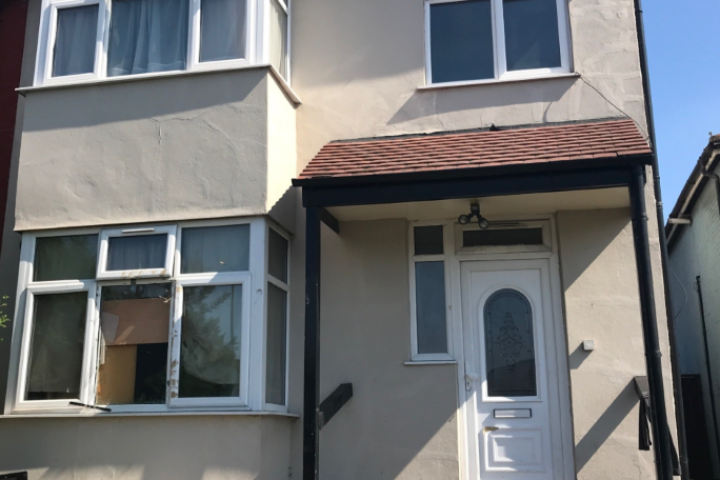
Rogue landlords in Brent have been brought to heel by an order to repay over half a million pounds following multiple penalties and several years of illegal activity.

Inderjeet and Jasvinder Chokkar converted a three bedroom family home into six small flats without planning permission. The flats were then rented out despite the lack of approval, generating significant income over several years. Brent Council issued an enforcement notice requiring the property to be returned to its original use, but this instruction was repeatedly ignored.

The couple continued to let the substandard flats, despite being fully aware of the breach of planning regulations. As rogue landlords in Brent, they persisted even after formal action was taken against them. Their behaviour eventually led to a conviction for failing to comply with a planning enforcement notice, and an appeal against that conviction was unsuccessful.

Following the conviction, the court ordered the recovery of £564,367, representing the full proceeds obtained from the illegal conversions. Additional penalties were imposed. Mr Chokkar received a £25,000 fine and faces up to 12 months in prison if the fine is not paid. Mrs Chokkar was fined £15,000, with a potential custodial sentence of eight months for non payment. Their company, Housing Solutions (GB) Ltd, was fined a further £25,000.

The court also ordered the payment of nearly £50,000 to cover council enforcement, prosecution and legal costs. In total, the combined fines, costs and confiscation order amounted to £679,142. The court considered the poor quality and small size of the flats, as well as the couple’s experience in property and their repeated refusals to comply with the law.

The case highlights the consequences faced by rogue landlords in Brent who disregard planning controls and tenant welfare. The financial motive behind the prolonged breach was a key factor in the court’s decision.

Cllr Krupa Sheth, Cabinet Member for Public Realm & Enforcement, commented on the outcome. She said: “These rogue landlords have felt the full force of the law after choosing to rip off tenants, house them in substandard conditions and ignore planning regulations. This kind of exploitation is illegal, and we will root out every last landlord in Brent who behaves like this and take them to court.”

She added: “If you break planning laws and exploit tenants in Brent, we will do everything in our power to bring you to justice. You will pay the price.”

Conservation in Croydon to potentially be boosted with nine new areas

Croydon Council is asserting its commitment to preserving the beauty and history of the borough by looking into creating nine additional conservation areas. This work would reinfore Executive Mayor Jason Perry’s pledge to safeguard the borough’s distinctive neighbourhoods and historical landmarks.

The proposed areas range from the historic Sanderstead Village, noted for its medieval parish church and 18th century ambience, to the contemporary architectural appeal of Fairfield Halls in the Civic Quarter.

The full list of areas under consideration includes:

Whitgift Estate
Croham Park Estate
South End, Ye Old Market
St Peter’s Road
London Road
Fairfield Civic Quarter
Sanderstead Village
Brighton Road, Purley
Court Avenue, Coulsdon

Each site will undergo detailed research and assessment against criteria set by Historic England, national and local planning policies. Residents will have the opportunity to contribute their opinions on which areas merit conservation status.

A conservation area is defined as an area of special architectural or historic interest, where preserving or enhancing the character and appearance is a priority. This can limit certain kinds of development, construction, and other notable changes.

This initiative aligns with Mayor Perry’s commitment to engage residents on planning matters and protect the borough’s distinctive features, as highlighted in the Mayor’s Business Plan 2022-26.

In July 2022, the Mayor removed the suburban design guide, while the ongoing Local Plan Review stresses the importance of maintaining local character and safeguarding green spaces. The review is currently under examination by the government’s Planning Inspectorate.

Since the late 1960s, Croydon has established 21 conservation areas, each differing in size, layout, and character. The Council continues to update Conservation Area Appraisals and Management Plans to ensure their relevance and protection.

Mayor Perry commented, “Croydonians are rightly proud of the unique character of the many different neighbourhoods that make up our borough.

“Our architecture and our public spaces tell the story of our rich history and evorlution, from a medieval market town to the economic powerhouse of South London, linking the coast and the capital. Croydon’s is a story of growth, hustle and drive that spans centuries, and one that we should celebrate.

“As Mayor I have listened to residents and taken action to do just that to protect our unique character through planning. The designation of conservation areas builds on this, bringing with it not just protection, but opportunity – fostering regeneration, design quality, and a stronger sense of place.”

Skip to content Skip to content