[directorist_add_listing]

Nuñez and Acosta Take Centre Stage in Royal Ballet and Opera’s Star-Led Summer 2026

The Royal Ballet and Opera has announced a summer season shaped not by spectacle, but by legacy. In late July and early August 2026, two of the Company’s most celebrated figures – Marianela Nuñez and Carlos Acosta – will curate individual programmes at the Royal Opera House, each offering a personal lens on a career spent at the heart of international ballet.

Nuñez, a Royal Ballet Principal and one of the most quietly revered dancers of her generation, opens the season with Marianela – Timeless (29 July–2 August). The programme is a love letter to the Company that has defined her career: a carefully chosen selection of one-act ballets from The Royal Ballet’s repertory, alongside divertissements performed with fellow dancers. Rather than a greatest-hits parade, Timeless promises something more intimate – a reflection on the works, partnerships and traditions that have shaped her artistry.

If Nuñez’s programme is about continuity, Carlos Acosta’s is about contrast. Carlos Acosta: Myths and Modern Masters (5–9 August) sees the former Royal Ballet Principal return to the Covent Garden stage with a wide-ranging programme of classical and contemporary works. Joined by guest artists from Birmingham Royal Ballet and Acosta Danza, Acosta brings together rare pieces and familiar favourites, united by his unmistakable theatrical flair and restless creative energy.

Now in the later, reflective phase of an extraordinary career, Acosta’s presence remains magnetic – less about virtuoso display, more about influence, storytelling and the pleasure of sharing the stage with the next generation of talent.

Together, the two programmes form an exciting summer offering: a celebration not of novelty, but of artists who have helped define what ballet looks like today – and what it might yet become.

Further details will be announced in February, with public booking opening in March 2026 here.

London Councils Warns on Funding Shortfalls Ahead of 2026-27 Settlement

London boroughs are facing mounting pressure as funding shortfalls and soaring service demand continue to strain local finances.

Responding to the provisional Local Government Finance Settlement for 2026-27, Cllr Claire Holland, Chair of London Councils, highlighted the delicate balancing act facing councils across the capital.

“A combination of long-term structural underfunding, skyrocketing demand for services and spiralling costs has left town hall finances across the capital under enormous strain,” she said.

The new multi-year settlement, the first in a decade, is a welcome step according to London Councils, offering more accurate funding allocations based on up-to-date council spending data and deprivation measures that factor in housing costs. “This is a far more accurate approach to measuring deprivation and its impact on levels of need, not just in London but across the country,” Cllr Holland noted.

Additional investment in local SEND provision has also been announced, providing crucial support for special educational needs and disabilities. Yet, even with these positive moves, the council finance outlook remains challenging. London is confronting a £1 billion budget shortfall this year, with more boroughs likely to require emergency borrowing. “Stabilising our budgets is critical for sustaining local services, building affordable homes and driving the economic growth we all want to see in our communities,” Holland added.

London Councils will analyse the settlement in detail to assess implications for borough budgets. Previous forecasts indicate that up to half of London boroughs may need emergency support to avoid financial collapse by 2028, with the capital already being the region most reliant on Exceptional Financial Support.

Temporary accommodation for homeless Londoners remains the single largest financial pressure. Latest analysis shows around 210,000 Londoners, including 102,000 children, are living in temporary accommodation—a record high, with child homelessness up 8% from last year and 35% since 2021. Subsidy for temporary accommodation has been frozen since 2011, despite massive rises in housing costs, creating a £740m annual shortfall, according to LSE research. London Councils calls for the subsidy to be updated to today’s housing costs to ensure quality accommodation and protect borough finances.

Social housing finances are also under strain. Boroughs must manage budget cutbacks even as demand for affordable homes grows. London Councils advocates for a social rent ‘convergence rate’ of at least £3 per week from April 2026 to balance fairness for tenants and funding for new home construction.

Revenue from the newly confirmed overnight accommodation levy is another area of focus. London Councils stresses that boroughs should retain a fair share of the funds raised to manage local service pressures and support growth, particularly in areas with high tourist volumes. The group will work with the government and Mayor of London to implement the levy while continuing to push for greater fiscal devolution.

London Lorry Control Scheme Introduces ANPR Cameras to Boost Compliance

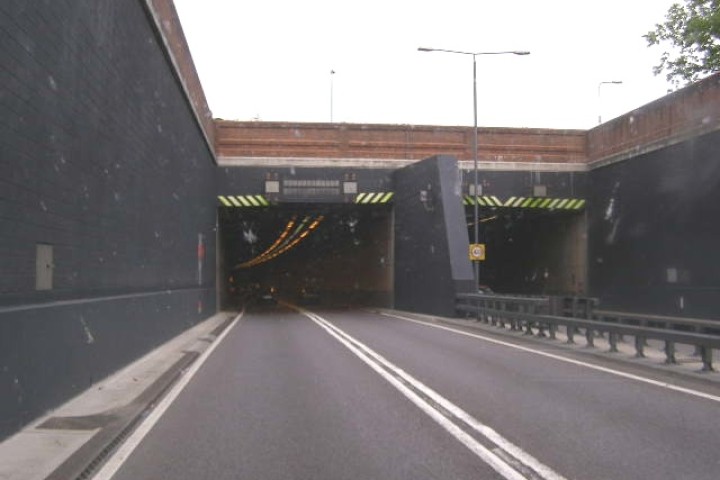
London Councils is stepping up its enforcement of the London Lorry Control Scheme (LLCS) with the introduction of automatic number plate recognition (ANPR) cameras across the capital.

The cameras are being rolled out following a successful pilot programme and will work alongside on-street Enforcement Officers to ensure heavy goods vehicle (HGV) operators comply with the scheme. The LLCS, in place since 1985, restricts HGV access to residential roads at certain times to reduce traffic, noise, and environmental impact, safeguarding the wellbeing of Londoners.

ANPR cameras will be installed on key routes identified for high non-compliance and operational priority. The technology automatically captures HGV number plates during restricted hours, allowing LLCS officers to check potential breaches before processing any enforcement actions. This approach aims to make enforcement more consistent, efficient, and fair, while also giving London Councils better insight into HGV movements overnight.

To ease the transition, warning notices will be issued to hauliers for two weeks at each new camera location. Revenue generated from any resulting penalty charge notices (PCNs) will fund vital traffic and parking services, with any surplus reinvested in transport initiatives such as the Freedom Pass for older and disabled Londoners.

Mayor Brenda Dacres OBE, Executive Member for Transport and Environment at London Councils, said: “The introduction of ANPR cameras will help the London Lorry Control Scheme make use of modern technology, supporting the work of Enforcement Officers on our streets and increasing compliance with the scheme across London. This change will allow enforcement to be applied more consistently, efficiently, and fairly, as well as minimise overnight disruption to London’s communities, allowing Londoners to live in a cleaner, quieter city.”

Operators should note that the operational hours of the LLCS remain unchanged, and HGVs must continue to follow the Excluded Route Network unless a permit allows use of restricted roads during those times.

London toddler dies after A1 crash days before Christmas

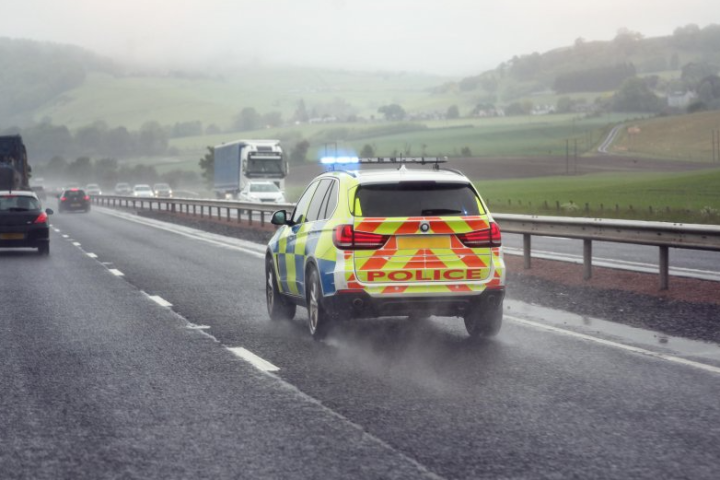
Tragedy has struck as a two-year-old boy from London has died just days before Christmas following a serious collision on the A1.

The crash happened on the northbound carriageway near Peterborough on Saturday, December 20, and involved two vehicles.

The toddler was travelling in a Toyota Auris with five other people when the car broke down in a live lane. At around 6.20pm, Cambridgeshire Police say the stationary vehicle was struck by a Volkswagen Touran. The incident has since been described as a fatal A1 crash toddler death.

All six occupants of the Toyota Auris were from London. The young boy later died from his injuries. The remaining five passengers were taken to hospital in serious condition, where they continue to receive treatment.

The driver of the Volkswagen, a 64-year-old man from Peterborough, suffered only minor injuries. He was arrested on suspicion of causing death by dangerous driving. Police have confirmed he has since been released on bail until March 20. The arrest forms part of the ongoing investigation into the A1 crash toddler death.

Officers are now making urgent pleas to ask for the public’s help as they seek more information to establish exactly what happened.

Anyone and everyone who witnessed the collision, or who may have dashcam footage from the area at the time, is being urged to come forward. Police are particularly interested in information relating to the moments leading up to the crash.

Sergeant David McIlwhan was quoted as saying: “Our thoughts are with the parents and family of this young child who has tragically lost his life in this collision. The family is being supported by specialist family liaison officers.

“I would appeal for anyone who witnessed the collision or has dashcam footage but was unable to stop at the scene, to get in touch.”

Cambridgeshire Police have confirmed enquiries remain ongoing. The A1 crash toddler death has prompted renewed appeals for witnesses as officers continue to piece together the circumstances surrounding the fatal incident.

UK Set to Test Chinese Robotaxis on London Streets in 2026

Chinese robotaxis could arrive on London streets as soon as 2026 following announcements from ride-sharing companies Uber and Lyft about partnerships with Baidu to trial autonomous vehicles.

The companies are seeking regulatory approval to begin testing driverless taxis in London. Baidu’s Apollo Go service already operates in multiple cities in China and has completed millions of rides without human drivers.

Transport secretary Heidi Alexander was reported to describe the development as “another vote of confidence in our plans for self-driving vehicles”. She added on X, external, “We’re planning for self-driving cars to carry passengers for the first time from spring, under our pilot scheme – harnessing this technology safely and responsibly to transform travel.”

Uber confirmed in June that it would accelerate UK trials of autonomous vehicles. The government is moving to facilitate pilot schemes for small commercial autonomous buses and taxis in 2026. Uber stated on Monday that its partnership with Baidu would “accelerate Britain’s leadership in the future of mobility, bringing another safe and reliable travel option to Londoners next year.”

Lyft announced in August that it aims to introduce driverless taxis in the UK and Germany through a European collaboration with Baidu. The company already provides “autonomous rides” in Atlanta, where Uber operates a similar service via its Waymo partnership.

Lyft chief executive David Risher noted on X, external that London passengers would be “the first in the region to experience Baidu’s Apollo Go vehicles”. However, regulatory approval is still required. If approved, Lyft plans to begin with a fleet of dozens of Baidu Apollo Go cars next year, eventually expanding to hundreds.

Jack Stilgoe, professor of science and technology policy at University College London, warned that autonomous vehicles “can’t just scale up like other digital technologies”. He told the BBC there is “a big difference between having a few test vehicles using public streets as their laboratory and a fully-developed, scaled-up system that becomes a real transport option for people.”

While self-driving vehicles are promoted for their potential to reduce errors, many remain concerned about safety. A YouGov poll in October found that almost 60% of UK respondents would not feel comfortable using a driverless taxi. In addition, 85% said they would choose a cab with a human driver if price and convenience were equal.

Problems with autonomous vehicles continue to make headlines, including incidents where cars have trapped passengers or caused traffic disruptions. Waymo reportedly paused its San Francisco service on Saturday after vehicles stopped functioning during a power outage.

Prof Stilgoe emphasised that safety, privacy, and congestion remain critical issues, suggesting that the UK could play a leading role in “setting standards for the technology”. He added, “London has been really successful at getting cars out of its city centre. When it comes to traffic, the only thing worse than a single-occupancy car is a zero-occupancy one.”

Ready Aye Ready: ABP supports Sea Cadets in local communities

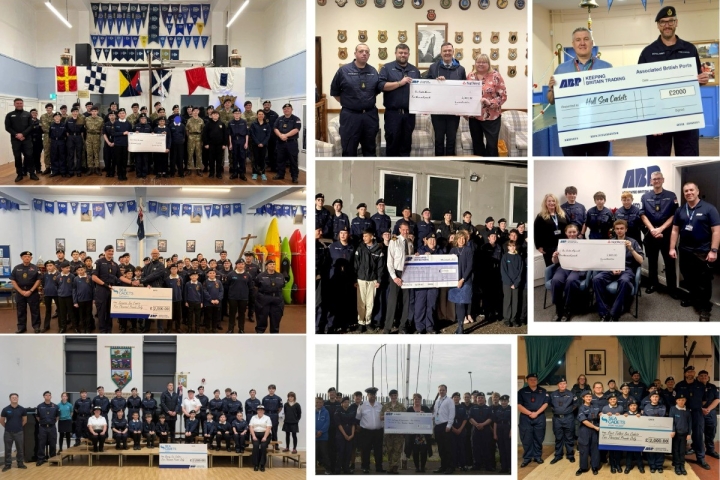
As 2025 draws to a close, Associated British Ports (ABP), the UK’s leading ports group, has completed a programme of donations supporting the work of Sea Cadet units in coastal communities all across Britain.

The funds donated by ABP will be invested across fifteen Sea Cadet units in close proximity to ABP’s ports, including in Ayr in Scotland, Barrow in the North West, Barry, Cardiff, Newport and Swansea and Port Talbot in Wales, Grimsby, Hull and Immingham on the Humber, Ipswich and King’s Lynn in East Anglia, Teignmouth and Plymouth in the South West and Southampton.

Local Sea Cadet units, all run by volunteers and each a standalone charity, offer young people a variety of opportunities and experiences to help them develop the teamwork skills, confidence and qualifications on the water and off the water. They provide a strong platform for personal development through activity-based learning and role modelling. At ABP we see firsthand the positive difference our local units make to the lives of young people and communities.

ABP’s funding will be put to work in a wide variety of ways, with uses including new training vessels, upgrades to premises, provision of facilities for overnight accommodation, essential minibus repairs and equipment for life saving training. In several cases, ABP’s donations are helping Units reach long-term goals they have been fundraising towards for some time.

The response from the Torpoint Sea Cadets (Plymouth) illustrates the positive difference ABP’s support will make: “Many thanks again for this generous offer of a donation. We are very grateful indeed. As mentioned, this will go a long way into funding our unit expansion project, specifically by getting us significantly closer to our target of being able to purchase an additional two rowing boats for next summer’s boating season. We currently don’t have enough capacity to get all of our cadets on the water on each boating night, so the extra boats will bring some significant waterborne experiences for our cadets – young people from across the local area, including Plymouth and South East Cornwall.”

Catherine Tipper, Chair of the Southampton Sea Cadets said: “We are extremely grateful to ABP Southampton for the generous donation made to Southampton Sea Cadet unit. We are fortunate to have the ongoing and invaluable support of ABP, which helps our cadets gain essential skills, qualifications, and experiences to give them a real head start in life, they have fun, gain confidence and make friends. Thank you again, your donation makes a big difference to the work we can do.”

Kings Lynn Sea Cadets said: “”As a charity we work hard to raise funds to provide the best experience for our cadets. We have an amazing team of adult volunteers who support us in delivering this. I would like to thank you from the bottom of my heart, this will help us immensely towards our purchase of a new safety boat.”

Hull Sea Cadets said “On behalf of everyone at the Unit, we thank you and ABP for your generous donation and continued support. It is much appreciated.”

Speaking for ABP, Paul Bristowe, Chief of Staff said: “We’ve been delighted to support our local Sea Cadet units through 2025, expanding a number of long-standing relationships. They do great work developing young people and highlighting the exciting opportunities the maritime sector offers. In particular I’d like to pay tribute to the volunteers who run the units, a number of whom are ABP colleagues, without whom none of this positive impact would be possible.”

For decades ABP has been a supporter of the Sea Cadets across multiple locations, including of the Grimsby and Cleethorpes Sea Cadets, based next to the Grimsby Port Office. The unit represents a great example of the variety of different water-based and shore-side activities available to young people, including sailing, windsurfing and powerboating to rock climbing, camping and paddle boarding.

In Southampton, ABP has previously donated to the Southampton Sea Cadets to help improve facilities and support the development of a variety of skills from cooking, cleaning, sailing, water safety, kayaking to confidence and relationship building. ABP has also donated items such as storage cupboards and role to Sea Cadet units, including in Barrow. In 2024, ABP supported the Ipswich Sea Cadets with the purchase and installation of a new pontoon.


Fulham 1 – Nottingham Forest 0: Fulham edge Forest as Jimenez spot-kick proves decisive

Fulham collected a valuable three points at Craven Cottage after a narrow 1-0 win over Nottingham Forest, with Raul Jimenez’s calmly taken penalty just before the break settling a low-key Premier League encounter.

The hosts were missing some of their usual attacking spark, playing without Alex Iwobi and Samuel Chukwueze, and found clear chances hard to come by for long spells. Even so, the game’s defining moment arrived when Kevin showed sharp footwork inside the area and was clipped by Douglas Luiz, leaving the referee little option but to point to the spot. Jimenez stepped up and sent the goalkeeper the wrong way to give Fulham a lead they would not relinquish.

Forest actually enjoyed plenty of the ball and spent long periods in Fulham territory, but possession rarely translated into genuine danger. Igor Jesus had an early opening after a loose pass across the Fulham box but delayed too long and blazed over, summing up Forest’s lack of urgency in the final third. Beyond that, Bernd Leno was largely untroubled, with Forest struggling to create clear sights of goal despite seeing plenty of the ball.

Fulham themselves offered little in open play after the interval, seemingly content to protect their advantage. Their best chance to seal the win came late on when Jimenez met a Kenny Tete cross, only to glance his header wide with the goal inviting. Still, Forest were unable to capitalise on Fulham’s conservatism, failing to test Leno as the match drifted towards its conclusion.

While the performance may not live long in the memory, the result certainly will for Marco Silva’s side. The win lifts Fulham further clear of relegation trouble and keeps them within touching distance of the teams chasing European places. For Forest, the frustration was clear: plenty of neat build-up, but no cutting edge, and another evening where control of the game brought no reward.

Fulham now turn their attention to an upcoming trip to West Ham, while Forest face a daunting home test against Manchester City, knowing improvement in the final third is essential if they are to avoid being dragged back into danger.

Banksy Bayswater mural confirmed as new London artwork

The elusive street artist Banksy has reportely confirmed via reliable channels he is responsible for a new mural that has appeared in Bayswater, west London. The Banksy Bayswater mural shows two children lying on the ground, dressed in wellington boots, coats and winter bobble hats, with one child pointing upwards towards the sky.

The artwork has been painted on a wall above a row of garages on Queen’s Mews and was first seen on Monday. Banksy confirmed the Bayswater mural by posting an image of the work on his Instagram account on Monday afternoon. The artist’s identity remains unknown.

Reliable media outlets have been tipped that Banksy is also behind an identical mural that appeared outside the Centre Point tower in central London on Friday. However, his representatives have only confirmed authorship of the Banksy Bayswater mural. The central London piece has not been formally acknowledged by the artist.

Artist Daniel Lloyd-Morgan was quoted as suggesting that the Centre Point location carried a specific meaning related to child homelessness. “Everybody is having a good time but there are a lot of children who are not having a good time at Christmas,” he said.

He added that passers-by appeared to be ignoring the artwork. “It’s a busy area. Quite poignant that people aren’t stopping. They walk past homeless people and they don’t see them lying on the street. It’s kind of like they’re stargazing. It’s quite fitting that the kids are pointing up like they’re looking at the North Star.”

The black and white street art depicts two children lying on their backs and pointing upwards. One child wears a woolly hat with hands tucked into their jacket pockets. Behind them, a larger figure wearing boots and a bobbly hat, possibly a Santa-style hat, also points towards the sky. The Centre Point mural appears visually identical to the Banksy Bayswater mural.

It is believed the work made a clear statement about homelessness. The Centre Point tower, at 101 to 103 New Oxford Street, has long been associated with housing protests.

Originally built as an office block in 1963, the building remained empty for more than a decade, prompting anger among social justice campaigners. The homelessness charity Centrepoint took its name from the tower after being founded by Reverend Ken Leech, who described the building as “an affront to the homeless”. The block has since been redeveloped into multimillion-pound luxury flats.

Banksy has not commented directly on the relevance of either location in relation to the new works. Mr Tomkins said he believed the artwork referenced an earlier Banksy piece.

“In 2018 he painted in Port Talbot, and the little boy is identical to child that has been painted here,” he said. “This is quite unusual for him to use the same little boy again, because he has never done that.”

The Centre Point mural follows Banksy’s London artwork from September, which depicted a protester lying on the ground holding a blood-splattered placard while a judge in a wig and gown loomed above, holding a gavel. That mural appeared on a wall within the Royal Courts of Justice complex and was removed days later.

In 2024, Banksy created an animal-themed trail across London, featuring works showing a goat, elephants, a gorilla, monkeys, piranhas, a rhino and pelicans among other animals. The Banksy Bayswater mural now adds to that recent series of high-profile works across the capital.

London Waterloo and Liverpool Street Station Closures Over Christmas for Engineering Work

Waterloo and Liverpool Street stations will close over the Christmas period to allow essential engineering work.

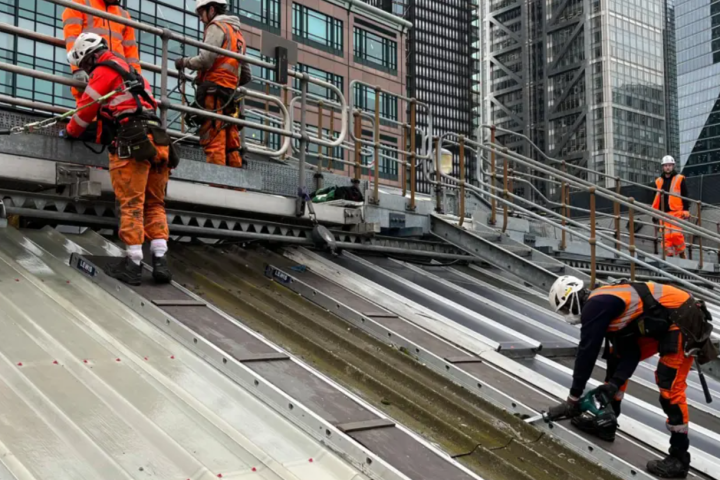
At Liverpool Street, the station will shut to enable the installation of new glass panels above the concourse. The works will also include the replacement of the ageing drainage system.

Waterloo will close to allow installation of new rail points at nearby Queenstown Road.

No trains will run between Stratford and Liverpool Street from Christmas Day to New Year’s Day. Waterloo services will stop from Christmas Day until 28 December, with a very limited service resuming until 4 January.

A two-year project at Liverpool Street has seen engineers replace panels over the platforms that were installed in the 1990s. These had cracked and become covered in lichen. The next stage will focus on replacing Georgian window panes over the concourse, necessitating a full closure for safety reasons.

The drainage system, dating back to the 1890s, will also be replaced as it is unable to cope with modern storm levels. The scheme has cost Network Rail £23m.

Huge cherry pickers will be used to remove the glass panels, making closure of the concourse unavoidable.

At Waterloo, the line will be closed to allow points replacement at Queenstown Road. The West Coast mainline out of Euston will operate only as far as Milton Keynes from Christmas Day to 5 January. Victoria and Vauxhall stations, as well as the Mildmay Overground line, will also be closed for several days. Passengers are advised to check travel information with their rail operator, Network Rail, or Transport for London.

Chris Denham of Network Rail said most of the railway would operate normally, but Christmas is the ideal time for engineering work due to lower passenger numbers. “It’s the quietest period on the railway. In some areas, you are talking 50% of normal passenger numbers. So for the massive work we need to do this Christmas for instance, it is the most logical time of year to do it. Particularly this year, as many people won’t have to go back to work until January 5th and that gives us a good chunk of time to do really difficult engineering.”

Skip to content Skip to content