[directorist_add_listing]

Eagles Welcome Title Challengers City in Sunday Showdown

Crystal Palace welcome Manchester City to Selhurst Park this weekend with the league table adding real bite to the occasion. Palace start the round fourth, while City are second, two points behind leaders Arsenal after 15 games — and Palace only five points back from City in the early title picture.

City’s last match in any competition brought a significant boost: they won 2–1 away at Real Madrid in the Champions League on Wednesday night. In the league, their most recent outing (prior to this weekend) was a 3–0 home win over Sunderland, which kept them right on Arsenal’s heels. 

The main fitness update is in midfield: Rodri will miss the Palace game as he continues recovering from a hamstring injury, while John Stones is being assessed after a thigh issue.

Palace’s last match in any competition was a convincing 3–0 UEFA Conference League win away at Shelbourne on Thursday, with goals from Christantus Uche, Eddie Nketiah and Yéremy Pino. Oliver Glasner indicated afterwards that some players who did not travel — including Jean-Philippe Mateta and Ismaïla Sarr — would be involved in the next training session, highlighting the balancing act between Europe and the league.

From a tactical perspective, City will expect to control the ball and territory, particularly with their usual aggressive positioning and wave-after-wave pressure. Without Rodri, the emphasis on game management and defensive coverage in transition becomes even more important — especially against a Palace side that have shown they can punish space quickly when opponents over-commit.

Palace’s league position speaks for itself, and Glasner’s team will treat this as an opportunity rather than a burden. They have the pace and direct running to make life awkward for City if they can stay compact, win second balls and break cleanly into the channels. Set plays could also loom large at Selhurst Park, where momentum swings quickly and small moments can feel magnified.

The stakes are clear at both ends. 

City are chasing Arsenal in the title race and cannot afford many slips. Palace, sitting fourth, have a chance to reinforce their top-four credentials and close the gap to the teams above them. 

With City arriving after a demanding European trip and Palace returning from their own continental commitments, this one has the feel of a high-level, high-intensity contest shaped by energy, structure and fine margins.


Chelsea v Everton Preview: Maresca Demands Control, Patience and Progress at Stamford Bridge

Chelsea return to Stamford Bridge with momentum to build and standards to reinforce as Everton arrive in west London, presenting a test not just of quality, but of maturity.

Enzo Maresca has been clear in his messaging this week: Chelsea’s evolution is about control, consistency and understanding game moments, not simply overwhelming opponents with talent. Against an Everton side organised and disciplined under David Moyes, those principles will be examined closely.

Maresca’s message: trust the process, control the game

Speaking ahead of the fixture, Maresca stressed that progress cannot be rushed and that Chelsea must avoid becoming impatient when matches don’t immediately open up.

He spoke about the importance of dominating the ball with purpose, keeping positional discipline, and trusting that chances will come through structure rather than chaos. Against teams like Everton, Maresca acknowledged that patience is vital — particularly when opponents are comfortable defending deep and waiting for transitions.

Maresca also underlined that Chelsea’s young squad is still learning how to manage games emotionally. He wants intensity without recklessness, aggression without losing shape, and creativity without abandoning balance.

Chelsea’s strengths: youth, pace and width

Chelsea’s most obvious weapons remain out wide. The squad is full of explosive, fearless wingers who thrive in one-v-one situations and thrive when given space to attack defenders. Maresca has encouraged his wide players to stay brave, keep taking opponents on, and stretch compact defences horizontally.

That approach will be central against Everton. Moyes’ side are well-drilled and difficult to break through centrally, so Chelsea’s ability to create overloads and isolate defenders could determine the flow of the match.

Maresca has also highlighted the importance of quick counter-pressing when possession is lost, ensuring Chelsea can sustain attacks and prevent opponents from settling into defensive rhythms.

Midfield responsibility and tempo

In midfield, Maresca wants control rather than constant verticality. He has spoken about reading the game properly — knowing when to accelerate play and when to recycle possession to pull opponents out of shape.

Against Everton, Chelsea’s midfielders will need to be sharp in possession and disciplined out of it. Everton will look to slow the game, disrupt rhythm and exploit turnovers. Maresca has made it clear that protecting the team’s structure when attacking is non-negotiable.

Respect for Everton — no complacency

Maresca was also respectful of Everton’s improvement under Moyes, noting their organisation, physicality and ability to manage tight games. He warned that Chelsea must be ready for a match where territory does not immediately translate into goals, and where concentration is required for the full 90 minutes.

Everton’s threat from set-pieces and transitions has been well-documented, and Maresca acknowledged that details — second balls, defensive positioning after attacks — will be decisive.

Team news and approach

Chelsea are expected to continue with a high-energy setup, prioritising athleticism, width and pressing intensity. While rotation is always an option given the depth of the squad, Maresca has hinted at the importance of rhythm and continuity as his side look to build consistency.

Everton arrive with selection questions of their own, particularly at right-back and in midfield, which Chelsea will aim to test early by moving the ball quickly and stretching the pitch.

A night about progress, not just points

For Chelsea, this fixture is another marker of where the project stands. The talent is evident; the challenge is turning control into dominance and dominance into results.

Maresca’s stance has been clear: performances must reflect understanding as much as ambition. Everton will not make this easy — but that is precisely the point of the test.

Stamford Bridge will expect intensity, intelligence and attacking intent. Maresca will expect composure, patience and discipline.

If Chelsea can deliver all three, this could be a night that reinforces belief in both the performance and the process.

Maria Balshaw to Step down as Director of Tate Next Year

Maria Balshaw to Step down as Director of Tate Next Year

Tate has announced that Maria Balshaw will step down as Director next year, ending a transformative nine-year tenure at the helm of one of the world’s most influential art institutions. She will leave the role in spring 2026.

Balshaw, who became Tate’s first female Director in 2017, has overseen a period of significant artistic expansion, audience growth and international collaboration. Her leadership has been defined by a clear public mission: to broaden access to art and deepen learning across communities nationwide.

Among the landmark moments of her directorship was Steve McQueen’s Year 3 in 2019 – a vast civic portrait featuring 76,000 London schoolchildren. Her exhibition programme has since championed artists long underrepresented in major museums, including Women in Revolt, Life Between Islands, Leigh Bowery and Emily Kam Kngwarray, while reimagining the presentation of major figures from Cornelia Parker and Isaac Julien to Yoko Ono and, most recently, Turner & Constable.

Balshaw has also driven a major shift in Tate’s collecting strategy, significantly increasing acquisitions by women artists, Indigenous artists, Global South practitioners and leading textile and ceramic artists. This broader, more inclusive focus has helped reposition Tate’s national collection for a changing cultural landscape.

Her tenure marked a surge in public engagement: Tate now holds the largest arts membership in the world, with 150,000 Members and a rapidly growing Tate Collective community of 180,000 young people aged 16–25 – a scheme she launched in 2018 to nurture the next generation of art lovers.

Internationally, Balshaw expanded Tate’s global partnerships, strengthening relationships with institutions worldwide and supporting the circulation of Tate’s collection across continents.

Her influence has extended far beyond Tate. As Chair of the National Museum Directors Council, she secured vital capital maintenance funding for museums nationwide and emergency support during critical periods. She played a key role in the campaign to preserve Derek Jarman’s Prospect Cottage and served on the board of Factory International, maintaining strong ties to Manchester.

Balshaw’s legacy will endure through several major projects currently underway:

  • The Clore Garden at Tate Britain, opening in 2026 in partnership with the Royal Horticultural Society
  • The complete transformation of Tate Liverpool ahead of its 2027 reopening
  • The redevelopment of the Palais de Danse at Tate St Ives, once Barbara Hepworth’s second studio

She has also been instrumental in building Tate’s long-term financial resilience through a new endowment fund, launched earlier this year and already exceeding £50 million in donations.

Before she departs, Balshaw will curate a major retrospective of Dame Tracey Emin at Tate Modern, opening February 2026.

Maria Balshaw said:
“It has been an absolute privilege to serve as Director of Tate over this last decade and to work with such talented colleagues and artists. With a growing and increasingly diverse audience, and with a brilliant forward plan in place, I feel now is the right time to pass on the baton to a next Director who will take the organisation into its next decade of innovation and artistic leadership. My greatest thrill has always been to work closely with artists, and so it is fitting that Tracey Emin’s exhibition at Tate Modern will be my final project at Tate.”

Roland Rudd, Chair of Tate, said:
“Maria has been a trailblazer at Tate. She has never wavered from her core belief – that more people deserve to experience the full richness of art, and more artists deserve to be part of that story. As the home of British art and of international modern and contemporary art, Tate today reflects the audiences we serve and the artists who make up our nation. We engage a wider public than ever before through our own galleries, our digital channels, and our projects in other venues across the UK and the world. Maria has my heartfelt thanks for those achievements and for all her work over the past decade”.

Flying Spur sets new ‘Winter Lap Record’ at most northerly active racetrack in the world

The Flying Spur Speed has again demonstrated its exceptional performance in all conditions by setting a new ‘winter lap record’ at the world’s most northerly active race circuit.

The record was set at the Drivecenter Arena circuit in Fällfors, northern Sweden – just 100 miles from the Arctic Circle, and a former military airbase. Despite the entirety of the 2.05-mile track being covered in 12” of ice and snow, the Flying Spur Speed was able to complete laps in under three minutes, with the best time standing at 2:58 – the quickest any vehicle has lapped the facility in winter conditions, ever. The Flying Spur’s variable four-wheel drive system and rear-wheel steering combined to give the car outstanding agility in the conditions, and peak speed was 120 mph during the record run despite the longest straight being only 450 metres long and covered in sheet ice.

The record was inspired by a combination of previous events from Bentley’s history – the two Ice Speed Records captured by Bentley in 2007 and 2011, and the one-hour endurance record set by a Turbo R at Millbrook Proving Ground in the UK in 1986 where 140 mph was averaged around the banked bowl. While the conditions mirrored those of the Ice Speed Records, the car that was used – registration Y15 BML – has a specification matched to the Turbo R in Bentley’s Heritage Collection. Identical Brooklands Green paintwork, yellow fine lines, and an interior in Linen, Cumbrian Green and Open Pore Walnut were specified to mark the Turbo R’s 40th birthday this year.

Flying Spur Speed – Performance in All Conditions

The Flying Spur Speed is a car designed to deliver exceptional driving performance in all conditions, thanks to its Ultra Performance Hybrid powertrain and advanced chassis systems. An advanced 600 PS 4.0-litre twin-turbo V8 is combined with a 190 PS electric motor that is neatly integrated within the 8-speed dual clutch transmission. In Sport Mode this powertrain deploys a full 782 PS and 1,000 Nm, with the instant torque of the E-motor complementing the charismatic cross-plane beat of the V8.

In pure EV mode, the E-motor provides 190 PS and 450 Nm of torque, more than enough to keep up with the traffic in most situations, while the 25.9 kWh battery offers up to 47 miles (76 km) of usable electric-only range (on the EU drive cycle). Together, the V8 and E-motor provide the new Flying Spur with a total range of 515 miles (829 km).  Full electric mode can be deployed at speeds of up to 87 mph / 140 km/h, with throttle applications of up to 75 per cent.

The Bentley Performance Active Chassis comes as standard with the Flying Spur Speed. Features of the sophisticated new setup include Bentley Dynamic Ride and All-Wheel Steering, along with an electronically controlled Limited Slip Differential, while a new generation of ESC software permits a range of driving styles to be accessed and provides reliable traction in all conditions – though the record was asset with the system completely switched off.

With the new car’s rear-biased weight distribution of 48.3 : 51.7, the chassis systems and ESC have a mechanically-optimised platform in which to provide the final refinement. The system uses active torque vectoring front to rear through a centre differential, and precision vectoring across each axle using the brakes, to provide exceptional traction in all conditions – vital for a fast lap on snow-covered sheet ice.

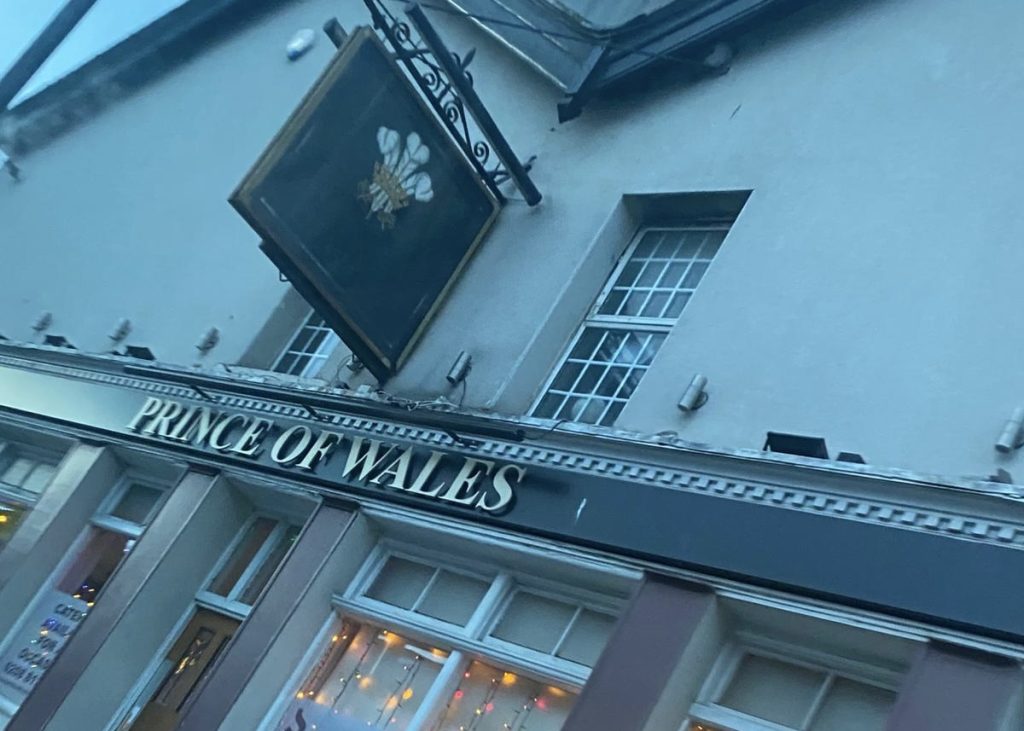
The Prince of Wales, Southall: A Beloved Desi Pub Serving One of West London’s Best Mixed Grills

Tucked away on Western Road in Southall, the Prince of Wales (or POW as it is commonly referred to) looks like a traditional London corner pub from the outside – but inside it’s one of West London’s best-known “desi pubs”, blending a classic boozer with serious Punjabi cooking and a loyal local following.

A Southall institution

The Prince of Wales sits at 202 Western Road, a short walk from Southall’s main drag and the Grand Union Canal. It’s a family-run business that’s been operating since 2003 and is now very much part of the neighbourhood’s fabric. The owners describe it as a “safe haven” for the community – a place where regulars drop in for a pint, food, and the football on TV rather than a flashy, destination gastropub.

Prince of Wales, Southall

Prince of Wales, Southall

The pub keeps long hours, opening every day from late morning through to midnight, which suits shift workers and match-day crowds alike.  Big screens show Premier League games, boxing, and pay-per-view fights, and the bar is well stocked with mainstream lagers on tap plus a selection of whiskies, Scotch and cognac.

Online reviews consistently praise the atmosphere as relaxed, unpretentious and friendly – “a nice pub that also serves Indian food,” as one TripAdvisor reviewer neatly puts it, noting that it can get busy when major sporting events are on.  The pub also proudly advertises a 5-star food-hygiene rating.

Punjabi food in a pub setting

What really sets the Prince of Wales apart is the kitchen. The menu is firmly rooted in Punjabi and North Indian cooking: grilled meats from the tandoor, rich curries, street-food-style snacks and a good spread of vegetarian options.

Starters and small plates range from Punjabi fish pakora and chicken pakora to lamb kebabs, lamb chops and paneer dishes.  There are familiar curries such as chicken curry, keema curry and chicken tikka masala, along with biryanis, daals, rice, naans and sides like chilli chips that have become favourites with regulars.

Review platforms and food blogs repeatedly single out the pub’s grills – especially the lamb chops – for special praise, describing them as “packed with flavour” and one of the standout reasons to visit.

The famous mixed grill

Ask anyone who knows the Prince of Wales and they’ll usually mention one dish first: the mixed grill. It’s the pub’s signature order, often recommended by regulars to first-timers and frequently highlighted on delivery menus and review sites.

In its classic form, the Prince of Wales mixed grill is a generous sizzling platter built for sharing. A typical serving includes:

  • Chicken tikka – around six pieces of boneless chicken, marinated in yoghurt and spices, then cooked in the tandoor until lightly charred at the edges.

  • Chicken wings – another six wings, spiced and grilled so the skin is smoky and crisp while the meat stays juicy.

  • Lamb kebabs (seekh kebabs) – two minced lamb kebabs shaped on skewers, seasoned with herbs, chilli and garam masala.

  • Lamb chops – two chops, a house speciality, marinated and grilled so they arrive nicely charred but still tender.

The kitchen also offers variations on the theme. A mini mixed grill pares things down with a smaller selection – for example, three wings, three pieces of chicken tikka, one lamb chop and one lamb kebab – ideal for one hungry person or as a starter to share.  At the other end of the scale, there are large sharing platters like the King Mixed Grill and the POW Platter, which can add extras such as king prawns, fish pakora, chicken pakora and chips, turning the dish into a full table-covering feast for a group.

The mixed grill usually arrives on a sizzling iron platter, the meats piled over sliced onions, with green chutney, chilli sauce or lemon wedges on the side – the kind of dish that turns heads as it leaves the kitchen. Online reviewers regularly describe it as “great,” “very generous” and excellent value for money, and it’s one of the most-ordered items on delivery apps as well as in the pub itself.

Why it’s worth a visit

Put simply, the Prince of Wales is the kind of place where you can watch a match, drink a proper pint and eat food that would hold its own in a dedicated Punjabi restaurant. It stays busy for a reason: consistent cooking, hearty portions, reasonable prices and a down-to-earth atmosphere that attracts locals, visitors to Southall and food-lovers from further across London.

If you go, the mixed grill is almost a rite of passage – order it for the table, share it around with naan and chips, and you’ll immediately understand why this West London pub has such a strong reputation.

Six Defeats on the Spin: Burnley Under Pressure Ahead of Fulham Visit

Burnley welcome Fulham to Turf Moor this weekend in what already feels like a significant fixture near the bottom of the Premier League. Scott Parker’s side are stuck in the relegation zone after a damaging run of defeats, while Marco Silva’s Fulham arrive looking to halt a downturn of their own and avoid being dragged deeper into trouble.

Burnley come into the game on the back of a 2–1 defeat away at Newcastle United last weekend. Reduced to ten men just before half-time and two goals down, they pulled one back in stoppage time through Zian Flemming but could not rescue a point. That result extended their losing streak in the league to six matches, and they remain 19th in the table on 10 points from 15 games, five points adrift of safety. Recent statistics underline the scale of the slump: Burnley have lost each of their last six league fixtures, conceding 13 goals and scoring only four in that period.

Fulham’s most recent outing also ended in defeat. They were beaten 2–1 at home by Crystal Palace on Sunday, despite a fine equaliser from Harry Wilson, with Marc Guehi heading a late winner for the visitors. That followed a chaotic 5–4 home defeat to Manchester City and means Silva’s side have now lost back-to-back league games after a more positive spell. Even so, Fulham sit 15th in the table, four points above the relegation zone, with a recent sequence of three wins and three defeats from their last six Premier League matches – including victories over Wolves, Sunderland and Tottenham.

The broader form guide paints a clear picture. Burnley have taken just two wins and one draw from their opening 15 league games and have lost six straight, while also going seven matches without a clean sheet. Fulham, by contrast, have been inconsistent rather than persistently poor: their last six league results read W–L–W–W–L–L, and they are winless in their last two but remain outside the bottom three.

Team news gives Parker extra problems. Burnley are without Hannibal Mejbri, Lucas Pires and Kyle Walker through suspension, while defenders Jordan Beyer, Connor Roberts and Bashir Humphreys and forward Zeki Amdouni are all sidelined with longer-term injuries. That leaves the Clarets short of options at the back and in midfield. Fulham are also missing a few important players: Rodrigo Muniz has a thigh issue, Antonee Robinson is out with a knee injury and Ryan Sessegnon is unavailable after a hamstring problem. Even so, Silva can still call on the core of the side that has carried them through much of the season, including the in-form Wilson.

Tactically, Parker is likely to emphasise structure and attitude. Burnley have struggled badly, but this fixture offers a chance to reset at home: expect a compact shape, plenty of energy in midfield and a focus on getting the ball quickly into the front line, with Zian Flemming an important creative presence. Their main task will be cutting out the errors that have repeatedly undermined them and managing the game better when under pressure.

Fulham, under Silva, will look to balance control with pragmatism. Away from home they have been inconsistent, but recent wins at Sunderland and Tottenham showed they can be efficient on the road when they defend well and take their chances. At Turf Moor they are likely to try to use their technical quality in midfield, keep the ball better than the hosts, and rely on the movement of Wilson, Emile Smith Rowe and Samuel Chukwueze behind Raúl Jiménez to create openings.

The league table ensures the stakes are obvious. For Burnley, still second from bottom and on a run of six straight defeats, this is close to must-win territory if they are to keep survival hopes realistic heading into the new year. For Fulham, a positive result would steady them after two damaging home defeats and widen the gap to the bottom three.

With one side in urgent need of a spark and the other trying to avoid being pulled into the same fight, Turf Moor is set for a tense, high-pressure encounter in which small details – and how each team handles the weight of the occasion – could make all the difference.

Top v Bottom: Arsenal Look to Respond in League After European Cruise

Arsenal welcome Wolverhampton Wanderers to the Emirates on Saturday night in a meeting of polar opposites in this season’s Premier League: the leaders against the bottom club, a side chasing the title against one still searching for a first league win.

Arsenal arrive in good overall shape, even if their most recent league outing stung. Mikel Arteta’s side lost 2–1 away at Aston Villa last weekend, conceding a stoppage-time winner that cut their lead at the top of the table to two points. Before that, they had beaten Brentford 2–0 at home and drawn 1–1 at Chelsea, part of a run that has kept them clear at the summit. Their last game in any competition was far more straightforward: a commanding 3–0 Champions League victory over Club Brugge in midweek, with Noni Madueke scoring twice and Gabriel Martinelli adding the third to complete a perfect six wins from six in their group.

Wolves come into the fixture in a brutally different position. Rob Edwards’ side are bottom of the table, winless in the league and on a run of eight consecutive Premier League defeats. Their latest match was a 4–1 home loss to Manchester United on Monday night – a game in which they briefly levelled just before half-time but were overrun after the break. It was their first league goal since late October but did nothing to change the broader picture: two points from 15 games and a double-digit gap to safety.

The recent form lines underline the contrast. Arsenal’s last six in all competitions include wins over Spurs, Bayern Munich and Brentford, draws with Chelsea and Sunderland, and that narrow defeat at Villa Park. Wolves’ corresponding run is a catalogue of setbacks: league defeats to Fulham, Chelsea, Crystal Palace, Aston Villa, Nottingham Forest and Manchester United, plus a cup exit at home to Chelsea.

Arteta’s team are expected to approach this fixture with their usual front-foot intent at home. Arsenal have been strong at the Emirates in the league, with recent wins built on early pressure, structured possession and a steady flow of chances. The midweek win over Brugge also allowed minutes for some younger and fringe players, while keeping the core of the side in good rhythm before returning to domestic duty.

For Wolves, the challenge is as much psychological as tactical. Edwards has spoken bluntly about his team’s defensive lapses after the United defeat, and his early weeks in charge have been spent trying to tighten their structure and restore belief. Recent matches have seen them sit deeper, look to stay compact and hope to grow into games, but a lack of cutting edge going forward and individual errors at the back have repeatedly undermined those plans.

The dynamic at the Emirates is therefore fairly clear. Arsenal will look to dictate tempo, keep Wolves pinned into their own half for long spells and use their variety of attacking options – from wide threats to late midfield runners – to force openings. Wolves, by contrast, are likely to prioritise defensive organisation, attempt to frustrate, and rely on counter-attacks or set pieces for any opportunities they can create.

For Arsenal, it is an important chance to stabilise after the Villa loss, protect their position at the top and avoid handing further encouragement to their closest challengers. For Wolves, every point now feels precious; even a draw away to the leaders would represent a significant step forward in a season that has yet to find any positive traction.

Given the gulf in league position and form, expectation will sit firmly with the home side – but with Wolves already warned publicly by their own manager about standards, the visitors know they cannot afford another timid showing on such a big stage.

Barbs Launches Barbados-Inspired Christmas Menu at Queen of Hoxton – A Bajan Twist on Festive Favourites

Barbs Unveils Barbados-Inspired Christmas Menu at Queen of Hoxton, Bringing Bajan Warmth to London’s Festive Season

Barbs, the UK’s first authentic Bajan fast-casual restaurant, is celebrating its first festive season at Queen of Hoxton with the launch of a bold new Barbados-inspired Christmas menu. Designed to bring warmth, spice and Caribbean soul to London’s winter, the menu reimagines seasonal favourites through a distinctly Bajan lens.

Since joining Queen of Hoxton earlier this year, Barbs has quickly become known for scratch cooking, family recipes and a modern approach to Bajan comfort food. Founder Nicc Wright says the Christmas menu is a natural extension of the brand’s mission to showcase the breadth and vibrancy of Barbadian cuisine.

“We didn’t want to serve a typical Christmas menu – we wanted to create something that feels festive but unmistakably Barbs,” says Wright. “These dishes blend familiar seasonal flavours with the seasoning, brightness and warmth of Barbados. It’s Christmas, but with an island heartbeat.”

A Festive Feast with Caribbean Character

The limited-edition menu brings together playful interpretations of festive classics and Barbs’ signature island flavours, with options for vegan, vegetarian and gluten-free diners.

Highlights include:

Deep Fried Brie
Golden, crispy Brie paired with Barbs’ house-made Bajan cranberry sauce.

Crispy Cauliflower Bites (Vegan & Gluten Free)
Cauliflower seasoned Bajan-style, finished with crispy onions, sage crumb and cranberry sauce.

Chicken Wing-Mas
Crispy wings coated in sage and onion crumb, served with Bajan cranberry sauce.

Turkey Christmas Cutter
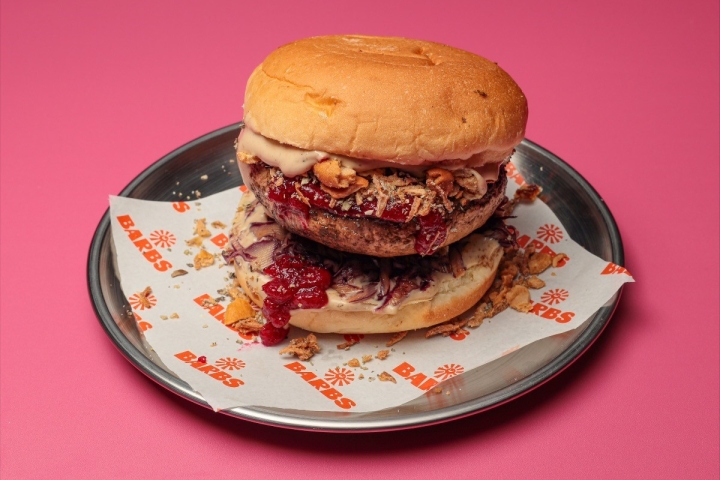
A festive, indulgent sandwich stacked with turkey breast, spiced Christmas slaw, pork scratching, gravy mayo, sage and onion crumb and Bajan cranberry sauce on a potato bun.

Portobello Christmas Cutter (Vegetarian)
A juicy portobello mushroom served with Christmas slaw, corn scratching and festive trimmings in a warm potato bun.

At the centre of the menu is Barbs’ Bajan cranberry sauce, made in-house with island-inspired spices to deliver a sweet–savory flavour profile that complements both meat and plant-based dishes.

A Perfect Pairing at Queen of Hoxton

Barbs’ partnership with Queen of Hoxton has quickly become one of Shoreditch’s standout food collaborations, combining the restaurant’s vibrant cooking style with the venue’s reputation for creativity and cultural energy.

Andy Maddocks, Managing Director of Mothership Group, says the new menu captures what makes Barbs special:

“Barbs has brought something genuinely fresh to Queen of Hoxton. Their first Christmas menu feels thoughtful, full of character and rooted in real flavour. It’s a brilliant fit for the space and for our community.”

Barbs’ Core Favourites Remain on the Menu

Guests can still enjoy Barbs’ signature dishes throughout the season – including the Bajan Fried Chicken Burger, Fried Fish Burger, Bajan Roti Wraps, Mac Pie Balls, Bajan Fishcakes and the much-loved Piña Colada Waffle – all served with the brand’s range of house-made sauces such as Fancy Sauce, Herby Mayo, Barbs Tomato Ketchup and the authentic Bajan Hot Pepper Sauce.

London Bus Speeds at Lowest in Years as Passenger Numbers Fall

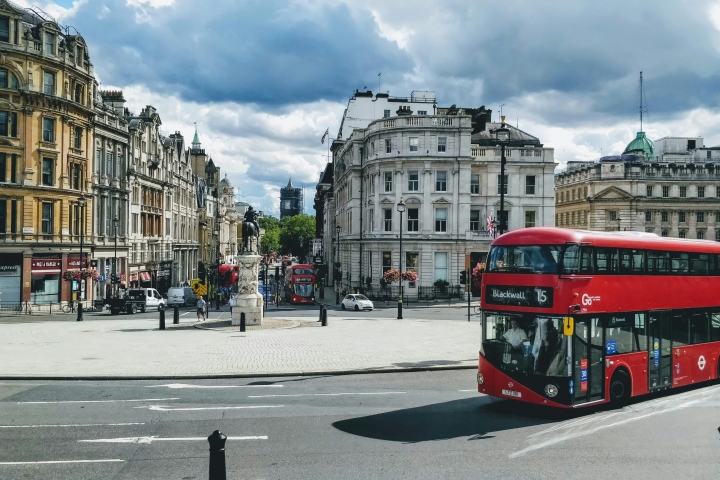
Bus speeds in London have dropped to their lowest levels in years, contributing to a decline in passenger numbers, the London Assembly has been told.

Data from City Hall shows that average bus speeds across the capital fell to 9.17mph in 2024–25, down from 10.27mph four years earlier. In August, the most recent month recorded, buses were travelling at an average of 9.06mph.

Passenger journeys also fell last year for the first time since the pandemic, dropping from 1.869 billion to 1.842 billion.

Transport for London (TfL) said its Bus Action Plan aims to improve travel speeds, including 15.5 miles of new bus lanes, 1,900 signals prioritising buses and 52.8 miles of existing lanes operating 24 hours a day.

The assembly’s transport committee heard that slow services and “endless traffic” were making buses less appealing.

Paul Lynch, managing director of Stagecoach London, said: “It’s making them less attractive and less reliable… It’s got to be one of the reasons why bus passenger numbers are declining at the same time that bus speeds are.” He added that conditions had worsened over recent years, with one driver reporting it as the worst he had ever seen in 40 years operating buses in London.

TfL’s latest Travel in London report recorded a 1.5% fall in bus journeys compared with last year, while passenger numbers on the Underground and Elizabeth line rose.

Michael Roberts, chief executive of London TravelWatch, warned that slower journey times reduce patronage, lowering TfL’s income and increasing operating costs, since more buses are required to maintain services. He said buses remain an efficient use of road space, and declining use is “bad for London”.

Roberts added: “For every 10% reduction in journey speeds, there’s a 6% reduction in demand.” Meeting the mayor’s target for 80% of trips to be made by walking, cycling or public transport by 2041 would require bus journeys to rise by 40%, with daily trips needing to grow from 5.1 million to 9 million according to TfL analysis.

The report highlighted disparities across boroughs, with average speeds below 7mph in the City of London, Camden and Westminster, while Bexley, Hillingdon and Havering recorded speeds above 11mph.

Skip to content Skip to content