[directorist_add_listing]

Man Utd 1–1 West Ham: Magassa’s Late Strike Punishes Wasteful United

Manchester United let another home victory slip through their fingers as Soungoutou Magassa’s late finish earned West Ham a deserved 1–1 draw, leaving Ruben Amorim’s side ruing missed chances and another lapse in game management.

United had looked on course to climb further up the table when Diogo Dalot smashed in the opener just before the hour mark, a goal that briefly lifted the home crowd and seemed to steady a team still scarred by their recent collapse against 10-man Everton. But their inability to close matches out struck again, and Magassa’s composed rebound denied them what would have been a vital win.

The draw nudges United above Liverpool into eighth, but it was far from the leap forward they needed. West Ham, still stuck in the relegation zone, continue to show life under Nuno Espírito Santo, collecting eight points from their last five matches and closing the gap to safety to just two points.

For half an hour, West Ham posed real questions. Casemiro had to throw himself in front of Matheus Fernandes’ low drive, and United’s back line looked uncomfortable whenever the visitors pushed forward. Eventually, though, United asserted control. Alphonse Areola tipped Bryan Mbeumo’s driven cross over the bar, Joshua Zirkzee was denied on the line by Aaron Wan-Bissaka, and Bruno Fernandes shaved the post on the rebound. United ended the half with a season-high volume of touches in the box, but nothing to show for it.

Amorim replaced Ayden Heaven at the break — the youngster booked early and walking a tightrope — but kept faith in his 3-4-3, and it was his left wing-back who delivered the breakthrough. Dalot drifted in unnoticed, pounced on a loose ball, and hammered it home to give United the lead and temporarily hush Old Trafford’s tension.

But instead of consolidating, United slipped back into bad habits. Their grip on the match loosened, they lost control of second balls, and confidence seeped away. West Ham sensed it immediately. Substitute Andy Irving’s first touch was a whipped corner, Jarrod Bowen flicked it goalward, and although Noussair Mazraoui cleared off the line, Magassa reacted fastest to sweep in the equaliser.

From that point, United wobbled. West Ham even carved out half-chances to snatch all three points, their belief growing as United retreated. Nuno’s side may still sit in the bottom three, but their structure, discipline, and momentum suggest they will not be there much longer.

United, on the other hand, remain puzzlingly inconsistent. The path to Champions League qualification is still open, but displays like this — flat, careless, and short of conviction in key moments — will not get them there.

Amorim insisted afterwards that the match had been under control before his side lost the ball too easily and surrendered momentum. Nuno, meanwhile, praised his players for their bravery and organisation in a stadium where many teams crumble.

Old Trafford once again felt like a missed opportunity — and United once again felt like a side unsure of exactly who they want to be.


GLL Opens Applications for Year Two of its Literary Foundation

GLL – the charitable social enterprise behind many of the UK’s public libraries – is kicking off the second year of its fast-growing GLL Literary Foundation, and it’s calling on children’s authors to step forward.

Now recognised as a national programme (and newly featured in Writers’ & Artists’ Yearbook 2026), the Foundation offers a rare combination of creative, financial and professional support designed to help early-career children’s authors turn passion into a sustainable career. And crucially, it keeps libraries – including those across Bromley and Greenwich – at the heart of the story.

Applications are now open!

Publishers can nominate authors for the 2026 cohort until 9 January 2026, with GLL particularly keen to hear from writers connected to its library communities.

Successful applicants receive:

  • A £750 bursary and in-kind support worth up to £4,000
  • A dedicated librarian mentor to help design and deliver events in libraries and schools
  • Specialist training in branding, marketing, finance and publicity
  • Networking opportunities with publishers, booksellers and literary festivals
  • Access to workspace in GLL’s business library hubs

Alongside the bursary scheme, GLL also runs a free online support programme for all authors living or working in GLL library areas. Think webinars, workshops, virtual mentoring and practical guidance – open to writers at any stage.

A Programme that Works

The inaugural 2025 cohort reported stronger networks, higher confidence and boosted visibility – with book sales to match. All 20 authors now join a new Alumni Programme to keep that momentum going.

Children’s author Marcela Ferreira, who worked with Bromley Libraries, describes the scheme as “a dedicated personal cheerleader and safe haven” that helped her navigate the industry.

Greenwich-based author Janelle McCurdy calls it “one of the highlights of my career… a true blessing” for building community connections and reaching young readers.

Author Janelle McCurdy

Why It Matters

The Foundation was created in response to mounting evidence: early-career authors are struggling to make ends meet, yet meeting real writers in real libraries is proven to boost children’s reading engagement.

It also aligns with the National Year of Reading 2026, strengthening the cultural role of libraries at a time when children’s literacy needs urgent attention.

Rebecca Gediking, GLL’s Head of Libraries, puts it simply:
“Libraries empower writers and communities to thrive – this programme proves it.”


Applications and details here

Fresha Reveals London Bus Takeover as Demand for Self-Care Surges This Party Season

Fresha, the world’s largest beauty and wellness booking platform, has launched one of its boldest UK campaigns – a full London bus takeover urging time-pressed Londoners to put self-care back on the agenda.

For the next two weeks, more than 300 Routemasters will be ‘Fresharised’ across the capital, running on some of the city’s busiest routes from Shoreditch and Camden to Oxford Circus, Angel, Hackney, King’s Cross and the West End.

Stamped with the line ‘Selfcare just got Fresha’, the campaign targets commuters, party-hoppers, Christmas shoppers and tourists at precisely the moment they’re most likely to need a salon rescue or last-minute spa fix.

Perfect timing for a city at full tilt

The rollout coincides with one of the highest footfall periods of the year. November to December brings a 35% uplift in weekend visitors to central London, while Tube and bus usage spikes as festive shopping and office party season peaks.

Meanwhile, searches for ‘same-day beauty appointment’ and ‘last-minute hair appointments’ reliably surge each winter, and Google reports 1.5 million searches for ‘selfcare’ last month alone – up 13% year on year.

Fresha’s campaign lands squarely in these high-pressure micro-moments: stuck in traffic, sprinting between events, or racing to get party ready.

A TikTok-ready backdrop for London’s commute

With TikTok’s #LondonCommute trend topping 2.1 billion views, Fresha expects the fleet of black-and-pink buses to appear organically across social feeds as Londoners film their daily routes through iconic streets.

James Hayward-Browne, Head of Brand & Content Marketing at Fresha, said:

“Our goal was simple: to meet people where they are. December in London is busy and can feel overwhelming with office parties, Christmas prep, winter skin and hair flare-ups and everything in between. These buses are a reminder that self-care can happen at any time, not just once the new year begins. Whether someone needs a quick reset during their lunch break, a blow-dry before an event, or a pre-flight manicure before heading home for the holidays, Fresha makes it easy to prioritise yourself whenever you need it.”

Where the buses are running

The takeover covers key high-traffic routes including the 253, 38, 73, 19 and 254 – lines that cut through some of London’s most beauty-savvy neighbourhoods such as the West End, Angel, Hackney, Dalston, Victoria, Soho and Camden.

A timely boost for local beauty businesses

With more than 140,000 beauty and wellness partners worldwide, Fresha’s winter campaign is designed to drive bookings for salons and freelancers during one of the most lucrative – and demanding – months of the year, turning London’s festive rush into a moment of opportunity.

Old Trafford Under the Lights: Amorim’s United Host Nuno’s West Ham

Manchester United return to Old Trafford this evening looking to turn a much-needed upturn in results into something more sustained, while West Ham arrive in the relegation zone knowing they badly need points of their own. With United sitting in mid-table but within touching distance of the European places, and West Ham down in 18th, this feels like an important checkpoint in the season for both clubs.

United come into this fixture on the back of a morale-boosting comeback win over Crystal Palace at Old Trafford, a result that ended a three-match winless run in the league. Ruben Amorim’s side had to respond after falling behind, but showed character and attacking intent to turn the game around and move up to ninth place, three points off the top four with a game in hand.

West Ham, now under Nuno Espírito Santo, saw their recent momentum checked by a 2–0 defeat to Liverpool last weekend – a game in which they had to play a long spell with ten men. That loss ended a three-match unbeaten run which had included an eye-catching 3–1 home win over Newcastle, their first league victory under Nuno and their first home league success since February. They travel to Manchester 18th in the table on 11 points, very much part of the early relegation picture.

Recent history between the clubs will also be in the visitors’ minds: West Ham have won four of the last five competitive meetings, including a 2–0 victory at Old Trafford in May.

United are now firmly under the guidance of Rúben Amorim, whose early months have brought a clearer playing identity and, recently, an uptick in league results. He still has selection issues to manage: Benjamin Šeško remains sidelined with a knee problem, and full-back Noussair Mazraoui is unavailable due to international commitments later this month, while Matheus Cunha has only just returned from a head injury and is still being eased back. Even so, the core of his starting XI – including Bruno Fernandes, Casemiro and Bryan Mbeumo – is available and in regular action.

West Ham are in the early weeks of the Nuno Espírito Santo era after the Portuguese coach replaced Graham Potter in September. He inherits a squad that has been inconsistent and leaky defensively, but one that still boasts attacking threats in the likes of Jarrod Bowen, Callum Wilson and Lucas Paquetá. There are no widely reported new injury crises ahead of this game, though Nuno has already hinted he may need to shuffle his pack to cope with the schedule and to tighten up a back line that has conceded 27 league goals in 13 matches.

At home, United under Amorim are looking increasingly front-foot. Expect them to push their full-backs high, dominate the ball for long spells and use the movement of Fernandes, Mbeumo and Cunha (if selected) to drag West Ham’s back four around. Their recent improvement has come from sharper pressing and quicker ball circulation, though defensive lapses have not been eradicated completely.

West Ham will likely arrive with a more pragmatic plan. Nuno’s sides are usually compact and well organised, and he will look to keep the spaces between the lines tight, defend deeper than his predecessor’s team often did, and then spring forward quickly through Bowen, Wilson and Paquetá when United turn the ball over. Set pieces will also be a key part of their armoury, especially against a United defence that has been vulnerable in those moments at times over the last 18 months.

The central midfield battle should go a long way to deciding the rhythm of the evening. If United can control that area, win second balls and keep West Ham penned back, they have the quality to create sustained pressure and enough attacking options to make it count. But if West Ham can disrupt Casemiro and his partners, force turnovers and transition quickly, they have already shown in previous meetings that they can hurt United.

Concentration at the back will be vital for both teams. United have struggled to keep clean sheets; West Ham have conceded heavily in several matches this term. One mistake, one set piece or one counter-attack could swing a game that has plenty riding on it.

For Manchester United, this match is an opportunity to back up the Crystal Palace comeback and move closer to the group chasing Champions League places. Another win would consolidate the sense that Amorim’s ideas are bedding in and that Old Trafford can once again become a reliable source of points.

For West Ham, the stakes are more immediate. Sitting in the bottom three, they need results quickly to avoid getting cut adrift. A positive performance and even a point at Old Trafford would be useful; an away win would instantly change the mood around Nuno’s tenure and give their season a very different feel.

With one side looking up the table and the other anxiously glancing over their shoulder, tonight’s game at Old Trafford promises to be tense, tactical and potentially pivotal for both clubs.

Leeds 3–1 Chelsea: Farke’s Men Deliver Statement Victory

Leeds United produced their performance of the season at a feverish Elland Road, dismantling Chelsea 3–1 to lift themselves clear of the relegation zone and deal a serious blow to the visitors’ Premier League title ambitions.

Under intense scrutiny and with pressure mounting over his future, Daniel Farke doubled down on the 3-5-2 system that sparked life in Leeds during their spirited second-half fightback at Manchester City. His conviction was rewarded handsomely: Leeds were hungrier, sharper and braver throughout, overwhelming a Chelsea side that arrived in West Yorkshire believing they were genuine title contenders after impressive displays against Arsenal and Barcelona.

Instead, Enzo Maresca’s team left nine points adrift of leaders Arsenal, their momentum shattered by a Leeds side who simply wanted it more.

Elland Road smelled vulnerability in the visitors and roared its side forward from the opening whistle. Leeds pressed relentlessly, snapping into duels, suffocating Chelsea’s midfield and creating wave after wave of pressure.  Their dominance paid off after just 16 minutes.  A powerful near-post run from Jaka Bijol met a wickedly delivered corner, and the defender thundered a bullet header past a helpless goalkeeper.  It was no fluke — Chelsea were visibly rattled by Leeds’ intensity and structure.

Then came a moment of pure brilliance.

Just before the break, Ao Tanaka picked up the ball 25 yards out and unleashed a sensational long-range strike that dipped and swerved into the far corner. Elland Road erupted in disbelief and delight as Leeds took a fully deserved 2–0 lead into half-time.  Chelsea, dazed and disorganised, trudged down the tunnel having been out-run, out-fought and out-thought.

Maresca’s response was swift and ruthless. A double substitution at the break injected urgency, and the impact was near-instant.  A lapse in concentration from Gabriel Gudmundsson allowed Pedro Neto, freshly introduced, to steal into the box at the back post and poke home a lifeline goal for 2–1.  Chelsea suddenly looked alive, the pace quickened, and Leeds teetered for the first time all night.

But the hosts refused to fold.

As Chelsea pushed forward in search of an equaliser, Leeds struck with precision.

A sloppy pass inside the box from Tosin Adarabioyo was seized upon by substitute Noah Okafor, who showed brilliant awareness to square the ball for Dominic Calvert-Lewin.

The striker — revitalised in recent weeks — swept the ball calmly into the bottom corner for his second goal in as many games, sending Elland Road into raptures and restoring Leeds’ two-goal cushion at 3–1.

This time, Chelsea had no answer.

The visitors’ title talk dissolved under Leeds’ ferocity and tactical clarity. They mustered possession but not purpose. Leeds, meanwhile, defended with grit and countered with menace.

For Daniel Farke, this was more than three points.  It was a statement.  And proof that this Leeds team still has fight — and a clear identity — in their battle for survival.

The manager praised his side’s unity and resilience afterwards:  “We’re a club on a mission. Elland Road must be our fortress.”

Saturday brings another huge test at home to Liverpool — and, suddenly, belief is flowing again.

A frustrated Enzo Maresca gave a blunt assessment.  “They were better than us in all aspects.  We deserved nothing.”  Chelsea’s defeat exposed familiar cracks: vulnerabilities without Caicedo, soft defending, and a lack of ruthlessness.

Leeds climb out of the drop zone, three points clear and revitalised.   Chelsea slump nine points behind Arsenal, their title hopes fading.

Elland Road demanded a response — and Leeds delivered one of the most important performances of their season.

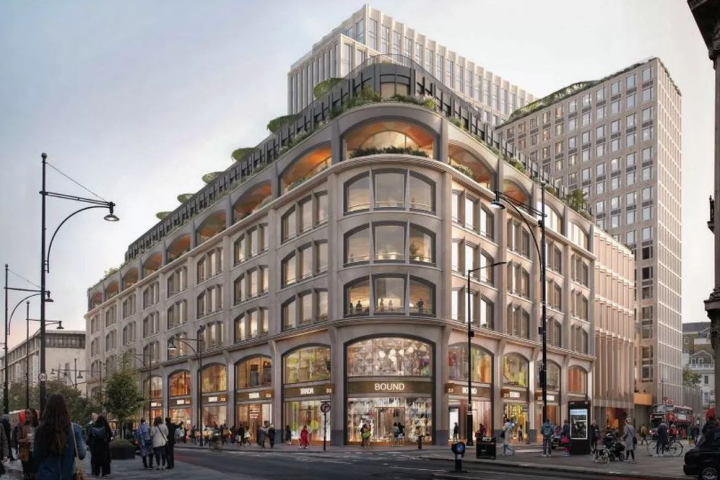
Former Oxford Street Campus to Become New Food Hall and Office Space

A former college campus and office block near Oxford Street is set to undergo a major redevelopment, creating new retail, food hall and office space.

Berkeley Estate Asset Management, acting for long-term owner Oxford and City Holdings Ltd, has submitted plans for a “deep retrofit” and extension of 33 Cavendish Square. The scheme includes refurbishing the site’s three towers, removing their cores to create more open floor plans, and demolishing surrounding low-rise buildings, known as the podium.

The redevelopment would replace the former College of Fashion campus with an eight-storey block and deepened basement. The three towers, dating from the 1960s and ranging from nine to 21 storeys, will remain as office space. Floors between the 17th and 19th storeys may be converted into a viewing gallery, bar and food area.

Newly built blocks will include office space, “cultural and creative” floorspace, restaurants, a pub, and a food hall. The current site also houses a mini-golf leisure centre, gym, and empty teaching space last used by the University of Arts.

Local community groups have largely supported the plans but expressed concerns over the scheme’s height and massing. Some fear the frontage could disrupt the “rhythm” of Oxford Street. One objection noted that demolishing the south podium would remove a building that had housed the London College of Fashion for more than fifty years, calling it a cultural loss.

Westminster City Council planning officers described the scheme as “highly commendable” and noted that it would create hundreds of local jobs. The plans retain more than half of the original floorspace and are expected to add 35,000m2 of office space, supporting 1,875 employees in offices and 335 jobs in ancillary services.

The redevelopment would result in the loss of 6,500m2 of retail space, as well as the mini-golf facility, gym, and educational space. Council analysis indicated the increase in office space would bring economic benefits and improve the overall quality of the West End International Centre.

Energy efficiency is a focus of the proposal, with greening planned for terraces and roofs where the current site lacks greenery. Council officers noted that the reconfigured retail space would be of higher quality, revitalising a key area just off Oxford Street.

Westminster City Council’s planning committee is scheduled to review the application on Tuesday, December 9.

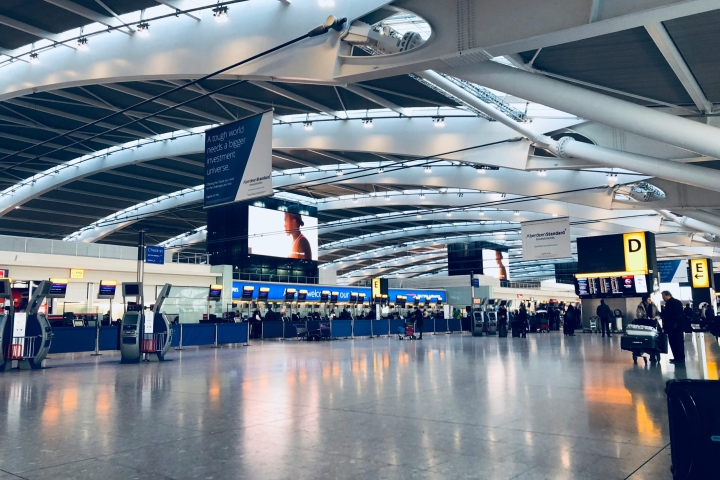
Heathrow Airport Introduces Fee Hike and Time Limit for Terminal Drop-Offs

Heathrow Airport has announced changes to its passenger drop-off arrangements, introducing a time limit and increasing fees for the first time.

From January, the airport will raise its terminal drop-off fee from £6 to £7. Travellers will be allowed 10 minutes in the drop-off areas before a Penalty Charge Notice (PCN) can be issued.

Passengers can pre-pay online or by phone, but must do so before midnight the following day to avoid an £80 fine.

A Heathrow spokesperson said the changes are designed to “smooth traffic flow and reducing congestion.” They added: “It helps reduce congestion, encourages public transport use, and ensures our forecourts are used for their intended purpose.”

The airport emphasised that free drop-off and pick-up options remain available at all Park and Ride car parks for each terminal. They noted that 95% of passenger visits to the terminal drop-off zones were under 10 minutes.

Other London airports have similar charges. Gatwick, Luton, Stansted and Southend airports all charge a minimum of £7 for drop-offs, while London City airport offers the service for free.

Burnley 0–1 Crystal Palace: Muñoz Header Seals Precious Win

Crystal Palace escaped Turf Moor with a hard-fought 1–0 victory thanks to Daniel Muñoz’s precise first-half header — a single moment of quality in a match dominated by Burnley’s pressure but undermined, once again, by their lack of cutting edge.

The Colombian wing-back struck midway through the opening period, rising to guide a looping header back across goal from Marc Guehi’s deep cross. It was a slick, well-crafted move in an otherwise cagey first half where Burnley controlled possession but remained toothless in the final third — a recurring theme of their troubled season.

Oliver Glasner’s side were made to sweat late on, surviving waves of Burnley pressure and relying on heroics from Dean Henderson and Chris Richards to protect their slender advantage.
For Burnley, it was another afternoon of frustration: a fifth straight defeat, a fifth match without scoring, and further evidence of brutal Premier League growing pains.

Burnley’s opening spell showed promise.  They circulated the ball confidently, pressed Palace back into their own half, and controlled the tempo.  But, as has been the case too often, they stalled at the decisive moment.  Palace, meanwhile, waited patiently for their moment — and when it came, they pounced.  A sweeping move found Guehi in space wide on the right.  His curling cross picked out Muñoz, who directed a measured header across James Trafford and into the far corner.  Against the run of possession, Palace were in front.  Scott Parker’s side, despite their territorial dominance, had produced just 0.07 expected goals up to that point — a statistic that summed up their first-half struggle.

Burnley emerged from the break with renewed intent, helped enormously by Parker’s bold decision to introduce Jacob Bruun Larsen, Hannibal Mejbri, and Marcus Edwards.

Instantly, the Clarets looked sharper, more vertical, and far more threatening.

On the hour mark, they engineered their best attacking sequence of the afternoon, Bruun Larsen’s teasing cross found Lyle Foster, whose half-volley was dramatically blocked.  The rebound fell to Josh Cullen, whose effort was smothered by Palace defenders throwing bodies on the line.  Moments later, Burnley came even closer.

Bruun Larsen surged into the box to meet a deep delivery, unleashing a thunderous effort destined for the top corner — only for Dean Henderson to stretch out a single fingertip and divert it onto the crossbar.  Replays confirmed the slightest of touches made all the difference.  It was Burnley’s turning point… but ultimately not enough.

Burnley pushed, pressed, and probed, but their intensity faded as the minutes ticked away.

Their final chance came wrapped in chaos:  Henderson misread a late cross, punching thin air, and the ball ricocheted dangerously toward goal.  It took a sharp, instinctive goal-line clearance from Chris Richards to deny Armando Broja what would have been a fluky equaliser.  After that let-off, Palace closed ranks, slowed the tempo, and absorbed the last of Burnley’s pressure to secure what Oliver Glasner called “a huge win.”

Scott Parker, despite another crushing result, insisted his players deserved more.    A lot of positives — courage, bravery, taking the game to Palace.

Oliver Glasner, meanwhile, admitted his team had to “survive” the final stretch.  

Crystal Palace climb further from danger, grinding out three vital away points.  Burnley suffer a fifth consecutive defeat, remain goal-shy, and face increasing pressure in the fight for survival.  Muñoz continues to shine under Glasner, delivering energy, aggression, and — now — crucial goals.

Despite Burnley’s late charge and control for long spells, Palace’s resilience won the day.

For Parker’s young side, the effort was admirable — but the Premier League remains unforgiving, and their margin for error grows thinner by the week.

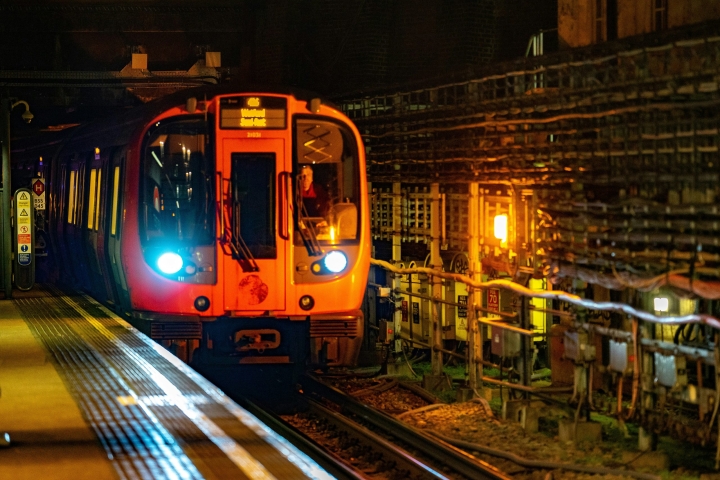
London Could Halve Transport Project Costs with European Planning Model

A City Hall report has suggested that London could cut the cost of major new transport projects by up to half by adopting a European model of planning and financing.

The report, titled Mind the Funding Gap, highlights that infrastructure projects in the capital are often significantly more expensive than in other European cities. For example, the Jubilee line extension reportedly cost ten times more per mile than a comparable project in Madrid.

The report calls on the mayor and Transport for London (TfL) to restart work on Crossrail 2, which was paused after government funding was withdrawn during the Covid-19 pandemic. It warns that without reform, rising delivery costs could lead to more projects stalling at the planning stage.

Recent years have seen the completion of several new transport projects in London, including the Elizabeth line and Northern line extension. Last week’s Budget also confirmed government backing for the Docklands Light Railway (DLR) extension to Thamesmead. However, other projects, such as the Bakerloo line extension and West London Orbital, remain on hold.

The London Assembly Budget and Performance Committee report suggests that planning and financing reforms, modelled on successful European approaches, could make a significant difference. The committee pointed to Madrid’s metro expansion in the 1990s, which kept costs low by using standardised and simplified station designs.

Neil Garratt, chair of the committee, said: “Delivering new transport infrastructure has wide-reaching benefits for London, Londoners, and the wider country, yet challenges remain with funding and spiralling development costs. London could deliver major infrastructure projects between 20 and 50% cheaper if we adopted some of the planning and financing processes in neighbouring countries.”

The report also calls for a clear timeline from City Hall for transport developments until 2040, alongside a strategy to fund infrastructure with private investment.

TfL said it would respond to the report in due course. A spokesperson added: “TfL has a wealth of experience in London of delivering transport infrastructure projects. Many of these have been unlocked through innovative financing agreements with the private sector, which we continue to consider for major projects on a case-by-case basis.”

Skip to content Skip to content