[directorist_add_listing]

Brentford FC Seal First Away Win of the Premier League Season

West Ham 0-2 Brentford – London Stadium, Premier League

Brentford earned their first away win of the Premier League season yesterday, with a dominant 2-0 victory over West Ham United.

Second-half goals from Igor Thiago and substitute Mathias Jensen ensured a fully deserved three points for Keith Andrews’ side, whose superiority has plunged the Hammers deeper into relegation danger. West Ham were meanwhile booed off at full-time after suffering a fifth straight home defeat at the London Stadium – making this their worst run since 1931.

Brentford seized control early in the game, registering 15 first-half shots and exploiting West Ham’s defensive fragility from set-pieces and long balls. Their pressure finally became too much in the 43rd minute, when Kevin Schade outpaced two defenders to square for Thiago, whose shot beat Alphonse Areola at the second attempt. Thiago had already struck the crossbar and went on to have another goal ruled out for offside — a decision confirmed by VAR.

West Ham lacked cohesion and attacking threat throughout, rarely testing their rivals and giving Brentford’s goalkeeper, Caoimhin Kelleher, an easy 90-minutes. Jarrod Bowen came closest with a low strike in first-half stoppage time, but the hosts never built on it.

With West Ham down to ten men late on due to an injury to Konstantinos Mavropanos and no substitutions remaining, Brentford sealed the win when Jensen rifled a shot into the roof of the net in stoppage time.

Brentford’s Head Coach, Keith Andrews commented: “I’m very proud of the group. We had courage and personality. Thiago has come through tough times with injuries, and now he’s showing his quality. The team managed the game brilliantly.”

Off the pitch, fan frustration continues to grow.

Organised protests and thousands of empty seats highlighted unrest with the club’s board, particularly co-owners David Sullivan and Karren Brady. Supporters group Hammers United have voiced longstanding discontent over the club’s direction, recruitment, and stadium move from Upton Park.

With boos ringing out at half-time and full-time, Nuno Espirito Santo’s first home game in charge could hardly have gone worse, where the manager said: “It was a disappointing evening and performance. We had a good start, but Brentford were more aggressive and we lost control. There’s a clear anxiety at home — from fans and players. We need to change this.”

What is next for these teams?

West Ham will be facing Leeds United on Friday, where they hope to break their four-game losing streak at home and lift themselves out of the relegation zone. They return to the London Stadium on Sunday, 2nd November to play Newcastle United.

Brentford will host struggling champions Liverpool next, before taking on Grimsby Town in the Carabao Cup round of 16.

UK tech incorporations hit record high for second straight quarter

The UK’s technology sector has achieved a new milestone, with the number of newly incorporated tech firms hitting record levels for the second consecutive quarter. Fresh analysis by RSM UK revealed that 15,470 new tech companies were launched in the third quarter of 2025, representing a 36% increase compared with the same period last year and an 8% rise on the previous quarter — which itself had already set a record.

Growth was widespread across the UK, with every region reporting an increase in new tech incorporations compared to 2024. London, the East of England, the North West, the South West, Wales, and the West Midlands all recorded their strongest quarters since 2019, underscoring the national reach of the country’s growing digital economy.

According to RSM UK’s head of technology industry, Ben Bilsland, this surge reflects growing optimism in the sector. He noted that further expansion could be on the horizon in the fourth quarter, buoyed by recent government initiatives and international agreements. “Q4 may see further growth in the wake of positive messaging from the UK government on the tech sector and the US–UK Tech Prosperity Deal announced during the US President’s recent visit,” Bilsland said.

The US–UK Tech Prosperity Deal is expected to channel deep investment into advanced areas such as artificial intelligence, quantum computing, civil nuclear energy, and other frontier technologies. Several major American tech companies have already pledged multi-billion-pound investments in the UK, with their CEOs highlighting the country’s dynamic innovation landscape and talent base.

Bilsland described the pace of UK startup creation as remarkable but cautioned that sustaining this growth would depend on overcoming several persistent challenges. “Funding is crucial, alongside access to the right talent and skills, and a regulatory environment that balances innovation with protection,” he explained.

He also pointed to the upcoming Autumn Budget as a pivotal moment for the sector’s future, calling on the government to maintain its support for innovation and enterprise. “As we approach the Autumn Budget, all eyes will be on the Chancellor to unveil growth-friendly tax incentives for businesses and to protect the R&D tax scheme, which is a crucial pillar to support innovation and development,” Bilsland added.

The recent boom in tech incorporations highlights both the strength and resilience of the UK’s digital economy. Despite broader economic challenges, including inflation and global supply chain disruptions, the appetite for technological innovation and entrepreneurship remains strong. Industry observers say the surge demonstrates not only confidence in the UK’s innovation ecosystem but also the country’s position as a major player in the global tech arena.

With momentum building and investor confidence high, the coming months will be crucial in determining whether this record-breaking trend continues into 2026.

Befordshire man banned from flying after mid-air meltdown on US flight

A man who caused chaos on a transatlantic flight to London has been banned from travelling abroad for six months after being restrained by cabin crew mid-air.

Simon Jones, 51, from Willington in Bedfordshire, was handcuffed after shouting, swearing, and pacing up and down the cabin on a flight from the United States to Heathrow on 23 May. Uxbridge Magistrates’ Court heard that his behaviour escalated so severely that the captain authorised crew to physically restrain him.

Prosecutor Ashleigh Ettienne told the court that Jones began showing signs of agitation before the plane even left the runway. During the pre-flight safety demonstration, he was “clapping” and “talking very loudly,” causing alarm among nearby passengers. When approached by crew members, he became confrontational, swearing at them after being denied a glass for his drink.

As the flight continued, Jones repeatedly got up from his seat, disturbing passengers and shouting abuse at the person next to him, who eventually asked to be moved. The captain instructed that Jones was not to be served any more alcohol, but this only made him angrier. “He became irate, gritting his teeth and pacing up and down the cabin,” Ms Ettienne said.

At one point, Jones sat on the section of the aircraft door connected to the emergency slide and refused to move when told it was unsafe. He then began shouting at other passengers before arguing again with cabin crew. The captain gave permission for him to be restrained, and handcuffs were applied to secure him in his seat.

Even while restrained, Jones continued to make threats. According to the prosecution, he shouted at one crew member, “Oi blonde boy, loosen them cuffs or I’ll wrap them around your neck.” Crew were required to check on him every 15 minutes until landing, significantly disrupting their duties and affecting service to other passengers.

Defence barrister Gurbinder Tamana told the court that Jones suffers from bipolar disorder and had not been taking his prescribed medication at the time of the flight. “During that period in his life, he was having a difficult time,” she said. “He accepts his behaviour was completely out of character. He’s now on new medication and is in stable employment working in a bar.”

Ms Tamana said her client had only consumed one alcoholic drink on the flight and that the combination of stress, mental health struggles, and missed medication likely contributed to his behaviour.

Jones had previously pleaded guilty to several offences, including using threatening or abusive language toward crew, behaving in a disorderly manner, and intentionally interfering with crew duties.

Sentencing him, District Judge Kathryn Verghis said his conduct had caused distress and disruption from “the very start of the flight” and described his behaviour towards both crew and passengers as “completely unacceptable.”

Jones was given a 12-month community order, ordered to complete 150 hours of unpaid work, and attend 20 rehabilitation activity days. He must also pay £400 in costs, £114 in victim surcharge, and £150 in compensation to a fellow passenger. Additionally, he has been banned from flying internationally for six months.

Andrews Embraces ‘Transition’ as Brentford FC Prepare for their Match Against West Ham

Brentford FC manager, Keith Andrews, struck a tone of calm confidence ahead of his side’s clash with West Ham United – kicking off today – 20th October – at 8pm.

The Thames Gazette were invited down to the training ground in Osterley last week to hear from Andrews, who offered injury updates, praised his young players, and reflected on his team’s evolution during what he described as “a season of transition.”

Injury News and Squad Morale

The question on everyone’s lips – what of Antoni Milambo? Andrews confirmed that the young midfielder faced a “long road back” after his injury, but insisted that the entire club will support him throughout his rehabilitation, saying: “Antoni has everyone behind him,

“He’ll have all the backing he needs from staff and teammates. It’s about patience and focus — a journey similar to what Thiago went through in his recovery.”

There was brighter news regarding Aaron Hickey, however, who has returned to light training. Andrews described it as “a small knock” and emphasised that the full back was “back on the grass,” with no major concerns expected ahead of the coming fixtures.

Transition and Togetherness

Moving onto reflecting on his first months at the helm, Andrews spoke positively about the squad’s adaptation to change.

“The transition has been easier because I already knew the players,” he explained. “That familiarity has been invaluable. We’re building something new here, but there’s a shared understanding and belief.”

He did admit that results away from home need improvement, but maintained positivity when praising the players’ attitude and commitment. “Work rate and desire are non-negotiable,” he said. “We’re constantly developing, learning, and improving how connected we are without the ball, how we press, and how relationships on the pitch form. It’s a new team in many ways — a new frontline — and that takes time.”

Facing Nuno’s West Ham

The upcoming meeting with Nuno Espírito Santo’s West Ham adds an intriguing subplot. Andrews said he expects “stylistic changes” from Nuno’s side, and a different tactical challenge than in previous encounters.

“West Ham have talented players and they’re evolving under Nuno,” Andrews observed. “We have to understand not just the tactical angles, but the mental ones too. Set pieces will be key — it’s one of the areas that can decide games like this.”

Andrews also addressed reports of discontent among West Ham supporters but refused to be drawn into the narrative. “That’s none of my concern,” he said firmly. “I’ve always had respect for the club’s traditions and its fans. I loved Upton Park — it was a special place.”

Unsung Heroes and Young Talent

The Brentford boss highlighted several players who have caught his eye, noting that the young winger, Michael Olakigbe, leads the team in dribbles, and described him as “a defender who loves to defend and a player with huge desire.” Andrews added, “He’s amongst the best I’ve come across for attitude and consistency. He settled brilliantly last season and has kicked on again.”

On Kevin Schade, recently called up for Germany but unused in the latest squad, Andrews said the recognition had given him “a real spring in his step.”

“It’s been over a year since he played for Germany — this call-up shows his progress. He’s a fabulous talent, committed and adaptable, and a big part of how we play.”

Andrews also revealed that Michail Antonio is training with the team as he explores options for a new contract. “He brings great experience and personality,” Andrews said. “He’s keeping sharp and showing professionalism every day.”

Looking Ahead

The Brentford manager reaffirmed his belief in rewarding performance and consistency, hinting that younger players could see opportunities under his watch. “We’re gelling extremely well,” he said. “The players are honest, positive, and have great attitudes. Confidence isn’t an issue — the mindset here is strong.”

Andrews acknowledged the challenges of a “tricky transfer window” but said the club’s data-driven recruitment and focus on long-term growth are paying off. “Brentford has a strong reputation for developing talent, and we’ll keep building on that,” he noted. “I’m lucky to be working here. This is special football.”

Calm Before the Clash

As Brentford prepare to face a resurgent West Ham, Andrews projected composure and quiet determination. “We’re always looking to improve in every facet,” he said. “We feel like we’ll score in every game — that belief is vital. The key now is to keep evolving, to keep pushing.”

South Norwood man on trial after ‘falling down Covid rabbit hole’ and posting 16,000 extremist messages

A man accused of encouraging terrorism after posting thousands of extremist messages during the Covid-19 pandemic has told a jury that he “fell down a rabbit hole” of conspiracy theories and paranoia, describing his online activity as “twaddle” and “gibberish.”

Paul Martin, 60, from South Norwood in Northern Croydon, is on trial at the Old Bailey accused of using an encrypted Telegram group called The Resistance UK to promote violence and rebellion during the pandemic. Prosecutors allege that between 2020 and 2021 he posted more than 16,000 messages that called for “the use of explosives, serious violence and disruption” to influence the government and intimidate the public.

The group’s discussions revolved around Covid-19 restrictions, lockdown measures, and anti-vaccine conspiracy theories. Members shared false claims about the virus, the government’s response, and vaccine safety. Martin is said to have been one of the most prolific contributors, encouraging others to resist what he described as “tyrannical” state control.

However, giving evidence in his defence this week, Martin portrayed himself as a man who became lost in a blur of isolation, fear, and alcohol during the pandemic. Speaking calmly in the witness box, he told defence barrister Dominic Thomas that his posts were the product of stress, boredom, and “a kind of delusion” rather than any genuine intent to cause harm.

“I fell down a rabbit hole,” Martin said. “I was just talking twaddle. I was saying things in my mind and writing them down as I thought them. There was a lot of bravado in those groups — a lot of people saying extreme things that they didn’t really mean. It was nonsense.”

Martin admitted to being deeply influenced by conspiracy theories circulating online during the pandemic. He told the jury that he genuinely believed at one stage that the Covid vaccines were part of a sinister plot to control or harm people. In one of his Telegram posts, he described the vaccines as “a poison designed to kill you off over a short period” and claimed that 5G mobile signals would trigger a “kill shot” after the second jab.

Reflecting on those views in court, Martin said: “It seems ridiculous now, but at the time I thought it was possible. I thought we were heading in a dangerous direction. I was frightened that we’d lose the right to say no — that people would be dragged out of their houses and forced to take it.”

When asked by Judge Richard Marks KC if he truly believed he could be “physically manhandled out of [his] home and forced to take the vaccine,” Martin replied: “I thought it was a possibility. It gave me scary thoughts. Everything I was seeing on the news seemed to point that way.”

The jury heard that Martin’s social isolation and heavy drinking may have worsened his mental state. During lockdown, he rarely left his flat and consumed large amounts of alcohol. “I suppose I’d drink a whole bottle of rum in one sitting,” he told the court. “Not every day — my kidneys couldn’t take that — but often enough. I lost track of time. I wouldn’t know if it was Monday or Sunday.”

Police raided his home in 2021 and found a stun gun, two crossbows, and a pair of small pistols. Martin has admitted owning the stun gun but insists the other items were harmless and kept for recreational use. “The crossbows were purely for sport,” he said. “The pistols were the sort you find at fairgrounds — they weren’t proper weapons.”

Photos of his flat taken at the time of his arrest showed rooms piled high with boxes, electrical equipment, and household clutter. Martin told the court he was “a hoarder” and had been sleeping on his sofa because there was no room in his bedroom.

Under cross-examination, he acknowledged that some of his messages on The Resistance UK group appeared to glorify violence. In one post, he wrote: “Not in my lifetime. I will go to arms.” Asked by his defence lawyer whether he ever intended to act on such words, Martin replied: “No, of course not. I’ve never hurt anyone. I was just typing my thoughts — talking nonsense.”

He told the jury that while he had sometimes fantasised about “standing up” to authority, he had no real intention of committing violence. “I don’t even like confrontation,” he said. “The most aggressive thing I’ve ever done is play paintball.”

The case has drawn attention to the darker corners of online discourse during the pandemic, when misinformation, fear, and isolation fuelled a rise in extremist narratives. Prosecutors argue that Martin crossed the line from free expression into the active encouragement of terrorism, while his defence maintains that his posts were the incoherent ramblings of a man struggling with loneliness and poor mental health.

As the trial continues, the jury will have to decide whether Martin’s words represented a credible threat or a case of online bluster taken too far.

HMP Wandsworth Remains ‘Inhumane and Unfit for Purpose’

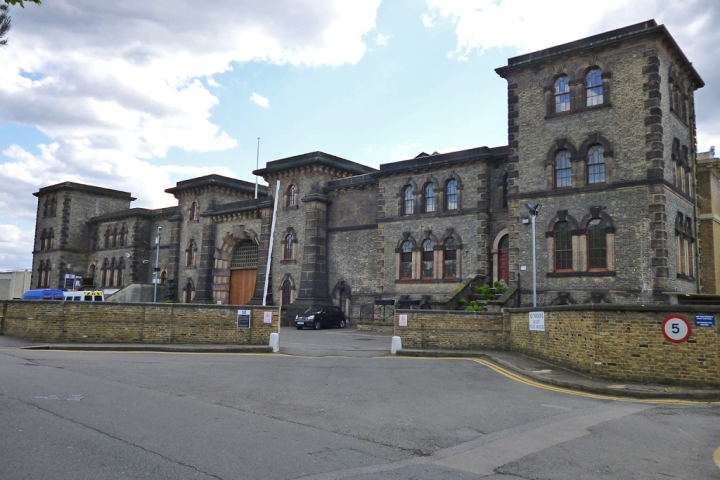
HMP Wandsworth is still “inhumane and unfit for purpose”, according to the Independent Monitoring Board (IMB) 2024/25 report.

While there are encouraging sign that the the scandal-hit South West London prison has begun improving, the Victorian-era Category B men’s prison continues to face serious challenges, with staffing shortages and overcrowding at the heart of its ongoing issues.

Built in 1851 as the Surrey House of Correction, Wandsworth was originally designed according to the separate system principle, with individual cells and in-cell toilet facilities. These toilets were removed to increase capacity, and prisoners were required to “slop out” until 1996, highlighting a long history of adapting facilities to meet the needs of an expanding population. Today, the prison holds between 1,300 and 1,500 men, far above its intended capacity, with more than 90 per cent of prisoners sharing cells built for single occupancy.

Staffing continues to be the most urgent issue at Wandsworth. The IMB found that the prison often operates with fewer than 85 officers on duty to manage almost 1,500 men, with officers frequently absent, inexperienced or demotivated. This shortage affects every aspect of prison life: prisoners are regularly locked in cramped cells for up to 22 hours a day, limiting opportunities for exercise, showers, access to the kiosk, educational activities, and even basic healthcare. The report stressed that without fundamental changes to staffing and infrastructure, the prison will remain “inhumane and unfit for purpose.”

Conditions at the historic prison remain harsh. Broken windows, ageing buildings, and hot water pipes running through cells contribute to dangerously cold winters and uncomfortably hot summers. Inadequate ventilation has encouraged mould and vermin, further undermining safety and hygiene. While violence has fallen from previous years—with prisoner-on-staff assaults dropping from 518 to 354, and prisoner-on-prisoner assaults from 442 to 360—the prison still struggles with self-harm incidents, totalling 726 cases involving 261 men, down from 998 incidents the previous year.

Recent security improvements were prompted by the infamous escape of Daniel Abed Khalife in September 2023. Khalife, a former British Army network engineer accused of spying for Iran, escaped Wandsworth while on remand in a chef’s uniform, using bedsheet strapping to attach himself to the underside of a food delivery van. The escape sparked a nationwide police search, including airport and port security alerts, and prompted a review of the prison’s procedures. Khalife was captured three days later in Northolt and later convicted of spying for Iran, receiving a sentence of 14 years and three months in February 2025. The incident revealed 81 security failings at Wandsworth, which have since been reduced to three “significant” and one “critical” issues, all of which were addressed immediately.

The prison’s troubled reputation is not new. Wandsworth has been the site of 135 executions between 1878 and 1961, with the last executions taking place in 1961. Historically, it has been associated with corporal punishment, overcrowding, and prison reform attempts that have repeatedly fallen short. In more recent decades, scandals have included staff misconduct, drug smuggling, and failures in reform programmes. Despite temporary improvements under the Prison and Safety Reform of 2016, many of the promised changes failed to materialise fully on the ground, leaving prisoners and staff with limited support.

The IMB report praised new leadership at the prison for beginning to address some long-term problems, noting a “sense of strategic direction” and a cautious recovery. However, it emphasised that consistent staffing is essential to maintain safety and provide an adequate regime for prisoners. On average, a third of staff are absent daily, making routine operations challenging and creating additional stress for those on duty.

HMP Wandsworth also offers educational and training programmes, two gyms, a sports hall, and a large multi-faith chaplaincy catering to Christian, Muslim, Jewish, Sikh, Hindu, Buddhist, Mormon, and Jehovah’s Witness prisoners. Despite these facilities, the lack of adequate staffing and prisoner engagement often limits access, leaving many inmates idle for long periods. Drug abuse remains a serious problem, with cannabis openly smoked and harder drugs circulating, compounded by allegations of staff corruption.

Prison reform advocates, including Glyn Travis of the Prison Officers Association, have expressed concern over the prison’s lost reform status. Travis stated that staff had previously engaged positively with reforms under former governors, but changing government agendas and inconsistent investment have left the prison vulnerable once again. Critics also point to insufficient use of body scanners and limited anti-ligature equipment for staff, despite several suicides in recent years.

The Ministry of Justice has pledged further investment of up to £300 million to improve conditions at Wandsworth and other prisons, alongside measures to increase staffing levels and enhance security. A spokesperson confirmed that while progress is being made, more work is required to make the prison safe, secure, and humane for both staff and prisoners.

HMP Wandsworth remains a microcosm of broader challenges within the UK prison system: overcrowding, inadequate staffing, ageing infrastructure, and complex security risks. While the prison has begun to recover from its lowest points, including improvements in violence reduction and operational oversight, inspectors warn that the journey towards a fully humane and functional prison environment is far from complete. Without sustained investment, staffing reforms, and infrastructure upgrades, Wandsworth is likely to continue facing serious criticisms and operational challenges for years to come.

London Developers to Be Allowed to Reduce Affordable Homes Under New Housing Plans

Developers in London will soon be allowed to build fewer affordable homes under a joint government and City Hall plan designed to reverse the capital’s housing slump.

The move, led by Housing Secretary Steve Reed and London Mayor Sadiq Khan, aims to jumpstart stalled construction projects but has drawn fierce criticism from homelessness charities, who warn it risks worsening record levels of housing insecurity.

The package, expected to be announced within weeks, will be a temporary intervention to address what officials describe as a “housebuilding emergency.” Developers will be permitted to include as little as 20% affordable housing in new projects instead of the 35% currently required to qualify for fast-track planning approval. They will also be able to access higher government subsidies for the affordable homes they do build.

Officials say the goal is to “unblock” sites that have been left dormant as building costs rise and profit margins shrink. A spokesperson for Khan said the mayor is working closely with Reed “on a package of reforms to boost housebuilding in the capital,” describing the upcoming changes as part of efforts to “build a better, fairer, more prosperous London for all.”

Yet homelessness and housing charities have condemned the plans as a betrayal of London’s most vulnerable residents. Mairi MacRae, director of campaigns and policy at Shelter, said the proposal would let “profit-driven developers continue looking after their bottom line at the expense of 97,000 children who are growing up homeless in the capital.” She urged ministers to “urgently reverse these plans.”

The Labour government has placed housing at the centre of its economic strategy, setting a national target of 1.5 million new homes during this parliament. But the capital’s construction industry has slowed dramatically.

Figures from consultancy Molior show that the number of homes under construction in London has dropped from 60,000 between 2015 and 2020 to about 40,000 today, with forecasts suggesting it could fall to just 15,000 by 2027. In the first quarter of 2025, builders began work on only 3,248 private-sector homes, a rate of 0.12 homes per 1,000 people compared to the national average of 0.5.

Robert Colvile, director of the Centre for Policy Studies, warned that the figures spell trouble for national ambitions. “We’re now in a situation where we’re building one twentieth of the houses we need in London,” he said. “That’s going to torpedo the government’s target of 1.5 million homes.”

London’s housebuilding costs have always been among the highest in the country, with limited space forcing developers to build upwards and replace existing structures. But in recent years, rising inflation, high interest rates, and tighter post-Grenfell safety regulations have compounded the problem. The Building Safety Regulator, established to oversee new safety standards, has faced a backlog of 10,000 applications, leaving many projects stuck in limbo.

Mayor Khan and Secretary Reed are reportedly exploring three measures to address the gridlock. The first would lower the affordable housing threshold for fast-track planning approval to 20%. The second would boost government subsidy levels, potentially covering up to half of the cost of affordable units. The third would give local councils discretion to waive the community infrastructure levy, a tax used to fund roads, schools, and GP surgeries in new developments.

An official familiar with the talks said the measures would be reviewed automatically in case the economy improves before the end of Khan’s term in 2028. “This is an emergency and we need to act,” they said. “There is next to no social housing currently being built in London, and 20% of something is better than 35% of nothing.”

However, others warn that short-term fixes could have lasting consequences. Kate Henderson, chief executive of the National Housing Federation, said that while the challenges facing London are unique, “it is essential that we do not water down our affordable housing ambitions.”

A leaked memo, reported by The i, revealed that Reed and Khan are considering splitting the reduced affordable housing quota so developers pay for 10% while councils cover the other 10%. Sources close to Reed said any relaxation of developer requirements would come with “a clear expectation that they deliver more homes.” One source said, “Affordable housing is a vital part of our effort to build 1.5 million houses, and one cannot happen without the other.”

City Hall sources described the proposal as a temporary, pragmatic measure to address current economic pressures. “Sadiq will always prioritise getting as many affordable homes built as possible,” one said, pointing out that London delivered more new homes before the pandemic than at any time since the 1930s. Yet despite a pledge to build 88,000 homes a year, recent data shows only 3,950 were completed in the first half of this year.

Industry voices have cautiously welcomed the plan. Ryan Etchells, chief commercial officer at property lender Together, said it would “make some new schemes viable” but doubted it would “be a silver bullet” for the housing crisis. “In the slow housing market we’re currently experiencing, developers will only build at the rate and price at which they can sell,” he said. “Delivering fewer affordable homes will probably not see home builders cutting their overall pricing, meaning affordability will remain an issue for first-time buyers and home-movers, particularly in London.”

Etchells also pointed to broader structural problems hampering the market, including rising material costs, labour shortages, and lengthy approval delays. He argued that encouraging more investment in the private rented sector could help ease pressure on supply. “We need to encourage more buy-to-let landlords into the market by removing damaging tax and regulatory barriers,” he said, noting that 720,000 homes across England currently sit empty and could be repurposed for housing.

While the government insists that the London affordable housing plans are a necessary response to an urgent slowdown, critics argue that lowering expectations will only deepen the divide between those who can afford to buy and those struggling to find somewhere to live. For the capital’s growing number of homeless families, the balance between pragmatism and principle may yet prove to be the defining test of London’s new housing strategy.

Lewisham and Charing Cross are the only 24 hour Met Police desks left

Only two Metropolitan Police stations open to the public around the clock, as ten more front counters are set to close

These cost cutting moves mark a major shift in accessibility, reducing the number of police counters operating across the capital from 37 to 27. Under the new plan, most front counters will open only between 10:00 and 22:00 on weekdays and 09:00 to 19:00 at weekends.

Lewisham and Charing Cross will be the only front desk positions that remain open 24 hours a day. The latter is currently under scrutiny, with ten officers based there being investigated by the police watchdog.

The closures form part of a wider drive by the Met to save £260 million, which will also involve cutting about 1,700 officer and staff roles.

The force says the decision will save £7 million and free up 2,900 hours of police officer time each month.

Assistant Commissioner Matt Twist said the Met “is having to shrink to live within its means,” adding that the force must focus its limited resources on the public’s top priorities.

Around 5% of crime is currently reported at front counters, which equates to approximately 50,000 of the one million crimes reported annually in London. Despite this, critics argue the closures will leave some Londoners without vital face-to-face contact at moments of crisis.

The decision has reignited a long-running debate about the accessibility of policing in the capital. London Mayor Sadiq Khan had previously pledged to maintain at least one 24-hour front counter in each of London’s 32 boroughs. Responding to the new plans, he said he had “resisted closing front counters unless we really had to,” describing it as an operational policing decision that was made possible only with “record-breaking funding from City Hall.”

The changes continue a trend that has seen the steady decline of physical police access points. In 2013, London had nearly 140 front counters. Boris Johnson’s tenure as mayor, 65 were closed, followed by another 38 closures in 2017 under Sadiq Khan. The Met had previously committed to maintaining at least one counter per borough open 24 hours a day as part of its A New Met for London strategy, but that commitment will no longer stand.

The force has said that Londoners will still be able to report crimes and book appointments through other means, including video calls, online reporting, and by phone via 999 and 101.

Phones will also be installed outside closed stations for emergencies.

However, victim support groups have raised serious concerns that these measures will not effectively replace the reassurance of face-to-face contact.

A staff member, identified only as Nick due to job security concerns, told BBC London that counters are “always busy,” with officers often called in to cover shifts.

He described the front desk as an essential refuge for the public, adding: “It could be just somewhere safe to be if they think someone’s following them. If you’re removing a vital service for the people of London, and you’re saying, ‘trust us’, it’s like, ‘how can we trust you when you’re removing something we all need?’”

Criticism has also come from the London Assembly’s Police and Crime Committee.

Gareth Roberts, a Liberal Democrat member, said the London police station closures would have “real world consequences for hundreds, if not thousands, of Londoners,” particularly for vulnerable groups such as the elderly, non-English speakers, and those without internet access.

Domestic abuse charity Refuge echoed these concerns, warning that survivors who rely on walk-in access to report abuse may find themselves with no safe way to reach the police. “If someone is walking by a police station and they’ve built up the courage to go in, I don’t think we should be putting up additional barriers,” said Emma Pickering, the charity’s head of tech-facilitated abuse.

As part of the plans, stations in Barking, Chingford, Harrow, Kensington, Mitcham, Pinner, Royalty Studios, Twickenham, and Wimbledon will all lose their front counters.

The Met insists the closures are necessary to protect frontline policing, and statistically this is an artery for only a small volume of total crime reporting, but for many Londoners, the shrinking physical presence of the police raises deep questions about safety, trust, and visibility in the heart of the city.

New report says Croydon Council’s Financial Crisis is worsening

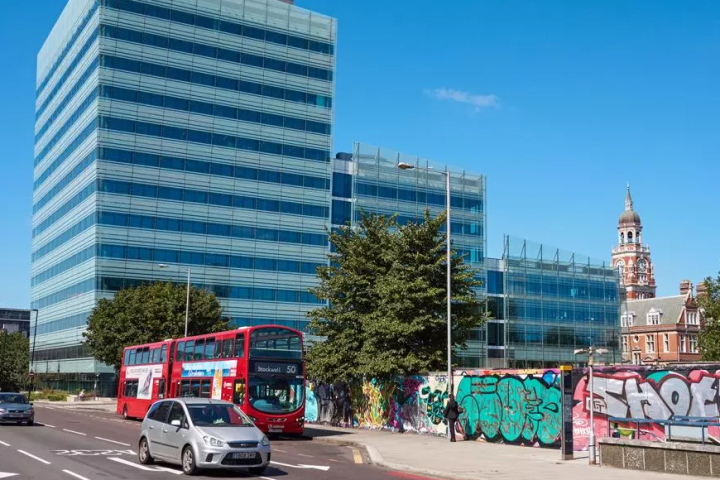
Croydon Council is once again under scrutiny as independent auditors warn that the authority remains in an “unsustainable” financial position. The latest report by Grant Thornton, released this week, delivers a stark message: unless decisive action is taken to reduce operating costs and long-term debt, Croydon’s financial crisis will continue to deepen.

The report issued a rare statutory recommendation, a formal warning requiring urgent action because “arrangements to achieve financial sustainability have deteriorated.” Such recommendations are among the most serious interventions auditors can make, signalling that the council’s recovery plan is faltering. Despite years of government oversight and repeated efforts to balance the books, Croydon Council’s financial crisis shows little sign of easing.

Grant Thornton’s report outlines that the worsening situation over the past year has prevented the council from exiting government support as planned. Croydon Council has effectively declared bankruptcy three times in five years, and relies heavily upon central government emergency funds.

Croydon Council’s borrowing has risen sharply from £51 million to £136 million in just one year, alarming both local residents and watchdogs.

Auditors have warned that without a sustainable debt solution, Croydon cannot demonstrate financial independence or deliver the savings needed to safeguard essential services such as education and social care. Government-appointed commissioners, sent in to take control in August, have been tasked with enforcing best value across day-to-day services. They hold powers to override local decision-making and to intervene directly in financial management, as well as in the appointment and performance of senior staff.

While the overall assessment is grim, the report does acknowledge areas of progress. The council’s pension fund remains well managed, with net assets rising to £1.96 billion, an increase of £205 million over the year. Improvements have also been made to the housing service, supported by a new Housing Assurance Board that includes both residents and independent experts. Additionally, a dedicated officer has been appointed to improve the handling of housing complaints and coordination with investigations.

However, several weaknesses persist. Auditors emphasised that the Future Croydon transformation programme, a key initiative intended to modernise and streamline council services, must now deliver its promised savings without delay. They also raised concerns about special educational needs and disabilities (SEND) services, calling for urgent improvements to data accuracy and financial monitoring. Greater transparency around the council’s reserves was another key recommendation, with auditors urging that updated forecasts and benchmarking data be included in future reports.

Mayor Jason Perry acknowledged the seriousness of the findings but insisted that progress is being made. “Grant Thornton’s report is absolutely right to highlight the elephant in the room – Croydon’s historic debt,” he said. “I welcome the recommendation to deal with it head-on. I have worked closely with the commissioners and auditors throughout this process, and they recognise the huge progress Croydon has made.”

Despite these assurances, the Croydon Council financial crisis remains far from resolved. The combination of spiralling debt, central government control, and long-term structural weaknesses continues to cast a shadow over the borough’s financial future. With auditors, commissioners, and the Mayor all calling for urgent action, Croydon now faces a defining moment: whether it can finally restore fiscal stability or remain trapped in a cycle of dependence and decline.

Skip to content Skip to content