[directorist_add_listing]

Hounslow launches landmark Hogarth Prize to spotlight UK artists

A new national arts prize is set to transform Hogarth’s House in Chiswick into a showcase for contemporary creativity.

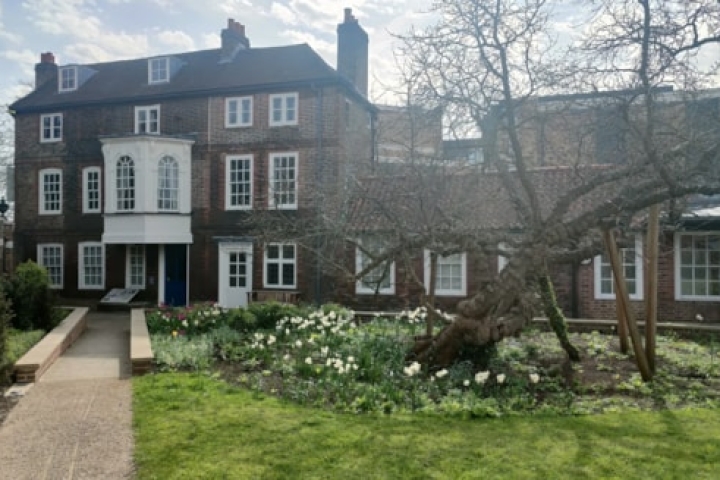
Hounslow Council has today announced the launch of The Hogarth Prize – a major new open-call award inviting artists from across the UK to exhibit at the former home of William Hogarth, the celebrated 18th-century painter and satirist. It is the first prize of its kind to be launched by a London council.

Delivered in partnership with leading arts agency Parker Harris, the initiative aims to position Hogarth’s House not only as a heritage site, but as a living platform for modern artistic voices.

A national stage for contemporary work

Open to amateur, emerging and established artists aged 18 and over, the prize welcomes submissions in any medium, provided the work can be wall-mounted. There is no prescribed theme. Instead, entrants are encouraged to demonstrate technical excellence, originality and a contemporary response to Hogarth’s spirit – bold, observant and unafraid to comment on the world around them.

Around 80 works will be shortlisted and exhibited at Hogarth’s House from 28 July to 6 September.

A high-profile judging panel – including gallerist and artist Robyn Graham, visual artist Hero Johnson RP and artist-coordinator Steven King – will oversee the inaugural award.

The overall winner will receive £3,000 and a six-week solo exhibition at Hogarth’s House in 2027. A Visitors’ Choice Award of £500 will also be presented in the final week of the show.

Entry fees have been set at £16 for one submission or £24 for two, in a bid to keep the prize accessible to artists at all stages of their careers.

Building a cultural legacy

Hogarth’s House, managed by Hounslow Council, holds the largest public display of William Hogarth’s work in the UK. The new prize signals a deliberate shift: using heritage not as a static backdrop, but as a catalyst for new work.

Cllr Salman Shaheen, Cabinet Member for Culture, Leisure and Public Spaces at Hounslow Council, said the initiative is rooted in Hogarth’s own belief in art as performance and commentary.

‘My picture is my stage,’ William Hogarth once wrote. Now, in honour of his legacy, of which we are proud custodians through Hogarth’s House, we are giving a stage to artists from across the UK through this new prize.

“It is my hope that the Hogarth Prize will nurture talent nationwide and give artists a major new platform to showcase their work, establishing Hounslow as a place that treasures art and champions creative works.

“We see this prize growing year after year, with the Hogarth Prize standing proudly alongside the Turner Prize and the Royal Academy’s Summer Exhibition, in years to come.”

Engaging the next generation

Alongside the main award, a dedicated Schools Exhibition will invite pupils from across Hounslow to submit postcard-sized artworks. These will be displayed at Hogarth’s House for a month ahead of the finalists’ exhibition, embedding young creativity at the heart of the project.

The Hogarth Prize forms part of the council’s wider Culture Strategy, which aims to expand access to the arts, activate heritage spaces and position Hounslow as a borough that invests in creative opportunity.

Keith Andrews’ New Long-Term Deal Adds Extra Edge to Brentford’s Run-In

Turf Moor plays host to a meeting loaded with very different kinds of urgency on Saturday afternoon, as Burnley welcome Brentford with the Clarets fighting for their Premier League lives and the Bees pushing for a finish that could carry European reward.

It’s the kind of fixture where the table can distort perception: one side scrapping for points any way they can find them, the other trying to convert a strong season into something historic. Yet the match-up is not as simple as “survival versus ambition”, because both teams arrive with clear questions to answer—Burnley about turning battling performances into wins, Brentford about responding after a rare setback and proving their progress is sustainable over the final stretch.

The hosts come into the game with their most recent match in any competition offering a much-needed lift in belief. Last weekend’s 1–1 draw away at Chelsea delivered a point that few outside the camp would have assumed they could take, and it was achieved in a way that should travel well into a relegation run-in: discipline, patience, and a refusal to fold after going behind early. Falling behind inside four minutes could easily have set the tone for a long afternoon, but Burnley stayed in it, managed the game, and earned their route back—eventually equalising late through a second-half response that underlined spirit as much as structure. The fact it came on the road, in a hostile environment, matters; the next step is proving that same resolve can be paired with sharper execution at Turf Moor, where home points have been harder to come by than Parker would want.

Brentford’s last outing in any competition was more sobering. A 2–0 defeat at home to Brighton ended a run of results that had kept them in the thick of the European conversation, and it arrived with a sense of frustration because the Bees had enough territory and enough moments to believe they could have changed the game. Instead, they were punished in the key phases and struggled to find the finishing touch that has carried them through much of the season. Results like that can either become a wobble or a reset; the response on Saturday will indicate which. There is no lack of incentive—this is a club that has spent much of the campaign in the mix for the top seven, and every away match now carries the feel of an audition for Europe.

One of the defining storylines around Brentford this week, though, sits above the pitch as much as on it. Keith Andrews has signed a new long-term contract extension, an emphatic show of commitment from both club and coach and a clear statement that the Bees believe they are building something durable rather than enjoying a fleeting high. Andrews’ rise from set-piece specialist into the top job has been one of the season’s more striking managerial arcs, and the extension adds another layer to Saturday’s contest: the team now steps into the run-in with stability reinforced and the message made public that the club expects this level to be the new normal. That can be a powerful boost—clarity at the top tends to sharpen focus in the squad—yet it also brings expectation, especially in fixtures where Brentford will be favoured on paper.

For Burnley, the pressure is more immediate and more visceral. Survival fights are rarely about one match, but they can be shaped by them, and the Clarets know Turf Moor points are the currency that keeps hope alive. The Chelsea draw can be framed as a platform rather than a breakthrough, because the league position will not change on one result; what changes is belief. A performance that proves they can compete with big names also proves they can compete with everyone else, and the challenge now is to turn that belief into a home win against an opponent with pace, confidence, and a striker in red-hot scoring form.

Selection will have a major say in how the game feels, particularly in the first hour when energy and organisation decide whether Burnley can turn it into the kind of scrappy contest they often need. The injury list for the home side remains a significant hurdle. Josh Cullen has been out long-term with a serious knee injury, Connor Roberts is sidelined, and there are further absences that have limited options across defence and attack. Jordan Beyer and Mike Trésor remain unavailable, while Zeki Amdouni and Axel Tuanzebe have also been missing, and Armando Broja has been working toward a return but has not been fully available. When a team battling relegation carries that many unavailable names, it tends to shape the entire tactical plan: fewer like-for-like replacements, fewer mid-game adjustments, and a greater reliance on the players who can consistently handle the physical and mental grind.

Brentford’s availability picture is not without its own issues, even if the squad has generally coped well across the season. Long-term knee injuries have ruled out Fábio Carvalho and Antoni Milambo, and Josh Dasilva also remains sidelined, limiting midfield rotation and reducing some of the creative and energy options off the bench. There have also been late fitness checks in defensive areas recently, meaning matchday readiness will matter. The upside for Andrews is that the system has been stable enough to absorb changes, and the squad has shown a clear identity whether or not every first-choice player is available.

Form players are central to the build-up, and Brentford’s headline man is obvious. Igor Thiago has been one of the league’s most productive forwards this season, and his goals have underpinned Brentford’s push into the European picture. His finishing changes the psychology of matches: opponents know that one lapse, one poor defensive distance, one half-cleared cross can turn into a goal. In games where the Bees are not dominating, they still carry threat because Thiago can decide a contest with minimal service—an attribute that becomes even more important away from home. Support from wide areas and runners from midfield has been a key part of how Brentford create their best chances, and the return of Kevin Schade to greater involvement recently has provided another direct outlet when the game opens up.

Burnley’s attacking story has been more fragmented, partly because of the injuries, partly because survival seasons often force a team to prioritise structure over freedom. Even so, the Chelsea draw offered useful reminders about who can influence a game at this level. The equaliser came late, and the performance included enough moments in transition to show that Burnley can still threaten if they choose their moments carefully. The role of wide players and set-piece delivery feels especially important here; Turf Moor matches often become battles of territory and second balls, and a well-worked dead-ball routine can change the entire emotional temperature of the stadium. If Burnley are to win, it may not be through prolonged dominance but through capitalising on the spells when momentum turns their way.

Tactically, the contest looks set to revolve around two connected battles: how Brentford handle the physical edge of Turf Moor, and how Burnley cope with Brentford’s ability to accelerate quickly once the press is beaten. Parker will want his side to start with intensity—strong duels, aggressive second-ball work, and enough forward intent to keep Brentford’s back line honest. The danger for the home side is that over-committing can open the spaces Brentford love: quick breaks into wide channels, runners arriving in the half-spaces, and early balls into the box for Thiago to attack. Andrews’ team are comfortable controlling territory, but they are often most dangerous when the match becomes stretched and decisions must be made at pace.

That makes game state crucial. If Burnley score first, Turf Moor becomes a different environment: more noise, more bite in every tackle, and a match that can be slowed, managed, and turned into a test of patience for the visitors. If Brentford score early, the shape changes entirely. Burnley would be forced to chase with a squad already stretched by injuries, leaving more space for transitions and increasing the risk of conceding again. The last few minutes may be significant too—Burnley’s late goal at Chelsea is a reminder they can finish strongly, while Brentford’s season has included plenty of examples of late pressure and repeated attacks once opponents begin to tire.

The emotional backdrop is equally important. Brentford arrive with their manager newly tied down on a long-term deal, the club signalling belief and continuity at a time when many teams are defined by short-term thinking. Burnley arrive with the opposite reality: every week feels like a referendum, every result either tightening the grip of relegation fear or loosening it slightly. That contrast can create interesting tension in matches like this, because one side is playing with ambition and expectation, the other with urgency and survival instinct. Sometimes the team with more to lose plays more freely; sometimes the one with more to gain plays with more clarity. The opening exchanges will likely reveal which.

Everything points toward a match decided by concentration and efficiency rather than volume of chances. Burnley will need to protect themselves in transition and make the most of set-piece moments and crowd energy. Brentford will aim to impose their patterns, find Thiago early, and turn pressure into clear opportunities before the contest becomes a battle of nerves. With injuries influencing both benches and the stakes high for entirely different reasons, this has all the ingredients of a Premier League fixture where one decisive moment—one finish, one mistake, one perfectly delivered cross—could be enough to tilt the day.

Islington agrees £5m “Making it Happen” fund in new council budget

Islington councillors have signed off a new budget package centred on safer streets, cleaner neighbourhoods and fresh investment in council housing.

Approved on Thursday 26 February, the 2026/27 Budget includes a £5m “Making it Happen” fund designed to deliver visible improvements across the borough – from tackling anti-social behaviour to upgrading parks and play areas and boosting street cleanliness.

The new fund sits within a broader spending programme aimed at reducing inequality and supporting residents through rising costs.

Major housing investment

Housing dominates the figures. A total of £324m will be added to investment in existing council homes, focused on maintaining and improving properties so residents have secure, safe housing.

Alongside this, more than £58m is earmarked to purchase new council homes, with the aim of increasing supply and ensuring homes go to those in greatest need.

Support for low-income households

The council has also committed to maintaining one of the most generous Council Tax Support schemes in the country. Around £28m will be allocated to the scheme, with an estimated 24,500 households – roughly one in five in Islington – expected to benefit.

Cllr Flora Williamson, Executive Member for Finance and Performance, said the budget was designed to reflect residents’ priorities.

“We’re focused on turning residents’ priorities into action, to help create the more equal Islington that we all want to see,” she said. “This Budget delivers real, tangible improvements that people will see and feel – safer streets, better shared spaces, and support that helps families through tough times.”

Further details on the 2026/27 Budget are available on the council’s website.

Brentford Head Coach Keith Andrews Signs New Contract

The Bees boss has penned a deal which extends his stay until the summer of 2032.

Under Andrews’ guidance, the west Londoners sit seventh in the top flight this term, having reached the new year with a club-record Premier League points total for that stage of a season.

The Irishman has also led the club to a Carabao Cup quarter-final and FA Cup fifth round, where Brentford travel to West Ham United.

“When Keith accepted the job last summer, he signed a three-year contract, but the intention was always that we’d review this at the earliest opportunity,” said Brentford director of football Phil Giles.

“Given our progress this season, I’m really happy that we have agreed this extension within the first nine months.

“Keith has done an outstanding job, the team are playing well and the things we thought we could be better at this season have all improved.

“He is a really good fit for the club and the way we like to work, as he is able to bring the best out of both players and staff alike.

“Everyone at Brentford will be pleased to hear that Keith will be with us for many years to come, and I’m excited by what we can all achieve together in the coming seasons.”

Andrews was appointed Brentford head coach in June 2025 following the departure of Thomas Frank to Tottenham Hotspur.

He initially joined the club as set-piece coach in July 2024, departing Sheffield United, where he had been part of the coaching set-up under Chris Wilder.

Prior to that, the 45-year-old was assistant manager to Stephen Kenny during the Dubliner’s three-year spell as Republic of Ireland boss (2020-2023) and served as MK Dons’ assistant manager for the 2015/16 Championship campaign.

A midfielder, Andrews represented clubs including Wolverhampton Wanderers, Hull City, MK Dons and Blackburn Rovers during a 16-year playing career which began in 1999.

Andrews earned 35 caps for the Republic of Ireland and featured at UEFA Euro 2012.

Mobile ‘Safe Space on Wheels’ launches in Croydon town centre

A new mobile support hub for young people has launched in Croydon, bringing advice and safeguarding directly to one of the borough’s busiest streets.

Led by Anima Youth, the “Safe Space on Wheels” is a converted minibus offering a private, welcoming environment for girls and young women seeking guidance or support. The initiative forms part of Croydon Council’s Town Centre Taskforce, which aims to improve safety and reduce antisocial behaviour.

Parked on North End, outside Next, every Tuesday from 3pm to 6pm, the minibus provides a visible and consistent presence in an area heavily used by teenagers after school. Staffed by Anima Youth’s trained team, it mirrors the charity’s fixed Safe Space base in South Croydon – described as a “home from home” for young people.

While the organisation’s core mission is preventing violence against women and girls (VAWG), the space is open to boys and young men too. Alongside offering support, the team encourages conversations about healthy relationships, respect and positive behaviour as part of a preventative approach.

Eloise Ofori, Chief Executive at Anima Youth, said: “Our Safe Space on Wheels allows us to meet young people where they are, on their terms. This minibus is warm, familiar, and designed entirely with their needs in mind.

“We’re also committed to working with boys and young men, because preventing violence against women and girls means addressing the attitudes and pressures they face too. This is about building a safer Croydon for everyone.”

The Town Centre Taskforce is a priority for Executive Mayor Jason Perry and brings together council teams, police, community groups and faith organisations to address recurring issues in the borough.

Mayor Perry said: “As part of our violence against women and girls delivery plan we committed to doing more to make our borough safer for all. The work of our Town Centre Taskforce is doing just that, tackling issues and preventing them from happening again.

“Anima Youth is providing essential support to young people. They are relatable and their safe spaces are places where they know they can talk with trusted adults when needed. The safe space on wheels will make their services even more accessible for more young people.”

For Croydon’s young people, support is mobile and no longer confined to a building.

Bexley approves new economic growth strategy aimed at investment and inclusion

London Borough of Bexley has approved a new Economic Growth Strategy, setting out plans to attract investment, support skills and deliver what councillors describe as “inclusive growth” across the borough.

The strategy – titled Ready for tomorrow, growing for a better future – was signed off at a Public Cabinet meeting on 23 February. It follows a decade of development and infrastructure projects in the borough and is intended to shape the next phase of growth.

Residents and businesses were consulted on the draft proposals over December and January, with feedback incorporated into the final document.

From growth to “good growth”

The strategy outlines a series of priorities, including clearer economic outcomes, a focus on fairness and resilience, and a pipeline of projects designed to attract new businesses while supporting local skills and innovation.

Council leaders argue that growth must extend beyond headline employment figures.

Cllr David Leaf, Leader of Bexley Council, said:

“Bexley is a great place to live, work and raise a family and our new Economic Growth Strategy will ensure we can do more to attract businesses, investment and jobs into our Borough. While the country faces difficult economic challenges, we are clear that there are significant opportunities here in Bexley and we are eager to work with partners to deliver good sustainable growth for Bexley.

“We recognise that good growth is about more than jobs and investment. That’s why we are proud of our excellent green spaces, heritage sites, family friendly neighbourhoods, our bustling town centres, excellent schools and rich arts and culture and these leave us well positioned for good growth in Bexley.

“These are exciting times for our great Borough. The Economic Growth Strategy is the foundation for future growth, supports our ambitions and aspirations and demonstrates that Bexley is open for business. We look forward to working more closely with partners. Together we’ll be ready for tomorrow and growing for a better future.”

Culture as catalyst

Alongside the economic plan, the Cabinet approved a new cultural strategy, recognising the role of arts and heritage in shaping the borough’s identity and supporting regeneration.

Cllr Cafer Munur, Cabinet Member for Place Shaping, said:

“We know that Bexley is one of London and the South-East’s best-kept secrets, blessed with an array of cultural treasures and miles of precious green and blue spaces.

“#CelebratingBexley our year long programme of cultural and creative events demonstrates the strength of local partnerships that we have in our Borough and the power of community making on place and people.

“The Economic Growth Strategy builds on this partner first approach and outlines our shared vision for Bexley. Together we’ll be ready for tomorrow and growing for a better future.”

A long-term framework

The council says the strategy provides a long-term framework for investment and partnership working at a time of national economic uncertainty. Its emphasis on skills, innovation and sustainability reflects a broader shift among local authorities towards linking economic development with quality of life.

Whether the plan translates into measurable gains for residents will depend on delivery. For now, Bexley’s message is clear: it intends to compete for growth – and to define on its own terms what that growth should look like.

British firm to power clean energy future with record Lower Thames Crossing hydrogen deal

British hydrogen innovator GeoPura has today been announced as the supplier of the largest volume of green hydrogen ever produced for a British construction project.

National Highways’ Lower Thames Crossing project will be the first major British infrastructure project to be carbon neutral in construction. A key part of this ambition is replacing diesel with hydrogen, electric and other low-carbon fuels. Unlike diesel, hydrogen only emits water when used in a fuel cell, dramatically reducing greenhouse gas emissions and protecting air quality for both the workforce and local communities.

Enhancing hydrogen production capacity is a key part of the Government’s plans to increase energy security by reducing reliance on imported fuel sources that are vulnerable to disruption in supply. The emerging green energy sector has the potential to create over 400,000 jobs and add over £7 billion to the British economy by 2030.

Minister for Industry, Chris McDonald, said: “GeoPura and the Lower Thames Crossing collaboration is proof that clean energy goes hand-in-hand with major British infrastructure projects.

“Hydrogen has a key role to play in our industrial strategy, and from Nottinghamshire to Kent, our first flagship hydrogen projects will sustainably power projects up and down the country.”

Matt Palmer, Executive Director for the Lower Thames Crossing, said: “Today we’ve given the green light to green hydrogen. By replacing diesel with home grown hydrogen, we’re not only reducing our own carbon footprint but also helping clean up the construction sector. National Highways is supporting new jobs and skills that will put British businesses and people at the forefront of the growing clean energy sector.”

Founded in 2019, GeoPura produces green hydrogen across several locations in the UK via electrolysis powered by locally sourced renewable electricity. This includes at its flagship HyMarnham Power facility in Nottinghamshire. Located on the site of a former coal-fired power station, the HyMarnham Power site is supported by government HAR1 funding and demonstrates how former fossil fuel infrastructure is being repurposed to deliver clean, secure energy for the future.

GeoPura employs more than 170 people across Britain and Europe, many of whom have transitioned from traditional energy sectors. The contract will support the continued expansion and create more jobs.

Andrew Cunningham, CEO, GeoPura, said: “We’re extremely proud to be supplying the largest volume of green hydrogen ever contracted for a British construction project and I congratulate the Lower Thames Crossing for setting a powerful example of how major infrastructure can be delivered sustainably. This contract award further strengthens the British hydrogen supply chain driving both price efficiency and British jobs across this new, exciting industry with tangible deployments.”

GeoPura will supply 2,500 tonnes of hydrogen to the Lower Thames Crossing, enough to replace over 12 million litres of diesel and save an estimated 30,000 tonnes of CO2 emissions. The hydrogen will be supplied as a managed service, which includes the delivery, storage and distribution to equipment on site during the main construction phase of the project.

Six hydrogen powered generators provided by GeoPura are already at work on the project, charging batteries used in electric machinery on a work site in Essex with zero emissions.  A British-made JCB hydrogen fuelled digger became the first one deployed outside a test environment anywhere in the world when it was used to carry out survey work on the project in Kent last year.

The scale of the project’s purchase will accelerate the construction industry’s progress toward net zero by requiring its Delivery Partners and their supply chain – who are three of the biggest construction firms in Europe – to invest in hydrogen-powered machinery, and develop the skills needed to operate and maintain them.

The Lower Thames Crossing is a new road and tunnel that will tackle congestion on the Dartford Crossing and drive economic growth by creating a reliable new link between the ports of the south east, the Midlands, and the North.

The project received planning permission in March 2025. In the Budget last year, the Chancellor committed the final part of public funding that will enable the private sector to take forward construction and long-term operation of the new road.

Greater London charities face pressure as closures outnumber new registrations

More charities were removed from the official register in Greater London last year than were newly established, highlighting mounting challenges for voluntary organisations as they enter 2026.

According to Charity Commission data, 250 charities were registered in Greater London during 2025, while 270 were removed. Removals can include mergers or organisations completing their purpose, but the overall net decline emphasises the financial and operational pressures facing the sector.

National trends mirror the local picture. The Status of UK Fundraising 2025 report found that 54% of charities across the UK saw their fundraising income either remain static or fall, with many citing broader economic pressures. Meanwhile, demand for support continues to grow, with research from Charities Aid Foundation showing that 33% of Greater London residents rely on charitable services.

For many organisations, the focus is shifting from short-term survival to long-term sustainability.

Rising costs and increased competition

Charities face rising operational expenses, tighter regulatory requirements, and a more competitive fundraising landscape. Smaller organisations in particular are under pressure to maintain financial stability while meeting growing demand.

Adam Tier, head of underwriting at Ansvar Insurance, said:

“Greater London has always had an incredibly active charity sector, but these figures show just how challenging the current environment has become. Rising operational costs, a more competitive fundraising landscape and increased demand with an average of 33% of Greater London residents relying on charitable services mean organisations need to think differently about sustainability.”

Strategies for resilience

Sector experts highlight several practical approaches for improving sustainability. Partnerships between organisations serving similar beneficiaries can reduce overheads, enable shared back-office functions, and strengthen joint fundraising or grant applications.

Nurturing long-term supporter relationships is another key strategy. Consistent communication and storytelling can convert one-off donors into monthly givers, providing more reliable income streams.

Tier also emphasised the importance of reviewing risk and insurance arrangements: “Financial sustainability isn’t just about raising more money. Often, it’s about taking a fresh look at existing processes and asking the right questions. The organisations that thrive are those that plan ahead, understand their risks and adapt early, positioning themselves to weather these challenges and continue serving their communities for years to come.”

Community commitment endures

Despite the pressures, the registration of 250 new charities in Greater London in 2025 demonstrates the continued commitment of local communities to addressing social need.

For the capital’s voluntary sector, 2026 begins with a delicate balancing act: adapting to rising demand, managing limited resources, and ensuring long-term resilience. The organisations that succeed will be those willing to innovate, collaborate, and plan ahead.

Crystal Palace 1-0 Wolves: Injury-Time Hero Saves the Day at Selhurst

Crystal Palace finally snapped a miserable run and breathed new life into their Premier League season with a dramatic 1-0 victory over Wolverhampton Wanderers at Selhurst Park yesterday, snatching all three points with an injury-time strike from substitute Evann Guessand.

The decisive goal arrived after a tense 90 minutes in which Palace had to withstand pressure, hit the woodwork, save a penalty and cope with a late red card to their opponents — all before Guessand’s finish broke the deadlock deep into stoppage time and sent a tense crowd into jubilant relief.

The early exchanges were cagey. Both sides probed nervously, aware that a breakthrough here could have significant implications — Palace desperately needed momentum after a long period without a league win, and Wolves, short of victories themselves, wanted to climb out of trouble. Palace made the first big dent in the game’s narrative just before half-time when Wolves were awarded a penalty after a strong challenge inside the box.

With the tension rising inside Selhurst Park, Tolu Arokodare stepped up, but Palace captain Dean Henderson got down low and made a big save to keep the scoreline level and preserve Palace’s chances of recovering something from the contest. That moment proved crucial — instead of going behind on the cusp of half-time, Palace stayed in touch and the psychological edge swung back in their favour.

The second half saw Palace build momentum without finding a clear cutting edge. They pushed in numbers, especially down the flanks, creating half chances through Ismaïla Sarr and forcing reflex saves from Wolves’ goalkeeper José Sá, but the visitors’ defence held firm under siege.

Wolves, for their part, looked dangerous on the break and carried threat from set pieces, but Palace’s back line and midfield battled resolutely to deny them the break they needed. The match turned in Palace’s favour when Wolves were reduced to ten men after Ladislav Krejčí picked up a second yellow card for persistent time-wasting, leaving the visitors to defend with one fewer player in the final half hour.

Even with the numerical advantage, Palace found Wolves organised and stubborn; the deadlock endured as frustration crept into both dressing rooms and the clock ticked toward full-time. Supporters alternated between anxious hope and tense silence, acutely aware that one goal could decide everything after so many missed opportunities in recent weeks. Then, in a dramatic closing sequence deep into added time, Palace swung one last delivery into the box from the left flank. Tyrick Mitchell’s cross found Guessand arriving with perfect timing, and he finished with confidence from close range, sparking wild celebrations in the home end as Palace finally secured a precious three points.

After the final whistle, Palace manager Oliver Glasner admitted that relief was the overriding emotion. He acknowledged the weight of their poor run — just one victory in their previous 15 matches across all competitions — and praised his players for sticking to the task, especially in withstanding Wolves’ pressure and then taking their chance when it mattered most. Glasner also addressed the tension among supporters, some of whom had displayed banners criticising his leadership, and stressed that while he respected fans’ passion, his focus remained on guiding the team and improving results week by week. He described Guessand’s goal as “a huge moment” that could help shift Palace’s mood and build confidence heading into the closing stages of the season.

Wolves boss Rob Edwards reflected on a performance that had its positives — defending bravely for long spells, earning a penalty and competing physically in difficult conditions — but ultimately came up short because they couldn’t manage the final phase. He conceded that the timing of Krejčí’s dismissal and Guessand’s late intervention were decisive, but also underlined his side’s resilience throughout the match. Edwards suggested Wolves could take heart from their organisation and discipline even after going down to ten men, but admitted there was frustration in seeing a solid performance undone at the last possible moment.

For Crystal Palace, the win lifts them to 13th in the Premier League and offers a morale boost — and crucial points — after a difficult spell.

It was a game of fine margins, but in the end a late flash of clinical finishing and a big penalty save proved the difference. Wolves, meanwhile, head home still seeking their first away win of the season and rueing the missed chances that might have seen them leave Selhurst with something from the contest.

Skip to content Skip to content