A 14-year-old British boy who took his parents to court after being sent to boarding school in Ghana must remain there until at least the end of his GCSEs, a High Court judge has ruled. The decision follows months of legal proceedings that began after the boy, who cannot be named for legal reasons, argued that he was unhappy and wanted to return to the UK.
The boy was taken to Ghana in March 2024 after being told he was visiting a sick relative. In reality, his parents had arranged for him to move there due to concerns about his behaviour in London, including repeated absences from school, having unexplained money, and carrying a knife. Court papers said the boy denied being part of a gang or carrying a weapon.
After arriving in Ghana, the boy said he was homesick and struggled to adapt to life there. He told the court that he was “living in hell”, “desperate” to return to the UK, and felt “like an alien” in Ghana. He said he had been “abandoned” by his family, did not speak Twi, and had difficulty making friends or fitting in socially. Despite these challenges, the High Court has ruled that he should stay in Ghana to complete his GCSEs before any return is considered.
In February, the boy found publicly funded lawyers and brought a case against his parents to the High Court in London. He initially lost his bid to return when a judge ruled that coming back to the UK would expose him to greater harm. However, in June, he won a Court of Appeal challenge to have the case reheard after Sir Andrew McFarlane, the most senior judge in the Family Division, identified confusion in the earlier decision.
The final judgment was handed down on Tuesday by Mrs Justice Theis, who ruled that the boy should remain in Ghana and focus on completing his studies. She noted that returning to the UK prematurely would cause further disruption, both to his education and to his family life. “I am acutely aware that the conclusion I have reached does not accord with [his] wishes and how that will feel for him,” the judge said. “[He] has the talent, ability and intelligence to make this work together with his family. It will be difficult but they all have the common aim for [him] to return to live with his family.”
The boy, who holds both British and Ghanaian citizenship, is now enrolled in school in Ghana and preparing for his GCSEs. His solicitor, James Netto of the International Family Law Group, said his client “welcomes” the clarity provided by the ruling. “This has been an extremely difficult case on every level,” he said. “He never wanted to be in a position where he was obliged to bring court proceedings against his own parents, but their actions left him with no meaningful alternative. His position remains unchanged: he wants to return home.”
The boy’s mother told the court that she feared for her son’s safety if he were to return to London before completing his GCSEs. “It is really hard to be away from him,” she said. “I feared and continue to fear if he were to come back now, that he could end up dead. I know he does not see it like that…”
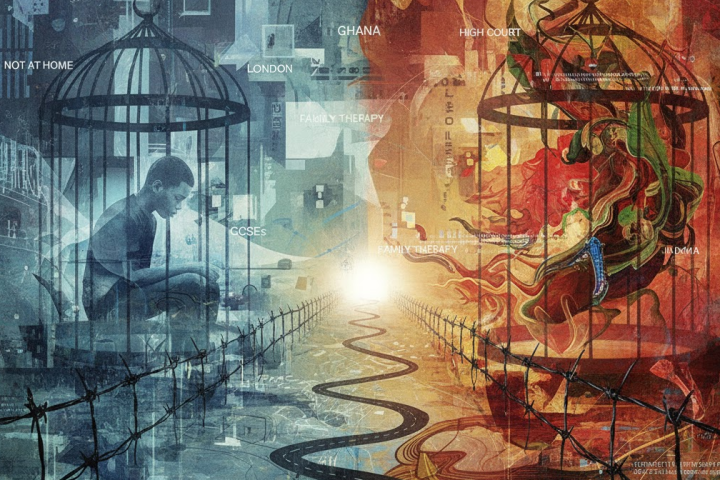
In her judgment, Mrs Justice Theis set out a “road map” for the boy’s eventual return to the UK, which includes ongoing family therapy funded by the local authority. She said the plan would be reviewed once he completes his GCSEs to determine whether he is ready to return. “The aim is setting out a road map and taking the necessary steps for [him] to return here after completing his GCSEs,” she said. “Whether that would take place will need to be reviewed nearer the time.”
The High Court ruling that the British boy must remain in Ghana until the end of his GCSEs underscores the balance judges must strike between a child’s wishes and their welfare. For now, the focus remains on his education, stability, and preparation for an eventual return home.