Senior police officers have told the London Assembly that the Israel-Gaza conflict hate crime on London transport remains elevated, even after a recent fall in reported incidents. Levels of hate crime across Transport for London services have not returned to those seen before October 2023.
Hate crime reports rose sharply in late 2023, with Jewish and Muslim communities particularly affected. While figures have since declined, officers said the impact of the Israel-Gaza conflict hate crime on London transport continues to be felt on the Tube, rail services and buses.
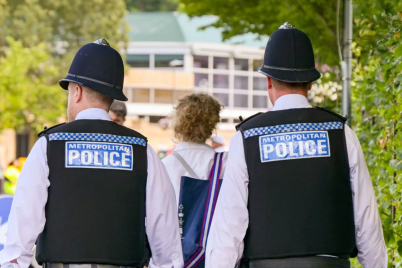
British Transport Police Ch Supt Chris Casey told the assembly’s police and crime committee: “International events play a really big part – they do generate increases in hate crime and we see those reports.”
He said the pattern had been clearly reflected on the capital’s transport network. Ch Supt Casey added: “Towards the end of 2023, we saw a big increase in terms of antisemitic hate crime.
“And that is in the context of the Jewish community actually being a very small percentage of the population and then even a smaller percentage of those who are Jewish that decide to travel anyway on the network.
“[There was] a massive increase – and we did see exactly the increase that the Met did as well.”
Data from British Transport Police shows that between January and August 2024, recorded hate crime across the public transport network increased by 27.8% year on year, rising from 1,551 to 1,982 offences. The figure later fell by 8.3%, from 1,383 incidents in 2024 to 1,268 in June 2025, but remains above pre-October 2023 levels. Officers said this confirmed the continuing influence of the Israel-Gaza conflict hate crime on London transport.
Mandy McGregor, TfL’s head of policing and community safety, said incidents had reduced by 8% since the peak of the conflict but warned they were still higher than before the war. “That’s from a peak when the Gaza-Israel situation [started]. So we have seen it come down, but it’s still higher than levels before October 2023,” she said.
Since the conflict began, London has seen hundreds of pro-Palestinian and pro-Israel demonstrations. Some have taken place inside major transport hubs, including King’s Cross and Liverpool Street stations, adding further pressure to the transport network.
Ch Supt Casey said large stations were not an “ideal” setting for protests, but stressed that police must balance public safety, the right to protest and the operation of transport services. “As long as the station can safely operate and it doesn’t impact critical national infrastructure then we have to find a way to balance those rights as long as it’s lawful activity,” he said.
“So there may be things that are said that will shock and offend and that maybe we don’t like or people don’t, but there is that balance.”
Assembly members also questioned officials about subvertising, where political messages are placed over approved adverts, and whether such actions could amount to hate crime. This followed the appearance of marketing material calling for a boycott of Coca-Cola on some Tube trains, despite TfL’s ban on political advertising.
Conservative assembly member Lord Bailey said: “These would appear to be hate crimes, there’s certainly a large section of the public, myself included, who consider them a hate crime.”
BTP Supt Sam Painter said unauthorised advertising was removed once identified. “We do frequently see acts of what we call subvertising, so the subversion of advertising on TfL’s network for a whole variety of different political groups,” he said.