The pedestrianisation of Oxford Street is no longer just a bold idea whispered around City Hall. It has arrived in the form of detailed proposals, newly released by the mayor of London and Transport for London, and it promises to reshape one of the most famous shopping streets in the world. The pedestrianisation of Oxford Street now sits at the centre of a public conversation that is growing louder by the day.
Londoners have been here before, but this moment feels different.
A previous consultation that ended in June showed that 63% of respondents supported regeneration plans for the area. That support propelled the project forward. Even so, not everyone is convinced. Some residents have told the BBC that they fear diverted traffic, disrupted bus routes and the implications for disability access. Such concerns reveal how the pedestrianisation of Oxford Street is both exciting and controversial.
Sir Sadiq Khan has set out his position with unmistakable clarity. He said: “We need urgent action to give the nation’s high street a new lease of life.” He further added that he is “pleased that we’re now moving ahead with our exciting plans to regenerate this iconic area, backed by the vast majority of Londoners and businesses.” According to him, the proposals released on Friday “map out the potential next steps” and he encourages Londoners to offer their views.
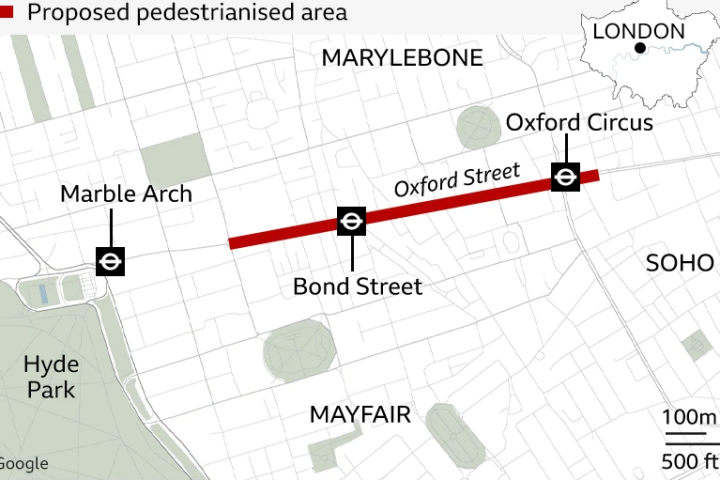
The plans themselves are ambitious. Between Orchard Street and Great Portland Street, private motor vehicles, buses, taxis, private hire vehicles, cycles, scooters and pedicabs would all be excluded entirely. Only service and delivery vehicles could enter, and only between midnight and 07:00. General traffic already faces significant restrictions in the area during the day, but this marks a definitive shift.
Pedestrians would gain new and wider crossings. Bus routes currently serving Oxford Street would be rerouted to Wigmore Street and Henrietta Place with expected increases in journey times calculated as less than one minute. New bus stops, shelters, taxi ranks and drop off points would be established nearby. Blue badge parking bays may also increase. Because cycling would be prohibited on the pedestrianised stretch, new cycle routes would be developed elsewhere.
Another major element is the creation of a mayoral development corporation to oversee planning and development across the zone. This corporation has government and London Assembly backing, and work is underway to put the required legislation in place by 1 January.
The pedestrianisation of Oxford Street is more than a traffic experiment. It is an attempt to redefine how the centre of London works, feels and moves. Whether it becomes a triumph or another chapter in a long debate will depend on how Londoners respond now.