

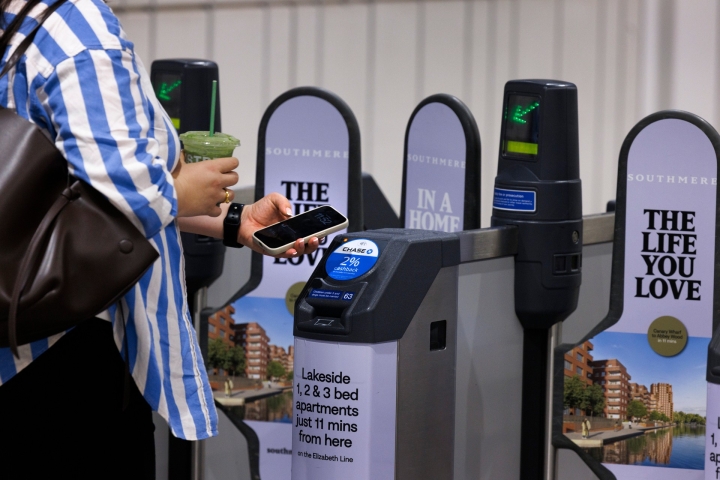
For London’s youngest commuters, the journey is an extension of the working day – whereas older commuters are using it for entertainment, reading or switching off.
This hustle culture may be unexpected for a generation that is often deemed to prioritise strict work life balance boundaries, but it’s evident in the multi-tasking Gen Z do on their journeys. According to new research from Chase¹, almost two-thirds of 18-24-year-old commuters in London say they use their journey for productive activities² (65%), compared to over half of age groups aged 25 and older (51%). For example, they are twice as likely to use their commutes to work versus other age groups (14% vs 7% of those aged 25 and over).
Millennials embracing a more balanced commute
Over 25? You’re in the cohort most likely to use a commute as downtime. Those aged 25-34 are the biggest podcast listeners, with 27% tuning in compared with 17% of all other age groups. 35-44-year-olds are the biggest bookworms, with 1 in 5 (19%) choosing to read during their journeys compared with 15% of all other age groups.
Commuters who actively choose to zone out and do nothing – or “rawdog” their journey – are over three times more likely to arrive feeling relaxed (7% of “relaxed” commuters vs 2% of “stressed” commuters do this).
Talking about my generation…
The most likely generation to do the following are…
- Tune out by listening to music – 18-24-year-olds (52%)
- Doomscroll on social media – 18-24- and 25–34-year-olds (both 35%)
- Get ahead by doing work – 18-24-year-olds (14%)
- Zone out and do nothing – over 55s (9%)
- Find time for their favourite podcast – 25-34-year-olds (27%)
- Get up to date on the latest news – over 55s (26%)
- Find some escapism in a good book – 35-44-year-olds (19%)
- Get round to finally replying to loved ones – over 55s (17%)
- Find some retail therapy in online shopping – 18-24-year-olds (12%)
- Meditate or practice mindfulness – 18-24-year-olds and 25–34-year-olds (both 6%)
- Sort their life admin, such as booking a gym class or arranging childcare – 35-44-year-olds (10%)
Blitzing admin on your commute could free up more than five and a half hours of free time each month
Those optimising their commutes by doing life admin such as household tasks, or doing an online grocery shop say they spend an average of around 20 minutes of their typical commute doing so – which could equate to getting back around 336 minutes of free time – or five hours and 36 minutes³ – in a typical month.
Morning commutes are when Londoners say they are most likely to get things done (45% vs 25% in the evenings), with Monday morning the commute in which Londoners say they tend to get the most done (22% vs 5% saying other times of the week).
This goes to show that turning commute time into productive time could help Londoners reclaim their evenings and weekends for the people and activities they value most.
Binay Agarwala, Managing Director for Rewards and Lending at Chase, says:
“Londoners are increasingly seeing their commute as an opportunity to maximise their travel and to make their lives easier. Whether that’s listening to music, catching up on life admin, getting ahead on work or simply switching off, optimising the journey can help people start the day feeling more positive and in control. In a city where time is at a premium, making every minute count could be the key to a happier, more balanced routine.”
Rewarding Londoner’s journeys
Chase customers in London can earn 2% cashback – up to £20 – when they use their Chase debit card to pay for TfL travel⁴. That cashback is also available across spending on groceries, dining and everyday transport (including train, tram, buses and ferries), fuel and electric charging. Find out more here.