A biochemistry student who was instrumental in helping Kingston University open its first ever sensory room for neurodivergent students has graduated with first class honours after coming through Clearing.
Bliss J, from Ipswich, changed her initial plan to study pharmacology and switched to study a foundation year in biochemistry through Clearing, going on to complete a three-year BSc (Hons) Biochemistry degree.
Bliss decided to study at Kingston after attending an open day and researching how the University stacked up against its competitors in the Guardian University Guide.
“When I was looking through the league tables, I noticed Kingston rated highly for biosciences and saw the mental health and wellbeing support was excellent,” she said. “I was impressed by the facilities, particularly the science labs, and the accommodation on offer. I also really like the town, Kingston is a nice area and central London is so accessible.”
Having been diagnosed with autism when she was younger, the 24-year-old initially found the transition to higher education difficult but the University helped her adapt by assigning her both a mentor and a disability adviser.
“I think for autistic students that change in independence, having to navigate university and a new social life, as well as moving away from home for the first time, can be a real struggle. I was given more time and support with assessments and this allowed me to transition more easily and helped me gradually settle into university life,” she said.
In her second year at Kingston University, she became an Autism Peer Network Coordinator, a student-led coordination role designed to build community, offer safe spaces and support autistic students.
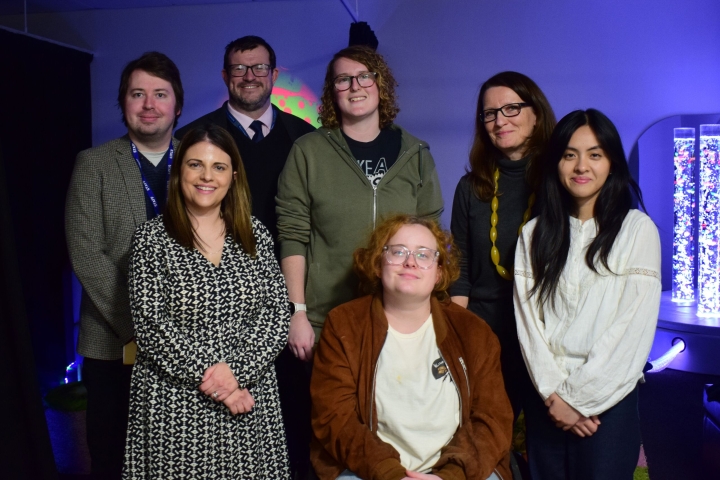
In this role she worked with the University and its Developing Minds lab to open its first ever sensory room – a safe space for neurodivergent students to decompress from busy university life. “I was sharing feedback from the network to make sure it fit everyone’s needs. It’s a great place to switch off and I was very proud when it opened – it showed how accommodating the University is to students’ needs.”
Bliss said her course has shaped how she sees her future and appreciated how the University adapted the modules taught, based on industry requirements. “Microbiology gave me a better understanding of how diseases develop, how they can be identified under the microscope and how to treat them. Clinical biochemistry deepened my understanding of blood disorders, while bioinformatics introduced me to computational approaches used in research,” she said.
Highlighting one of her tutors, Bliss said Dr Ahmed Elbediwy’s passion for biochemistry made lectures enjoyable and said his care went beyond the classroom. Discussing Bliss as a student, Dr Elbediwy said: “As my tutee, I could see such a transformation in Bliss during her time with us. Bliss was always a phenomenal student, who always gave her best and has done so much in her time at Kingston University; she also always went out of her way to help those around her, which makes her such an amazing individual. I am very proud of her and what she has achieved. She has such a promising future ahead of her.”
This summer, Bliss graduated with top honours and picked up two prizes for her high performance, including the Biochemical Society Undergraduate Recognition Award – given to the best student in biochemistry. She is now looking to pursue a Masters and hopes to continue on to a PhD and go into drug development. “I’m so proud of everything I’ve achieved and learnt over the past four years. I’ve come a long way and I’m really grateful for the opportunities Kingston gave me.”
Asked what advice she would give to students applying through Clearing, Bliss recommended attending open days and researching university choices. “The Clearing process was very smooth – those I spoke to on the phone were responsive, knowledgeable and helpful,” she said. “I’d recommend looking into the support services available and taking opportunities to get involved in a way that suits you. It can really help you settle into university life.”