A major new research project led by the University of Worcester in collaboration with multiple partners from across England, aims to improve mental wellbeing and strengthen family support for young people from ethnically diverse communities.
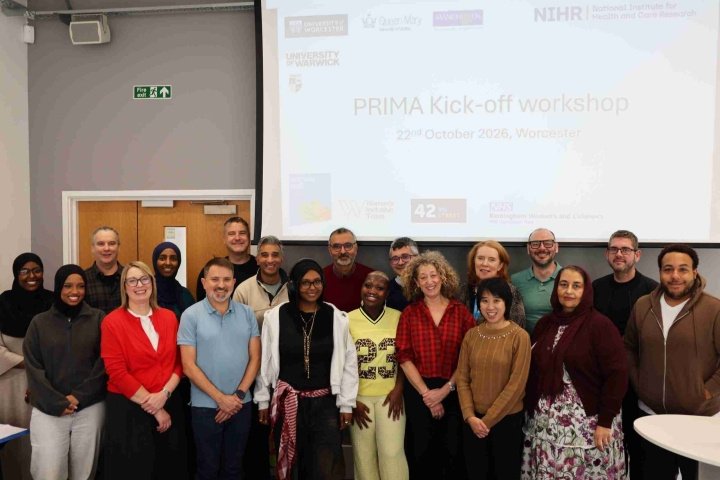
Researchers from the University of Worcester, Queen Mary University of London, the Universities of Warwick and Manchester and community organisations – Women’s Inclusive Team in London, Norton Hall Children & Family Centre in Birmingham and 42nd Street in Manchester – have secured funding from the National Institute for Health and Care Research (NIHR) to evaluate an innovative family wellbeing programme called PRIMA.
The two-year study will assess the impact of PRIMA, a school-based programme designed for young people aged 11 to 14 and their parents or carers. Developed specifically with and for ethnically diverse communities, the programme aims to strengthen mental wellbeing, improve family communication, build coping and help-seeking skills, and reduce the risk of future mental health difficulties.
The project is being led by Dr Helena Tuomainen, Associate Professor in Child and Adolescent Mental Health at the University of Worcester, together with Dr Fiona Samuels, Reader in Global Health and Inequalities at Queen Mary University of London.
Helena said: “PRIMA was co-designed with young people, parents, carers and school staff from communities in London and Birmingham through our previous NIHR-funded research, known as D-PRIMA.
“The programme focuses on issues that families themselves identified as most important, including self-esteem, mental wellbeing, family relationships, body image, communication and the impact of technology on everyday life.
This study will help establish whether PRIMA is feasible, acceptable and shows promise for improving wellbeing among young people and their families.”
The study evaluating the PRIMA programme will take place in six secondary schools across Tower Hamlets, Birmingham and Manchester and involve around 80 to 100 young people and their families.
Participants will take part in six monthly workshops led by trained community facilitators. Sessions will combine family-based activities, creative learning, peer support and shared meals, creating opportunities for families to connect and learn together.
By working closely with families, schools and community organisations, PRIMA aims to provide support earlier, strengthen protective factors for mental wellbeing and help prevent mental health difficulties from becoming more severe.
If successful, the findings will lay the groundwork for a future large-scale trial and could help shape new family-focused approaches to promoting young people’s mental health and wellbeing in schools and communities across the UK.