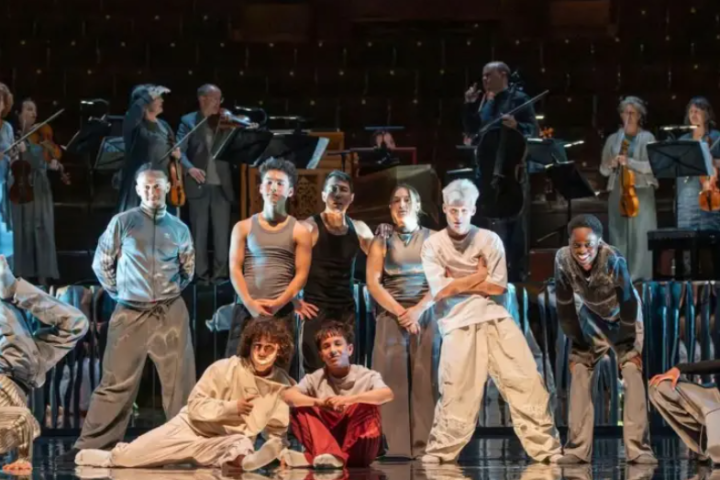
At a north London secondary school, street dancers and classical musicians are finding common ground through an innovative collaboration that blends hip-hop with Baroque music. The project, Breaking Bach, pairs students with the Orchestra of the Age of Enlightenment (OAE) to perform choreography to Johann Sebastian Bach’s compositions, written more than 300 years ago.
Emmanuel, 14, and Jeriah, 15, both pupils at Acland Burghley School in Camden, describe the experience as transformative. “With street dance we’re so focused on hitting the right beats but with classical music, it’s more about flowing with the music,” said Jeriah, who joined after seeing posters around the school. Emmanuel added that he has gained a new appreciation for Bach’s work, describing it as “very complex” and no longer “grandpa music.”
The programme, led by Olivier Award-winning choreographer Kim Brandstrup, extends beyond dance. Harvey, 15, served as sound engineer for the London previews and credited the experience with opening up new career possibilities, from lighting to cinematography. His involvement helped build confidence and skills beyond the arts; he has since become a youth MP in Camden.
The OAE, which established a permanent residency at Acland Burghley School in 2020, is the first professional orchestra in the UK to be based full-time within a state secondary school. Musicians rehearse in the school hall and run workshops for students, sometimes performing just hours after teaching. This close integration has coincided with a marked improvement in academic outcomes: the GCSE music pass rate at the school has risen from 24 per cent to 77 per cent over five years, despite a higher-than-average proportion of pupils with special educational needs, those receiving free school meals, or who have lived in care.
Each year, the OAE’s education programme reaches around 17,000 young people, many of whom have limited exposure to live classical music. Musicians report that working alongside students has reinvigorated their own practice and creativity, describing the partnership as mutually beneficial.
Crispin Woodhead, chief executive of the OAE, said the initiative demonstrates how cultural organisations can expand their societal role: “Our story is not just about one school or one orchestra: it’s about how cultural groups can rethink their role in society and bring the arts to the wider community. We are still the only professional orchestra in the UK to be permanently based in a state secondary school.”
The OAE is now encouraging other arts organisations to explore similar partnerships, highlighting how embedding professional arts within schools can provide students with unique educational experiences while revitalising the work of the artists involved.