
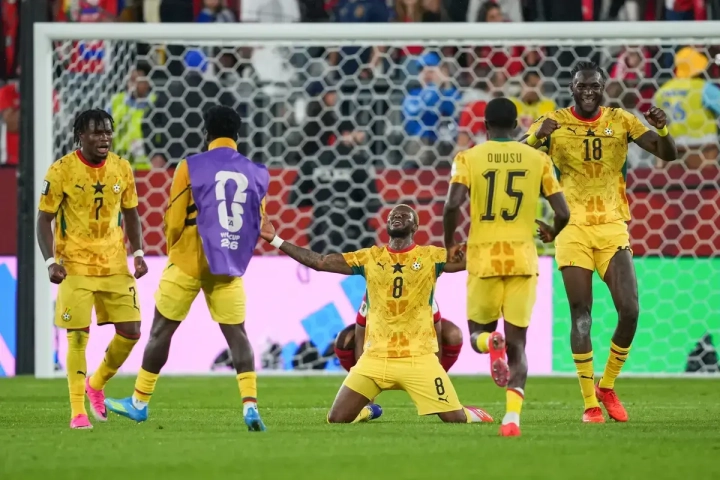
A Dramatic Night in Canada
The 2026 FIFA World Cup delivered a remarkably chaotic conclusion on Thursday morning, as Ghana snatched a dramatic 1-0 victory over Panama in their Group L opener. Taking place at the rain-soaked Toronto Stadium in Canada, the fixture officially kicked off at exactly 00:00 BST on 18 June 2026. For vast portions of the contest, the West African side appeared disjointed and completely devoid of attacking inspiration against a highly disciplined Panamanian outfit. However, a sweeping counter-attack deep into second-half stoppage time fundamentally altered the narrative, providing the Black Stars with a perfect, albeit highly fortunate, start to their tournament campaign.
The result is a devastating blow for Thomas Christiansen’s Central American side, who thoroughly dominated possession and territorial advantage but ultimately lacked the necessary clinical edge. Conversely, the triumph represents a monumental relief for newly appointed Ghanaian head coach Carlos Queiroz. Stepping into the dugout following the late dismissal of Otto Addo in March, the veteran manager marked his record-equalling fifth successive World Cup appearance with a vital three points, immediately easing the immense pressure resting on his squad’s shoulders.
Panamanian Dominance and First-Half Frustrations
Entering the fixture, pre-match discussions were heavily dominated by a significant absentee for the Black Stars. Influential midfielder Thomas Partey was entirely unavailable for the contest, having been denied a visa to enter Canada due to pending off-field legal issues in the United Kingdom. His absence in the engine room was glaringly obvious from the first blast of the referee’s whistle. Operating in a fluid 3-4-3 formation, Panama systematically seized control of the midfield battle, dictating the tempo and forcing their heavily favoured opponents deep into their own defensive third.
The Central Americans created the first genuine opening of the match in the second minute. Michael Amir Murillo delivered a dangerous, low cross into the penalty area, finding the perfectly timed run of Cecilio Waterman. The forward unleashed a powerful first-time volley, but Ghanaian goalkeeper Lawrence Ati Zigi produced a spectacular, diving save to his right to repel the danger.
Panama continued to press their early advantage, maintaining an impressive 64% of the overall possession throughout the match. They carved out another glorious opportunity in the 38th minute following an unconvincing clearance. Ati Zigi leapt to punch away a threatening cross, but the ball dropped invitingly to the feet of Jiovany Ramos. Despite having ample time and space inside the penalty area, the defender snatched at his right-footed strike, slicing the ball harmlessly wide of the target.
Astonishingly, Ghana reached the half-time interval having failed to register a single attempt on goal. They became the very first team at the 2026 tournament to accomplish that highly dubious statistical feat, heavily reflecting their disjointed passing and complete lack of cohesion in the final third.
Tactical Shifts and the Second-Half Response
The Black Stars were forced into an immediate, unforeseen alteration at the break, as Ati Zigi succumbed to an injury sustained during his busy first-half performance. He was subsequently replaced between the posts by Benjamin Asare. The enforced change, combined with a seemingly stern team talk from Queiroz, injected a renewed sense of urgency into the West African side. Jonas Adjetey finally ended the team’s lengthy shot drought in the 48th minute, directing a firm header that was comfortably gathered by Panamanian goalkeeper Orlando Mosquera.
Despite Ghana’s slight improvement, Panama remained a persistent threat on the counter-attack. Midfielder Cristian Martínez nearly broke the deadlock shortly after the hour mark. Collecting a loose ball inside the penalty area, he deployed a clever shimmy to buy a vital yard of space before flashing a fierce shot aggressively into the side netting.
Recognising the absolute necessity for fresh attacking impetus, Queiroz executed a decisive, game-altering double substitution in the 57th minute. Brandon Thomas-Asante and Abdul Fatawu were introduced into the fray, replacing Kamaldeen Sulemana and Ernest Nuamah respectively. The changes almost paid instant dividends. Darting aggressively down the right flank, Thomas-Asante delivered a beautifully weighted ball across the face of the goal, desperately seeking the sliding run of Jordan Ayew. However, Ramos produced an immaculate, goal-saving challenge at the far post to deny the veteran forward.
The Late Stoppage-Time Drama
As the clock ticked past the 90-minute mark, both exhausted sides appeared to have settled for a cautious, hard-fought draw. However, the sprawling, expanded 48-team tournament format places a massive premium on victories, and the Black Stars refused to completely abandon their pursuit of three points.
In the fifth minute of added time (90+5′), Ghana launched a devastating, breathtaking counter-attack that completely unpicked the tiring Panamanian defensive lock. Collecting the ball deep inside his own half, the highly influential Thomas-Asante drove forward with terrifying speed down the left wing. Spotting the late, bursting run of Caleb Yirenkyi through the centre, the substitute delivered a perfectly measured square pass into the penalty area. Arriving precisely on time, the 20-year-old midfielder calmly redirected the ball into the top right corner with a simple tap-in, sparking scenes of absolute delirium among the Ghanaian players and staff.
The raw emotion of the last-gasp winner inevitably spilled over, resulting in a brief, chaotic melee between the two sets of players before the referee could finally bring proceedings to a close. Amidst the late drama, Antoine Semenyo was officially awarded the Player of the Match accolade, having worked tirelessly throughout the evening to provide a vital outlet for his heavily pressured defensive colleagues.
Group L Implications and the Road Ahead
When the final whistle echoed across the stadium, the contrasting emotions were stark. The heartbreaking defeat ensures Panama’s agonising wait for their first-ever World Cup point continues. Having previously lost all three of their group-stage matches during their 2018 debut, they now face a monumental, uphill battle for survival. They must rapidly dust themselves down and prepare for a daunting clash against Croatia in Toronto, knowing that another defeat would likely spell a premature end to their tournament aspirations.
Conversely, Ghana will celebrate a thoroughly precious, albeit imperfect, victory. The three points propel them to second place in the highly competitive Group L standings, sitting perfectly level on points with group leaders England but slightly behind on goal difference. While Queiroz will be acutely aware that massive structural improvements are required before facing the European heavyweights in Massachusetts, the resilience and late fighting spirit displayed in Toronto provide a formidable foundation to build upon.
Official Match Facts
Goalscorers:
- Ghana: Caleb Yirenkyi (90+5′)
Discipline:
- Ghana: Caleb Yirenkyi (Yellow Card, 16′)
- Panama: César Blackman (Yellow Card, 71′), Carlos Harvey (Yellow Card, 90+8′)
Substitutions – Ghana:
Minute | Player On | Player Off |
45′ | Benjamin Asare | Lawrence Ati Zigi |
57′ | Brandon Thomas-Asante | Kamaldeen Sulemana |
57′ | Abdul Fatawu | Ernest Nuamah |
77′ | Kwasi Sibo | Elisha Owusu |
86′ | Prince Kwabena Adu | Jordan Ayew |
Substitutions – Panama:
Minute | Player On | Player Off |
62′ | José Fajardo | Cecilio Waterman |
62′ | Azarias Londoño | Cristian Martínez |
73′ | Ismael Díaz | José Luis Rodríguez |
89′ | Aníbal Godoy | César Blackman |