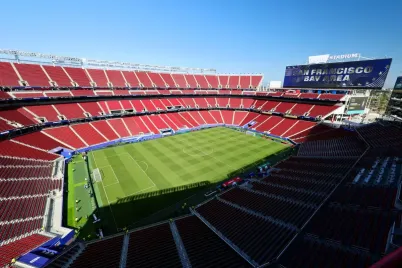
The dust has barely settled on the agony of semi-final defeat, yet the unforgiving schedule of the 2026 FIFA World Cup demands one final, gruelling exertion. On Saturday, 18 July 2026, European heavyweights England and France will meet in the often-maligned, yet historically open, third-place play-off. Scheduled for a 22:00 BST kick-off under the sweltering evening sky at the Miami Stadium in Florida, this fixture pairs two pre-tournament favourites who have seen their ultimate dreams of global supremacy extinguished at the penultimate hurdle. While the golden trophy is no longer within reach, a prestigious bronze medal and the opportunity to conclude an exhausting summer campaign on a positive note provide ample motivation for both camps.
For the Three Lions, the journey to the American East Coast is shrouded in a profound sense of what might have been. Thomas Tuchel’s side arrived in North America burdened by the colossal weight of history, desperate to end a sixty-year trophy drought that stretches all the way back to 1966. Having navigated a dramatic, emotionally taxing route through the knockout phases, their campaign came to a crashing, heartbreaking halt against reigning champions Argentina in Atlanta on Wednesday. Despite demonstrating immense character and tactical fluidity throughout the tournament, a 2-1 defeat to the South Americans leaves the English squad facing the immense psychological challenge of rallying their spirits for one final fixture. Refocusing a squad devastated by a semi-final exit is a monumental managerial task, but finishing third would represent England’s best World Cup performance on foreign soil.
Conversely, the French camp finds themselves navigating an unfamiliar sense of failure on the global stage. Didier Deschamps’ meticulously drilled outfit had been heavily tipped to reach an unprecedented third consecutive World Cup final, a feat not achieved since the legendary Brazilian generations of the mid-twentieth century. Up until their semi-final assignment, Les Bleus had looked imperious, combining suffocating defensive solidity with devastating attacking transitions to comfortably dispatch Sweden, Paraguay, and Morocco. However, their aura of invincibility was emphatically shattered by a relentless Spanish machine in Arlington. A comprehensive 2-0 defeat not only exposed rare defensive vulnerabilities but also marked the first time the French attack had been entirely nullified in a competitive fixture in recent memory. They arrive in Miami eager to salvage their pride and remind the world of their undeniable quality.
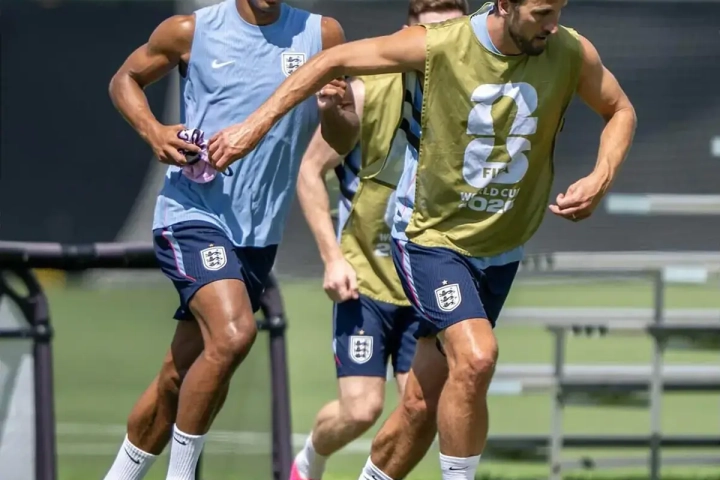
The third-place play-off traditionally operates outside the rigid tactical paradigms that govern the rest of the tournament. Unburdened by the suffocating pressure of progression, managers historically utilise this fixture to heavily rotate their starting elevens, rewarding squad members who have patiently waited in the wings for an opportunity to shine. For England, this could mean an opportunity for the likes of Eberechi Eze, Trent Alexander-Arnold, or Ivan Toney to showcase their talents from the first whistle. Tuchel has built a culture of collective responsibility within his camp, and ensuring that peripheral figures receive vital tournament minutes will be a primary objective to keep the squad unified.
Similarly, Deschamps is fully expected to shuffle his pack extensively. The punishing physical demands of the North American summer, combined with the emotional toll of their semi-final exit, dictate that fresh legs are absolutely essential. Young talents such as Warren Zaïre-Emery and Bradley Barcola, who have provided energetic cameos throughout the competition, may be handed starting berths in the midfield and forward lines respectively. However, completely abandoning their established tactical blueprints is highly unlikely. The fundamental principles of French transitional play and English possession-based control will remain entirely intact, even with heavily altered personnel stepping onto the pitch.
A fascinating subplot that will undoubtedly influence team selection revolves around the fiercely contested race for the tournament’s Golden Boot. While both managers are eager to rotate, the individual ambitions of their star forwards cannot be entirely ignored by the coaching staff. Kylian Mbappé has been in scintillating form, relentlessly pursuing the individual accolade to add to his already overflowing trophy cabinet. Providing the Paris Saint-Germain forward with the opportunity to augment his goal tally against a potentially disjointed English backline will be a tempting proposition for Deschamps.
On the opposing flank, England captain Harry Kane harbours his own enduring aspirations. Having previously claimed the Golden Boot in 2018, the Bayern Munich striker remains a potent, clinical threat inside the penalty area. If both Mbappé and Kane are deployed in Miami, the fixture instantly transforms into a high-stakes shootout between two of the modern era’s most prolific marksmen. This dynamic adds a rich layer of individual intrigue to a match that is too often prematurely dismissed as a mere exhibition game.
At this punishing stage of an expanded 48-team World Cup, physical endurance and medical recovery dominate the pre-match agenda for both nations. The stifling humidity of Florida will demand meticulous hydration strategies and careful in-game management to prevent muscular exhaustion. Both medical departments are working tirelessly to evaluate the fitness of their respective squads following the gruelling semi-final encounters, implementing rigorous recovery protocols.
Fortunately for the neutral spectator, neither camp has reported any verified, catastrophic injury concerns stemming from their mid-week defeats. Furthermore, both nations have successfully navigated the perilous disciplinary tightrope. With no crucial personnel confirmed as suspended for the accumulation of yellow cards, Tuchel and Deschamps possess fully stocked arsenals. This comprehensive availability allows both managers to freely select their rotated lineups without being forced into unwanted compromises, ensuring a high-calibre contest regardless of who takes the field.
While the immediate focus is firmly fixed upon the pristine turf of the Miami Stadium, the historical context surrounding this cross-Channel rivalry adds a rich layer of narrative tension to the encounter. These two proud footballing institutions share an extensive, highly competitive history that stretches back decades. English supporters will vividly recall their agonising clash at the 2022 World Cup in Qatar. At the quarter-final stage of that tournament, a fiercely contested battle saw France emerge as 2-1 victors, a match deeply defined by Harry Kane’s tragic late penalty miss that sent the Three Lions packing.
That painful memory remains incredibly fresh in the collective consciousness of the English squad, injecting an undeniable element of sporting revenge into Saturday’s proceedings. Furthermore, the two nations have frequently sparred in major tournaments and international friendlies over the years, forging a rivalry built upon mutual respect and intense geographical proximity. For the Three Lions, securing a victory in Florida would not completely erase the pain of their semi-final exit, but it would provide a satisfying measure of vindication against one of their fiercest European rivals.
As the 22:00 BST kick-off rapidly approaches, the atmosphere in Miami is building towards a unique crescendo. The third-place play-off frequently produces the most entertaining, uninhibited football of the entire tournament. Stripped of the suffocating fear of failure that paralyses teams in the knockout rounds, players are free to express themselves, attempt audacious passes, and attack with reckless abandon. Defending often takes a back seat to offensive flair, resulting in thrilling, high-scoring spectacles.
For England, claiming the bronze medal would represent a tangible reward for a summer of immense sacrifice and tactical evolution under their German manager. It would serve as a crucial stepping stone, proving that they can consistently compete at the absolute highest echelons of the international game. For France, a podium finish is the absolute minimum requirement to salvage pride and appease a highly demanding domestic audience accustomed to ultimate victory.
Every single tackle will still carry immense weight, and national pride remains firmly on the line. One exceptionally talented squad will leave North America with a physical testament to their prolonged run, concluding their arduous campaign with a victory. The other will face a long, sombre flight back across the Atlantic, carrying the bitter, lingering taste of consecutive defeats. The global footballing audience awaits the outcome of this fascinating European collision.