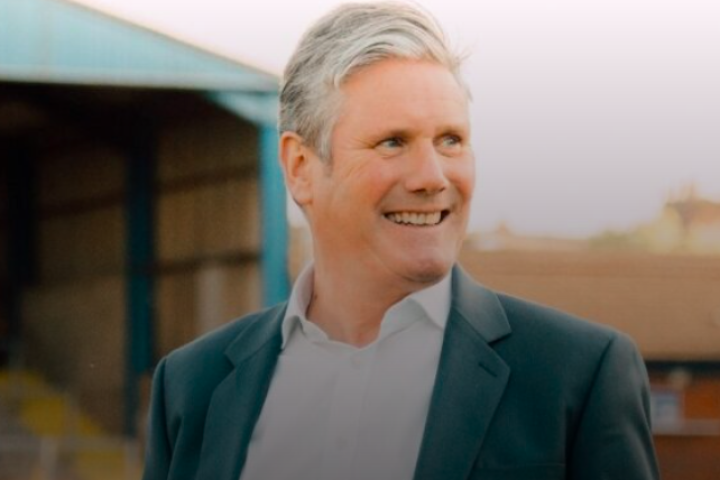
The resignation of Prime Minister Keir Starmer has rattled financial markets and intensified scrutiny of Labour’s economic direction, with investors increasingly focused on the prospect of Andy Burnham taking over at Number 10.
Sterling weakened and gilt yields remained elevated on Monday as traders assessed the political fallout from Starmer’s decision to step down less than two years after Labour’s landslide election victory. Burnham, who only returned to Westminster last week, is widely regarded as the frontrunner to succeed him, potentially becoming Britain’s seventh prime minister in a decade.
Nigel Green, chief executive of deVere Group, said markets had already begun to react to the prospect of a leadership transition.
“Sterling weakened against the dollar following the announcement, while gilt yields remain elevated after months of political uncertainty and concerns about the UK’s fiscal outlook,” he said.
“Investors are now turning their attention to the identity of Starmer’s successor and what it could mean for taxation, borrowing and economic policy.”
According to Green, the key question for investors is not who replaces Starmer, but what policy direction a new administration would take.
“The market’s first question isn’t who replaces Keir Starmer. It’s whether the next Prime Minister pushes Britain further towards taxing wealth and capital.
“If investors conclude the answer is yes, sterling falls, gilt yields rise and money leaves. It’s that simple.”
The prospect of a Burnham premiership is already prompting debate in financial circles about the future balance between public investment, taxation and fiscal discipline.
“Andy Burnham’s political stock has risen sharply and markets are paying attention,” Green said.
“His growing influence immediately raises the probability of wealth taxes becoming a serious policy discussion. Investors won’t wait for legislation, they react to direction.”
Starmer’s departure has also cast uncertainty over the future of Chancellor Rachel Reeves, whose commitment to fiscal restraint has been viewed as a key pillar of Labour’s economic credibility.
“Rachel Reeves has been the face of Labour’s economic credibility. Starmer’s resignation leaves a giant question mark over her future,” Green added.
Economists said market volatility reflected uncertainty over what a Burnham-led government would look like in practice.
Emeritus Professor Joe Nellis, economic adviser at MHA, said the resignation had added to turbulence that had already been building in anticipation of Starmer’s departure.
“The expectation of the Prime Minister’s resignation in recent days had already driven volatility in financial markets – a spike in bond yields and fall in sterling this morning shows that his resignation is only adding to that,” he said.
“This is not because of any great love the markets have for the outgoing PM, but for fear of what comes next.”
Nellis argued that investors would ultimately judge the next administration on its approach to taxation, borrowing, spending and regulation rather than the personality occupying Downing Street.
“Who he chooses to form his economic team, particularly his choice as Chancellor, will also be crucial. This makes it difficult to predict the policy direction of his government.”
However, he suggested that any market turbulence could prove short-lived if the incoming leadership presents a credible growth strategy.
“If the next PM can convince financial markets that a clear, long-term investment plan will be implemented and that there is a strong, well-funded path to sustainable growth for the UK, then business confidence will increase.”
Business groups are also calling for the next Labour leader to place growth at the centre of government policy.
Eva Barboni, executive director of Enterprise Britain, said entrepreneurs and investors were seeking greater certainty.
“The message we hear consistently from entrepreneurs, business leaders, and investors is that they want a government whose ambition for the country matches their own,” she said.
“As Labour selects its next leader, it is crucial that they prioritise accelerating the reforms needed to help British businesses start, scale, and succeed here in the UK.”
The political upheaval is also expected to have consequences beyond financial markets.
Monica Eaton, founder and chief executive of Chargebacks911, warned that periods of uncertainty can alter consumer behaviour and increase pressure on merchants.
“When households feel less certain about the future, purchases may be scrutinised more closely, merchants can face greater pressure around refunds and the distinction between a genuine customer issue and a dispute that should not have become a chargeback can become harder to navigate,” she said.
Meanwhile, Susannah Streeter, chief investment strategist at Wealth Club, said another change of prime minister risked reinforcing concerns about Britain’s political stability.
“Andy Burnham looks set to become Britain’s seventh Prime Minister in around a decade, a remarkable level of political upheaval for a developed economy,” she said.
“Combined with the lingering effects of Brexit, the revolving door at Number 10 has tarnished the UK’s reputation as a stable place to do business and made it harder to attract the long-term investment needed to drive stronger economic growth.”
She added that Burnham would need to reassure investors that a more interventionist approach to economic policy could be combined with fiscal discipline.
“After years of political chop and change, investors are likely to place a premium on stability, credibility and a clear long-term economic strategy.”
For now, markets appear to be withholding judgment. But with Labour preparing to choose its next leader and Burnham emerging as the favourite, investors are already weighing the implications for taxation, public spending, borrowing and growth.
As Green put it: “Politics is now becoming a market driver in Britain again.”
“Investors will be watching Labour’s leadership contest very closely because the outcome could have real consequences for UK assets, borrowing costs and capital flows.”