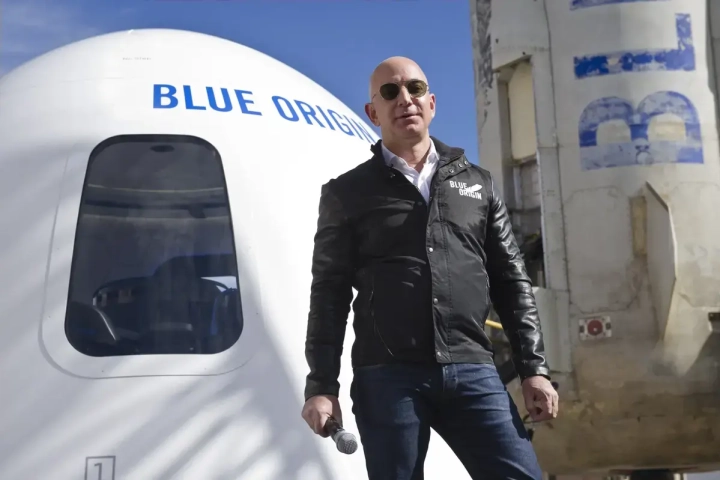
The financial tectonic plates of English football are shifting once again. Reports emerging this week have revealed that Amazon founder Jeff Bezos has held preliminary discussions regarding a potential investment in Liverpool Football Club. The American billionaire, boasting an estimated personal fortune of $257 billion (£192 billion), has been approached to join an incredibly wealthy consortium aiming to acquire a strategic minority stake in the Anfield outfit.
The investment vehicle attempting to court the world’s fourth-richest man is led by Amit Bhatia. Bhatia, the son-in-law of billionaire steel magnate Lakshmi Mittal, recently relinquished control of his shares in Championship side Queens Park Rangers, a deliberate structural move that has paved the way for this audacious Premier League pursuit.
Fenway Sports Group (FSG), the US-based custodians of Liverpool since 2010, have formally acknowledged the negotiations. A spokesperson for the ownership group confirmed that an investment consortium “led, managed, and represented by Amit Bhatia has expressed interest in making a strategic minority investment in Liverpool Football Club”. If finalised, the transaction is expected to place a staggering valuation of at least $6 billion (£4.5 billion) on the Merseyside institution, reflecting the exponential commercial growth of elite sporting assets.
While sources close to the negotiations have cautioned that Bezos is not certain to proceed with the investment, his mere presence at the periphery of the discussions highlights a fascinating evolution in Premier League ownership.
The Anatomy of the Deal: Bhatia, Mittal, and Bezos
The prospective deal currently being discussed centres on a minority stake, which insiders suggest could reach up to 30 per cent of the club. Bhatia is driving the initiative with the substantial backing of the wider Mittal family. Bringing Bezos into the fold would undoubtedly elevate the consortium’s financial muscle into the stratosphere, placing Liverpool among the most formidable economic entities in global sport.
Bezos is no stranger to the allure of elite sports franchises. The Blue Origin and Washington Post tycoon has previously explored high-profile takeovers in the National Football League (NFL). He was heavily linked with bids for the Seattle Seahawks and the Washington Commanders over the past two years, although he ultimately stepped back from both opportunities.
Should he decide that English football presents a more appealing portfolio addition, the financial implications for Liverpool would be profound. Bezos’s net worth is roughly 43 times the estimated $6 billion valuation of the football club itself. While minority investment does not equate to outright ownership, the injection of capital from an individual of his financial standing would fundamentally alter the club’s spending capabilities, infrastructure development, and long-term commercial strategy.
For Bhatia, the pursuit of Liverpool represents a return to the pinnacle of English football. His previous tenure at Loftus Road with QPR provided him with an intricate understanding of the domestic game’s operational realities, yet the scale of the Anfield project exists in an entirely different dimension.
FSG’s Long-Term Vision and the $6 Billion Valuation
To comprehend the significance of this potential investment, one must contextualise the phenomenal financial journey Liverpool have experienced under Fenway Sports Group. When John W. Henry’s firm purchased the club sixteen years ago, they paid a mere £300 million to rescue it from the brink of administration.
Today, a $6 billion valuation highlights the explosive appreciation of Premier League assets. FSG has historically favoured a self-sustaining operational model, famously relying on astute data-driven recruitment and commercial expansion rather than limitless owner subsidies. However, the financial landscape of European football has altered dramatically in recent years. The proliferation of state-backed ownership groups and massive American consortiums has inflated transfer fees and wage bills, placing immense pressure on self-sustaining clubs to find new avenues of capital generation.
This is not the first time FSG has sought external investment to bolster their balance sheet. In 2023, the owners agreed to a minority investment deal with Dynasty Equity, a strategic move designed primarily to clear bank debt incurred from the pandemic and major infrastructure projects.
The current talks with Bhatia’s consortium appear structurally similar but far more ambitious in scope. Selling a 30 per cent stake would provide FSG with a colossal injection of liquidity without forcing them to relinquish operational control of a highly profitable and globally beloved asset.
The Americanisation of the Premier League
If the Bhatia consortium, fortified by Bezos, successfully concludes a deal, it will accelerate a broader, undeniable trend defining the English top flight. The Premier League is increasingly becoming a playground for US-based capital.
At present, roughly half of the 20 clubs in the division are part-owned or fully controlled by American investors. Newly crowned champions Arsenal are operated by Stan Kroenke’s sports empire, while Manchester United remains firmly in the grip of the Glazer family, despite the minority operational takeover by Sir Jim Ratcliffe’s INEOS group. Elsewhere, Leeds United are backed by San Francisco 49ers Enterprises, and numerous other clubs rely on American financial structures.
The relentless influx of US money speaks to the Premier League’s unchallenged status as the most lucrative and globally visible domestic football competition in the world. American investors, familiar with the closed-shop, hyper-profitable franchise models of the NFL and NBA, view the Premier League as an undervalued media product with immense global growth potential.
For Bezos, the appeal is clear. The Premier League offers a unique cultural cachet and global broadcasting reach that few other sporting properties can match. His involvement would immediately position Liverpool as a commercial behemoth capable of challenging the sovereign wealth funds backing Manchester City and Newcastle United.
A Transitional Era on the Pitch
The timing of this boardroom manoeuvring is particularly poignant, as Liverpool find themselves navigating a complex and highly scrutinised transitional period on the pitch. The 2026-27 season represents a profound shift in the club’s modern history, both in the dugout and within the playing squad.
In May, FSG made the ruthless and highly controversial decision to sack head coach Arne Slot. Despite having delivered the Premier League title just one season prior, an underwhelming fifth-place finish last term prompted the American owners to pull the trigger. The dismissal generated significant disquiet among the Anfield faithful, placing immense pressure on the incoming regime.
Andoni Iraola, the former AFC Bournemouth tactician, has been drafted in to spearhead the next chapter. The Spaniard arrives with a reputation for implementing high-octane, pressing football, but he inherits a squad facing its most significant challenge in nearly a decade.
For the first time since 2017, Liverpool will commence a campaign without the talismanic presence of Mohamed Salah. The departure of the Egyptian icon leaves a cavernous void in both the club’s attacking output and its global marketing appeal. Replacing a player of Salah’s calibre requires precision recruitment and, inevitably, substantial financial backing.
This is where the prospect of the Bhatia-Bezos investment becomes a tantalising narrative for supporters. While the club’s fan base has traditionally placed tremendous pride in their core working-class values, the modern reality of football dictates that competing for the sport’s biggest honours requires immense financial leverage. An influx of capital could provide Iraola and the recruitment department with the war chest necessary to aggressively rebuild the squad, target elite-level replacements for Salah, and instantly bridge the gap to the summit of the table.
Balancing Tradition and Hyper-Capitalism
For Liverpool supporters, the concept of billionaires using their club as a vehicle for investment often brings a complicated mix of emotions. The Anfield faithful are fiercely protective of their heritage, a community-driven ethos rooted deeply in the socialist principles espoused by legendary manager Bill Shankly.
In recent years, the fan base has consistently pushed back against moves that threaten those traditions, most notably leading the revolt against the ill-fated European Super League project. FSG were forced into a humiliating public apology following that debacle, and the relationship between the Boston-based owners and the supporters’ unions has required careful, continuous mending ever since.
Therefore, any new investor entering the boardroom will be subjected to intense scrutiny. While the allure of Bezos’s seemingly infinite resources is obvious, supporters will demand assurances regarding ticket prices, stadium preservation, and community engagement.
Simultaneously, the competitive reality of the Premier League is undeniable. Fans crave the adrenaline of title races and Champions League nights under the lights. Achieving those heights requires a squad assembled with elite, premium talent. Andoni Iraola’s tactical system, which demands extreme physical conditioning, relentless high pressing, and rapid transitions, cannot function effectively with a thin or ageing squad. The recruitment department will need to target dynamic, multi-faceted players who can immediately adapt to the rigorous pace of the English game.
If the Bhatia consortium finalises their 30 per cent acquisition, it could provide the perfect equilibrium: preserving FSG’s experienced operational stewardship while injecting the vital financial steroids required to complete Iraola’s squad overhaul.
The Broader Footballing Implications
As the negotiations continue behind closed doors, the wider footballing community is watching with keen interest. The potential arrival of a figure like Jeff Bezos, even in a minority capacity, would send shockwaves through the corridors of power in London, Manchester, and beyond.
It signifies that the ceiling for Premier League valuations has not yet been reached. If Liverpool commands a $6 billion valuation for a minority stake, the baseline for other elite clubs across Europe will naturally inflate. Furthermore, it sets the stage for an intensified financial arms race. While UEFA and the Premier League continue to grapple with the implementation of robust Profitability and Sustainability Rules, the sheer volume of wealth pooling at the absolute top of the sport threatens to widen the chasm between the elite and the rest of the pyramid.
Ultimately, Amit Bhatia’s consortium has initiated a courtship that could redefine Liverpool Football Club’s future. Whether Jeff Bezos decides to formally attach his name and his vast fortune to the Anfield project remains to be seen. However, the sheer fact that the world’s most powerful billionaires are circling the Premier League serves as a stark reminder of English football’s transformation from a traditional domestic pastime into a colossal, multi-billion-dollar global entertainment industry.