
The 2026 FIFA World Cup has been a theatre of spectacular athletic achievement and intense on-pitch drama. However, as the tournament progresses towards the latter stages, the most explosive talking point has undeniably occurred away from the stadiums. Following France’s hard-fought victory over Paraguay in the Round of 16 on Saturday, 4 July 2026, an unprecedented geopolitical and legal storm erupted.
At the centre of the controversy is France’s talismanic captain, Kylian Mbappé, and Celeste Amarilla, a 61-year-old senator from Paraguay’s Liberal Radical Party. What began as a tightly contested football match has devolved into a staggering saga involving brazenly racist tirades, international diplomatic statements, criminal complaints, and highly bizarre threats of counter-lawsuits.
Here is a comprehensive, deep dive into the incident that has cast a long, uncomfortable shadow over the knockout stages of the World Cup.
The Catalyst: A Narrow French Victory
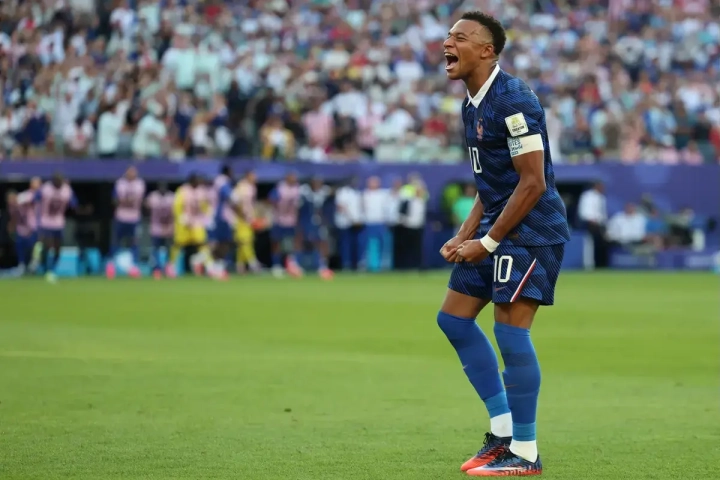
To understand the sheer scale of the ensuing fallout, one must first look at the context of the match itself. France and Paraguay met in the Round of 16, resulting in a tense, highly physical encounter. France eventually prevailed 1-0, with Kylian Mbappé scoring the decisive, and only, goal of the match via a penalty kick.
While the Paraguayan national team fought valiantly and ultimately exited the tournament with their heads held high, the reaction from one of their most prominent politicians sent immediate shockwaves around the globe.
The Racist Tirade on Social Media
Shortly after the final whistle, Senator Celeste Amarilla, a lawyer who has been active in Paraguayan politics since 1982, took to her social media platforms, including X (formerly Twitter) and Instagram, to launch a vicious, highly personal attack on the Real Madrid forward.
Amarilla’s posts crossed every conceivable line of sporting rivalry, descending immediately into blatant racism. In her initial barrage of insults, she referred to Mbappé as a “colonised Cameroonian” who was “pretending hard to be French, resentful, newly rich, arrogant, and ugly”.
The senator did not stop there. Employing deeply offensive, historically racist tropes, Amarilla quoted a post celebrating Mbappé’s goal and added that the French captain “never learned to write,” that he “sucked on coconuts” instead of breastmilk, and that the “most educated creatures he listened to were chimpanzees”.
Furthermore, she attempted to diminish France’s sporting achievement, claiming they “won by a fluke” and that Mbappé and his team were “scared to death the whole match”. In a shocking display of unsporting behaviour from an elected official, she even suggested that the Paraguayan players should have physically assaulted the French captain, stating her only criticism of her national team was that they did not slap him after the game.
Mbappé Strikes Back
Kylian Mbappé, no stranger to facing abuse on social media, refused to let the senator’s comments pass without a forceful, dignified rebuttal. Taking to X, the French captain released a strongly worded statement in which he condemned the racism while pointedly defending the honour of the Paraguayan players.
“Madame Celeste Amarilla, you are a despicable woman and unworthy of your position. You do not represent Paraguay, that country which has sweated passion and honour throughout the competition,” Mbappé wrote.
He continued by highlighting how her actions were actively damaging her own nation’s reputation on the global stage.
“Through your recklessness and your brazen racism, the entire world has already forgotten the journey and the historic effort that your players accomplished during this World Cup, making way for an incompetent woman who gives the worst possible image of her country. I will never allow people like her the freedom to spread their hatred and racism across the world.“
Mbappé’s response drew widespread international support, framing his stand as not just a personal defence, but a necessary strike against the normalisation of racism in sport.
Institutional Fallout: Criminal Complaints and Diplomatic Apologies
The severity of the senator’s comments rapidly elevated the situation from a social media spat to a formal institutional crisis.
The French Football Federation (FFF) Intervenes
The FFF moved swiftly to protect their captain, announcing immediate plans to file a criminal complaint with the public prosecutor’s office. The federation released a statement characterising Amarilla’s remarks as “utterly abhorrent and unacceptable”. They emphasised that an insult to the captain of the national team is an insult to France itself, stating: “These remarks bring shame upon those who make them and those who disseminate them… it is our country that is being insulted”.
The Paraguayan Government Distances Itself
Faced with a rapidly escalating diplomatic incident, the Paraguayan Government was forced to intervene and publicly disavow their own senator. The Ministry of Foreign Affairs released an official statement to limit the diplomatic damage.
The government stated it “deplores and rejects the statements made by Senator Celeste Amarilla”.
They clarified that the senator was speaking exclusively in her individual capacity as a legislator and that her views “in no way” reflect the sentiments of the Paraguayan government or its people.
The statement reaffirmed the nation’s “firm commitment to the promotion of human rights, equality and respect among people, the fight against racism, xenophobia, intolerance and all manifestations of hatred or discrimination”.
The Bizarre Counter-Attack: Amarilla Alleges ‘Gender-Based Violence’
If the footballing world thought the diplomatic condemnation would force an apology from Amarilla, they were mistaken. In a staggering twist, late on Monday, the senator published an open letter in both French and Spanish, demanding an apology from Mbappé and threatening to sue him.
While she admitted to deleting her original racist posts, her justification raised eyebrows. Amarilla claimed she wrote the initial tirade with “boiling blood,” blaming her emotional state on her “mixed-race blood, that beautiful blend of Indigenous blood with the Spanish blood”. She claimed she immediately regretted using the “same insults I receive, because I too am despised for being mixed-race and Latina,” but then pivoted to aggressively attacking the French star’s character.
In her lengthy rebuttal, Amarilla levelled several new accusations against Mbappé:
Arrogance and Swearing: She accused Mbappé of blatant arrogance and claimed he insulted Paraguayan players during the match using the highly offensive Latin American phrase “La concha de tu madre”.
Disrespecting the Goalkeeper: Amarilla alleged that Mbappé showed a severe lack of sportsmanship by refusing to shake the hand of Paraguayan goalkeeper Orlando Gill after the final whistle, instead choosing to shout his victory in the goalkeeper’s face.
Targeting France: She insisted her issue was solely with Mbappé’s behaviour, not with the nation of France, which she claimed to have admired throughout her life.
The most astonishing element of her open letter, however, was her decision to cast herself as the victim. Amarilla accused Mbappé of committing “pure and simple gender violence” and “political violence against a woman” by calling her a despicable woman unworthy of her office.
“You despise me precisely because of my gender; you offend me precisely because I am a woman,” Amarilla wrote, entirely ignoring the racist nature of her initial attack. “Retract your statement with me, honor your French citizenship, and apologize, or I may take legal action for gender violence.”
The Legacy of the Saga
As France prepares for their highly anticipated quarter-final clash against Morocco on Thursday, the French camp has largely chosen to ignore Amarilla’s bizarre legal threats and open letter, choosing to let the FFF’s legal team handle the fallout.
The Kylian Mbappé and Celeste Amarilla saga will undoubtedly go down as one of the darkest and most surreal off-pitch controversies in World Cup history. It highlights the deeply entrenched issues of racism that still plague the global game, while simultaneously showcasing how quickly the actions of a single politician on social media can force governments and sporting federations into emergency diplomatic control.
For now, Mbappé’s focus returns to the pitch, seeking to guide France to ultimate glory, while the legal mechanisms in both Europe and South America begin to process the fallout of a truly unprecedented political tirade.