
Small and medium-sized businesses face fresh uncertainty over how future business rates changes could affect their plans for growth, investment and recruitment, as property-related costs remain one of the biggest fixed pressures on firms operating from commercial premises.
The issue has come into sharper focus ahead of the 2026 business rates revaluation in England and Wales, which will update the ratable values of more than two million commercial properties. According to the Valuation Office Agency (VOA), revaluations are carried out every three years to reflect changes in the commercial property market, but for businesses already managing tight margins, the timing and impact of any resulting changes will be closely watched.
While an increase in a property’s rateable value does not automatically translate into an equivalent rise in its business rates bill, many businesses are carefully reviewing their ongoing occupancy costs as they plan for the years ahead.
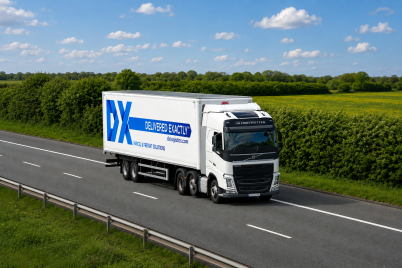
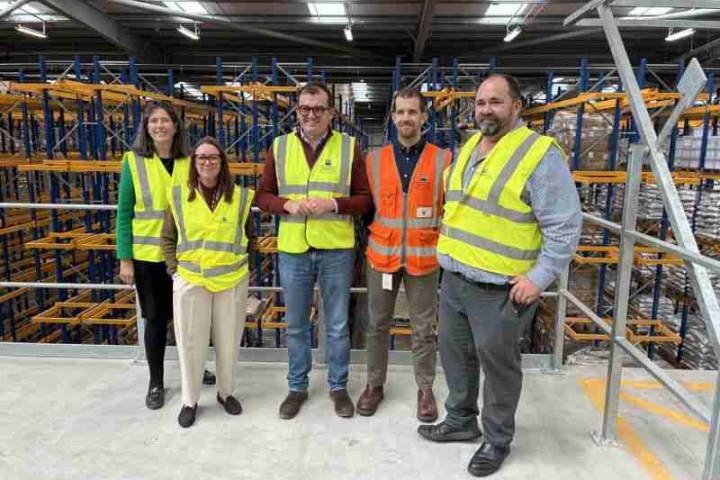
For Andrew Cusworth, Managing Director of Buckle Shipping, the conversation is not just about tax policy. Buckle Shipping’s warehouse is only three years old, meaning the business is still building the operation, developing its customer base and investing for future growth. Rising fixed costs therefore risk restricting that growth before the operation has had the opportunity to reach its full potential.
“For many small and medium-sized businesses, the challenge is not one single cost increase, it is the cumulative effect of rising overheads across the board. Business rates remain a significant expense for firms operating from commercial premises, and when those fixed costs become harder to predict, it can affect decisions around investment, recruitment and growth.”
The latest government reforms have introduced a new structure for business rates from April 2026. As part of the changes, lower multipliers are available for qualifying retail, hospitality and leisure properties below certain rateable value thresholds, while a higher multiplier applies to properties with rateable values of £500,000 and above. The government has stated that properties above this threshold account for less than 1% of all ratable properties in England.
Alongside the new multiplier structure, the government has introduced a package of transitional support designed to limit the immediate impact of revaluation-related increases for eligible businesses. The government says the wider support package is worth £4.3 billion over three years.
Further proposals put forward by Andy Burnham have also added to the wider debate over whether business rates could be reshaped to give more support to high streets and independent operators. His suggestions have included cutting rates for pubs and music venues, raising the threshold for small business rates relief, and taking some smaller high street firms outside the scope of business rates altogether. For businesses planning ahead, the central concern is not the purpose of those ideas, but whether any future changes are introduced with enough clarity, consistency and notice to support long-term decision-making.
The debate has also widened beyond how rates are calculated for individual premises. Some of Andy Burnham’s proposals have raised the possibility of shifting more of the business rates burden onto larger warehouse developments and other commercial property categories to fund relief elsewhere in the system, adding another layer of uncertainty for firms trying to plan ahead. For businesses such as SMEs and warehouse operators, the concern is not necessarily the aim of those proposals, but whether further changes to the rates system could create additional cost pressure without enough time for businesses to adapt.
Even with support measures in place, business owners are still having to make long-term decisions in a cost environment that can change quickly. For a relatively young operation, the concern is that more money spent simply maintaining its existing position leaves less available to invest in facilities, expand the customer base, recruit and create further opportunities.
Mr Cusworth said: “Companies need stability and predictability when making long-term decisions. Whether it’s taking on additional space, investing in new facilities or recruiting more staff, confidence in future operating costs is an important factor.”
Commercial premises remain vital to large parts of the UK economy, particularly in sectors such as logistics, warehousing, manufacturing and distribution, where physical space is not optional. According to official guidance, non-domestic properties such as shops, offices, warehouses, pubs and factories can be liable for business rates.
That certainty, Mr Cusworth said, can be the difference between businesses delaying decisions and pressing ahead with investment.
Mr Cusworth said: “Small businesses are often the engine of economic growth within their communities. When business owners have confidence to invest, expand and create jobs, the benefits are felt far beyond individual companies.”
Mr Cusworth said: “Businesses are continually looking for ways to improve efficiency and remain competitive. The more certainty they have around their operating costs, the better positioned they are to invest for the future.”
For organisations operating from commercial premises, business rates remain one part of a wider cost picture that also includes wages, energy, rent, borrowing and supply chain pressures. For younger SMEs still building their operations, the challenge is not protecting the status quo but preserving the capacity to invest, expand and create opportunities. If the cost of standing still continues to rise, businesses with ambitions to grow may find that an increasing share of their resources is absorbed before that growth can take place.