
- Number of people killed in London reduced by 13 per cent from 2024 – the second lowest figure on record outside the pandemic, provisional data shows
- Six people were killed while cycling in 2025, the lowest level since 2020, despite huge cycling growth
- Since 2015, more than 250 deaths are estimated to have been prevented on London’s roads thanks to the Mayor, TfL and Vision Zero partners’ collective action
- Despite this progress, more work needs to be done to prevent death and serious injury on London’s roads
- Earlier this year, the Mayor and TfL launched an ambitious plan to significantly reduce road danger and prevent deaths and serious injuries on London’s roads
Transport for London (TfL) has published provisional annual casualty statistics that show the number of people tragically killed on London’s roads fell by nearly 13 per cent from 110 people in 2024 to 96 people in 2025. This is the second lowest level on record, excluding 2021, which was heavily affected by pandemic-related lockdowns and changes in travel patterns.
Unfortunately, serious injuries have increased by eight per cent from 3,597 in 2024 to 3,900 in 2025. TfL, London’s boroughs, the police and other partners are committed to working closely to eliminate death and serious injury from London’s streets by 2041, and have a bold new Vision Zero Action Plan, setting out 43 actions to reduce road danger. This includes rolling out more safer speed limits, redesigning high streets, addressing danger on side roads, and strengthening enforcement against dangerous driving. London’s evidence-led Vision Zero approach has already made the capital’s roads safer, with an estimated 262 deaths prevented on London’s roads since 2015 thanks to the Mayor, TfL and Vision Zero partners collectively taking action.
People walking, cycling and motorcycling continue to face the greatest risk on London’s roads:
- In 2025, 81 per cent of all people killed or seriously injured (3,217 people) were travelling using these modes of transport
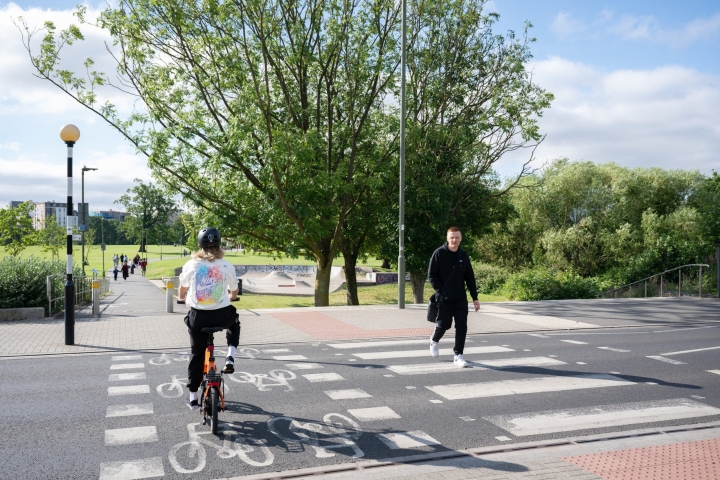
- Six people were tragically killed while cycling in 2025 and, although no death is acceptable on London’s roads, this is the lowest number since 2020, and second lowest ever
- This reduction is despite cycling levels continuing to rise, with 1.5 million daily cycle journeys in 2025, a 12.7 per cent increase from 1.33 million in 2024, meaning that the overall risk to people being killed whilst cycling has reduced
- Provisional data also shows that the number of casualties per million cycle journeys reduced by 27 per cent between the 2010-14 baseline and 2025 (from 14.3 cyclist injuries per million cycling journeys to 10.4)
- TfL remains committed to ensuring cycling is sustainable, safe and accessible for all, and has increased the length of the strategic cycle network from 90km in 2016 to over 441km in 2025, a seven per cent increase from 2024
- In 2024/25 alone, TfL launched 17 new Cycleway routes and since September 2025, 29 per cent of Londoners live within 400 metres of the cycle network
- TfL has made a number of busy junctions safer for everyone, including the recently completed improvements at Lambeth Bridge, which saw some of the highest levels of cycling collisions in the capital
Unfortunately, there has been an eight per cent increase in serious injuries, rising from 3,597 in 2024 to 3,900 in 2025. This increase was driven by both injuries to people cycling and travelling in a car. Cycling in London continued to boom in 2025, accompanied by the widespread adoption of e-bikes, both dockless rental bikes and privately owned bikes. While injury risk per journey has increased compared to 2024, it remains lower than the historical baseline. TfL is working closely with the police to better understand the causes of injuries to car occupants.
Cars continued to be involved in most collisions that killed or seriously injured someone in 2025. Excess speed remains one of the biggest risks to road users, with 57 per cent of the 2025 fatal collisions in London reporting speed as a contributory factor (53 out of the 93 collisions). This is why TfL and the Mayor are continuing to lower speeds across London, with more than 250km of TfL’s roads now subject to a 20mph speed limit and at least a further 65km of the TfL Road Network will see lowered speed limits by 2030. TfL is committed to modernising and expanding London’s safety camera network, adding at least 20 new sites and investing in new technology that is adaptable to future enforcement needs.
In 2025, 10 people were tragically killed in collisions involving a bus, however, this is the lowest number since 2021. Bus passenger injuries are also the lowest on record, except during the pandemic in 2020, TfL remains determined to eliminate deaths involving a bus and has committed to achieving 100 per cent Intelligent Speed Assist (ISA) coverage across the bus fleet by 2031. In the coming weeks, TfL will be launching the next stage of the Bus Safety Standard, which sets out new safety requirements for buses. The Standard aims to ensure that the bus industry, particularly bus manufacturers, their supply chain and bus operators, have a clear view of future requirements for buses and areas of further research, development, and trials.
TfL has been examining how driving and riding for work contribute to road danger, with specific risk factors such as fatigue, time pressure, high vehicle mileage leading to increased wear and tear, distractions linked to app use, the challenges of operating in complex urban environments and limited access to welfare facilities. TfL estimates that on average (between 2022-24), around 45 per cent of all people killed or seriously injured on London’s roads – approximately 1,700 each year – have been harmed in collisions involving a working driver or rider. Of these, roughly 1,450 were members of the public, not the person driving or riding for work. These estimates suggest that there are specific risk factors related to vehicles and working conditions that pose a significant risk to both workers and members of the public.
Lilli Matson, TfL’s Chief Safety, Health and Environment Officer, said: “Any death or serious injury on our roads is unacceptable, and our thoughts are with the families and friends of the 96 people who were tragically killed in 2025. While it is encouraging that fatalities have fallen to one of the lowest levels on record, we are deeply concerned by the increase in serious injuries.
“We know that people walking, cycling and motorcycling remain most at risk, and that speeding and dangerous driving continue to be key factors behind collisions. That is why we are working with boroughs, the police and partners to take bold action through our refreshed Vision Zero plan, from safer speed limits and redesigned streets to stronger enforcement and improvements to vehicle safety. Our goal remains clear, to eliminate death and serious injury from London’s roads and we will continue to focus on the measures that will have the greatest impact, making our streets safer for everyone who lives in, works in and travels around our city.”
Walking and Cycling Commissioner, Will Norman said: “While these figures show we are making progress, every death or serious injury on our streets is devastating and we know there is still more work to do to eliminate this heartbreak.
“The Mayor and I remain committed to achieving Vision Zero by 2041. We’ve set out an ambitious new plan, working with boroughs, the police and communities, to tackle road danger, reduce speeds and make streets safer for everyone walking, cycling and travelling across the capital, as we build a better and safer London for everyone.”
London Cycling Campaign CEO, Tom Fyans, said: “Every one of London’s near 100 fatal collisions and near 4,000 involving serious injuries annually results in families grieving, friendship circles shattered, lives ruined. Excess speed is a factor in many of these tragedies. LCC recognises the work the Mayor, TfL and the Met are doing to reduce this unnecessary, unacceptable toll. But not only does opposition from some about 20mph limits and other road measures to reduce road danger need to end now, we all need to redouble efforts to go further, do more and deliver faster to save lives.”