Residents and business owners in Southall have stepped up demands for action over drug use, suspected dealing, antisocial behaviour and crime amid growing concerns about conditions around the Broadway, Southall Park and surrounding residential streets.
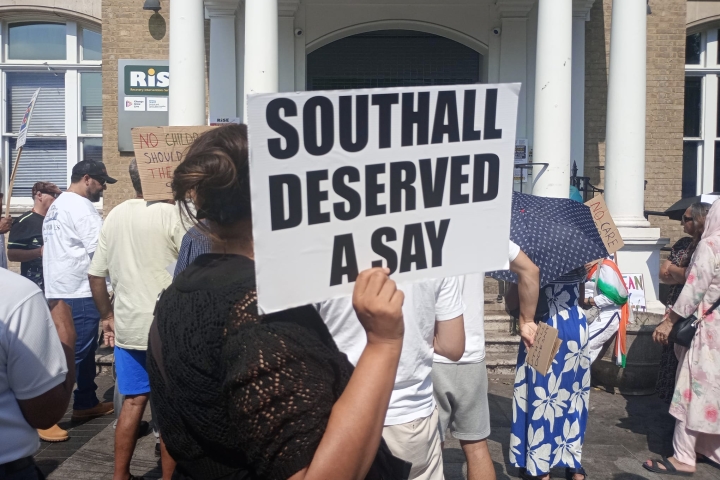
A community protest was held outside the former Southall Town Hall on Saturday, August 15, bringing longstanding frustrations about the area into the spotlight and calling for greater action from Ealing Council, police and other agencies.
At the centre of the controversy is the relocation of Recovery Intervention Service Ealing, known as RISE, to Southall Town Hall.

The service provides treatment and support for adults experiencing problems with drugs and alcohol and is commissioned by Ealing Council. It previously operated from premises on The Broadway in West Ealing before its main service relocated to Southall Town Hall.
Residents campaigning over the move are not questioning the need to provide help for people struggling with addiction. Instead, they are asking whether Southall Town Hall was an appropriate location, whether residents were adequately consulted and whether sufficient measures were put in place to deal with any impact on the surrounding community.
Those questions have become increasingly important as residents report more visible drug taking, suspected dealing, aggressive begging and antisocial behaviour around parts of Southall.
Saturday’s demonstration was organised by the Southall Residents Alliance and promoted under the message “Stop Treating Southall as a Dumping Ground”.

Local campaigner and immigration lawyer Harjap Bhangal was among those promoting the demonstration in the days leading up to the event, highlighting concerns about drug abuse, drug dealing, shoplifting and violent crime.
The protest follows months of growing pressure on local authorities.
Southall resident Herpreet Nirwal took the issue directly to Ealing Council at a Full Council meeting on June 30.
Nirwal questioned the justification for relocating RISE to Southall and raised concerns about what he described as escalating drug use, aggressive begging and intimidation.

Residents have also reported witnessing people apparently preparing and smoking drugs openly in public areas.
Some have described changing their daily routines because they no longer feel comfortable walking through certain locations.
Southall Park is among the areas causing particular concern.
For generations the park has been used by families, children, elderly residents, walkers and people simply looking for somewhere peaceful away from the busy Broadway.
When residents begin questioning whether they feel comfortable using those spaces, the issue extends beyond recorded crime figures.
It becomes a question of confidence in the community.
Similar concerns have been raised around residential streets close to the Broadway, where residents have reported suspected drug taking, antisocial behaviour and intimidating behaviour.
Businesses also have a significant stake in what happens next.
Southall Broadway is one of west London’s best-known shopping destinations and attracts visitors from across London and beyond.
Its restaurants, jewellery stores, fashion retailers, food shops and independent businesses form a commercial centre that generations of families have worked to build.
Any perception that visitors might encounter open drug taking, dealing or threatening behaviour risks damaging that reputation.
However, an important distinction remains at the heart of the debate.
While some residents believe the relocation of RISE has contributed to the increase in problems they are witnessing, Ealing Council disputes that connection and says there is no evidence demonstrating that the treatment service itself has caused the difficulties being reported.
People attending RISE are seeking help with addiction and should not automatically be associated with criminality.
Seeking treatment for drug or alcohol dependency does not make someone a criminal, and many of those using such services are attempting to rebuild their lives.
Nevertheless, concerns about drugs and antisocial behaviour in Southall are significant enough to feature among local policing priorities.
Metropolitan Police neighbourhood teams have identified tackling antisocial behaviour in areas including St Joseph’s Drive and Avenue Road among their priorities, alongside violence and drug-related offending in the wider Southall area.
Police say targeted patrols, stop-and-search powers and antisocial behaviour legislation are being used, alongside cooperation with council teams and drug and alcohol outreach services.
Ealing Council has also said it understands residents’ concerns about reports of open drug use and intimidation and has increased patrols and CCTV monitoring around identified hotspots.
The council has said CCTV operators are being encouraged to look proactively for suspicious behaviour and alert police, while officers and other teams gather intelligence about those involved.
Those measures demonstrate that the problems being reported are being taken seriously.
But Saturday’s protest also demonstrated that many residents believe considerably more needs to be done.
One of the major questions is whether vulnerable drug users are being targeted by dealers operating near places where treatment services are provided.
Residents have raised this possibility, although a direct link has not been independently established.
If dealers are deliberately exploiting vulnerable people seeking treatment, that is an issue requiring targeted police action.
The debate must therefore avoid becoming a simplistic argument between residents and people suffering from addiction.
Drug dependency is a complex health and social problem.
People seeking treatment need access to professional help, rehabilitation and support.
At the same time, communities should not be expected to accept open drug taking, dealing, theft, intimidation or persistent antisocial behaviour as an inevitable consequence of providing those services.
Both objectives can coexist.
Southall can support people trying to escape addiction while taking robust action against those supplying illegal drugs.
It can provide rehabilitation while ensuring parks and residential streets remain safe.
And it can recognise the vulnerability of people with addictions while listening to residents who are frightened or frustrated by what they are witnessing.
What is now required is coordinated action.
Visible policing is an important part of that response, particularly around locations identified as hotspots.
Dealers need to know that officers are gathering intelligence and that supplying drugs to vulnerable people will bring consequences.
Residents also need straightforward ways of reporting incidents and confidence that those reports are being acted upon.
Businesses need support when they experience shoplifting, intimidation or persistent antisocial behaviour.
Treatment and outreach teams also have a crucial role.
If individuals are using drugs openly or repeatedly causing problems, agencies need to establish what intervention is appropriate rather than allowing the same pattern to continue.
CCTV should form another part of the response, but cameras alone will not restore public confidence.
Residents need to see that information gathered through CCTV, policing and community reports is producing measurable results.
There is also the question of consultation.
Campaigners have questioned how the decision to relocate RISE was reached and whether residents were sufficiently involved before the service moved.
Major decisions affecting town centres inevitably create competing demands, but meaningful consultation can help communities understand why decisions are being taken and what safeguards will accompany them.
That is particularly important in a town such as Southall.
Southall is far more than another London suburb.
It has a cultural and commercial identity recognised across Britain and internationally.
Its South Asian businesses, restaurants, markets and community institutions have made it one of the most distinctive parts of west London.
Families have invested generations of work into building that reputation.
It is therefore understandable that residents feel protective of their town and angry when they believe its environment is deteriorating.
But protecting Southall cannot mean demonising everyone struggling with addiction.
Nor can compassion for vulnerable people mean ignoring legitimate concerns from those who live and work around the Broadway.
The solution has to sit somewhere between those two positions.
Treatment for addiction must continue.
Enforcement against dealing and crime must be strengthened.
Public drug taking and persistent antisocial behaviour must be challenged.
Businesses and residents must be listened to.
And local authorities must be transparent about what is happening and whether the measures being introduced are actually working.
Saturday’s demonstration has ensured that those concerns can no longer easily be overlooked.
The next stage should be driven by evidence rather than accusation.
Police data, drug-related arrests, antisocial behaviour reports, CCTV intelligence, enforcement results and information from treatment and outreach services can help establish the scale and nature of the problem.
That evidence could also determine whether the situation has genuinely worsened since the relocation of RISE or whether other factors are responsible.
Southall residents deserve those answers.
People struggling with addiction deserve effective treatment and the opportunity to recover.
And those who profit by selling illegal drugs to vulnerable people should face the full consequences of the law.
Southall remains a vibrant and resilient community with a proud history.
The strength of feeling demonstrated this weekend comes from residents who want to protect that community and ensure its streets, parks and shopping areas remain places where people feel comfortable.
The message coming from the campaign is clear: residents believe Southall deserves better.
The challenge now facing Ealing Council, the Metropolitan Police and other agencies is to show that they have heard that message — and demonstrate through visible, measurable action that they are prepared to respond.
Credits/Photos: Herpreet Nirwal