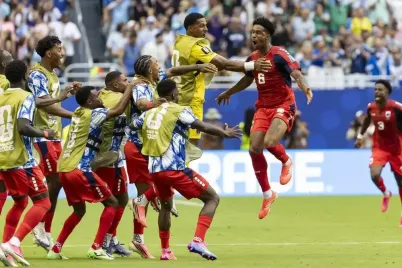

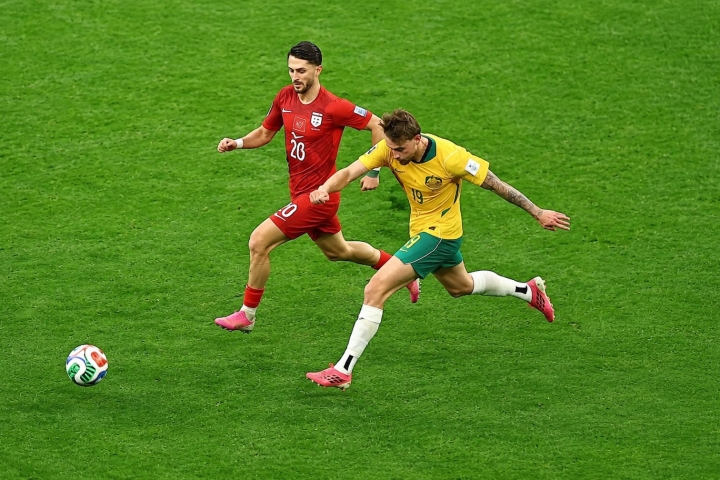
Australia made a dream start to their World Cup campaign with a superb 2-0 victory over Turkey in Vancouver, delivering a performance full of discipline, courage and clinical finishing. On a night when Turkey enjoyed long spells of possession and created enough attacking pressure to trouble most opponents, the Socceroos showed exactly why tournament football is not always about who has the ball the longest, but who makes the biggest moments count. Goals from Nestory Irankunda and Connor Metcalfe gave Australia a famous win, while goalkeeper Patrick Beach and a tireless defensive unit ensured Turkey’s return to the World Cup stage ended in frustration.
The result was a major statement from Tony Popovic’s side. Australia arrived as underdogs against a Turkish team packed with technical quality, experience and attacking flair, but the Socceroos were never intimidated by the occasion. Instead, they produced a performance built on structure, belief and ruthless counterattacking. Turkey controlled much of the ball, moved it patiently across midfield and repeatedly tried to create openings through their creative players, but Australia defended with remarkable concentration and struck at exactly the right moments.
The opening exchanges set the tone for the contest. Turkey looked comfortable in possession and attempted to dictate the pace through midfield, with Hakan Calhanoglu and Arda Guler trying to pull Australia out of shape. Guler, in particular, was central to Turkey’s attacking plan. Every time he drifted into space, Turkish supporters sensed something might happen. Yet Australia’s defensive organisation made life difficult for him. The Socceroos were compact, aggressive in the tackle and quick to close down shooting lanes.
Australia were prepared to concede possession in less dangerous areas, but they refused to allow Turkey easy routes into the penalty area. Harry Souttar, Alessandro Circati and Cameron Burgess were commanding at the back, winning aerial duels, blocking shots and clearing crosses under pressure. In front of them, Australia’s midfield worked relentlessly, covering ground, screening the defence and looking for opportunities to release the ball quickly when Turkey committed too many players forward.
Turkey’s first clear warning came when Guler found space and unleashed a dangerous effort, but Beach was equal to it. The Australian goalkeeper, handed a huge responsibility on one of the biggest stages in football, showed impressive composure. His handling was clean, his positioning was strong, and he gave confidence to the defenders in front of him. That early save proved important because it prevented Turkey from turning their territorial dominance into scoreboard pressure.
Australia’s breakthrough arrived in the 27th minute and perfectly captured their game plan. After absorbing pressure, the Socceroos broke quickly and decisively. Paul Okon-Engstler played an important role in the move, helping turn defence into attack before Irankunda surged into space. The young forward showed outstanding composure, driving into a dangerous area before finishing with confidence past Ugurcan Cakir. It was a huge moment for Australia and an even bigger personal moment for Irankunda, who became one of the central stories of the match.
The goal changed the energy inside the stadium. Turkey suddenly found themselves chasing the game despite having enjoyed more of the ball, while Australia grew in confidence. Irankunda’s pace and directness became a constant concern for the Turkish defence. He almost threatened again before half-time, cutting inside and forcing Cakir into action. His willingness to take responsibility was one of the most encouraging features of Australia’s display.
Turkey responded by increasing the tempo, but their attacks often became rushed. There were moments when they moved the ball into promising positions, only for the final pass or final touch to let them down. Guler tried to influence the game from different areas, Calhanoglu attempted to dictate play from deeper positions, and Turkey’s wide players looked to stretch the Australian back line, but the Socceroos refused to lose their shape.
One of the key moments before the interval came when Turkey appeared to have a promising counterattack after winning the ball in midfield. With numbers forward, they had a chance to punish Australia, but the move lacked urgency and conviction. By the time the final pass was attempted, Australian defenders had recovered their positions and cleared the danger. It summed up Turkey’s evening: plenty of possession, plenty of territory, but not enough precision when it mattered most.
At half-time, Australia led 1-0 despite spending much of the opening period without the ball. For Popovic, the first half was close to ideal. His team had followed the plan, defended with discipline and taken their chance. For Vincenzo Montella, the message to Turkey was clear: they needed more speed, more sharpness and more bodies attacking the penalty area.
Turkey began the second half with renewed purpose. They pushed higher, moved the ball faster and tried to pin Australia back. Kenan Yildiz looked dangerous when drifting into wider areas, while Guler continued to search for pockets of space around the edge of the box. Australia had to survive several uncomfortable moments, including free-kicks, corners and long spells of Turkish pressure.
Beach again played an important role. Whenever Turkey did manage to work the ball into shooting positions, he looked alert and confident. His saves were not just technically good; they were emotionally important. Each intervention gave Australia more belief and increased Turkey’s frustration. In matches like this, a goalkeeper’s calmness can spread through an entire team, and that was exactly what happened.
Australia also had chances of their own from set pieces. Souttar remained a major threat in the air, and Turkey struggled at times to deal with his size and timing. One second-half corner almost brought another goal, with the ball dropping dangerously in the area before Turkey scrambled clear. Even when Australia were not dominating possession, they always carried danger from direct attacks and dead-ball situations.
As the match moved beyond the hour mark, Turkey’s frustration became more visible. Their possession numbers were impressive, but Australia were increasingly comfortable defending their box. Crosses were headed away, shots were blocked, and midfield runners were tracked. Turkey needed a moment of inspiration, but Australia’s concentration never wavered.
The decisive second goal arrived in the 75th minute. Connor Metcalfe, who had worked tirelessly throughout the match, found space and produced a brilliant long-range strike to double Australia’s lead. It was a goal of huge quality and even greater significance. At 1-0, Turkey could still believe an equaliser was coming. At 2-0, the match suddenly felt firmly in Australia’s hands.
Metcalfe’s finish sparked wild celebrations among the Australian players and supporters. It was the kind of goal that turns a strong performance into a famous result. After spending so much of the match defending, Australia had once again shown devastating efficiency. Turkey had the ball, but Australia had the cutting edge.
The final 15 minutes were a test of nerve. Turkey threw players forward and attempted to rescue something from the game, but Australia’s defensive wall held firm. Souttar and Circati continued to dominate aerially, Burgess stayed strong in the challenge, and the midfielders dropped deeper to protect the lead. There was no panic, no unnecessary risk and no sign that Australia were about to throw away their advantage.
When the final whistle blew, the contrast between the two teams was clear. Australia celebrated a magnificent victory, while Turkey were left to reflect on a painful defeat. The Socceroos had not simply won; they had delivered one of their most mature World Cup performances. They had accepted the reality of facing a technically gifted opponent, adapted their approach and executed it almost perfectly.
Popovic was understandably proud after the game. His thoughts centred on the collective nature of the performance. He praised the players for their discipline, courage and willingness to suffer without the ball. He also highlighted the impact of Australia’s younger players, especially Irankunda and Beach, who both justified the faith shown in them. For Popovic, the result was not about luck. It was about preparation, organisation and the belief that Australia could hurt Turkey if they stayed patient.
The Australian manager also appeared satisfied that his tactical decisions had been rewarded. Starting Irankunda gave Australia pace and unpredictability in attack, while selecting Beach in goal was a bold call that paid off. Popovic’s approach showed confidence in the next generation of Socceroos, and those players responded on the biggest stage.
Montella, meanwhile, was left frustrated by Turkey’s inability to turn dominance into goals. His post-match thoughts were likely focused on missed chances, slow decision-making and a lack of ruthlessness in the final third. Turkey had enough possession to control the match, but they did not make Australia defend enough clear chances from central areas. Montella could point to the effort and technical control his players showed, but he would also know that tournament football punishes wastefulness.
For Turkey, the defeat was particularly disappointing because it came in their first World Cup appearance for more than two decades. There was excitement around their return, and the squad had enough attacking talent to cause problems in Group D. But this result has immediately increased the pressure on their next fixture. They now need a response, not only in terms of result but in terms of attacking efficiency.
The key moments of the match told the story perfectly. Beach’s early save from Guler prevented Turkey from taking control. Irankunda’s 27th-minute opener gave Australia belief and forced Turkey into a more urgent game. Turkey’s wasted counterattack before half-time showed their lack of composure in decisive moments. Metcalfe’s 75th-minute strike killed the contest. Australia’s final defensive stand sealed a result that could become hugely important in the group.
Irankunda will receive plenty of attention, and rightly so. His goal was taken with maturity, but his overall performance was also impressive. He stretched Turkey, gave Australia an outlet and showed no fear. His story adds even more emotion to the moment, but on the pitch alone he proved he belongs at this level.
Metcalfe also deserves enormous credit. His goal was spectacular, but his work before that was just as valuable. He pressed, tracked runners, helped the midfield stay compact and provided energy in transition. In a match where Australia needed every player to perform their role, Metcalfe delivered both industry and quality.
Beach’s performance may prove just as significant. Goalkeepers can define tournament campaigns, and his display gave Australia a platform. He made saves at crucial moments, dealt with pressure and showed maturity beyond his level of international experience. If Australia go on to progress from the group, this clean sheet may be remembered as one of the foundations.
Defensively, Australia were outstanding. The back line did not just clear the ball aimlessly; they defended intelligently. They recognised danger early, stayed compact and forced Turkey into lower-quality attempts. Turkey may have had more shots and more possession, but many of those efforts came under pressure or from difficult positions.
The wider significance of the result is enormous. In Group D, where the United States also began strongly, Australia’s victory gives them a major advantage. A win in the opening match changes the mood of a tournament. It gives players confidence, gives coaches tactical flexibility and gives supporters belief that something special may be possible.
For Turkey, the path is now more complicated. They still have the talent to recover, but they must quickly solve the attacking problems that Australia exposed. Possession alone will not be enough. They need sharper movement inside the box, better decision-making in transition and more conviction when chances arrive.
Australia’s win was not built on glamour. It was built on sacrifice, structure and seizing the right moments. That is often what separates successful tournament teams from those who merely look good in spells. The Socceroos understood the assignment and delivered.
By the end of the night in Vancouver, Australia had earned far more than three points. They had earned respect. They had shown that they could compete with a technically superior opponent and still find a way to win. They had given their supporters a result to remember and their group rivals something serious to think about.
The final score read Australia 2, Turkey 0. It was a result shaped by Irankunda’s fearless finishing, Metcalfe’s decisive strike, Beach’s calm goalkeeping and a defensive performance full of heart. For Australia, it was close to the perfect start. For Turkey, it was a painful reminder that in World Cup football, control means nothing unless it is turned into goals.