

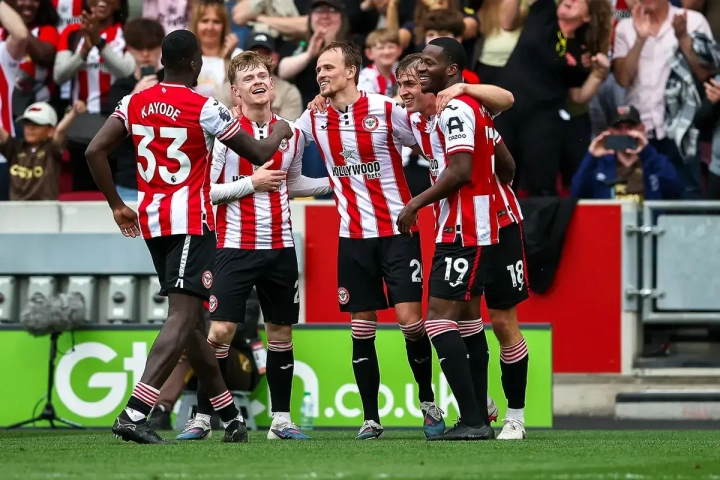
In a match filled with drama, controversy, missed chances and moments of attacking brilliance, the Bees combined ruthless efficiency with relentless energy to secure a victory that could prove pivotal in shaping the final weeks of their campaign. West Ham, meanwhile, left west London frustrated and stunned after a defeat that felt far harsher than the scoreline initially suggested, but one that ultimately exposed their defensive fragility and inability to respond when momentum turned against them.
The significance of the fixture was clear long before kick-off. Brentford entered the match desperate to revive their European ambitions after a difficult run of results that had seen promising performances fail to produce victories. Keith Andrews’ side knew a win would propel them back into contention for continental qualification and restore confidence at a critical stage of the season. West Ham arrived carrying a very different burden. With the relegation battle tightening and rivals beginning to gather momentum, every point had become precious for Nuno Espírito Santo’s struggling team. The atmosphere reflected those contrasting realities — Brentford supporters sensed opportunity, while the travelling fans carried nervous tension and expectation.
The game exploded into life almost immediately. Within the opening minute, Brentford signalled their intent when Dango Ouattara burst into space and unleashed an effort that drifted agonisingly wide of the post. It was a warning shot that foreshadowed the chaos and intensity that would define the opening half hour. West Ham responded positively, showing flashes of attacking quality themselves. Pablo forced Caoimhín Kelleher into an important save after capitalising on hesitation at the back, and for a brief period the match looked evenly balanced, with both sides willing to attack aggressively and commit bodies forward.
The breakthrough arrived after fifteen minutes and came through a moment that perfectly summed up West Ham’s current fortunes. Brentford worked the ball brilliantly down the left flank, with Keane Lewis-Potter producing a dangerous delivery across the face of goal. Michael Kayode attacked the cross aggressively, forcing the ball onto the post before it rebounded awkwardly into Konstantinos Mavropanos, who could do little to prevent it crossing the line. The own goal sparked wild celebrations among the home supporters and left West Ham players protesting in frustration, believing Kayode may have fouled the defender during the scramble. The goal stood, however, and Brentford had the lead they craved.
To their credit, West Ham did not collapse immediately. In fact, they produced some of their best football after falling behind. Valentín Castellanos emerged as the visitors’ main attacking threat and twice came agonisingly close to equalising. First, he curled an effort against the outside of the post after creating space cleverly inside the penalty area. Minutes later, he rose highest from a corner and saw his looping header strike the woodwork again. It was one of those afternoons where the margins consistently went against the Hammers, and every near miss seemed to increase their sense of desperation.
West Ham thought they had found a route back into the match when Mavropanos headed home from a set piece, seemingly redeeming himself for the earlier own goal. Their celebrations were cut short after a lengthy VAR review ruled the defender offside. The disallowed goal visibly affected the visitors, while Brentford grew stronger with every passing minute. The home side’s confidence surged, and their attacking combinations became increasingly fluid. Mikkel Damsgaard orchestrated play superbly from midfield, drifting into pockets of space and linking attacks with intelligence and precision.
Brentford should arguably have extended their lead before halftime. Damsgaard was presented with a huge opportunity after West Ham goalkeeper Mads Hermansen raced out of his area and failed to clear effectively. With the goal exposed, the Danish midfielder attempted a composed finish from distance but sent the ball narrowly wide. Soon afterward, Lewis-Potter forced Hermansen into another important stop, while Sepp van den Berg’s header drifted inches past the post. The first half became a breathless spectacle, with chances arriving at both ends and the crowd roaring every attack forward.
Despite trailing by only one goal at the interval, there was already a sense that West Ham had missed a crucial opportunity to seize control of the game during their strongest spell. Brentford entered the second half with renewed focus and quickly delivered the moment that effectively decided the contest. Ouattara, who had been causing problems all afternoon with his pace and direct running, skipped past El Hadji Malick Diouf inside the area before being brought down by a reckless sliding challenge. The referee pointed immediately to the penalty spot, leaving West Ham furious but with few genuine complaints.
Igor Thiago stepped forward to take the penalty and displayed remarkable composure. Using a stuttering run-up, he calmly sent Hermansen the wrong way before slotting the ball into the corner to score his twenty-second Premier League goal of the campaign. The strike not only doubled Brentford’s lead but also shifted the emotional balance of the game completely. West Ham suddenly looked deflated, and their earlier confidence evaporated almost instantly.
The visitors attempted to respond, but their frustration became increasingly obvious. Crysencio Summerville came desperately close when his curling effort crashed against the crossbar before Tomas Soucek’s follow-up clipped the post. It was another cruel moment for West Ham, who by that stage had struck the woodwork multiple times without reward. Every failed attempt seemed symbolic of a team struggling under pressure, unable to convert promising moments into meaningful momentum.
Brentford, in contrast, looked composed and clinical. Their pressing remained aggressive, their movement intelligent and their confidence unmistakable. The third goal arrived in the closing stages and perfectly encapsulated the difference between the two sides. A slick passing move involving Lewis-Potter and Mathias Jensen carved open the West Ham defence before Damsgaard received the ball inside the area, shifted effortlessly away from his marker and guided a low finish into the bottom corner. It was a goal of quality and composure, one that brought the stadium to its feet and effectively sealed the victory.
The final minutes carried an emotional edge for Brentford supporters beyond the result itself. Josh Dasilva returned to action after a lengthy injury absence, receiving a thunderous ovation from the crowd, while young Kaye Furo made his Premier League debut. Those moments added a sense of celebration to an already memorable afternoon and highlighted the positive atmosphere surrounding the club as they continue to grow and compete at the highest level.
After the final whistle, Brentford manager Keith Andrews was visibly delighted with both the performance and the atmosphere generated by the supporters. He described the occasion as one of the team’s most important games of the season and praised the energy shown from the first whistle. Andrews emphasised that his players had remained patient despite previous frustrations in recent weeks and believed the victory was a deserved reward for their persistence and quality. He highlighted the importance of maintaining belief during difficult runs and credited the squad for responding positively under pressure.
Andrews also reserved special praise for Damsgaard and Thiago. He spoke about Damsgaard’s creativity and composure in possession, describing him as the player who connected the entire attacking structure together. Regarding Thiago, the Brentford manager emphasised the striker’s consistency, work ethic and ability to deliver in decisive moments. He noted that beyond scoring goals, Thiago’s movement and pressing had been crucial in unsettling West Ham’s defence throughout the afternoon.
West Ham manager Nuno Espírito Santo, meanwhile, delivered a far more sombre assessment. While acknowledging that his side had created opportunities and competed well during parts of the first half, he admitted the team failed to react properly after conceding the second goal. Nuno suggested the players lost composure and belief once Brentford extended their advantage, something he described as deeply concerning given the importance of the situation. He stressed that the squad must respond immediately and insisted they could not afford to mentally collapse after setbacks if they hoped to survive the relegation battle.
Nuno also addressed the penalty incident, accepting that Diouf’s challenge on Ouattara had been avoidable while recognising the difficulty of defending against such pace and movement. However, he made it clear that the penalty itself was not the decisive issue in his eyes. Instead, he focused on the team’s lack of resilience afterward, admitting that previous performances had at least shown fight and determination after adversity, qualities that were missing once Brentford seized control.
Captain Jarrod Bowen echoed his manager’s frustration but attempted to strike a more optimistic tone. He pointed to the numerous chances West Ham created and argued that on another day the game could have unfolded very differently. Bowen insisted the squad must treat the remaining fixtures like cup finals and maintain belief despite the damaging defeat. He acknowledged the emotional impact of the loss but urged teammates not to dwell on the result for too long, knowing that survival still remains within reach if performances improve quickly.
For Brentford, the victory felt transformative. Moving into sixth place has reignited dreams of European football, and the manner of the performance suggested a team rediscovering both confidence and rhythm at the perfect moment. Their attacking football was sharp and fearless, their midfield dynamic and their defensive structure disciplined despite the pressure West Ham applied during periods of the match. Perhaps most importantly, they displayed the ruthlessness required to punish mistakes and capitalise on momentum swings.
For West Ham, however, the result leaves growing uncertainty and anxiety. Despite moments of encouraging attacking play, they lacked composure in both penalty areas and appeared mentally fragile once the game began slipping away from them. Hitting the woodwork repeatedly and seeing a goal disallowed will fuel frustration, but deeper issues remain evident — particularly their inability to manage key moments and maintain defensive concentration under pressure.
Ultimately, this was a match that captured two clubs moving in opposite emotional directions. Brentford played with belief, intensity and freedom, embracing the pressure of chasing Europe. West Ham played with desperation and anxiety, qualities that increasingly define teams battling relegation. The result may prove pivotal for both sides, not only because of the points gained and lost but because of the confidence and momentum generated in the process. Brentford march forward dreaming of Europe, while West Ham leave west London facing a battle that suddenly feels far more dangerous and uncertain.