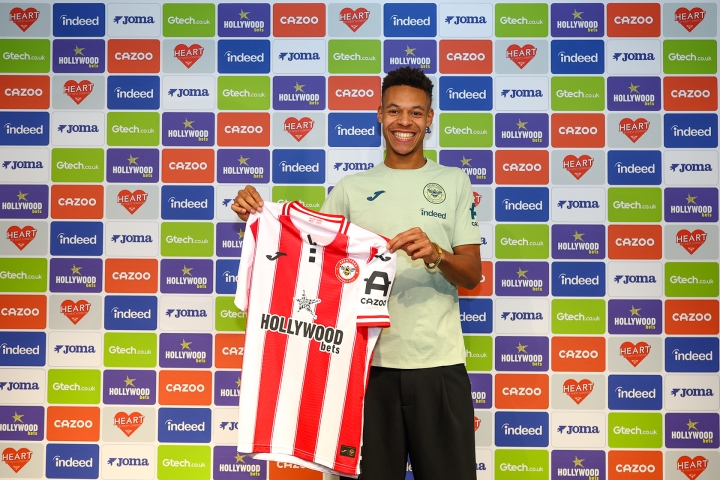
Kaye Furo has become Brentford’s latest forward project, arriving from Club Brugge as the club continues to lean into a recruitment strategy built around high-upside talent, athleticism and development. The 18-year-old has joined on a long-term deal running to the summer of 2031, and he takes a first-team squad number as Brentford position him as someone who can grow into Premier League minutes rather than simply bolster the B team.
Furo is a physically imposing striker for his age—around 1.90m tall, right-footed, and comfortable operating as a central forward. Those who have watched his rise in Belgium describe a profile Brentford traditionally value: pace to threaten the space behind, the frame to pin centre-backs, and a willingness to work without the ball. Brentford’s coaches also believe he can become a more complete No 9, not just a penalty-box finisher, with movement across the front line and the intensity to press from the front—key traits in how the Bees want to play.
His route to west London has been quick but well-earned. Furo spent formative years in youth football at Royal Antwerp before moving into Club Brugge’s academy system, where he progressed into Club NXT in Belgium’s second tier. That environment—more senior than pure academy football, but still development-focused—helped him build the physical and tactical base that has made him stand out. He’s already been exposed to first-team football too, making senior appearances for Club Brugge and getting a taste of European nights, an experience that tends to accelerate a young forward’s learning curve.
Internationally, he’s been part of Belgium’s youth set-up across multiple age groups and has already stepped into Under-21 contention, which hints at the level of belief around his ceiling. Off the pitch, he’s spoken proudly about his background and the journey it’s taken to reach this point, and he has described the move to Brentford in emotional terms—one of those “dream” opportunities that feels big because it’s earned.
From Brentford’s side, the messaging has been consistent: they’ve tracked him for a while, like his mix of raw tools and coachable qualities, and see a pathway for him within the club’s system. Keith Andrews has been particularly enthusiastic about what Furo could become, highlighting his mentality and the different ways he can threaten defences—running channels, attacking crosses, and occupying centre-backs so others can play off him. That last part matters at Brentford, where forwards are often judged as much by their off-ball work and link play as by their goal totals.
The timing of the transfer also makes sense. Brentford have built a reputation for refreshing their attacking options without losing their identity—finding the next solution before the previous one leaves—and Furo’s arrival fits that pattern. With Igor Thiago currently carrying a major share of the scoring burden, adding another young striker with a different physical profile gives Brentford both depth now and a longer-term development play. The expectation internally is that he’ll be managed carefully: training time with the first team, minutes where they make sense, and a clear plan to strengthen his decision-making, hold-up consistency and finishing under pressure.
For supporters, the exciting part is the combination of tools and context. Furo isn’t arriving as a finished product, but Brentford have made a habit of turning high-potential forwards into Premier League-ready contributors. If he adapts quickly to the league’s tempo and physicality, he offers something every team wants: a big, mobile striker who can stretch the pitch, compete in the air, and still improve significantly with top-level coaching. That’s the bet Brentford are making—and it’s why this signing feels like more than just a squad addition.