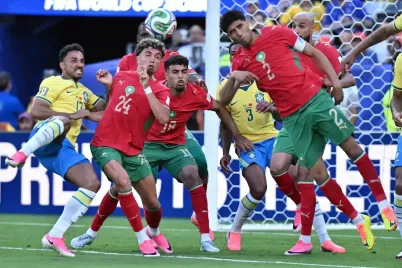

Switzerland reached their first World Cup quarter-final since 1954 after holding their nerve in a tense penalty shoot-out to beat Colombia 4-3 following a goalless draw at BC Place in Vancouver, on a night of discipline, frustration, missed chances and one decisive Swiss moment from the spot.
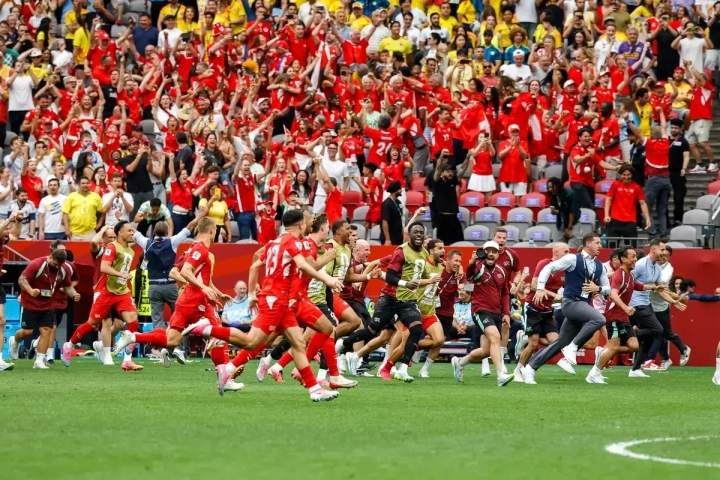
After 120 minutes without a goal, the contest was settled by the thinnest of margins. Gregor Kobel, already one of the key figures of a draining last-16 tie, produced the crucial save from Cucho Hernández in the shoot-out, while Davinson Sánchez struck the crossbar for Colombia. Switzerland also had their own moment of danger when Manuel Akanji failed to convert, but Rubén Vargas, sent on late in normal time, kept his composure to score the winning penalty and send the Swiss players racing towards him in celebration.
It was not a match full of flowing football or constant attacking rhythm, but it was a knockout tie heavy with tension. Colombia had more of the crowd behind them, more attacking momentum for spells and enough chances to feel they should have found a way through. Switzerland had organisation, patience and a goalkeeper who refused to be beaten. By the end, that combination was enough to carry Murat Yakin’s side into the last eight and set up a quarter-final meeting with Argentina.
For Colombia, the defeat was bitter. Néstor Lorenzo’s players had entered the match with belief, energy and the backing of a loud travelling support that helped turn BC Place into something close to a Colombian home ground. Yellow shirts dominated large sections of the stands, and every forward move was met with a surge of noise. Yet all that colour and emotion could not produce the one thing Colombia needed most: a goal.
The first half showed early signs of what the evening would become. Neither side wanted to give the other space in transition. Switzerland were compact, careful and wary of Colombia’s pace, while Colombia tried to probe through wide areas and quick combinations around the edge of the box. Clear chances were scarce, but the first serious warning came from Gustavo Puerta, whose curling effort forced Kobel into an important save. It was a moment that underlined Colombia’s threat and Kobel’s sharpness in equal measure.
Switzerland, missing the injured Johan Manzambi, had to adjust their midfield structure and rely heavily on Granit Xhaka’s control and experience. Ardon Jashari stepped in and worked diligently, while Xhaka tried to dictate tempo whenever Switzerland escaped Colombia’s press. The Swiss were not always adventurous, but they were rarely careless. Their game was built on survival first, then patience. In a knockout match, that can be enough if concentration holds.
Colombia’s best spells came when they moved the ball quickly and forced Switzerland’s back line to retreat. Luis Díaz remained a constant concern, drawing defenders towards him and trying to make things happen from the left. Jhon Arias looked to connect midfield and attack, while Colombia’s runners tried to exploit any hesitation around the Swiss penalty area. But the final pass was too often delayed, the final shot too rushed, and the decisive touch never arrived.
As the first half wore on, the match settled into a pattern of Colombian initiative and Swiss resistance. Colombia looked the more likely side to create something from open play, but Switzerland were comfortable enough without the ball to prevent sustained panic. The South Americans had possession in promising areas but found a red wall of Swiss shirts blocking the route to goal. When they did find space, Kobel was there.
The second half brought more urgency but not much more clarity. Switzerland tried to push higher in short bursts, with Dan Ndoye offering energy and direct running, though the Swiss struggled to turn those advances into clear chances. Colombia, meanwhile, kept searching for a breakthrough but became increasingly aware that one mistake could decide the tie. That caution added to the tension. The match was open enough to feel dangerous, but never loose enough to become wild.
Juan Fernando Quintero’s introduction gave Colombia a different type of threat. His touch, vision and ability to slow the game before releasing a pass gave Lorenzo’s side a creative spark. Colombia began to ask more questions between the lines, and Switzerland were forced to defend deeper. Still, the Swiss back line held firm, aided by Kobel’s authority and Xhaka’s leadership in front of the defence.
The longer the match went on, the more every half-chance felt enormous. A header from Jhon Lucumí struck the bar, a moment that will live painfully in Colombian memory. Jaminton Campaz also had a late opportunity, but his effort did not punish Switzerland. Those were the moments Colombia will replay: not easy chances, but chances good enough to decide a tight World Cup knockout tie.
Switzerland had opportunities of their own, though fewer in number. Xhaka saw one effort fly over in extra time, while Swiss attacks often broke down before they could properly test the Colombian goalkeeper. Yet their lack of attacking fluency did not lead to panic. Yakin’s side accepted the nature of the contest. They remained compact, trusted the structure and waited for penalties if that was where the night had to go.
There was also a moment of controversy in extra time when Colombia appealed for a penalty after Campaz went down in the box. The referee waved play on, and the decision stood. In a match with so little separating the teams, it naturally became another moment for Colombian frustration, but the bigger story remained their inability to turn pressure into a goal across two hours of football.
By the time the whistle sounded at the end of extra time, both teams looked drained. Switzerland had absorbed long spells of pressure. Colombia had pushed, chased and searched without reward. Penalties were not just a test of technique; they were a test of nerve after 120 minutes of emotional and physical strain.
The shoot-out began with Colombia hoping their attacking confidence would finally translate into goals. Quintero converted, showing the calm expected from a player of his experience. Switzerland responded through Xhaka, who squeezed his penalty home despite the goalkeeper getting a touch. That was the first sign that luck, as well as nerve, might be leaning towards the Swiss.
The decisive swing came when Kobel denied Cucho Hernández. It was a strong, confident save from a goalkeeper who had already influenced the match throughout normal and extra time. Switzerland then moved ahead, before Colombia suffered another damaging blow when Davinson Sánchez struck the crossbar. At that point, the pressure shifted sharply. Switzerland could see history in front of them. Colombia could feel it slipping away.
Akanji’s miss briefly reopened the door, adding one final twist to the shoot-out. Colombia still had hope, and the Swiss celebrations had to wait. But Vargas, introduced late and trusted with one of the biggest kicks of Switzerland’s modern World Cup history, showed no fear. His penalty was calm, clean and decisive. As the ball hit the net, the Swiss bench emptied and the players sprinted towards him.
For Switzerland, the emotion was obvious. This was more than a last-16 win. It ended a long and painful pattern of World Cup exits at this stage. In 2006, 2014, 2018 and 2022, Switzerland had reached the round of 16 but gone no further. This time, they found a way through. It was not glamorous, but it was resilient, mature and historic.
Yakin’s reaction afterwards reflected the scale of the achievement. He spoke with pride about the mentality of his players and highlighted the importance of making the right substitutions at the right time. Vargas, Cedric Itten and Zeki Amdouni all had roles to play from the bench, with Vargas ultimately delivering the decisive moment. Yakin also praised Kobel, whose save from Hernández became the defining act of the night. For the Swiss coach, this was a victory built on belief, planning and composure.
There was also satisfaction in how Switzerland responded to adversity. Losing Manzambi before the match could have disrupted their approach, but Jashari came in and performed his duties well. The Swiss did not dominate the game, and they will know they must offer more going forward, but tournament football is not always about style. Sometimes it is about staying alive. Switzerland stayed alive longer than Colombia, and that was enough.
Lorenzo, by contrast, was left to explain a painful defeat. He described the match as tight, tactical and evenly balanced, but admitted that Colombia lacked the finishing touch. His side had the effort, the crowd and several opportunities, yet could not make one count. He also defended his substitutions, including the decisions involving Arias and Luis Suárez, with disciplinary risk and fatigue factors in his thinking. In the end, though, his central message was simple: Colombia had chances, but the ball would not go in.
That will be the hardest part for Colombia to accept. This was not a match in which they were overwhelmed. They were competitive throughout. For long periods, they looked capable of finding the goal that would change everything. But knockout football punishes wastefulness. The longer the game stayed goalless, the more Switzerland grew into the idea that penalties might favour them. Once it reached that stage, Kobel became the difference.
Colombia’s players looked devastated at the end, many standing motionless as the Swiss celebrations unfolded around them. For a team that had hoped to reach only a second World Cup quarter-final in its history, this was a huge missed opportunity. Their supporters had created one of the best atmospheres of the tournament, but left with only regret. The margins were narrow, but the pain was wide.
Switzerland now move on to face Argentina, the defending champions, in a quarter-final that will demand even more. They will need greater attacking sharpness and more control in possession, but they will also take huge confidence from the way they handled pressure in Vancouver. A team that can survive a match like this and win a shoot-out has already shown something valuable: resilience under strain.
For Colombia, the campaign ends with questions about missed chances and what might have been. For Switzerland, it continues with history already made and belief renewed. The match itself may not be remembered as a classic, but the ending will live long in Swiss football memory. Kobel’s save, Vargas’s winning penalty and the sight of a long wait finally ending gave Switzerland a night that was tense, imperfect and unforgettable.