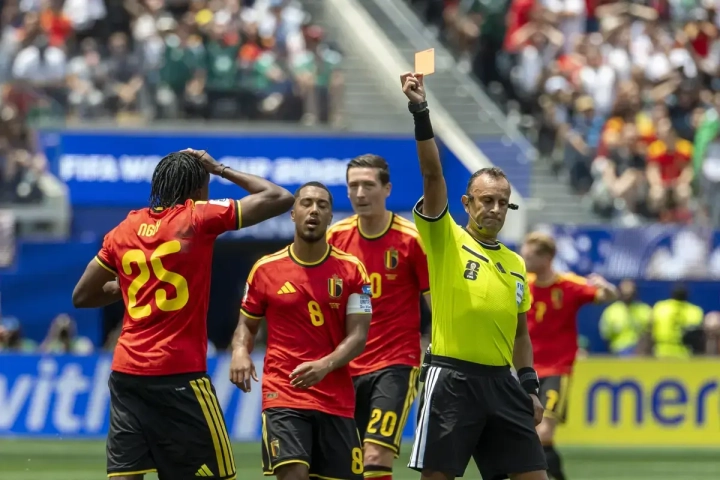
The breathtaking backdrop of the Canadian Rockies and the imposing architecture of BC Place Vancouver will serve as the spectacular setting for a decisive Group G showdown at the 2026 FIFA World Cup. Scheduled to kick off at exactly 04:00 BST on Saturday, 27 June 2026 (translating to 20:00 local time on Friday evening), Belgium and New Zealand will take to the pitch knowing their tournament survival hangs precariously in the balance. As the group stages reach their thrilling climax, this fixture presents a stark contrast in expectations and pressures. For the European heavyweights, anything less than a convincing victory will be viewed as a monumental failure, potentially signalling an unceremonious end for their celebrated squad. Conversely, the All Whites arrive with a golden opportunity to execute a historic upset, acutely aware that a famous win could propel them into the knockout stages of the global showpiece for the first time in their history.
The Group G Equation
Navigating the complexities of the newly expanded 48-team tournament, Group G has delivered a series of incredibly tight and unpredictable encounters. Heading into this final matchday, the standings remain delicately poised. Egypt currently leads the group with four points, having followed their 1-1 draw against Belgium with a 3-1 victory over New Zealand. Iran and Belgium are deadlocked in second and third place, respectively, both sitting on two points with an identical neutral goal difference after their tense goalless stalemate in Los Angeles. New Zealand props up the group with a solitary point earned from their thrilling 2-2 draw with Iran.
The permutations for this clash in Vancouver are relatively straightforward, yet brutally unforgiving. Rudi Garcia’s Belgian side must secure a victory to guarantee their progression to the Round of 32. A win would take them to five points, ensuring at least a top-two finish. A draw, however, would leave them stranded on three points, placing them entirely at the mercy of the result between Egypt and Iran, and potentially forcing them into the nerve-wracking lottery of the third-place rankings.
For Darren Bazeley’s New Zealand, the mathematical reality is absolute: win or face elimination. A victory would elevate the All Whites to four points, a tally that has historically proven more than sufficient to secure passage to the knockout rounds under the new tournament format. Any other result will mathematically condemn the Oceanic representatives to an early flight home.
Belgium’s Search for a Spark
Arriving in North America heavily burdened by the immense expectations that continuously surround their immensely talented squad, the Red Devils have endured a deeply frustrating campaign thus far. Despite boasting some of the most recognizable attacking talents in world football, Garcia’s men have yet to score a goal of their own making at this tournament. Their solitary goal came via an unfortunate own goal by Egypt’s Mohamed Hany in their opening 1-1 draw.
The subsequent 0-0 draw against Iran was a masterclass in attacking futility. Despite monopolising possession and registering 23 shots with an expected goals tally of 1.8, the Belgians lacked the crucial cutting edge in the final third. Elite playmaker Kevin De Bruyne has relentlessly pulled the strings in midfield, repeatedly carving out glorious openings, but the finishing touches have been noticeably absent. Striker Romelu Lukaku cut a visibly frustrated figure in Los Angeles, publicly acknowledging that the team is playing with too much emotion in key moments and struggling to convert their dominance into tangible rewards.
Compounding Belgium’s offensive woes are significant personnel issues. Dynamic winger Jérémy Doku missed the Iran fixture after leaving the camp for the birth of his first child, severely depriving the team of his explosive pace and direct dribbling ability on the flanks. Furthermore, the defensive unit must undergo a forced reshuffle. Promising defender Nathan Ngoy was shown a straight red card for denying a clear goalscoring opportunity against Iran’s Mehdi Taremi. The resulting suspension means Garcia will likely turn to Arthur Theate or Koni De Winter to partner Brandon Mechele at the heart of the defence.
New Zealand’s Blueprint for an Upset
In stark contrast to the heavy scrutiny surrounding their opponents, New Zealand has approached this tournament with commendable freedom, fighting spirit, and tactical bravery. Bazeley’s squad has consistently demonstrated that they belong on the grandest stage, earning plaudits for their organisation and opportunistic attacking play.
Their opening 2-2 draw with Iran was a testament to their resilience, with winger Elijah Just producing a sensational performance to net a brace. In their second outing against Egypt, the All Whites showcased their set-piece prowess, taking an early lead through a powerful header from defender Finn Surman. Although they eventually succumbed to a 3-1 defeat following a relentless second-half onslaught by the Pharaohs, New Zealand’s first-half gameplan, kicking long when necessary and intelligently keeping possession when possible, proved highly effective against elite opposition.
Captain and talismanic forward Chris Wood remains the undisputed focal point of the New Zealand attack. His immense physical presence and aerial dominance offer a constant outlet to relieve defensive pressure. Supported by the creative energies of Sarpreet Singh and the industrious running of Marko Stamenić in midfield, the All Whites possess the necessary tools to trouble a Belgian defence that has occasionally looked vulnerable to rapid counter-attacks.
Tactical Battlegrounds
When analysing the granular details of this impending matchup, a fascinating clash of overarching footballing styles immediately emerges. Belgium will undoubtedly seek to dominate territorial possession, patiently passing the ball to manipulate the New Zealand defensive block and create pockets of space for De Bruyne and Leandro Trossard to exploit.
Recognising their opponents’ sheer technical superiority, Bazeley will likely instruct his side to embrace a highly pragmatic, reactive posture. The All Whites will deploy a rigid, disciplined low block, completely congesting the central channels to deny De Bruyne the time and space he requires to thread his trademark through-balls. Defensive solidity will heavily rely upon the leadership of veteran centre-back Michael Boxall and goalkeeper Max Crocombe, who will need to produce the performance of a lifetime to keep the Belgian attackers at bay.
Area of the Pitch | New Zealand Key Figure | Belgium Key Figure | Tactical Significance |
Central Midfield | Marko Stamenić | Kevin De Bruyne | A monumental battle for creative control. Stamenić must aggressively disrupt the passing lanes to starve the Belgian forward line of crucial service from their elite playmaker. |
The Penalty Box | Michael Boxall | Romelu Lukaku | Elite physical defending against one of world football’s most imposing strikers. Boxall must command the aerial duels and remain touch-tight to completely nullify Lukaku’s threat. |
The Flanks | Elijah Just | Maxim De Cuyper | Just’s devastating pace on the counter-attack against the overlapping runs of the Belgian full-back. Exploiting the spaces left behind by De Cuyper could provide New Zealand’s best route to goal. |
Team News and Squad Availability
Preparation for this monumental Group G finale has presented differing challenges for both managers. For Belgium, Garcia must navigate the aforementioned absences of Ngoy and Doku. The manager will likely recall Timothy Castagne to the starting lineup, having introduced him as a substitute against Iran, while Dodi Lukébakio or Alexis Saelemaekers will be tasked with providing width in the attacking third.
Conversely, New Zealand appears to boast a relatively pristine bill of health following their physical battle against Egypt. Sarpreet Singh and Callum McCowatt both picked up yellow cards in that encounter, but neither is suspended for this crucial fixture. Bazeley has the luxurious flexibility of selecting his absolute strongest starting eleven, ensuring the final outcome will be decided purely by tactical execution and on-pitch performance rather than enforced compromises.
The Final Word
Encounters between these two distinct footballing cultures are exceptionally rare on the senior international stage, adding a wonderful element of sheer unpredictability to the proceedings. While the European giants are overwhelmingly favoured to secure the victory, the pressure firmly rests on their shoulders. A hesitant, tentative approach could prove disastrous against an Oceanic side that has absolutely nothing to lose and everything to gain.
As the passionate, vibrant supporters converge on the magnificent modern architecture of BC Place Vancouver, the extensive theoretical planning and exhaustive video analysis will immediately give way to raw, competitive tournament survival. For Belgium, the early morning British fixture provides a golden opportunity to definitively silence their critics, ignite their faltering campaign, and firmly justify their status as genuine knockout contenders. For New Zealand, it represents the ultimate test of character against elite international opposition, offering the chance to execute a historic giant-killing act. Millions of fans tuning in around the world can readily anticipate an intriguing, fiercely contested encounter that perfectly encapsulates the unforgiving, dramatic essence of the FIFA World Cup.