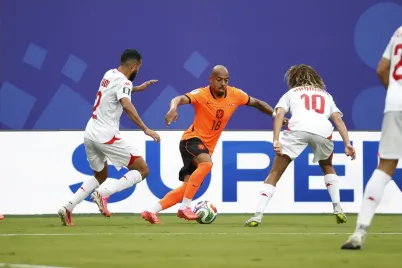
Everton’s unbeaten start to the Premier League season came to an end at the Hill Dickinson Stadium as Pedro Neto’s second-half double earned Chelsea a deserved 2–0 victory, leaving David Moyes to reflect on missed opportunities, contentious refereeing and a disappointing failure to build on an encouraging opening period.
There was enough in Everton’s first-half performance to suggest this could become another difficult afternoon on Merseyside for Chelsea. Jack Grealish supplied invention, Thierno Barry was presented with an outstanding opportunity to put the hosts ahead, and the contest had the competitive edge that so often makes this fixture uncomfortable for visiting sides. Yet once Neto struck inside the opening minute of the second half, Everton struggled to recover their attacking rhythm. Chelsea grew increasingly assured, while the home side’s attempts to respond produced too little sustained danger.
The result leaves Everton with ten points from seven matches, their two victories and four draws now accompanied by a first defeat. That remains a respectable foundation, but this was an afternoon which exposed the difference between staying competitive and doing enough to win. Chelsea, meanwhile, climbed above their hosts with a performance that became more convincing as the match progressed.
Moyes made two changes from the team which drew 2–2 at Hull, restoring Vitalii Mykolenko and bringing Merlin Röhl into the starting line-up, with Michael Keane and Brennan Johnson making way. Jarrad Branthwaite was fit to start alongside James Tarkowski, while Harrison Armstrong continued with James Garner in midfield. Grealish, Kiernan Dewsbury-Hall and Röhl provided support for Barry.
There was also a place among the substitutes for Christian Nørgaard, whose wait for an Everton debut had been prolonged by injury. His availability offered encouragement before kick-off, although the circumstances of his eventual introduction would provide little opportunity for a comfortable return to competitive football. Tyrique George again began on the bench, leaving Moyes with an attacking option to introduce if Everton needed greater penetration.
The opening exchanges were tense and scrappy, with both teams competing fiercely for control and neither immediately establishing a fluent attacking pattern. Everton sought to close the spaces around Chelsea’s creative players, while the visitors attempted to draw the home side out through patient possession.
Cole Palmer tested Jordan Pickford from distance, and Jordan Henderson had an effort blocked after Neto worked his way into a crossing position. Those moments hinted at Chelsea’s ability to find room around Everton’s defensive structure, but the hosts were sufficiently organised to keep much of the early contest away from the most dangerous areas.
Everton then enjoyed their most productive spell. Röhl brought a save from Emiliano Martínez, and the goalkeeper’s punishment for holding the ball too long supplied the home side with a corner. From the ensuing passage of play, Grealish delivered the sort of cross a centre-forward wants: accurate, inviting and directed into a position from which Barry should have made considerably more of his opportunity.
Unmarked close to goal, the striker headed straight at Martínez. It was Everton’s clearest chance, and its significance increased with every unsuccessful attack that followed. Against opponents with Chelsea’s attacking resources, such openings are precious. Barry had found the space; the finish failed to reward it.
Grealish then threatened himself, his bouncing volley forcing Martínez to stretch and turn the ball over. For a spell, Everton had the crowd engaged and Chelsea defending their penalty area. The frustration was that this promising period passed without a breakthrough.
Mykolenko also fashioned an opening for Barry, whose attempt on the turn was gathered by Martínez. There was purpose to Everton’s play at this stage, particularly when they could bring Grealish into possession in positions from which he could influence the penalty area. The difficulty was converting those promising situations into a lead before Chelsea began to impose themselves.
As half-time approached, the visitors supplied emphatic warnings. Henderson’s corner picked out Moisés Caicedo arriving at the far post, and the midfielder struck a superb volley against the crossbar. It was a rehearsed move executed with considerable quality, and Everton were fortunate that the finish struck the frame of the goal.
Armstrong then made a vital intervention, clearing Maxence Lacroix’s header off the line before the interval. The young midfielder’s alertness ensured Everton reached the dressing room level, but Chelsea’s growing threat from corners had become a concern. Having created opportunities to lead, the hosts ultimately needed both the woodwork and Armstrong’s positioning to preserve parity.
Running alongside the football was an increasingly fractious battle over Paul Tierney’s decisions. Armstrong had been booked for a challenge on Josh Acheampong, a decision Moyes subsequently disputed. Tarkowski and Morgan Rogers were then cautioned following another confrontation, with the match becoming punctuated by disputes and physical exchanges.
The major controversy came when Rogers, already booked, challenged Garner shortly before half-time and escaped further punishment. Everton’s anger was understandable. The challenge raised a serious question about whether Rogers should remain on the field, particularly given the threshold Tierney had established with earlier cautions.
Moyes later questioned the consistency of the decisions, comparing Armstrong’s punishment with the treatment of Rogers. Former referee Mike Dean was stronger in his assessment on Sky Sports, arguing that the Chelsea attacker’s contact warranted dismissal. It was a significant incident in a goalless match, although Everton still had an entire second half in which to shape their own outcome.
Instead, their position deteriorated almost immediately after the restart.
Rogers helped release Jorrel Hato down Chelsea’s left, the defender advancing beyond Ainsley Maitland-Niles before delivering into the penalty area. The cross took a deflection and reached Neto, who had been allowed the space to prepare his finish. His low shot beat Pickford, whose attempt to keep it out was unconvincing, and Everton were behind before the second half had properly settled.
There was some misfortune in the ball’s route through the box, but the defending before the finish invited criticism. Chelsea had progressed down the flank too easily, while Neto was insufficiently pressured when the opportunity arrived. Pickford, having got a hand towards the shot, will also have expected more of himself.
For Everton, the timing was particularly damaging. Whatever Moyes had wanted to reinforce during the interval was overtaken within seconds by the need to chase the game. Chelsea could now choose their moments with greater patience, and the home side had to find a way through opponents increasingly comfortable with the contest’s direction.
Moyes responded by introducing George for Maitland-Niles, with Röhl moving to right-back. The adjustment added another attacking player and changed Everton’s balance, but it did not produce the sustained pressure required to unsettle Chelsea.
That became the central disappointment of the afternoon. Everton remained within one goal for much of the second half, yet rarely made the match feel as precarious for the visitors as the scoreline suggested. Their attacks too often ended before a meaningful chance could develop, leaving Barry without the service needed to make amends for his earlier miss.
Chelsea, by contrast, could threaten when Everton committed players forward. Röhl made an important block to deny Rogers, while Palmer attempted an ambitious chip which went over. The visitors were increasingly able to combine defensive security with the prospect of exploiting space at the other end.
The football was interrupted by a worrying collision involving Martínez and Branthwaite as the Chelsea goalkeeper challenged for a delivery into the area. Martínez required lengthy treatment before being taken off on a stretcher, with Mike Penders introduced for his Premier League debut.
The incident understandably changed the atmosphere inside the stadium. Alonso subsequently confirmed that Martínez had left conscious and was undergoing precautionary hospital tests.
From a footballing perspective, the enforced change gave Everton a fresh opportunity to examine Chelsea’s resolve. A young goalkeeper entering a close away match might reasonably have expected a demanding finish. Everton, however, struggled to subject Penders to the sustained examination the situation demanded.
Johnson and Nørgaard arrived late, replacing Grealish and Armstrong, but there was no decisive change in momentum. Pickford kept Everton’s hopes alive by denying João Pedro on a Chelsea counter-attack, before the visitors finally secured the result in the 90th minute.
Henderson’s free-kick struck the defensive wall, and Everton failed to deal with the loose ball as it ricocheted inside the area. Neto reacted with greater composure than those around him, delaying his finish before guiding the ball beyond Pickford.
The contrast between the two sides was captured in that moment. Everton could point to an awkward sequence of rebounds; Neto supplied the calmness to turn uncertainty into a goal. His first Premier League double had settled the match, and eleven minutes of added time could not provide the hosts with a route back.
Moyes’ assessment afterwards focused on Everton’s attacking shortcomings as well as the manner of the opening goal. His side had competed during parts of the match, but he acknowledged that they had offered too little and had not created enough opportunities. His complaints about the officiating were legitimate subjects for discussion, yet his broader verdict recognised why Everton had ultimately lost.
Alonso praised Chelsea’s maturity and control, while stressing that one convincing afternoon had to become the basis for greater consistency. For the visitors, a first Premier League clean sheet since January was an additional reward. For Everton, allowing that sequence to end will have sharpened the disappointment at their own lack of attacking impact.
One defeat does not erase the resilience Everton demonstrated during their unbeaten opening six matches. There were also individual moments here which deserved credit: Armstrong’s clearance, Grealish’s first-half creativity and Mykolenko’s contribution on his return. The foundations of a competitive side remain.
But this match offered Moyes clear problems to address. Everton needed a more clinical finish when their best chance arrived, greater concentration immediately after half-time and a more forceful response once behind. The substitutions changed personnel and positions without transforming the attacking threat.
Chelsea departed with the points because they were sharper in the moments that decided the contest and more assured once they had the advantage. Everton’s challenge now is to recover the forward momentum which faded here. Their unbeaten run had demonstrated how difficult they could be to defeat; this afternoon showed how much more they must produce to turn competitive performances into victories against stronger opposition.