France and Senegal renew one of the World Cup’s most evocative modern rivalries tonight, with their opening Group I match carrying both immediate tournament importance and a powerful echo from football history. The fixture takes place on Tuesday, 16 June 2026, at New York New Jersey Stadium, also known as MetLife Stadium, in East Rutherford, with kick-off at 3pm local time, 8pm BST, 19:00 GMT in Dakar and 21:00 in Paris. For two sides with clear ambitions beyond the group stage, the first whistle will feel like more than the beginning of a campaign; it will be an early test of authority in a section completed by Norway and Iraq.
The expanded 48-team World Cup has changed the shape of the group stage, but it has not reduced the value of a strong start. The top two in Group I will advance to the round of 32, while third place may also be enough depending on results elsewhere, yet neither France nor Senegal will want to begin the competition by relying on mathematics. A victory here would offer control, calm and confidence before the next assignments, while defeat would immediately increase the pressure in a group that contains Norway’s attacking threat and an Iraq side returning to the tournament after a long absence.
Under Didier Deschamps, France arrive with the authority of a nation that has lived at the sharp end of major tournaments for more than a decade. The 2018 world champions and 2022 runners-up are seeking a third consecutive World Cup final appearance, and this is also expected to be Deschamps’ final tournament as head coach. His reign has been built on competitive clarity rather than decoration: structure, transitions, set-piece discipline and the capacity to make elite individuals function within a collective plan. That formula has carried France through changing generations and remains central to their hopes in North America.
Preparation has not been entirely smooth, which may sharpen rather than soften the focus. A much-changed French side lost 2-1 to Ivory Coast in a warm-up match before responding with a 3-1 win over Northern Ireland, a game lit up by Michael Olise’s hat-trick. Those fixtures did not carry the weight of tournament football, but they did provide clues. France still possess the attacking range to overwhelm opponents in bursts, yet they also know that defensive concentration and midfield control will be vital against a Senegal team capable of punishing loose possession.
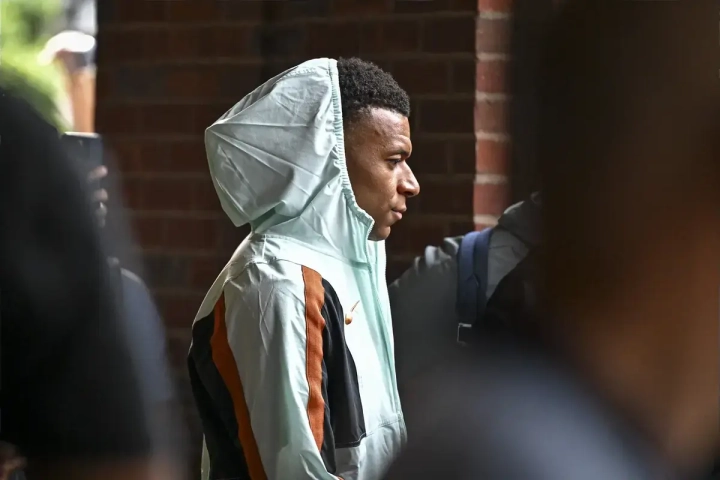
Their most recent competitive landmark came in qualifying, when Kylian Mbappe scored twice in a 4-0 win over Ukraine that helped secure France’s place at the finals. Mbappe remains the face of the side, its captain and its most explosive reference point, even after failing to score in the two warm-up fixtures. Deschamps has repeatedly protected him from the noise that follows his status, and France will expect his movement from the left and through central channels to stretch Senegal’s back line. Ousmane Dembele, Desire Doue, Marcus Thuram and Olise offer different forms of penetration around him, while N’Golo Kante’s return to the World Cup stage gives the midfield a familiar source of energy and balance.
Fitness has been one of the major French talking points in the build-up. William Saliba had been managed carefully because of back pain and followed an individual programme earlier in the camp, while Theo Hernandez and Aurelien Tchouameni were also rested as precautions. Jules Kounde had a knock after the Northern Ireland match, but the latest indications around the squad pointed towards France having no confirmed absentees or suspensions for this opener. That will allow Deschamps to make selection decisions based on tactical preference rather than emergency compromise.
The central question is how boldly France attack Senegal’s defensive structure. Deschamps has enough attacking quality to field a front line full of flair, yet he has rarely allowed France to become loose in major tournaments. Tchouameni’s positioning, Kante’s mobility and the work of the full-backs will be essential if France are to avoid giving Senegal space to counter. The duel between French creativity and Senegalese athleticism may decide the rhythm of the evening as much as any individual moment from Mbappe.
Across the pitch, Senegal arrive with a confidence rooted in both experience and unfinished business. Pape Thiaw leads them into the tournament after guiding a squad that blends established leaders with a younger generation hardened at strong European clubs. The symbolism is unavoidable: Thiaw was part of Senegal’s 2002 World Cup squad when they stunned defending champions France 1-0 in Seoul, even though he did not play that day. Now he stands on the touchline with the authority to shape the next chapter of a fixture that still holds a special place in the country’s sporting memory.
The Lions of Teranga qualified undefeated at the top of their African group, finishing the job with a commanding 4-0 win over Mauritania in which Sadio Mane scored twice and Iliman Ndiaye and Habib Diallo also found the net. That performance was their most recent competitive fixture and underlined the attacking spread that makes them difficult to contain. Their final warm-up was more restrained, a 0-0 draw with Saudi Arabia in which Lamine Camara tested the goalkeeper and Nicolas Jackson was sent off after receiving a second yellow card. No World Cup suspension has been confirmed from that friendly, and Thiaw has said his squad is fit and ready.
Senegal’s form over the past year has carried a strong sense of resilience. A 3-2 friendly defeat by the United States showed both their vulnerability and their capacity to respond, with Mane scoring twice after his team had fallen behind. The goalless draw with Saudi Arabia ended an 11-game scoring run, but it also offered a reminder that Thiaw’s side can remain compact even when the attack does not flow. Against France, that balance will be crucial. Senegal cannot simply defend deep for long periods and hope to survive, but neither can they allow the match to become open and stretched too early.
Mane remains the emotional and technical reference point, particularly after missing the 2022 World Cup through injury. Kalidou Koulibaly provides leadership in defence, Edouard Mendy brings tournament experience in goal, and Idrissa Gueye gives the midfield a combative edge. Around them, Pape Matar Sarr, Lamine Camara, Ismaila Sarr, Iliman Ndiaye and Jackson provide speed, ball-carrying and directness. This is not a Senegal squad built only on inspiration; it has physical power, tactical variety and enough quality in transition to make France defend large spaces if the European side lose the ball carelessly.
Thiaw’s likely tactical challenge is to deny France easy access between the lines. Senegal’s midfield will need to close the space around the French creators, protect the centre-backs from Mbappe’s diagonal runs and choose carefully when to press. The wide areas could be decisive. If Ismaila Sarr and Mane can receive early and attack full-backs before France are set, Senegal will feel they can turn defensive phases into genuine opportunities. If they are pinned too deep, the workload could become exhausting before the closing stages.
The historical backdrop gives the occasion added texture without defining the result in advance. On 31 May 2002, Papa Bouba Diop scored the goal that gave Senegal a 1-0 victory over France in the opening match of the World Cup in Seoul. France, then the defending champions, never recovered and exited at the group stage, while Senegal went on to reach the quarter-finals in one of the great debut campaigns in tournament history. The countries have met only once at a World Cup, which gives this reunion a rare clarity: France have never beaten Senegal on this stage, and Senegal have never lost to France on it.
Deschamps has rejected the idea of revenge, and that is understandable given that most of his squad were children or not yet born when the 2002 match was played. Still, football memory is not always carried by the players alone. Supporters, former players and national narratives bring their own weight. For France, this is a chance to begin a new World Cup with control rather than discomfort. For Senegal, it is an opportunity to show again that African football’s progress is not a romantic storyline but a competitive reality.
There are broader tournament implications too. Group I is one of the more intriguing sections because it mixes pedigree, upward momentum and unpredictability. France are expected to set the standard, but Senegal’s record across recent World Cups gives them a strong case to challenge for top spot. Norway, with their own attacking weapons, will watch this result closely, while Iraq’s return ensures there is no fixture that can be treated casually. In a three-match group phase, the opening game can shape selection, risk, confidence and the emotional tone of everything that follows.
The major battles are easy to identify but harder to settle. Mbappe against Senegal’s defensive cover will command attention, yet the match may turn on Kante and Tchouameni against Gueye, Camara and Sarr in midfield. Set pieces could also matter, with both sides possessing height and defensive strength, while the first goal may radically alter the tactical landscape. France are at their best when they can draw opponents forward and break into space; Senegal may prefer moments when they can disrupt rhythm and turn the game into a series of athletic duels.
For neutrals, this is one of the standout fixtures of the early group stage: a meeting of a European heavyweight and one of Africa’s most accomplished sides, framed by history but driven by present ambition. France want to begin the last chapter of the Deschamps era with the authority of a contender. Senegal want to prove that their ceiling extends beyond admiration and into the deepest rounds of the tournament. By the time the ball rolls in East Rutherford, the past will have done its work. What matters then is whether France can impose their control, or whether Senegal can once again make this fixture belong to them.