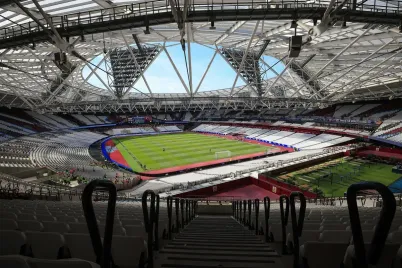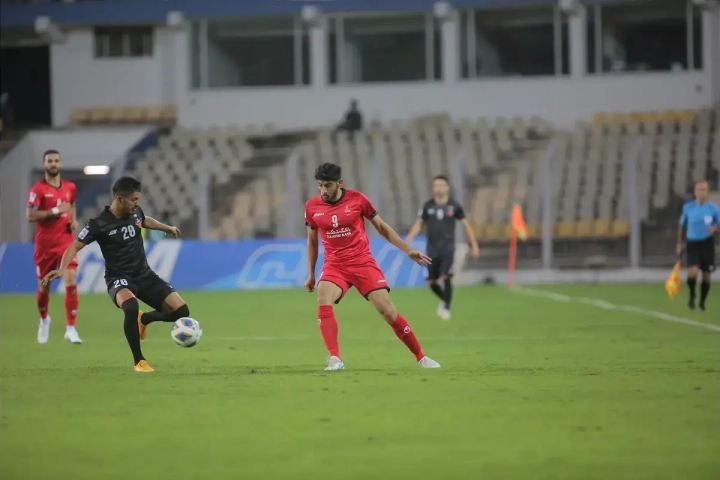
When the final whistle blew at the Los Angeles Stadium on Monday evening, securing a pulsating 2-2 draw between Iran and New Zealand, the drama on the pitch was ostensibly over. Instead, for Iranian winger Mehdi Torabi and the rest of the Team Melli delegation, an administrative nightmare was only just beginning.
In a stark reminder that sport and geopolitics are inextricably linked, Torabi now finds his 2026 FIFA World Cup campaign shrouded in doubt. State media confirmed on Tuesday that his US visa has expired, the result of a baffling discrepancy that saw him issued a single-entry visa rather than the multiple-entry clearance granted to his teammates.
With Iran forced to base their tournament operations in Tijuana, Mexico, due to severe diplomatic friction with Washington, Torabi’s exit from US airspace immediately invalidated his right to return.
A Team in Exile
The logistical reality for the Iranian squad is unprecedented in modern World Cup history. While the United States and Iran have recently agreed upon a framework to end their ongoing military and diplomatic conflict, the lingering security concerns necessitated a drastic measure: moving Iran’s base camp across the border to Mexico.
This arrangement forces the squad into an exhausting routine of flying in and out of the US solely for their Group G fixtures. For Torabi, the single-entry visa oversight means the winger was legally barred from re-entering the United States the moment the team’s aircraft touched down in Mexico early Tuesday morning.
The Iranian Football Federation has hastily scrambled to rectify the issue, stating it has “taken steps to obtain a new visa for Torabi” so he can rejoin the squad for their crucial upcoming fixtures against Belgium and Egypt. However, with relations between Tehran and Washington remaining frosty, and reports indicating that up to 15 members of the Iranian delegation were previously denied visas altogether, a swift administrative resolution is far from guaranteed.
“The Most Oppressed Team”
The visa fiasco is merely the latest chapter in what the Iranian camp describes as a deeply hostile environment. Tensions reportedly boiled over at Los Angeles International Airport following the match, with team captain Mehdi Taremi and backroom staff facing additional difficulties prior to departure.
Speaking to the press, head coach Amir Ghalenoei pulled no punches, condemning the treatment of his players and criticising US authorities for denying his squad basic post-match recovery time.
“After the game today they said to us, ‘You have to leave immediately,'” an exasperated Ghalenoei revealed. “We’ve been asked to get on a plane and return to our camp in Tijuana and we are really troubled by that. They are forcing us to go back early. They are making the situation more and more difficult, more hurdles, but we’re not going to let that stop us from doing our best. Our team is the most oppressed [at the tournament].”
Taremi echoed his manager’s sentiments, branding the entire logistical setup a “disaster” and confirming that the players had expressed their profound concerns directly to FIFA President Gianni Infantino, who visited the dressing room post-match to offer words of encouragement.
A Thriller on the Pitch
The off-field chaos threatens to overshadow what was, purely from a footballing perspective, a magnificent spectacle. Played against a highly charged backdrop, with a heavy security presence and anti-regime protests outside the stadium, the match itself delivered end-to-end drama.
New Zealand, making their long-awaited return to the World Cup after a 16-year absence, struck early through Motherwell forward Elijah Just. Iran responded before the break, with Ramin Rezaeian calmly finishing with the outside of his boot. When Just restored the All Whites’ advantage early in the second half, Iran dug deep once more, equalising through a towering header from Mohammad Mohebi.
Despite the pulsating 2-2 scoreline, the focus has abruptly shifted from Group G permutations to strict immigration protocols.
The Clock is Ticking
Iran is scheduled to face a formidable Belgian side this Sunday in Los Angeles, before travelling to Seattle to play Egypt on 26 June. All four teams in Group G currently sit on a single point, leaving the group wide open.
Yet, for Team Melli, the immediate opponent is not Kevin De Bruyne or Romelu Lukaku, but the US State Department. Whether Mehdi Torabi will be permitted to cross the border and take the pitch on Sunday remains one of the most compelling, and politically fraught, subplots of this extraordinary World Cup.