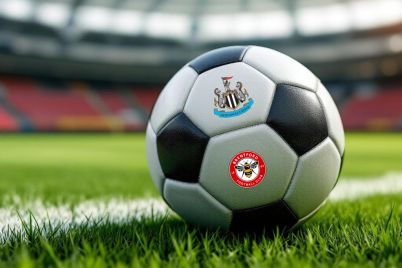
This is no ordinary late-season fixture at the Emirates. Arsenal against Newcastle United has often carried edge, noise, needle and history, but this one arrives carrying something heavier. It carries the weight of judgment.
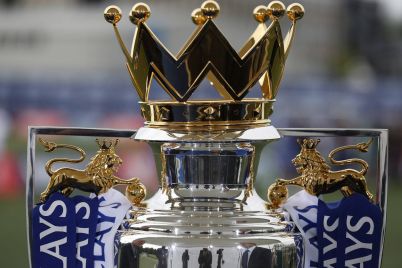
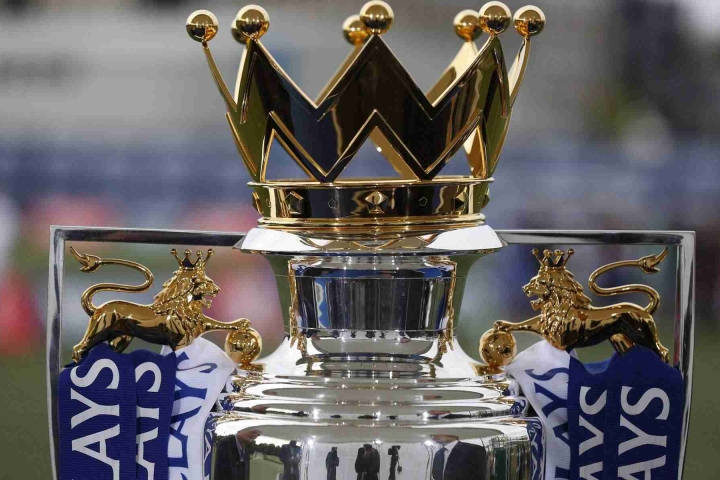
For Arsenal, it is a must-win game because the title race has moved from possibility into examination. Manchester City sit top on goals scored, level with Arsenal on 70 points after 33 matches, and that alone sharpens the entire atmosphere around Mikel Arteta’s side. Arsenal cannot afford to admire the table. They cannot afford brave performances, moral victories, or talk of lessons learned. At this stage of the season, the league does not reward aesthetics. It rewards cold-blooded execution. Beat Newcastle, and Arsenal return to the summit, at least temporarily. Fail to win, and the old questions return like weather through a cracked window.
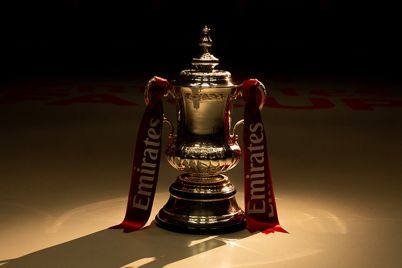
For Newcastle, the pressure is different but no less serious. Eddie Howe’s side arrive in 14th place, on 42 points, with 12 wins, six draws and 15 defeats from 33 league games. They are not where they expected to be, not where their investment suggested they should be, and not where their supporters’ ambition lives. This is a club that has tasted Champions League football, lifted a domestic trophy under Howe, and sold itself as a modern force. Yet they come to the Emirates looking over their shoulder rather than upwards, bruised by poor form and facing serious questions about where the project goes next.
That is why this fixture feels so dangerous for both managers. Arteta is under pressure because Arsenal have done so much of the hard work, led for so long, and yet now find themselves vulnerable to the accusation that they may once again blink when the lights are brightest. Howe is under pressure because Newcastle’s season has drifted badly, with three Premier League defeats in a row against Sunderland, Crystal Palace and Bournemouth leaving the mood on Tyneside flat and restless.
Arteta spoke before the game with the tone of a manager trying to turn anxiety into energy. His message was simple, direct and almost deliberately stripped of complication. He said there are five league games to go, called Newcastle “game one”, and told his players to go “all in”. It was the language of a manager who knows that, from here, there is no room for cautious half-steps. Arsenal have a Champions League semi-final against Atletico Madrid looming, but that cannot become a distraction. The league is still there, still alive, still within reach, but only if Arsenal seize the moment rather than merely describe it.
That is the central issue for Arsenal. They are no longer a developing side simply grateful to be in the conversation. They are a team built to win. Arteta has raised standards, improved culture, developed players, attracted major signings and given Arsenal back their authority. But the final piece is silverware. The uncomfortable truth is that elite football eventually stops applauding progress and starts asking for medals. Arsenal have been praised for their structure, intensity and courage, but the next stage is about ruthlessness. They cannot be the nearly men forever.
The defeat at Manchester City has changed the tone around the club. Arsenal played well in spells, created moments, and were far from embarrassed, but losing that match meant losing control of the title race. That is why Newcastle at home now becomes more than just another game. It becomes a referendum on Arsenal’s nerve. Can they respond after disappointment? Can they win when every misplaced pass creates a murmur? Can they turn the Emirates into a furnace rather than a theatre of tension?
The return of Bukayo Saka could be huge. Arteta confirmed that Saka is probably going to be in the squad, while Riccardo Calafiori is also available again. Jurrien Timber, however, is not ready, and Mikel Merino remains out. That is significant because Arsenal have missed Saka’s right-sided certainty, his ability to beat a man, hold width, draw fouls and change the emotional speed of a game. Even if he starts on the bench, his presence gives Arsenal something they have lacked recently: a sense that one moment can crack a match open.
Saka’s return is not just about talent. It is about belief. Arsenal’s attack has at times looked a little too careful, a little too patterned, as though each player is waiting for perfection before pulling the trigger. Saka does not solve everything, but he changes the angles. He gives Martin Odegaard a familiar passing lane. He gives Ben White or whoever operates on that side a natural rhythm. He gives Declan Rice and Martin Zubimendi, should they line up together, a wide outlet under pressure. He also forces Newcastle to defend deeper than they might like.
Arteta’s biggest decision may not be whether Saka starts, but how brave he wants to be from the beginning. Arsenal cannot treat this like a chess problem that needs 70 minutes of study. They need tempo. They need aggression. They need shots. They need the crowd involved early. Newcastle are low on confidence, and the worst thing Arsenal could do is let them grow into the game. If the opening half-hour becomes comfortable for Howe’s side, anxiety will start nibbling at Arsenal’s ankles.
There is pressure on Arsenal’s senior players in particular. Odegaard has to control the rhythm without slowing it to walking pace. Rice has to play with the authority of a player who wants to drag his side across the line. William Saliba and Gabriel must dominate physically, especially if Newcastle go direct. The full-backs have to be brave without allowing Harvey Barnes, Jacob Murphy, Anthony Elanga or whoever Howe selects to find space in transition. Arsenal’s centre-forward, whether Kai Havertz or Viktor Gyokeres, has to give Newcastle’s centre-backs a hard evening. This is not a night for sterile possession. It is a night for conviction.
Newcastle, though, are not merely arriving to serve as Arsenal’s emotional therapy. They have enough quality to hurt Arsenal if the home side become desperate. Bruno Guimaraes has trained fully and Howe has spoken about how important he is to the team. That matters. Bruno brings bite, passing range, personality and defiance. Newcastle have lacked flow, but if Bruno is sharp enough to start, he gives them a heartbeat in midfield. Sandro Tonali’s ability to dictate and disrupt could also be vital, especially with Joelinton suspended.
Howe’s problem is that his squad is patched together at precisely the wrong time. Anthony Gordon will not make the game after failing to train this week, Tino Livramento is waiting on further assessment, Fabian Schar and Emil Krafth are injury concerns, and Joelinton is suspended. That strips Newcastle of pace, physicality, defensive balance and midfield aggression. Away at Arsenal, those are not small details. Those are load-bearing walls.
Howe has admitted the pain of Newcastle’s form and made clear that his players must show character. He said the group is determined to put things right and insisted they need to perform, especially for the supporters. That is the right message, but Newcastle fans will want more than words now. They want evidence. They want a team that looks angry about its own decline. They want legs, tackles, organisation and a plan.
The pressure on Howe is serious because this season has punctured momentum. He has credit in the bank, and rightly so. He took Newcastle from danger to Europe, improved players, gave the club pride again and delivered a long-awaited trophy. But football credit is not a vault. It leaks when performances drop. The talk of possible bigger changes in the summer is revealing. Howe himself has said that if the team is not performing, there may be bigger changes than first thought. That sounds less like routine planning and more like a warning flare.
The uncomfortable question for Newcastle is whether this is merely a bad season or the start of a deeper stall. Injuries have hurt them, Europe has stretched them, and the intensity of Howe’s football can take a toll. But the drop-off cannot simply be explained away. Newcastle have looked flat too often, open too often, and short of solutions too often. At their best, Howe’s Newcastle are aggressive, vertical and suffocating. At their worst, they become stretched, emotional and easy to play through.
That is why Arsenal will look to attack the spaces around Newcastle’s midfield. Without Joelinton, Newcastle lose one of their great chaos-makers, the player who turns midfield into a wrestling match and makes pretty football feel unwelcome. If Bruno starts but is not fully match sharp, Arsenal will test him physically and positionally. Rice’s carries, Odegaard’s rotations and the movement of Eberechi Eze or Gabriel Martinelli between the lines could be key. Newcastle cannot afford to let Arsenal settle into waves.
Set-pieces could also matter. Arsenal have built a reputation for being ruthless from dead-ball situations, and Newcastle’s defensive absences may make that route especially tempting. Gabriel and Saliba attacking deliveries, Rice standing over corners, Havertz drifting to the back post: these are not side plots. In games like this, the first goal often arrives from pressure rather than poetry.
For Newcastle, the route to a result is likely to involve frustration first and ambition second. They need to survive Arsenal’s opening surge, slow the game down, and make the Emirates impatient. If they can reach half-time level, they will start to feel the pressure shifting across the pitch. The Arsenal crowd knows what is at stake. Every missed chance could carry a groan. Every Newcastle counter could make the air thin. That is where Howe will believe his side can do damage.
But Newcastle also have to show bravery. Sitting deep for 90 minutes at the Emirates is a dangerous invitation. Arsenal will eventually find territory, corners, second balls and pressure. Newcastle need moments where they push Arsenal back, where they force Raya to play long, where they make Saliba and Gabriel defend facing their own goal. Will Osula has given Howe something to consider up front, while Nick Woltemade and Yoane Wissa remain options depending on fitness and tactical need. Howe has said players must earn their place in training and deliver when chosen, which is a pointed message at a time when the squad’s edge is being questioned.
The psychological battle may decide this as much as the tactical one. Arteta has spoken about the difficulty of the chase and being chased, but his conclusion was clear: the best answer is to win the next game. That is exactly right. Arsenal do not need a speech now. They need a performance. They do not need to prove they are a good team. That has already been established. They need to prove they are a winning team when the pressure becomes personal.
If Arsenal win, they place pressure straight back on Manchester City and remind the league that the title race is still a fight, not a coronation. If they draw, the questions become louder. If they lose, the damage could be enormous, not just in the table but in the belief around the club. That is what makes this must-win. Not mathematically, perhaps, but emotionally and psychologically. Arsenal cannot allow another stumble to become a storyline.
For Newcastle, a win would be transformative. It would not repair the whole season, but it would give Howe something powerful to hold up: proof that his players are still fighting, still capable, still listening. A draw would be respectable, especially with the injuries. A heavy defeat, however, would deepen the feeling that this Newcastle side needs more than a summer refresh. It would invite sharper scrutiny of the manager, the recruitment, the squad balance and the hunger in the dressing room.
This is the kind of fixture that reveals truth. Arsenal will have the ball, the crowd, the title incentive and the stronger league position. Newcastle will have the role of disruptor, the wounded pride of a team accused of drifting, and a manager fighting to reassert control of the narrative. Arteta’s pressure is the pressure of expectation. Howe’s pressure is the pressure of decline. Both are dangerous. Both can consume a manager if results do not arrive.
The Emirates will expect Arsenal to start fast. The supporters will want urgency, not anxiety. They will want Newcastle pinned back, not invited in. They will want Saka’s name roaring from the bench or the starting XI. They will want Rice thundering into duels, Odegaard demanding the ball, and the front line playing with menace rather than manners. This cannot be a gentle Arsenal performance. It has to have teeth.
Newcastle, meanwhile, must make it ugly in the right way. They need to compete with pride, keep their distances compact, avoid cheap fouls around the box and make Arsenal solve problems rather than gifting them momentum. Howe’s best Newcastle teams have always had a snarl about them. That snarl has gone missing too often this season. At the Emirates, it has to return.
By Saturday evening, one manager may have bought himself oxygen and the other may find the room tightening. That is the nature of April football when the stakes are real. Arsenal are chasing a title. Newcastle are chasing credibility. Arteta is chasing the trophy that would complete the transformation. Howe is chasing the performance that proves his project still has pulse.
For Arsenal, nothing less than victory will feel enough.
For Newcastle, nothing less than a serious performance will be acceptable.
That is why this game matters. Not because of the fixture list. Not because of the television slot. But because both clubs arrive carrying questions they cannot talk their way around. At the Emirates, under the late Saturday light, they have to answer them.