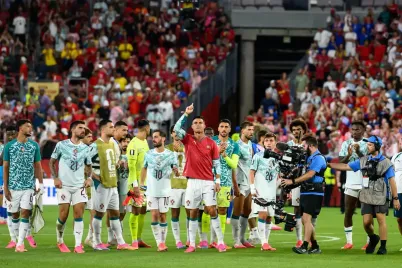
Manchester City’s difficult run of Premier League form continued on Saturday afternoon as Enzo Maresca’s side were held to a disappointing 1-1 draw by a determined Fulham at the Etihad Stadium, extending their winless league sequence to four matches and raising further questions about their consistency in the race towards the top of the table.
A spectacular second-half equaliser from Elliot Anderson rescued a point for the hosts after Rodrigo Muniz had given Fulham a deserved early advantage, but the result did little to ease the growing frustration surrounding a City team struggling to rediscover the authority and attacking fluency that supporters have come to expect.
The encounter also featured a controversial disallowed goal for Erling Haaland, several important saves from Gianluigi Donnarumma and an impressive tactical performance from a Fulham side that arrived in Manchester determined to challenge their opponents rather than simply defend.
For the visitors, managed by Alvaro Arbeloa, the result represented a significant achievement. Having suffered 20 consecutive defeats against Manchester City across all competitions, the London club finally brought that extraordinary sequence to an end with a performance built around organisation, confidence and a willingness to attack.
Although Fulham were unable to protect their first-half lead, they departed the Etihad with considerable encouragement after demonstrating that their recent improvement was no coincidence.
The atmosphere surrounding the lunchtime fixture reflected the contrasting circumstances facing the two teams.
City entered the contest following three successive Premier League defeats, an unfamiliar sequence for a club accustomed to competing at the highest level of English football. Their recent performances had exposed weaknesses in defensive transitions, while their attacking combinations had frequently lacked the precision required to break down organised opponents.
Fulham, meanwhile, arrived with growing confidence and an unbeaten sequence that suggested Arbeloa was beginning to establish a clear identity within his squad.
The international break had provided both managers with an opportunity to reassess their options, although the early stages suggested that the visitors had returned to domestic action with greater intensity.
Maresca made a notable adjustment to his midfield, introducing teenage midfielder Ayyoub Bouaddi alongside Anderson while leaving Enzo Fernandez among the substitutes.
The decision appeared designed to provide additional energy and mobility in central areas, particularly after City’s recent difficulties dealing with opponents breaking quickly through midfield.
Phil Foden was selected in an advanced creative role, with Jeremy Doku and Iliman Ndiaye providing width and support for Haaland.
Fulham’s starting line-up included former Manchester City winger Oscar Bobb, whose return to the Etihad would become one of the afternoon’s significant storylines.
The Norwegian played with confidence against his former employers and proved instrumental in creating the opening goal.
City initially attempted to establish control through possession, but Fulham were unwilling to allow their opponents the freedom to dictate the tempo.
The visitors pressed aggressively when opportunities presented themselves, closing passing lanes and forcing City’s defenders to make decisions under pressure.
Haaland threatened during the opening exchanges, only for David Affengruber to produce an important defensive block. Nico O’Reilly also found himself in a promising attacking position, but his effort was diverted into the side netting.
Those early opportunities suggested that City might gradually establish their customary dominance, although Fulham soon demonstrated that they possessed attacking ambitions of their own.
The breakthrough arrived in the 16th minute following an excellent passage of play involving Bobb and Muniz.
Bobb carried the ball forward with purpose before finding the Brazilian striker in a dangerous position near the edge of the penalty area.
Muniz showed excellent composure, creating the necessary space before directing a beautifully controlled curling effort beyond Donnarumma and into the upper corner of the net.
The finish gave the Italian goalkeeper little opportunity to intervene and provided Fulham with a deserved advantage.
It was a particularly satisfying moment for Muniz, whose selection ahead of Gonzalo Garcia had been rewarded with another important contribution.
The Brazilian had scored in his previous Premier League appearance, and his latest strike marked the first occasion since April 2025 that he had found the net in consecutive league matches.
For City, however, the goal highlighted an increasingly troubling pattern.
Maresca’s side had now conceded the opening goal in four consecutive Premier League fixtures, repeatedly leaving themselves with difficult situations to recover from.
The defensive organisation surrounding the move also raised concerns, with Fulham able to progress into dangerous territory without encountering sufficient resistance.
Rather than responding immediately with sustained attacking pressure, the hosts initially struggled to establish a consistent rhythm.
Fulham’s midfield remained disciplined, while their defenders showed confidence when stepping forward to challenge City’s attacking players.
The home side eventually believed they had restored parity in the 24th minute, only for a controversial refereeing decision to deny Haaland an equaliser.
Ndiaye delivered a dangerous cross towards the Norwegian striker, whose initial attempt was met by Fulham goalkeeper Bernd Leno.
The German appeared unable to secure the ball cleanly, allowing Haaland to react and force it across the goal line.
Celebrations were quickly interrupted, however, when referee Thomas Bramall ruled that the striker had committed a foul on Leno during the follow-up.
The decision centred on whether the goalkeeper had established sufficient control of the ball before Haaland attempted to complete the move.
Following a review by the video assistant referee, the original decision was allowed to stand, leaving City frustrated and the visitors relieved.
The incident immediately became one of the afternoon’s major talking points.
From City’s perspective, Haaland had reacted to a loose ball inside the penalty area and appeared entitled to challenge for possession.
The officials, however, judged that Leno had control of the ball when the striker made his second attempt, meaning the goal could not be awarded.
It was a significant moment in a match where clear opportunities were proving difficult to convert.
The controversy appeared to increase the urgency within the home side, although their subsequent attacking play remained inconsistent.
Foden began finding more space between Fulham’s defensive and midfield lines, while Doku attempted to stretch the visitors through his movement on the left.
Haaland was presented with a particularly inviting opportunity after Foden released him into space, but the normally clinical striker sent his effort over the crossbar.
Another promising opening followed when O’Reilly delivered into the penalty area, yet Haaland again failed to produce the decisive finish.
The Norwegian’s difficulties were particularly noticeable because of the standards he has established throughout his career.
His movement continued to create problems, but his final touch lacked its usual assurance.
Fulham’s defensive partnership of Affengruber and Calvin Bassey also deserved considerable credit for restricting the striker’s influence.
Both defenders remained alert to his movement, challenged aggressively when necessary and prevented him from consistently establishing control inside the penalty area.
Although City enjoyed spells of pressure, the visitors continued to threaten whenever possession changed hands.
Bobb was particularly dangerous during these moments, using his familiarity with City’s playing style and his ability to carry the ball into attacking areas.
One promising Fulham attack required an important intervention from Ruben Dias after Josh King delivered a dangerous ball across the penalty area.
The visitors then came close to doubling their advantage shortly before half-time.
A lapse in concentration from O’Reilly allowed Bobb to regain possession inside City’s defensive area, presenting the Norwegian with an opportunity to score against his former club.
He directed a powerful effort towards goal, but Donnarumma reacted impressively to prevent Fulham from establishing a two-goal lead.
The save proved crucial, particularly given the difficulties City were experiencing at the opposite end.
Doku produced a relatively comfortable effort for Leno to gather during the closing moments of the half, but the home side entered the interval trailing and facing increasing pressure to improve.
There were audible signs of frustration from sections of the Etihad crowd, particularly when City appeared reluctant to press Fulham’s defenders with sufficient aggression.
For a team associated with controlling possession and dictating the rhythm of matches, the opening 45 minutes had been unusually disjointed.
Fulham had not simply defended their advantage. They had demonstrated confidence in possession, pressed intelligently and created opportunities that could easily have extended their lead.
The second half began with City showing greater urgency.
Their passing became quicker, players moved into advanced positions more frequently and Anderson began to exert a stronger influence in midfield.
The England international had been one of the more energetic performers during the opening period, but his contribution became increasingly important as the hosts searched for a route back into the contest.
That determination was rewarded in the 57th minute.
A City corner was only partially cleared by the Fulham defence, with the loose ball travelling towards Anderson outside the penalty area.
Rather than attempting to control it, the midfielder struck a superb first-time volley through a crowded penalty area.
His effort travelled low beyond Leno and into the net, sparking celebrations around the Etihad and providing City with the equaliser they desperately needed.
The technique was exceptional, particularly given the number of players positioned between Anderson and the goal.
It was also his first Premier League goal for Manchester City, making the moment personally significant for a player increasingly establishing himself as an important figure within Maresca’s plans.
The equaliser changed the atmosphere inside the stadium.
Having struggled for much of the opening hour, City suddenly appeared capable of completing the turnaround.
Anderson continued to drive forward, combining with teammates and attempting to exploit spaces that were beginning to emerge within Fulham’s defensive structure.
He almost produced a second goal shortly afterwards following another attacking move involving Haaland.
The striker supplied the ball into Anderson’s path, allowing the midfielder to advance into a dangerous position inside the penalty area.
Showing quick feet and composure, Anderson directed a low effort through the legs of Ryan Sessegnon, but the ball rolled narrowly beyond the far post.
It was a moment that could have transformed the contest.
Had the effort found the net, City would have completed a rapid turnaround and placed Fulham under considerable pressure to respond.
Instead, the visitors survived and gradually regained their attacking confidence.
Arbeloa’s side continued to demonstrate an impressive willingness to commit players forward, refusing to retreat into a purely defensive formation despite the increasing pressure.
That approach created several dangerous situations as City pushed additional players into advanced positions.
Muniz remained a constant threat through his movement and ability to attack space behind the defensive line.
During one particularly dangerous counterattack, the Brazilian found himself with an opportunity to restore Fulham’s advantage, only for Donnarumma to produce another important save.
The Italian goalkeeper was called upon again when Bassey advanced into an attacking position following another rapid Fulham transition.
Donnarumma’s intervention, supported by defensive assistance from Dias, prevented the visitors from taking the lead for a second time.
Those moments underlined the vulnerability that continues to affect City whenever possession is lost in advanced areas.
While Maresca’s players were capable of creating opportunities through their attacking combinations, they frequently appeared exposed when Fulham moved the ball forward quickly.
The visitors recognised those weaknesses and repeatedly attempted to exploit them.
As the contest entered its final stages, Maresca turned to his substitutes in an effort to introduce fresh attacking energy.
Rayan Cherki replaced Foden in the 70th minute, providing an additional creative option as City searched for a winner.
Further changes followed, with Josko Gvardiol and Allan introduced in place of O’Reilly and Ndiaye during the 78th minute.
Enzo Fernandez was also brought on for Bouaddi in the closing stages.
The alterations reflected Maresca’s determination to find a decisive breakthrough, although Fulham’s defensive organisation remained difficult to overcome.
Cherki offered moments of technical quality, while Doku continued attempting to create space through direct running.
However, the final pass or finishing touch repeatedly failed to match the quality of the build-up.
Fulham also made adjustments, introducing fresh legs as the physical demands of their pressing approach began to increase.
Arbeloa’s players continued to work collectively, closing spaces around the penalty area and ensuring that Haaland rarely received possession in positions where he could turn and shoot comfortably.
Affengruber was particularly impressive in his individual battles with the Norwegian, while Bassey’s combination of strength and anticipation helped prevent City from establishing sustained pressure inside the box.
Leno also remained composed after the earlier controversy, providing reassurance behind a defensive unit that had been forced to withstand increasing pressure.
Despite City’s attempts to force a late winner, the visitors retained enough attacking ambition to ensure the home defence could never concentrate exclusively on moving forward.
The closing stages became increasingly tense, with both teams recognising that a single moment of quality could decide the outcome.
Ultimately, neither side could produce that decisive contribution.
The final whistle confirmed a 1-1 draw, bringing an end to Fulham’s extraordinary losing sequence against Manchester City while extending the hosts’ concerning run without a Premier League victory.
For Maresca, the result provided limited consolation.
Although City had avoided a fourth consecutive league defeat, their overall performance offered further evidence that significant improvements are required.
Speaking after the match, the Italian acknowledged that his team were experiencing a difficult period and admitted that recent results had fallen below expectations.
He suggested that some inconsistency was understandable while attempting to establish a new playing structure, but made clear that repeatedly conceding the opening goal was creating unnecessary problems.
Maresca explained that falling behind encouraged his players to rush their decisions and abandon some of the patience required to execute their tactical approach effectively.
He identified the need to improve defensive organisation and begin keeping clean sheets, recognising that City cannot continue relying on second-half recoveries to rescue results.
The manager also discussed his midfield adjustments, explaining that Anderson had been encouraged to operate slightly further forward, closer to the opposition penalty area, while Bouaddi provided support in central positions.
That tactical decision ultimately produced City’s equaliser, with Anderson emerging as the standout performer in an otherwise disappointing afternoon.
However, Maresca’s comments reflected an awareness that individual moments of quality cannot disguise broader concerns surrounding the team’s collective performances.
His side have now conceded in nine consecutive matches across all competitions, a sequence that illustrates the defensive difficulties currently affecting the squad.
The inability to control transitions remains particularly concerning, especially against opponents prepared to press aggressively and attack directly.
Arbeloa, by contrast, expressed considerable satisfaction with Fulham’s performance, although he admitted that his players had created enough opportunities to consider the possibility of securing all three points.
The Fulham manager praised his team’s courage, organisation and belief, explaining that they had travelled to Manchester with the intention of competing for victory rather than accepting a defensive approach.
He revealed that the club’s lengthy losing sequence against City had formed part of his pre-match discussions with the players.
Rather than allowing those previous results to influence their expectations, Arbeloa encouraged his squad to approach the fixture as a completely new challenge.
His message focused on competing for every ball, demonstrating personality in possession and believing that they possessed the quality to trouble their opponents.
The performance suggested that those instructions had been understood.
Fulham were aggressive without becoming reckless, confident when playing through midfield and disciplined when defending their penalty area.
Arbeloa also reserved particular praise for Muniz, highlighting the striker’s commitment in training and his willingness to contribute defensively as well as in attack.
The Brazilian’s opening goal was an excellent individual finish, but his overall contribution extended beyond that moment.
His pressing, movement and ability to occupy City’s defenders helped Fulham maintain an attacking presence throughout the contest.
Asked about Haaland’s disallowed goal, Arbeloa indicated that he had not studied the incident closely, although Leno had assured him that the decision to award a foul was justified.
The Fulham manager preferred to focus on the collective performance, emphasising that his players had remained committed to their approach even after conceding the equaliser.
He also expressed confidence that similar performances would translate into further victories as the season progresses.
The result extended Fulham’s unbeaten Premier League sequence to five matches, providing further evidence of the progress being made under their manager.
Perhaps most significantly, it ended a remarkable run of 20 consecutive Manchester City victories in meetings between the clubs across all competitions.
Fulham had not avoided defeat against City since September 2011, making Saturday’s draw an important result in the recent history of the fixture.
The visitors had previously suffered 17 successive Premier League defeats against their opponents, but their performance at the Etihad demonstrated how much competitive balance can change when a team approaches a difficult assignment with confidence and tactical clarity.
For City, the statistics offered a more troubling picture.
Despite recording 15 attempts and generating an expected goals figure of approximately 1.88, they managed only three efforts on target.
Fulham produced fewer overall attempts but registered four shots on target, highlighting the effectiveness of their attacking approach.
The visitors’ expected goals figure of approximately 0.72 also illustrated the importance of Muniz’s excellent finish and the opportunities created through rapid counterattacks.
While City generated the greater overall volume of attacking opportunities, the quality of their finishing remained below the standards expected of a team with their attacking resources.
Haaland’s performance was particularly frustrating.
The striker was unfortunate to have his first-half effort disallowed, but he also failed to convert several opportunities that would ordinarily have offered him a strong chance of adding to his goal tally.
His difficulties were compounded by the outstanding defensive work of Fulham’s central defenders, who consistently challenged his movement and prevented him from dominating proceedings.
Anderson, meanwhile, emerged with considerable credit.
Beyond his excellent equaliser, the midfielder provided energy, determination and a willingness to advance into dangerous positions.
His performance demonstrated why Maresca has increasingly trusted him with an influential role in the team.
Donnarumma was another important contributor, producing several saves that prevented Fulham from claiming a memorable victory.
Without those interventions, City’s afternoon could easily have ended in a fourth successive league defeat.
For Fulham, Bobb’s performance was especially noteworthy.
Returning to face his former club, the winger demonstrated creativity and confidence, providing the assist for Muniz’s opening goal and almost scoring himself before the interval.
His willingness to attack City’s defensive structure created persistent difficulties and contributed significantly to the visitors’ positive performance.
The draw leaves Manchester City third in the Premier League standings, behind Brighton in second, having missed an opportunity to improve their position.
More importantly, their four-match winless sequence threatens to undermine their ambitions of remaining competitive near the summit of the table.
With Arsenal setting the pace, City cannot afford to continue dropping points in fixtures where they would ordinarily expect to secure victories.
Their immediate schedule offers little opportunity for prolonged reflection, with important encounters against Napoli and Arsenal approaching.
Those fixtures will provide a demanding examination of Maresca’s ability to address the weaknesses exposed during recent weeks.
Improving defensive stability, restoring confidence in possession and rediscovering attacking efficiency will be essential if City are to prevent their disappointing run from developing into a more serious problem.
Fulham, meanwhile, can approach their forthcoming assignments with renewed optimism.
Their performance in Manchester demonstrated that they are capable of competing against high-quality opposition without abandoning their attacking principles.
Arbeloa will undoubtedly be encouraged by the resilience his players showed after conceding, particularly their willingness to continue searching for a winning goal rather than settling immediately for a point.
The visitors may also reflect on the opportunities they failed to convert, with Donnarumma’s saves ultimately preventing them from securing an even more impressive result.
Nevertheless, ending such a lengthy losing sequence against Manchester City represents a meaningful achievement and another encouraging step in their development.
For the home supporters, however, Saturday’s encounter provided more frustration than reassurance.
Anderson’s excellent equaliser offered a moment of genuine excitement, but it was not enough to disguise the lack of cohesion that characterised significant periods of City’s performance.
The disallowed Haaland goal will undoubtedly remain a subject of debate, although the hosts had sufficient opportunities to secure victory regardless of that decision.
The challenge facing Maresca is therefore about considerably more than one controversial incident or an afternoon of missed chances.
City must rediscover the defensive discipline, attacking precision and collective confidence required to compete consistently at the highest level.
Fulham arrived at the Etihad determined to challenge a team that had dominated this fixture for more than a decade and departed having demonstrated that history offered no guarantee of another defeat.
For the London club, the afternoon represented progress, belief and a deserved reward for an ambitious performance.
For Manchester City, it was another reminder that reputation alone cannot deliver Premier League victories.
One point ended their losing streak, but it did little to silence the questions surrounding their form, leaving Maresca with considerable work ahead as the season enters another demanding period.