
Mexico’s World Cup has already delivered noise, colour and expectation, but Tuesday night brings the point at which atmosphere alone is no longer enough. The co-hosts face Ecuador in the FIFA World Cup round of 32 at Mexico City Stadium, the tournament name for Estadio Azteca, on Tuesday, 30 June 2026, with kick-off at 8pm local time in Mexico City and 2am BST on Wednesday, 1 July in the United Kingdom. For Javier Aguirre’s side, it is the first knockout examination of a campaign that has so far been defined by control. For Ecuador, it is an opportunity to turn one of the group stage’s most dramatic late surges into a deeper run.
The fixture carries a weight that goes beyond the bracket. Mexico topped Group A with three wins from three, six goals scored and none conceded, a perfect opening phase that has raised the level of belief around a nation hosting World Cup football for the third time. Yet the country’s modern tournament history contains a stubborn barrier: Mexico have not won a World Cup knockout tie since 1986, when the competition was also staged on home soil. That context will follow every touch against an Ecuador team who entered the last 32 through a very different route, recovering from a difficult start in Group E before a stirring 2-1 comeback victory over Germany secured progression as one of the best third-placed sides.
That contrast gives the tie its intrigue. Mexico have looked structured, disciplined and emotionally energised by familiar surroundings, while Ecuador have shown resilience under pressure and the ability to impose themselves against elite opposition. The prize is a place in the last 16, but for both teams the match also offers a chance to reshape perceptions. Mexico want to prove that their group-stage command can survive the sharper edges of knockout football. Ecuador want to show that their win over Germany was not a momentary shock, but the clearest expression of a side capable of competing with anyone.
Aguirre, in his latest spell in charge of Mexico, has brought experience, pragmatism and a clear sense of tournament management. His team’s group stage was built on defensive security and measured attacking moments rather than reckless expansion. The 3-0 win over Czechia in their most recent competitive fixture completed the perfect start and reinforced the impression of a squad comfortable with the emotional demands around them. Mateo Chávez, Julián Quiñones and Álvaro Fidalgo were on the scoresheet in that match, while Guillermo Ochoa’s late appearance added a historic note as the veteran goalkeeper featured at a sixth World Cup.
The defensive record is the foundation of Mexico’s confidence. Raúl Rangel has been trusted in goal, while Jorge Sánchez, César Montes, Johan Vásquez and Jesús Gallardo have formed a back line that has yet to concede in the tournament. Edson Álvarez remains a vital presence in midfield, giving the side balance, aggression and leadership in the central areas. Around him, Luis Romo and Erick Gutiérrez offer the sort of work rate and composure required when knockout matches become stretched, while the attack has benefited from the movement and confidence of Quiñones.
Raúl Jiménez is expected to remain central to Mexico’s attacking plan after being managed carefully through the group stage. His experience gives the home side a focal point, but Aguirre’s options are not limited to one route. Roberto Alvarado can provide width and left-footed delivery, Quiñones has already demonstrated his eye for goal, and the emergence of Gilberto Mora has added another storyline to the campaign. Mora’s involvement against Czechia made him one of the most talked-about young players in the competition, though Mexico’s approach in a knockout tie is likely to be guided by control rather than sentiment.
There are no confirmed injury or suspension concerns for Mexico ahead of the match, leaving Aguirre with the welcome problem of choosing from a squad that has built momentum without obvious disruption. That availability matters because Ecuador’s physical intensity will test every area of the pitch. Mexico’s midfield will have to be brave in possession, but equally disciplined when the ball is lost. Aguirre’s side have pressed at carefully chosen moments, protected central zones effectively and relied on full-backs to advance without leaving the centre-backs exposed. Against Ecuador, the timing of those movements could be decisive.
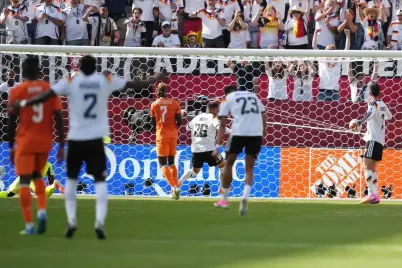
Sebastián Beccacece’s Ecuador arrive with a very different emotional rhythm. Their group campaign was not smooth, and they entered their final fixture under real pressure after failing to score in their first two matches. The response against Germany was emphatic. Falling behind could have ended their tournament, but goals from Nilson Angulo and Gonzalo Plata transformed the game, sent Ecuador into the knockout stage and gave the squad a powerful surge of belief. The result also underlined the character of a team that can absorb pressure, recover quickly and make the most of transition moments.
Beccacece has built his reputation on energy, aggression and pressing structure, and Ecuador’s best football comes when they can turn defensive pressure into forward momentum. The presence of Moisés Caicedo in midfield is central to that identity. Now captain, the Chelsea midfielder gives Ecuador ball-winning power, positional intelligence and the ability to drive the team up the pitch. Alongside him, players such as Alan Franco and Kendry Páez help provide the blend of control and creativity needed to connect midfield with attack, while Alan Minda and Jeremy Sarmiento offer direct running if called upon.
Ecuador’s defensive shape has also become a major talking point. Piero Hincapié, Willian Pacho and Joel Ordóñez give Beccacece high-level defensive options, with strength, recovery pace and comfort in possession. Angelo Preciado can provide thrust from full-back or wing-back areas, and the balance between Ecuador’s defensive aggression and Mexico’s attempts to draw pressure could shape long spells of the match. If Ecuador press too high without cover, Mexico have players capable of attacking the spaces behind. If they sit too deep, they risk allowing the home side to build rhythm in front of a crowd ready to respond to every forward pass.
Enner Valencia remains one of Ecuador’s most important attacking references. The veteran forward is the country’s record goalscorer and continues to bring movement, penalty-area instinct and tournament know-how. Plata’s match-winning contribution against Germany has also sharpened the focus on Ecuador’s wide and inside-forward options, while Angulo’s goal showed the value of runners arriving from deeper positions. Ecuador do not need long periods of possession to be dangerous; they need the right pressing trigger, the right first pass and the speed to commit numbers when Mexico’s shape opens.
Like Mexico, Ecuador have no confirmed injury or suspension issues heading into the tie. That leaves Beccacece able to lean on the structure that produced the comeback against Germany, although knockout football often demands subtle adjustments rather than dramatic change. The challenge will be emotional as much as tactical. Playing Mexico in Mexico City means confronting not only a well-organised team but also an environment that can make ordinary defensive clearances feel like major moments. Ecuador’s players have enough top-level experience to handle pressure, but they will need calm decision-making in the opening stages.
The historical backdrop gives the meeting another layer. Mexico and Ecuador have faced each other regularly over the years, with Mexico holding the stronger overall record. Their only previous World Cup meeting came in 2002, when Mexico won 2-1 during the group stage in Japan and South Korea. That result belongs to a different era, but it will still form part of the wider narrative as the teams meet again on the sport’s biggest stage. Ecuador have since developed into a more consistent World Cup presence, while Mexico continue to carry the burden of trying to turn reliable qualification and group-stage competence into knockout progress.
A match at the Azteca also brings its own symbolism. The stadium is woven into World Cup history, associated with 1970, 1986 and some of the tournament’s most famous images. For Mexico’s players, that can be an inspiration and a weight. The noise can lift them, but it can also increase the urgency to force the game. Ecuador will know that periods of frustration can change the mood inside the stadium. The longer they stay compact and competitive, the more the contest may become a test of patience for the hosts.
The central battle could decide the direction of the evening. Álvarez against Caicedo has the feel of a duel between two leaders who set the emotional tempo for their teams. Both are capable of breaking up play, both can organise those around them, and both understand the importance of second balls in tournament football. Around them, the supporting midfielders must ensure that neither side becomes too stretched. Mexico will want to control possession without becoming slow. Ecuador will want to press without leaving the spaces that Jiménez, Alvarado and Quiñones can exploit.
Set-pieces may also become a significant factor. Mexico have aerial strength through Montes and Vásquez, while Ecuador possess defenders who attack deliveries with conviction. In knockout matches, where open-play chances can be limited by caution, corners, free-kicks and second phases often carry greater importance. Discipline will be equally vital. With both teams reportedly clear of suspension concerns before kick-off, neither will want to alter that balance through avoidable cards or emotional reactions in a high-pressure environment.
For Mexico, victory would represent more than survival. It would be a step towards ending one of the most persistent frustrations in their World Cup story and would keep alive the dream of making home advantage count deep into the tournament. For Ecuador, progress would confirm their status as one of the competition’s most dangerous disruptors and would build on the belief generated by their comeback against Germany. The stakes are simple, the margins are likely to be narrow, and the setting is made for a night heavy with tension.
By the time the teams walk out in Mexico City, the narratives will already be clear: a host nation trying to turn a perfect group stage into a historic knockout push, and a South American side carrying the confidence of a statement win into another demanding test. Mexico have structure, form and the crowd behind them. Ecuador have energy, resilience and a midfield capable of unsettling any opponent. In a World Cup that has already produced shocks and surges of emotion, this round-of-32 meeting has all the ingredients of a contest shaped by nerve as much as quality.