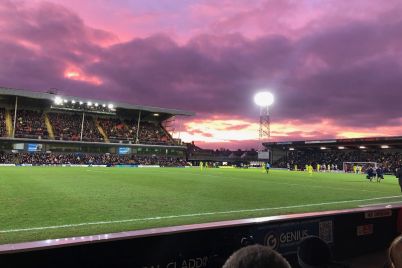
Everton host Chelsea on Saturday at 5.30pm at Hill Dickinson Stadium in what feels like far more than a routine late-season fixture. It is a useful marker in the table as well, with Chelsea starting the weekend sixth and Everton eighth, close enough for the game to carry real meaning for both clubs.
From Everton’s side, this feels like another examination of how much David Moyes has restored in a relatively short period. Everton went into the Arsenal game on the back of wins over Newcastle and Burnley, and although they lost 2-0 at the Emirates, the scoreline only broke away late after they had stayed in the contest for most of the evening and carried a threat of their own. That matters because Moyes is trying to rebuild not just results but trustworthiness, the sense that Everton can go into games against strong opponents and remain organised, competitive and awkward.
Moyes’ own press conference had the tone of a manager who believes there is a base to work from and more to come. He said Everton already had some defensive structure when he arrived, but that he has been able to build on it, and he was clear that the next step is still greater attacking output. He spoke warmly about James Garner, describing him as a low-maintenance, throwback footballer who has taken on responsibility, shown confidence on the ball, covered the ground quickly and not looked remotely intimidated by big occasions.
Moyes was full of praise for Garner’s development and suggested the midfielder is now playing with much more belief than he had in the past. He said Garner has shown great speed across the ground, has been confident on the ball, has not been frightened of coming up against some of the best players, and has surprised him with how well he has taken on the challenge. He also pointed to the added responsibility Garner now carries after signing a new contract and said that if Everton can help him reach England level, it would be fantastic.
That matters because Everton need players who can rise when the pressure sharpens. Moyes made the point that Garner has stepped up in big away games and has been able to carry out different roles depending on the opposition. He praised the way the midfielder has taken on individual jobs against certain players and simply got on with it without blinking. It was one of the clearest signs from the press conference that Moyes sees Garner not just as a solid performer, but as one of the central figures in Everton’s attempt to move forward.
The manager also reflected on Everton as a place where players can grow. He spoke about how satisfying it is when signings go on to become international footballers and referenced the likes of Leighton Baines, Phil Jagielka and Joleon Lescott from his first spell at the club. It was a reminder that Moyes does not just want Everton to survive seasons. He wants them to become a club where ambitious players improve, develop and start knocking on bigger doors.
That broader theme gives this match added significance. Everton are not where they were a year ago, when the mood was dominated by survival calculations and questions over where the goals would come from. Moyes himself acknowledged that shift, saying the club is now in a much more comfortable position with eight games to go and no real drama around them. But he also made clear there is still work to do. Everton need more goals, more assists and more attacking thrust from the players around the forward line. They are sturdier now, but the next step is becoming more dangerous.
Team news could have a major bearing on how Moyes shapes his side. Everton have been hopeful that James Tarkowski and Jarrad Branthwaite can at least put themselves into contention after missing the Arsenal defeat, and their availability would be a major boost given Chelsea’s pace and movement in the final third. Jack Grealish remains a concern, while Charly Alcaraz and Seamus Coleman have also been dealing with injury problems. Much may depend on how much risk Moyes is prepared to take with players who are not quite fully recovered, particularly with another break around the corner.
Chelsea, meanwhile, arrive on Merseyside under a very different kind of pressure. Liam Rosenior is still early in his reign and there is already noise around the club after a bruising week that included Champions League disappointment and renewed scrutiny over whether Chelsea are progressing quickly enough. Rosenior has not hidden from that. He has admitted defeats hurt and has spoken in honest terms about the need for his team to respond.
Moyes, interestingly, was very complimentary about the Chelsea manager. He said he knew a bit about Rosenior’s career, called him one of the young managers on the rise, praised the work he did at Hull City and even revealed he had recommended him for a managerial job in the past. Moyes added that Rosenior would have learned a great amount from managing abroad, dealing with a different league, different players and a different football culture. It was a notable show of respect and suggested Moyes sees Chelsea not just as a collection of expensive players, but as a side with a serious young coach trying to build something.
Chelsea’s team news, however, has been far from ideal. Trevoh Chalobah is expected to be out for around six weeks after suffering an ankle injury, Reece James is not expected back until after the international break because of a hamstring issue, and Filip Jorgensen has undergone a minor operation that will keep him out for a few weeks. Levi Colwill is back on the training pitch but is still not considered close to a return, while Malo Gusto, Jamie Gittens and Benoit Badiashile have also been among the names carrying fitness concerns.
That leaves Chelsea in an awkward position. On one hand, they still have the sharper collection of attacking players and the kind of individual quality that can decide matches even when the team is not at its best. On the other, they look vulnerable to exactly the type of game Everton will try to create: physical, noisy, compressed and emotionally charged.
Everton’s hope will be that the crowd can once again become a real factor. Moyes was upbeat about the planned coach welcome and the atmosphere around the stadium, joking that a 5 o’clock kick-off might suit Everton if supporters arrive with a couple of beers in them and ready to get right behind the team. Beneath the humour was a serious point. Everton know that in matches like this, the stadium can help shift momentum, create pressure and turn small moments into big ones.
Tactically, the contest looks like one Chelsea will want to control with possession, quick pressing and sharp combinations around Everton’s midfield and defensive line. Everton, by contrast, will want to stay compact, protect central areas, win second balls and make the game uncomfortable. Moyes will be keen for his side to remain disciplined and robust, but he will also know Everton need to show more ambition than simply hanging on. Against Chelsea, periods of pressure are inevitable. The challenge is whether Everton can turn their own moments into chances and whether they have enough quality in the final third to punish a Chelsea side whose confidence has been dented.
What gives Everton encouragement is that this is no longer a team drifting into these occasions hoping to survive them. Under Moyes, they are beginning to look like a side with a plan, with better balance and with a clearer sense of who they are. Chelsea may still travel as the bigger name with the more glamorous squad, but Everton go into the game with belief that they can make life deeply uncomfortable for them.
That is what makes this such an interesting preview. Everton have the structure, the crowd and a manager who can already see the shape of progress. Chelsea have the bigger attacking ceiling, the greater expectation and a young coach trying to steady the ship through a difficult spell. Somewhere between those two stories sits a game that should tell us a lot about both teams.