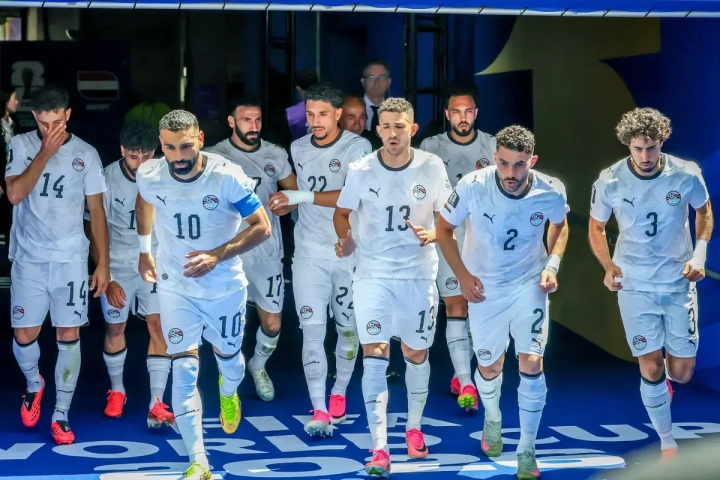
The captivating drama of the 2026 FIFA World Cup heads to the Pacific Northwest as New Zealand prepare to lock horns with Egypt in a highly consequential Group G encounter. Scheduled for Monday, 22 June 2026, the match will kick off at exactly 01:00 according to British Standard Time (BST) under the spectacular roof of BC Place in Vancouver, Canada. Following a pulsating opening round of fixtures that left the group perfectly balanced on a knife-edge, this Matchday 2 clash has rapidly transformed from a standard group-stage meeting into a potentially decisive battle for knockout round survival.
Group G Permutations and the Pressure Cooker
Arriving in North America for the newly expanded 48-team tournament, many global pundits expected European heavyweights Belgium to swiftly assert their dominance over Group G. However, the reality of the opening matchday proved entirely different, producing a pair of tense, tightly contested stalemates. Currently, all four competing nations, New Zealand, Egypt, Belgium, and Iran, sit completely deadlocked on a single point apiece.
Consequently, the margin for error has effectively evaporated. In this modern tournament format, securing a top-two finish or emerging as one of the eight best third-placed teams is absolutely essential for reaching the newly introduced Round of 32. Claiming all three points in Vancouver would immediately catapult either side to the summit of the group standings, drastically easing the suffocating pressure ahead of their respective final group fixtures.
Conversely, suffering a damaging defeat would leave the vanquished nation staring down the barrel of a disastrous, premature exit from international football’s grandest stage. For both teams, reaching the knockout phases represents a historic, long-standing ambition. New Zealand have never progressed beyond the group stage in their previous tournament appearances, while Egypt are equally desperate to secure their first-ever knockout berth after suffering early exits in 1990 and 2018.
The Pharaohs’ Tactical Blueprint
Under the meticulous guidance of head coach Hossam Hassan, the North African heavyweights arrived in Canada boasting significant technical pedigree and an unwavering defensive discipline. Their opening 1-1 draw against a heavily favoured Belgian outfit showcased a masterclass in resilient, structural organisation. Deployed in a rigid low block marshalled brilliantly by imposing centre-back Mohamed Abdelmonem, the Pharaohs completely frustrated their European opposition for large spells of the contest.
Offensively, the Egyptian system heavily relies on rapid, vertical transitions to threaten the opposition. During their opening fixture, this blueprint was executed to perfection in the 19th minute, when Emam Ashour latched onto a defence-splitting pass from captain Mohamed Salah to smash a powerful strike into the net.
Salah, naturally, remains the undisputed creative heartbeat of the national side. Operating primarily from the right flank, his elite ability to stretch opposition lines and ignite lightning-fast counter-attacks will rigorously test the New Zealand defence. Partnered with the immense domestic form of Eintracht Frankfurt forward Omar Marmoush, the Egyptian attacking unit is highly capable of ruthlessly punishing any defensive lapses on the break.
The All Whites’ Resilience
Standing across the tactical divide is a New Zealand squad currently brimming with quiet self-belief and undeniable character. Guided by head coach Darren Bazeley, the Oceanic representatives earned enormous international respect by battling to a thrilling 2-2 draw against Iran in Los Angeles on Matchday 1. While pre-tournament expectations from the global media may have been modest, the All Whites have emphatically proven they possess the attacking weaponry required to compete at the elite level.
The standout performer of their opening fixture was dynamic winger Elijah Just, who produced a spectacular individual display to net a crucial brace. His explosive pace and clinical finishing provide a vital outlet for a side that frequently finds itself absorbing extended periods of possession. However, the thrilling draw also highlighted a familiar, frustrating fragility at the back. Bazeley will be acutely aware that conceding twice against Iran exposes defensive vulnerabilities that the clinical Egyptian forwards will inevitably look to target.
Striking the delicate balance between committing bodies forward and maintaining a robust, disciplined defensive structure will be the primary focus for the coaching staff ahead of Monday’s clash. Fortunately, the New Zealand camp has reported a pristine bill of health, with no confirmed injury concerns or disciplinary suspensions hampering their preparations.
Tactical Battlegrounds
When analysing the granular details of this impending matchup, a fascinating clash of overarching footballing philosophies emerges. Hassan’s men will likely seek to monopolise the ball for longer periods than they did against Belgium, attempting to construct patient passing networks to manipulate the opposition’s defensive block. Through the relentless movement of their midfield, they will actively attempt to create central pockets of space for Salah and Marmoush to exploit.
In stark contrast, New Zealand may be forced to embrace a pragmatic, reactive posture. Acknowledging their opponents’ technical superiority, Bazeley’s side will likely instruct their team to remain incredibly tight, deliberately congesting the middle of the park. When possession is recovered, the explosive wing play of Just and the physical hold-up play of their central forwards will be immediately weaponised to launch rapid vertical transitions.
The battle within the central midfield zones promises to be particularly decisive. The Egyptian engine room, anchored by the tireless running of Ashour, will be tasked with aggressively disrupting the passing lanes and breaking up counter-attacks before they can truly materialise. If New Zealand can quickly bypass this pressing trigger, they will unlock the vital spaces required to isolate the Egyptian full-backs in dangerous one-on-one scenarios.
Area of the Pitch | Egypt Key Figure | New Zealand Key Figure | Tactical Significance |
The Flanks | Mohamed Salah | The Left-Back / Defensive Unit | Containing Salah’s elite dribbling and passing vision is absolutely paramount for New Zealand to survive. |
The Penalty Box | Mohamed Abdelmonem | Elijah Just | Abdelmonem’s aerial dominance and physical strength against Just’s explosive movement and clinical finishing on the counter-attack. |
Central Midfield | Emam Ashour | The Central Midfield Pivot | A monumental battle for tempo control. Ashour must dictate the rhythm, while New Zealand must disrupt and press effectively. |
Historical Context
Encounters between these two distinct footballing cultures offer an intriguing historical backdrop that heavily favours the African heavyweights. In fact, Egypt boast a highly dominant head-to-head record against New Zealand, having emerged victorious in two of their three previous senior international meetings, with the remaining fixture concluding in a draw.
The most recent chapter of their shared history occurred relatively recently, during an international friendly staged in March 2024. On that specific occasion, the Pharaohs secured a tightly contested 1-0 victory. While that historical footnote provides little tangible insight into the modern tactical landscape or the extreme pressure of a World Cup group stage, it highlights the significant psychological hurdle that the Oceanic representatives must overcome to secure a historic result.
Tournament Storylines and The Final Word
As the vibrant, passionate supporters from both nations converge on the impressive architecture of BC Place, the extensive theoretical planning and exhaustive video analysis will immediately give way to raw, competitive tournament survival. For the seasoned North African heavyweights, it is a golden opportunity to definitively assert their technical pedigree and justify their status as genuine knockout contenders. They are acutely aware that dropping further points against the lowest-ranked nation in the group would plunge their campaign into severe jeopardy before facing a highly capable Iranian squad.
For the ambitious Oceanic challengers, Monday represents another monumental test of character against elite opposition. Having already demonstrated their fierce competitive edge and remarkable attacking spirit, they step onto the Canadian turf hoping to register a historic victory that would undoubtedly send major shockwaves throughout the global footballing landscape.
Millions tuning in across the world can readily anticipate a fiercely contested, high-stakes encounter where fleeting moments of individual genius, unwavering tactical discipline, and sheer mental resilience will ultimately determine the vital outcome of Group G.