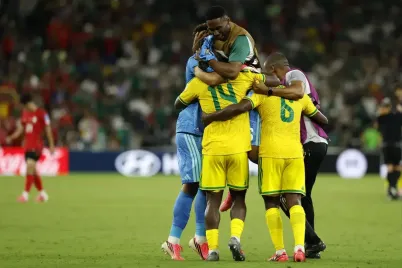

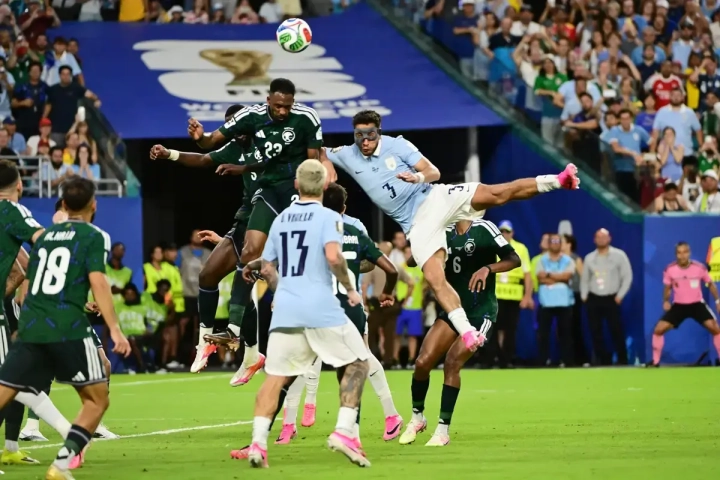
The 2026 FIFA World Cup continued to deliver dramatic twists and entirely unexpected results on Monday evening, as a fiercely resilient Saudi Arabia held two-time champions Uruguay to a gripping 1-1 draw in their Group H opener. Played under the brilliantly illuminated skies of the Miami Stadium in Florida, this highly anticipated fixture officially kicked off at 23:00 BST on 15 June 2026. For both ambitious nations, this opening match represented a golden opportunity to seize immediate control of a group that had been blown wide open just hours earlier by Cape Verde’s monumental shock goalless draw against Spain. However, a gruelling tactical battle, defined by relentless defensive discipline and late attacking desperation, ultimately resulted in the spoils being shared. Consequently, the group standings are left beautifully poised, with all four competing teams sitting perfectly level on one point apiece after the first round of matches.
Recalling their historic, earth-shattering upset of eventual champions Argentina during the 2022 tournament in Qatar, the Green Falcons arrived in the United States determined to prove their past heroics were no mere anomaly. Now operating under the astute guidance of Greek tactician Georgios Donis, who took charge just months prior to the tournament, the Asian representatives executed a highly disciplined and incredibly effective game plan. Acknowledging the vast disparity in technical quality between the two squads, Donis opted to set up his team to absorb immense pressure. Deploying a rigid 4-4-2 formation, the Saudi defensive lines sat exceptionally deep, aiming to completely frustrate their illustrious South American opponents and hit back utilizing rapid, sweeping counter-attacks.
This meticulously crafted defensive strategy paid spectacular dividends towards the end of the first half. In the 40th minute, the breakthrough arrived, sending the heavily outnumbered but incredibly vocal green-clad supporters inside the stadium into absolute raptures. Following a well-worked, outswinging corner delivery from Musab Al-Juwayr, towering midfielder Mohamed Kanno rose majestically above the crowded penalty area to meet the ball with a powerful header. While veteran Uruguayan goalkeeper Fernando Muslera showcased brilliant reflexes to parry the initial effort away from goal, central defender Abdulelah Al-Amri demonstrated supreme predatory instincts. Reacting quickest to the loose ball, the Al-Nassr defender tapped the rebound into the unguarded net to establish a shock 1-0 lead. Al-Amri’s unbridled joy was momentarily tempered when he received a yellow card just three minutes later for a cynical, late challenge, but the Saudis successfully navigated the remaining minutes to reach the half-time interval with their precious, hard-earned advantage entirely intact.
Crucial to Saudi Arabia’s immense defensive success was the inspired, career-defining form of goalkeeper Mohammed Al-Owais. The highly experienced shot-stopper produced a string of magnificent, acrobatic saves throughout the contest, repeatedly frustrating the Uruguayan forward line. He denied Federico Viñas from point-blank range on multiple occasions, showcasing remarkable agility and impeccable positioning. As the punishing heat and intense humidity of South Florida began to take a significant physical toll on the tireless players, Donis turned to his substitutes bench to provide fresh legs. Nasser Al-Dawsari was introduced to solidify the tiring midfield just after the hour mark, while late defensive reinforcements including Ali Lajami and Nawaf Boushal were deployed to help preserve the slender advantage.
Conversely, La Celeste entered the contest heavily favoured to secure maximum points and comfortably assert their dominance over the group. Manager Marcelo Bielsa deployed his trademark, physically demanding high-intensity pressing system, fielding a star-studded midfield featuring Manchester United’s Manuel Ugarte, Real Madrid’s Federico Valverde, and Tottenham Hotspur’s Rodrigo Bentancur. The match also marked a historic, immensely proud personal milestone for Fernando Muslera. Taking his place between the posts at 39 years and 364 days old, the Galatasaray goalkeeper officially became the oldest player to ever represent Uruguay at a World Cup finals, comprehensively surpassing the previous record held by legendary defender Diego Godín by more than three years.
Despite enjoying overwhelming possession statistics and possessing undeniable technical superiority across the pitch, Uruguay’s first-half performance was alarmingly disjointed and severely lacked clinical precision in the final third. The attacking movements were uncharacteristically sluggish, allowing the organized Saudi defence to easily intercept final passes and clear their lines. Recognising the urgent, absolute necessity for a drastic tactical shift, Bielsa made two highly decisive substitutions at the half-time break. In a bold move, he withdrew star striker Darwin Núñez and full-back Matías Viña, replacing them with the fresh impetus of Agustín Canobbio and Juan Manuel Sanabria. These immediate adjustments instantly injected significantly greater urgency, directness, and width into the South American attacking play.
The second half rapidly evolved into a virtual, unrelenting siege on the Saudi penalty area. The South American pressure mounted significantly in the 60th minute when the combative Ugarte found a pocket of space and unleashed a thunderous, swerving long-range strike that crashed agonizingly against the woodwork, with Al-Owais completely beaten. As the clock mercilessly ticked down and desperation genuinely began to set in among the Uruguayan ranks, the decisive breakthrough finally materialized in the 79th minute. Once again, the imposing figure of Viñas proved an absolute menace in the air, rising highest to force Al-Owais into another desperate, sprawling save with a powerful diving header. This time, however, left-winger Maximiliano Araújo was perfectly positioned to capitalize. Pouncing on the parried rebound, the winger kept his composure to confidently clip the ball into the near post, finally levelling the scoreline and sparking a frantic rush to restart the game.
The final ten minutes, plus a significant allocation of stoppage time, descended into a frantic, utterly breathless end-to-end spectacle. Uruguay poured men forward with reckless abandon in a desperate search for a dramatic late winner. Valverde, who was officially awarded the Player of the Match accolade for his tireless midfield orchestration and creative output, repeatedly tested the goalkeeper from distance with powerful, rasping drives. However, the Saudi defence, marshalled brilliantly by Hassan Altambakti, stood incredibly firm against the onslaught. Further tactical substitutions, including the late introduction of Rodrigo Aguirre for Viñas in the 89th minute, failed to produce the desired, elusive clinical finish required to snatch the victory.
The broader historical context of this hard-fought result is genuinely profound. For Saudi Arabia, the precious point provides immense, undeniable belief that they can successfully navigate the treacherous group stage and reach the knockout rounds for the first time since their memorable run in the 1994 tournament, which was incidentally also hosted in the United States. Donis publicly praised the unyielding spirit and immense passion of his players in his post-match media obligations, acknowledging the physical toll the match exacted while emphasizing that their defensive solidity proves they truly belong at this elite level of international competition.
Uruguay, meanwhile, will undoubtedly view the frustrating stalemate as a massively disappointing missed opportunity. Bielsa openly admitted his team’s sluggish, predictable start to the fixture was entirely unacceptable, highlighting the crucial necessity to ruthlessly capitalise when European champions Spain had surprisingly dropped valuable points earlier in the day. The South Americans must now rapidly regroup, thoroughly analyse their offensive shortcomings, and rediscover their lethal attacking rhythm ahead of their next highly demanding fixture.
With Group H now perfectly poised on a knife-edge, the stakes for the upcoming matches have been raised exponentially. Every single remaining group-stage fixture will undoubtedly be treated as a virtual cup final, as all four ambitious nations harbour genuine, entirely realistic ambitions of advancing to the next phase of the competition. The enthralling, tightly contested stalemate under the Miami lights serves as yet another vivid, compelling reminder of the beautifully unpredictable nature of World Cup football, where tactical discipline and unyielding passion can routinely match elite technical superiority.