
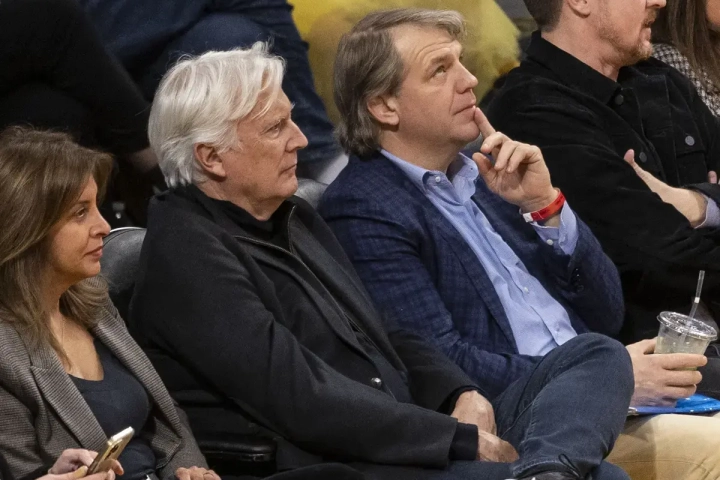
The turbulent, often chaotic era of shared governance at Chelsea Football Club appears to be hurtling towards a definitive conclusion. According to widespread reports emerging this week, chairman Todd Boehly and his business partner Mark Walter are in advanced negotiations to sell their minority stakes in the Premier League club to majority owners Clearlake Capital.
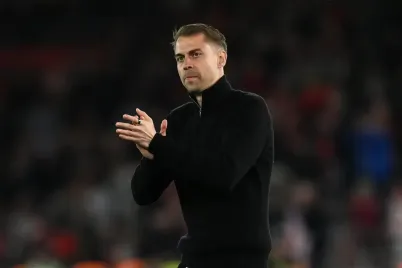
This boardroom reshuffle, unfolding just days before the Blues kick off their 2026/27 campaign under new manager Xabi Alonso against Fulham, represents a seismic shift in the club’s power dynamics. Since the American-led consortium completed a historic £2.5 billion takeover in May 2022, the club has been defined by unprecedented transfer spending, managerial instability, and an unusual split-control governance structure. Should the sale proceed, it will dramatically reshape Chelsea’s operational future, giving Clearlake total sovereignty over one of England’s most high-profile sporting institutions.
The Architecture of a Sale: Why Now?
The decision by Boehly and Walter to head for the exit doors stems from a potent combination of fractured internal relationships and immense external financial pressures.
Disagreements have reportedly plagued the consortium on nearly every major operational front. Tensions have simmered over recruitment policies, the constant turnover of managers, and the fiercely debated plans regarding the redevelopment of a new stadium. While Clearlake Capital currently controls 61.5 per cent of the club, a highly unconventional ownership agreement stipulated that they share equal governance and operational control with Boehly, who assumed the role of public-facing chairman. That arrangement has ultimately proven unworkable, breeding a boardroom tug-of-war that has undoubtedly filtered down to the pitch.
However, the catalyst accelerating the sale lies across the Atlantic. Mark Walter, a highly influential yet historically silent partner at Chelsea, is currently navigating a severe corporate crisis.
Facing an acute liquidity crunch as insurers move swiftly to unwind loans, Walter was recently forced into a shock fire sale of his controlling stake in the NBA’s Los Angeles Lakers, an asset he sold for $12.5 billion to Bob Iger and Joshua Kushner just a year after purchasing it. The scramble for liquidity has now inevitably reached his European footballing investments.
A £5 Billion Valuation and Clearlake’s Monopoly
Boehly, Walter, and Swiss billionaire Hansjörg Wyss currently control a combined 38 per cent of Chelsea through their holding company, Blueco. Boehly and Walter each possess an estimated 12.8 per cent share.
Under the stringent terms of the 2022 takeover agreement, the co-owners are strictly prohibited from selling their equity to outside, third-party investors for the first ten years of their tenure. Consequently,
Despite the club’s domestic struggles, culminating in a dismal 10th-place finish in the Premier League last season, Boehly and Walter are reportedly valuing the club at a staggering £5 billion in these exit negotiations. Should Clearlake agree to a buyout at this valuation,
For Clearlake, absorbing these shares would elevate their ownership stake to over 86 per cent,
The History of the Blueco Era
To understand the magnitude of Boehly’s departure, one must revisit the unprecedented circumstances of his arrival. The consortium purchased Chelsea in the spring of 2022, navigating a highly complex, government-supervised auction after long-time owner Roman Abramovich was heavily sanctioned and forced to sell following Russia’s invasion of Ukraine.
Promising a sleek, data-driven American sports model, Boehly immediately installed himself as the club’s interim sporting director during a frantic first summer window. He spearheaded the high-profile acquisitions of players such as Raheem Sterling and Marc Cucurella, initiating a relentless spending spree that rapidly eclipsed the £1 billion mark in subsequent transfer periods.
However, the promised stability never materialised. A revolving door of managers, from Thomas Tuchel and Graham Potter to Mauricio Pochettino and others, failed to generate consistent on-pitch success. After his initial 12-month tenure as sporting director, Boehly stepped back from hands-on footballing operations, allowing Eghbali and Clearlake to assume greater day-to-day authority.
Despite his reduced operational role, Boehly remained the lightning rod for supporter frustration. The American became the public face of the club’s perceived cultural erosion and erratic transfer strategy, bearing the brunt of the vitriol from the Stamford Bridge terraces as Chelsea plummeted down the Premier League table. While
What This Means for the Team and Xabi Alonso
For the playing squad and newly appointed manager Xabi Alonso, a streamlined ownership structure offers a highly valuable, albeit rare, commodity at modern-day Chelsea: clarity.
Since 2022, the club’s strategic direction has been heavily diluted by the necessity for consensus among a fractured ownership group. With Clearlake Capital assuming absolute control, the decision-making pipeline will be drastically shortened. Eghbali and his sporting directors will possess the uninhibited mandate to execute a unified vision for recruitment, tactical identity, and squad management without the constant threat of internal gridlock.
For Alonso, who arrives with a sterling reputation following his exploits in European football, this boardroom resolution is impeccably timed. Rather than navigating the political crossfire between rival billionaires, the Spanish tactician will answer to a singular hierarchy. This structural streamlining is essential for implementing his demanding, possession-based philosophy on a bloated squad that has lacked a coherent identity for several seasons.
The Stadium Dilemma Resolved?
Beyond the immediate footballing implications, Clearlake’s consolidated power is expected to finally unlock the impasse surrounding the redevelopment of Stamford Bridge.
The stadium issue has been one of the most fiercely contested battlegrounds within the consortium. Upgrading the club’s historic, 40,000-capacity home is universally acknowledged as a financial necessity for Chelsea to consistently compete with the matchday revenues generated by Arsenal, Tottenham Hotspur, and Manchester United. However, the competing factions could not agree on whether to ambitiously redevelop the existing site, a logistically nightmarish proposition due to its proximity to railway lines and a local cemetery, or to pursue a highly controversial relocation to Earls Court.
With the Boehly-Walter faction exiting the stage, Clearlake can finally push forward with
A New Chapter Beckons
As Chelsea prepare to travel to Craven Cottage this weekend, the narrative surrounding the club remains predictably dramatic. The Todd Boehly era, characterised by its audacious spending, boundless ambition, and frequent missteps, is drawing to a premature and sudden close.
While the American billionaire may depart with a heavily scrutinised sporting legacy, the potential doubling of his initial investment ensures the venture will be recorded as a resounding financial triumph. For Chelsea, the focus now shifts entirely to Clearlake Capital. With absolute power comes absolute responsibility; the private equity firm can no longer point to internal disputes as a justification for underperformance. The path is clear, the hierarchy is unified, and the pressure to restore Chelsea to the summit of European football has never been greater.