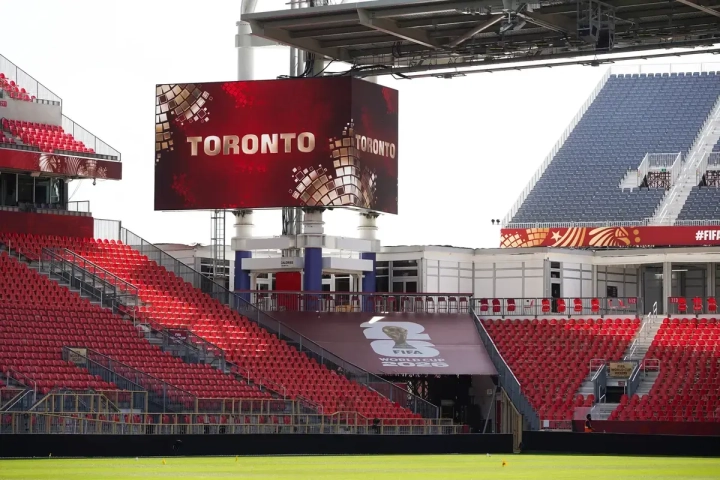
Senegal and Iraq meet in one of the most significant matches of their FIFA World Cup 2026 campaigns when they face each other in Group I at Toronto Stadium in Toronto, Canada, on Friday, 26 June 2026. Kick-off is scheduled for 19:00 UTC, which corresponds to 20:00 BST. With both nations still searching for their first points of the tournament, the contest carries major implications for their hopes of extending their stay at the finals.
The expanded 48-team World Cup format has created additional routes into the knockout rounds, with the best third-placed teams across the group stage earning places in the last 32. That possibility remains alive for both sides despite difficult starts to the competition. However, neither team can afford another setback. Victory is essential if either nation is to retain realistic hopes of progression, while defeat would leave elimination virtually certain.
What looked on paper like a competitive group has developed into a battle for survival behind France and Norway, who have taken control of the leading positions. As a result, attention now turns to Toronto, where two proud footballing nations will attempt to rescue their campaigns and keep their World Cup dreams alive.
Expectations were considerable around Senegal before the tournament began. The West Africans arrived in North America carrying the reputation of one of Africa’s strongest international sides and with memories of previous World Cup achievements still fresh. Their remarkable run to the quarter-finals in 2002 remains one of the standout stories in World Cup history, while their appearance in Qatar four years ago reinforced their status as regular participants on football’s biggest stage.
Under head coach Pape Thiaw, Senegal entered the tournament believing they could challenge for a place in the knockout rounds. Instead, their opening two fixtures have produced frustration. A 3-1 defeat against France was followed by an entertaining but costly 3-2 loss to Norway. Those results have left the Lions of Teranga rooted at the foot of Group I alongside Iraq and facing a match that has become far more important than many anticipated.
The defeat to Norway particularly stung because of the manner in which it unfolded. Senegal showed attacking quality and threatened throughout the contest but defensive lapses proved costly against a Norwegian side that punished mistakes efficiently. Ismaila Sarr was among the standout performers, finding the net twice and providing a reminder of the pace and directness that make him such an influential figure in the national side.
Even amid the disappointment of two defeats, Senegal have demonstrated that they remain dangerous going forward. Sarr’s form has been a positive development, while a squad containing players accustomed to competing at the highest levels of European football still possesses the experience required to handle pressure situations. The challenge facing Thiaw is finding the balance between attacking ambition and defensive stability.
A significant concern for Senegal arrives in the goalkeeping department. Edouard Mendy has been ruled out of the match after sustaining a knee injury during the defeat to Norway. The experienced goalkeeper was forced off during that encounter, and his absence removes one of the team’s most influential figures at a critical moment. Beyond Mendy’s injury, no confirmed suspensions have been reported for Senegal heading into the fixture.
The tactical approach is likely to reflect the stakes involved. Senegal know that only a win is likely to keep their qualification hopes alive, yet they cannot afford to leave themselves vulnerable defensively. Their pace in wide areas remains a major weapon, and much of their attacking play is expected to revolve around quick transitions and aggressive forward runs. Set pieces may also play an important role given the physical attributes available throughout the squad.
While Senegal entered the tournament with higher external expectations, Iraq have already achieved a significant milestone simply by reaching the World Cup. Their return to football’s biggest stage represented a landmark moment for the national programme and provided supporters with an opportunity to see their team compete against elite opposition once again.
Head coach Graham Arnold has overseen a period of progress that culminated in qualification for the finals. Although Iraq arrived as outsiders in a group containing France, Norway and Senegal, there was still hope that they could challenge for a place in the knockout rounds. The reality has been harsh, but not entirely unexpected.
An opening 4-1 defeat against Norway immediately placed Iraq under pressure. The margin of that loss highlighted the difficulty of competing against established European opposition, yet there were periods in the match when Iraq demonstrated resilience and attacking intent. Those positive moments were harder to find in the subsequent encounter with France, where a 3-0 defeat left them without points and with a negative goal difference that could become significant in any third-place calculations.
Despite those setbacks, Arnold has consistently emphasised the importance of maintaining belief. The mathematics of qualification remain complicated but not impossible. A victory against Senegal would at least give Iraq a chance of finishing third and entering the conversation for one of the additional knockout-round places.
Several players continue to carry the hopes of the Iraqi supporters. Striker Aymen Hussein remains a central figure within the squad and has been one of the country’s most important performers during recent years. His physical presence and ability to occupy defenders provide Iraq with a focal point in attack. Midfielder Amir Al-Ammari brings energy and composure in central areas, while younger talents have offered glimpses of promise despite the difficult circumstances of the group stage.
The challenge for Iraq has been converting possession and promising passages of play into tangible outcomes. They have shown moments of organisation and determination, yet the quality of opposition has exposed small errors. Against Senegal, the margin for mistakes is likely to be even smaller because both teams understand precisely what is at stake.
Unlike their opponents, Iraq enter the contest without any widely reported confirmed injury or suspension concerns among the available squad. That continuity could prove valuable in a match where familiarity and understanding may influence key moments.
From a tactical perspective, Iraq are expected to prioritise structure and discipline. Arnold’s teams have traditionally relied on collective organisation rather than individual brilliance, and that approach may again be evident in Toronto. Limiting the space available to Senegal’s attacking players will be essential, while swift counter-attacks could offer the most realistic route to goal.
One intriguing aspect of the fixture is the relative lack of historical meetings between the two nations. Encounters between African and Asian representatives at World Cups often carry an additional layer of interest because they provide a rare opportunity to compare the progress of two different footballing regions on the global stage. Both countries have produced memorable moments in international football, yet opportunities to meet in competitive fixtures have been limited.
The broader context of Group I adds further intrigue. France and Norway have established themselves as the leading contenders in the section, leaving Senegal and Iraq battling to keep their campaigns alive. The expanded format means a win may not immediately guarantee progression, but it would at least provide hope. Anything less would leave qualification dependent on a highly improbable combination of other results.
Storylines surrounding the match extend beyond simple mathematics. For Senegal, there is a determination to avoid an early exit that would be viewed as a major disappointment given the quality available within the squad. The team arrived at the tournament with ambitions that stretched far beyond merely competing. Falling short of the knockout rounds would inevitably trigger questions about missed opportunities in the opening two matches.
For Iraq, the fixture offers the chance to conclude their group-stage campaign with a statement performance. The nation has waited a long time to return to the World Cup, and a victory over one of Africa’s strongest sides would represent a memorable achievement regardless of what follows elsewhere in the tournament.
There is also the fascinating contrast in styles. Senegal possess athleticism, pace and individual quality across several areas of the pitch. Iraq, meanwhile, often rely on collective organisation and tactical discipline. Matches between teams with differing footballing identities frequently produce compelling contests, particularly when the stakes are so high.
The midfield battle could prove decisive. Controlling possession will be important, but so too will the ability to react quickly when possession changes hands. Senegal’s ability to transition rapidly from defence to attack has long been one of their strengths, while Iraq will seek to disrupt that rhythm and force the game into a shape that suits them.
Another factor is the psychological dimension. Neither team has experienced success in the tournament so far, meaning confidence levels will inevitably be tested. The side that handles pressure more effectively may gain a significant advantage. An early goal could dramatically alter the complexion of the contest and influence how both coaches approach the remainder of the match.
As the group stage reaches its conclusion, Toronto provides the setting for a fixture that has become far more consequential than many anticipated when the draw was made. Senegal are attempting to preserve ambitions that once appeared to stretch deep into the competition, while Iraq are fighting to extend a journey that has already captured the imagination of their supporters.
By the time the final whistle sounds, one team may still harbour hopes of reaching the knockout rounds, while the other could be left reflecting on what might have been. That sense of jeopardy is what makes World Cup football so compelling. With qualification hopes hanging in the balance, pride, ambition and opportunity will all be on the line when Senegal and Iraq take to the field for a decisive Group I showdown.