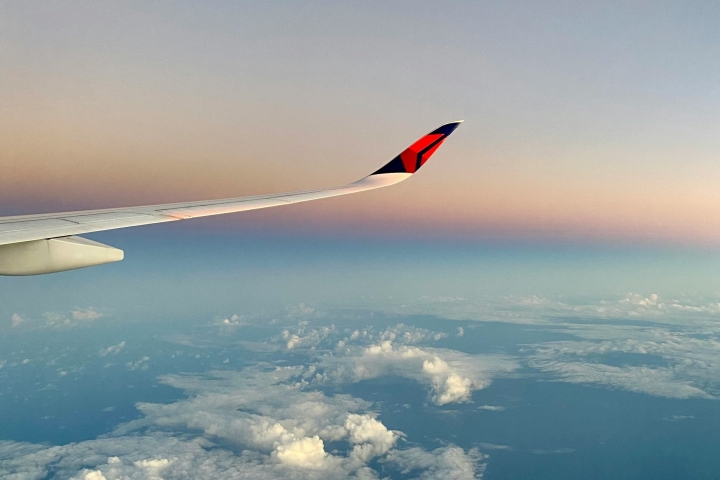
Thousands of Airbus aircraft were briefly grounded after warnings that intense solar radiation might interfere with sensitive onboard flight-control computers. While the cause is still under investigation, the incident has thrown a spotlight on an emerging aviation vulnerability: space weather.
Professor Mathew Owens, Professor of Space Physics at the University of Reading, explains how activity on the Sun can ripple all the way down to commercial jets.
“Particles from space, mostly from the Sun, can occasionally strike an airplane’s electronics. Because aircraft fly where the atmosphere is thinner, more of these high-energy particles are able to reach them. When one passes through a microchip, it can flip a tiny “bit,” the smallest unit of digital information in the microchip, stored as a 0 or a 1. This creates a glitch known as a single-event upset, which can make an electronic system behave in unexpected ways.”
These glitches are well-known in satellites, but increasingly relevant to aircraft as their systems grow more digital and more complex.
Despite the speculation, Professor Owens stresses that no direct link has been confirmed.
“We still do not know whether this had anything to do with the situation Airbus is looking into, or what sequence of events they are investigating,” he added.
“As more information emerges, we will get a clearer picture of what actually happened.”