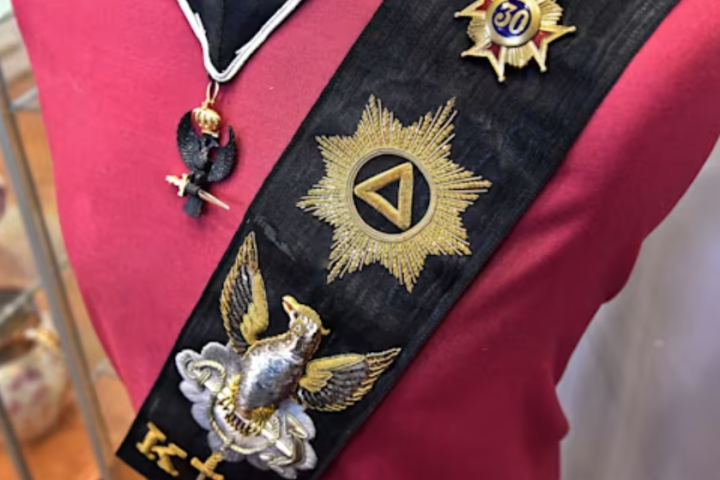
Freemasons are preparing to launch legal action against the Metropolitan Police over plans requiring officers to declare their membership of the organisation.
Groups representing Freemasons in England, Wales, the Isle of Man and the Channel Islands have sent a letter before claim to the force. The move is a formal step towards seeking a judicial review of the policy, which was announced earlier this month.
The United Grand Lodge of England, acting on behalf of itself as well as The Order of Women Freemasons and the Honourable Fraternity of Ancient Freemasons, said the proposal is discriminatory. It also claimed the consultation carried out by the Metropolitan Police was “wholly inadequate, prejudicial and unjust”.
The letter calls on the Met to suspend its decision to require officers to publicly declare Freemasons membership or face legal proceedings. The Met recently confirmed that Freemasonry would be added to its declarable associations policy.
Under the revised rules, officers and staff must declare membership, past or present, of any organisation that is described as hierarchical, has confidential membership and requires members to support and protect one another. The Met Police Freemasons legal action centres on this expanded definition.
The United Grand Lodge of England said the policy risks undermining public confidence in Freemasons and could breach human rights legislation and GDPR requirements.
Adrian Marsh, grand secretary of UGLE, said: “Freemasonry has the highest moral and ethical standards – standards that have been a cornerstone of its identity since the earliest days of organised Freemasonry over 300 years ago.
“The decision by the Metropolitan Police casts an aura of mistrust over the entire Freemason community.
“Given the obvious, detrimental impact on our members, United Grand Lodge of England, Order of Women Freemasons and Honourable Fraternity of Ancient Freemasons consider that we now have no choice but to take legal action to challenge this unlawful decision.
“We do not take this decision lightly but feel that we are left with no other options, in order to defend the rights of those in our membership, both male and female, present and past, that serve the people of London loyally in any capacity under the banner of the Metropolitan Police.”
Mr Marsh urged senior officers to reconsider the move and “work it through sensibly” with Freemasons to avoid costly litigation. He added: “They have the opportunity to avoid a huge waste of public funds.”
There are 440 Freemasons among the Metropolitan Police’s 32,135 officers. Mr Marsh said it was “inconceivable” that such a small number could influence the force.
UGLE said it was not properly included in the consultation process and claimed fewer than 5% of officers and staff responded to the survey. It also accused the Met of refusing to consider alternative approaches. The organisation added that the duty for Freemasons to support and protect each other is explicitly limited by respect for the law and family obligations.
The policy change was recommended by the Daniel Morgan Independent Panel report, which examined the Met’s handling of the unsolved 1987 murder of private investigator Daniel Morgan. The report said Freemasons membership among officers had been “a source of recurring suspicion and mistrust in the investigations”.
The Metropolitan Police said a survey of staff found that two thirds of respondents believed membership of such organisations affected perceptions of impartiality and public trust. Commissioner Sir Mark Rowley has promoted the declaration policy as part of wider efforts to improve transparency, a position now at the centre of the Met Police Freemasons legal action.