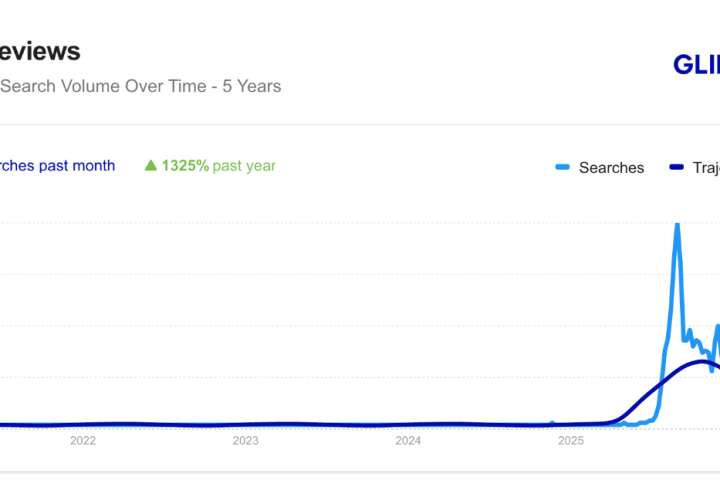
Searches for “buy reviews” surge 1,325% as expert warns of black-market trust economy targeting online shoppers
New search data reveals growing demand for bought reviews and followers, as AnyBusiness.com.au warns ecommerce customers to watch for fake credibility signals before buying online
Searches for “buy reviews” have surged by 1,325% in the past year, with the term reaching 6.7 million searches in the past month, according to new Glimpse search trend data.
The data also shows searches for “buy followers” reached 981,000 searches in the past month, up 48% year-on-year, suggesting a growing black market for online credibility as businesses, influencers and sellers compete for consumer trust.
The rise comes as ecommerce continues to grow, with more shoppers relying on social proof, star ratings, testimonials, follower counts and influencer-style content before making purchasing decisions. But experts warn that the same signals consumers use to decide whether a brand is trustworthy are increasingly being manipulated.
Mary Tamvakologos, Director of Operations at AnyBusiness.com.au, says the data points to a bigger issue around trust in the online marketplace.
Mary said:
“Consumers are trained to look for proof before they buy. Reviews, follower counts, customer photos and testimonials all help people feel more confident when choosing an online brand, especially if they have never heard of the company before.
“The problem is that those trust signals can now be bought. A brand can appear popular, established and well-reviewed without having earned that reputation from real customers.
“That creates a major risk for shoppers, particularly in ecommerce, where many people are buying from brands they discover through social media ads, marketplaces or influencer content. A polished Instagram page or hundreds of five-star reviews should not be the only reason someone feels safe making a purchase.”
The red flags shoppers should watch for before buying online
Mary Tamvakologos, Director of Operations at AnyBusiness.com.au says shoppers should not assume a business is legitimate just because it has a high follower count or glowing reviews.
She added:
“One of the biggest warning signs is a brand with thousands of followers but very little genuine engagement. If posts have lots of followers behind them but barely any real comments, conversations or tagged customer content, that is worth questioning.
“Reviews are another area where consumers need to slow down. If every review is five stars, very short, overly generic or posted within a similar time period, that can suggest they are not organic. Real customer feedback is usually more varied. Even strong businesses will have a mix of detailed praise, practical feedback and the occasional complaint.
“Shoppers should also check whether reviews mention specific products, delivery experiences, sizing, customer service or returns. Fake reviews often sound polished but vague. They might say ‘great product’ or ‘amazing service’ without explaining what was purchased or what actually happened.”
Five warning signs a brand may be buying credibility
Mary recommends shoppers look out for:
A large following but low engagement
A business may have tens of thousands of followers, but if posts receive very few comments, saves, shares or real customer interactions, the audience may not be genuine.
Repetitive five-star reviews
Reviews that use similar wording, vague praise or appear in a short time frame can be a sign of paid or incentivised activity.
No visible customer footprint
Legitimate ecommerce brands often have tagged photos, customer questions, returns information, delivery updates and real conversations. If the brand looks polished but has no trace of real buyers, be cautious.
Poor or hidden business information
A genuine online business should make it easy to find contact details, returns policies, delivery timeframes and company information. If these are missing, vague or difficult to verify, that is a warning sign.
Social proof that does not match the brand’s wider presence
If a brand claims to be hugely popular but has little presence outside its own website or social pages, shoppers should check further. Search the business name alongside terms like “reviews”, “scam”, “returns” or “complaints” before buying.
Why this matters for ecommerce businesses too
Mary Tamvakologos, Director of Operations at AnyBusiness.com.au warns that the issue does not just affect consumers. Genuine ecommerce businesses can also lose trust when fake social proof becomes widespread.
She said:
“Reputation is one of the most valuable assets a business can build. Buying reviews or followers might look like a shortcut, but it can damage long-term trust if customers realise the credibility was manufactured.
“For legitimate businesses, the answer is not to compete in the black market. It is to build proof properly. That means asking real customers for reviews, responding to complaints, showing transparent policies, publishing useful product information and making it easy for people to verify who is behind the business.
“In ecommerce, trust is not just a marketing asset. It directly affects conversion, repeat purchases and customer loyalty. Brands that invest in genuine customer experience will always be in a stronger position than those trying to buy the appearance of one.”
How shoppers can protect themselves
Before purchasing from an unfamiliar online brand, Mary recommends checking:
The business has clear contact details and returns information
Reviews are detailed and spread over time
Social media engagement looks real
Customers are tagging the brand organically
The same products appear elsewhere under different brand names
There are complaints about delivery, refunds or customer service
Whether payment options offer buyer protection
Mary added:
“Consumers do not need to become investigators every time they shop online, but they should take a minute to sense-check the business. If the only thing making you trust a brand is a follower count or a wall of perfect reviews, it is worth doing one more search before handing over your card details.”